
Say Hello to Black Jack Review — A Young Resident Discovers What Japanese Hospital Medicine Actually Is
by Shuho Sato
Read the first volume. If it doesn't hook you, put it down. It'll hook you.
Buy Say Hello to Black Jack on Amazon →*Affiliate link — I earn a small commission at no extra cost to you.
The Japanese healthcare system saved my grandfather's life multiple times in the 1990s. The Japanese healthcare system also, in his final years, failed him in specific ways that my family had to navigate without good resources for understanding what was happening or why.
I read Say Hello to Black Jack the year after he died. The manga gave me a vocabulary for what I had been watching. I did not understand what I had been watching until Shuho Sato showed it to me.
Quick Take
- Shuho Sato's 13-volume medical drama (2002–2006), followed by 9-volume sequel "Shin Black Jack ni Yoroshiku" (2007–2010)
- One of the most consequential social-critique manga in modern Japanese publishing — directly influenced healthcare policy discussions
- Author released the work copyright-free in 2012, an unprecedented decision for a major commercial manga
- Age rating: M (Mature) — graphic medical content, suicide themes, sustained institutional critique
What Is Say Hello to Black Jack About?
Eijiro Saito (斉藤 英二郎) has just completed medical school. He is beginning his residency at the prestigious Eiroku University Hospital in Tokyo. He chose medicine because he wanted to help people. He was at the top of his medical school class. His family is proud.
The series opens on his first day. He is twenty-six years old, idealistic, exhausted, and about to learn what hospital medicine actually is.
Across 13 volumes, Saito rotates through different specialties at Eiroku and at outside teaching hospitals. Each rotation is a multi-chapter arc that examines a specific area of Japanese healthcare:
- General surgery — The hierarchical structure of Japanese surgical departments; the seniority system that determines who operates; the way resident hours are calculated and what that does to the quality of patient care
- Cardiology — The economics of heart medication; the relationships between Japanese pharmaceutical companies and university hospitals; what happens when a patient cannot afford the treatment they need
- Neonatal Intensive Care Unit (NICU) — The specific texture of Japanese neonatal care; the babies born with conditions that the system processes in specific ways; the parents' situations
- Pediatrics — Childhood cancer in Japan; the legal and ethical frameworks for treating young patients; what doctors say and don't say to dying children
- Oncology — Cancer treatment in Japan; the social pressure on patients to perform optimism; the dying that the system has structured itself not to talk about
- Psychiatric medicine — Japanese psychiatric hospitalization; the specific patterns of suicide in Japan and what the medical system does and doesn't do; the patient who cannot afford to be admitted but cannot afford not to be
- Organ transplantation — Japanese transplant ethics; the legal complications around brain death; the gap between donor and recipient that the system has not adequately bridged
Each arc is a case study. Each arc involves specific patients whose stories are followed in detail. Each arc ends with Saito's perspective changed by what he has seen.
The series does not offer solutions. Sato is documenting. He shows the system. He shows the specific bad outcomes the system produces. He shows the doctors operating within the system trying their best to be ethical inside constraints that often prevent good outcomes. He does not blame individuals; he names structures. By the end of 13 volumes, the reader has a more accurate map of Japanese hospital medicine than most popular journalism has ever provided.
The sequel — Shin Black Jack ni Yoroshiku (新ブラックジャックによろしく, "New Say Hello to Black Jack") — continues Saito's career across 9 more volumes and focuses on cancer treatment specifically. It is considered narratively a continuation but tonally a deepening; the sequel is heavier than the original.
Why Did the Author Make Say Hello to Black Jack Copyright-Free?
In 2012, Shuho Sato declared the manga copyright-free — unprecedented for a major commercial manga that had sold millions of copies.
What this means in practice:
- The manga can be freely used, reproduced, adapted, and remixed
- No permission is required for any derivative work
- No royalties are owed to Sato for any use
- The text and art can be downloaded, redistributed, and modified
What this means in cultural terms:
- The manga's social-critique content can be used in policy debates, classroom teaching, journalistic illustration, etc., without licensing barriers
- The work has been adapted into voice comics, stage productions, and parody works
- The manga has been used in Japanese medical education programs
Sato's rationale: he wanted the manga's critique to be available to anyone who could use it. Royalties would be a barrier to that. He had been compensated for the original serialization and book sales; he believed the work's continued utility should not depend on his ongoing financial interest in it.
This decision made Say Hello to Black Jack one of the most accessible major manga in Japanese publishing. Anyone can read it. Anyone can quote from it. Anyone can build on it.
Who Is This Manga For?
- Readers interested in serious social criticism via fiction
- Healthcare workers, students, or interested observers of medical systems
- Seinen readers willing to engage with demanding material
- Anyone who has navigated a major medical situation in Japan or elsewhere
- Not for: casual readers; readers seeking light medical drama; readers triggered by extensive death and illness content
Content Warnings & Age Rating
Age Rating: M (Mature) — 18+ Content Warnings: Graphic medical procedures; multiple character deaths (patients, sometimes children); suicide depicted in the psychiatric arc; serious illness rendered without sentimentality; sustained institutional critique that includes discussions of euthanasia, end-of-life care, and the economic dimensions of healthcare; some chapters address pediatric deaths
The M rating is the floor. This is some of the most demanding mainstream manga in current Japanese publishing.
Story Overview (Arc Structure)
Volumes 1–3: General Surgery and the Hospital Hierarchy — Saito's first rotation. The seniority system. The patient who needs a specific procedure that the rotation schedule complicates. The first encounter with the gap between what Saito thought medicine was and what it is institutionally.
Volumes 4–5: Cardiology and Economics — The medications. The patients who cannot afford them. The hospital's relationships with pharmaceutical companies. The specific case of a heart patient whose treatment is dictated by what insurance will cover.
Volumes 6–7: NICU — The specific moral weight of neonatal care. The babies and the parents. The treatment decisions that doctors make and the framework around them.
Volumes 8–9: Pediatric Cancer — The arc that won the manga its initial mainstream attention. Sato's depiction of childhood cancer and the families navigating it became the basis for public policy discussions in Japan.
Volumes 10–12: Psychiatric Medicine — The most thematically intense section. Suicide, psychiatric hospitalization, the specific failures of the Japanese mental health system. This arc is widely considered the manga's most important.
Volume 13: Synthesis and Continuation — Saito's arc reaches a temporary stopping point. The sequel picks up from here.
Characters
Eijiro Saito — The protagonist whose specific journey is from idealism to a more textured understanding. Saito does not become cynical. Sato refuses the easy arc. By volume 13, Saito has become a doctor with a clear-eyed view of the system and a continued commitment to practicing medicine ethically within it. The combination is hard-won and the manga treats it as such.
Senior physicians at Eiroku — Various attending physicians, department chiefs, and senior residents. Sato writes them with care; none are villains. Each is a person operating within the system, making decisions that produce outcomes they don't always like but cannot individually change.
The patients — Each arc has its central patient and that patient's family. Sato spends significant time on these characters; they are not case studies, they are people. The reader is meant to know them by the end of each arc and to feel the specific weight of what happens to them.
Saito's family and friends outside medicine — Provide grounding context for Saito's transformation. His parents do not fully understand what he is becoming; his medical school friends are going through their own analogous experiences in different specialties.
Art Style
Shuho Sato's art is realistic, detailed, and unflinching. Medical procedures are drawn with anatomical accuracy. Hospital settings are rendered with the specific texture of real Japanese hospitals — the lighting, the floor materials, the equipment, the wear patterns of frequently-used spaces.
The character art is realistic rather than stylized. Faces age across the series. Bodies show the wear of long hours and stress.
The manga's most distinctive visual feature is the medical accuracy. Sato consulted with medical professionals throughout the run. Procedures, dosages, machines, medications, hospital layouts — all are correct. Japanese medical readers have verified the technical accuracy across multiple specialties.
Cultural Context
Say Hello to Black Jack was a cultural event in Japan during its 2002–2006 run. Specific arcs sparked national discussion:
- The childhood cancer arc led to journalistic coverage and parliamentary discussions about pediatric oncology resources
- The psychiatric arc influenced public discussion about mental health hospitalization reform
- The organ transplantation arc contributed to debates about Japanese brain-death legislation
The manga's title is a deliberate reference to Osamu Tezuka's Black Jack — the classic medical manga about a brilliant unlicensed surgeon who works outside the system for individual heroism. Sato's title (literally: "Hello to Black Jack" — Black Jack ni Yoroshiku) positions his work as Black Jack's institutional counterpart. Where Black Jack is a fantasy of medicine as individual virtue, Sato's manga is a documentary of medicine as institutional reality.
The 2003 TBS live-action drama adaptation starring Takeru Satoh (later famous for the Rurouni Kenshin films and Alice in Borderland) covered the early arcs. The drama achieved 14.2% average viewership ratings and was widely watched.
The manga won the 2004 Japan Cartoonists Association Grand Prize and multiple other awards.
What I Love About It
The psychiatric arc.
Specifically: the chapter where Saito encounters a patient who needs psychiatric hospitalization but cannot afford it and whose family cannot afford to lose their wage-earner to hospitalization but also cannot afford what will happen if hospitalization does not occur.
The chapter is not structured around a dramatic intervention. Saito does not have a magical solution. The hospital's options are limited. Insurance covers what insurance covers. The family's economic situation is what it is. The patient's condition is what it is. Sato shows Saito working through all of the options, talking to the patient, talking to the family, talking to the social worker, talking to his attending. Every option has costs. None is unambiguously right.
What Saito does — what specific small intervention he chooses to make — is the chapter's emotional center. The intervention is not heroic. It is small. It buys the family some time. It does not solve the structural problem. It does, in the specific moment, do something that Saito can do.
What I love is what Sato refuses to do. He does not romanticize the small intervention. He does not pretend it is enough. He shows Saito doing what he can, knowing it is not enough, and continuing to show up the next day. That is the manga's whole ethic. The system is what it is. The doctor's job is to do what the doctor can do within it, knowing that doing what you can is sometimes the only honest option.
I think about this scene when I think about my grandfather's final months. The doctors and nurses who cared for him were doing what they could within a system that limited them. Some of what they did was beautiful. Some of what they did was inadequate. The inadequacy was not their fault. It was the system. The system is what we have to look at if we want anything to be different.
Sato gave me language for that. That is why the manga matters.
What English-Speaking Fans Say
Say Hello to Black Jack has very limited English-language reach because it has never been officially licensed. The 2003 TBS drama is available with subtitles in some regions and has a small English audience. Among English-language readers who have accessed the manga (via Japanese editions or fan translations), the consensus is uniformly positive — Sato's work is considered one of the most important Japanese manga of its era and one of the great works of social-critique fiction in any medium.
The most common observation: even without complete cultural context for the Japanese healthcare system, the manga's emotional weight translates. The patients are people; their situations are recognizable.
Memorable Scene ⚠️ Spoiler Warning
The end of the pediatric cancer arc.
Without spoiling specifics: somewhere in volumes 8–9, the pediatric cancer arc reaches its conclusion with a specific case Sato has been developing for several chapters. A child with a treatable but expensive condition. A family doing their best. A medical system that has options but limits. Saito has been involved with the family throughout.
The arc ends without redemption. The medicine works to the degree it can. The family does what they can. Sato writes the conclusion with a restraint that is harder to read than melodrama would be. The chapter ends with Saito doing something small — visiting the family in a context the institution does not strictly require. He sits with them. He does not say much. He is there.
What that scene communicates is the manga's central thesis: medicine practiced ethically inside an inadequate system still has to happen. Doctors are still doctors. Patients are still patients. The relationships between them have to be honored even when the institutional outcomes are not what anyone wanted.
I cried for a long time after this arc. Sato earned every tear by refusing to cheapen the situation. That is the gift of the manga.
Similar Manga
| Title | Its Approach | How Say Hello to Black Jack Differs |
|---|---|---|
| Dr. Koto Clinic | Medicine with warmth and rural setting | Dr. Koto is constructive; Say Hello is critical. Companion works |
| Black Jack (Tezuka) | Anthology medical drama about unlicensed surgeon | Black Jack is myth; Say Hello is institutional reality. The titles are in dialogue |
| Iryu Team Medical Dragon | Hospital surgery drama | Iryu is action-procedural; Say Hello is character-procedural |
| Ode to Kirihito (Tezuka) | Tezuka's dark medical vision | Same critical tradition; Say Hello is contemporary, Kirihito is historical |
Reading Order / Where to Start
Volume 1 of the original series. Then volumes 2–13. Then the sequel "Shin Black Jack ni Yoroshiku" if you want more.
Official English Translation Status
Say Hello to Black Jack has no official English manga release. Despite the cultural significance, Kodansha (the original publisher) has not licensed the manga to any English publisher. The author's 2012 copyright-free declaration applies to Japanese rights; it does not automatically extend to other-language editions.
The Japanese edition is widely available (in print and digital). The 2003 TBS drama is available with English subtitles on some streaming services.
For English readers wanting access: Japanese editions or fan translations.
Pros & Cons
Pros
- One of the most important social-critique manga in modern Japanese publishing
- Each arc engages with a specific real healthcare issue with documentary care
- Saito is one of seinen's best-written protagonists
- 13 volumes complete; 9-volume sequel for those who want more
- Sato's copyright-free declaration makes the work uniquely accessible (in Japan)
Cons
- No English manga license
- Emotionally demanding; heavy content
- Specific to Japanese healthcare context — some references may be opaque to non-Japanese readers
- The institutional-critique pace is an acquired taste. It won't land for everyone, especially readers seeking more dramatic medical fiction.
Is Say Hello to Black Jack Worth Reading?
For readers who can access it: yes, unconditionally. Among the most important manga of the 21st century. The 13-volume commitment is real but rewarded.
For English-only readers: the 2003 TBS drama is the most accessible alternative. The drama is faithful and well-regarded but inevitably covers less than the manga.
Format Comparison
| Format | Notes |
|---|---|
| Physical (Japanese) | All 13 volumes of original + 9 volumes of sequel available in Japan |
| Digital (Japanese) | Available; also accessible via the author's copyright-free distribution |
| English Manga | None — unlicensed |
| Drama (TBS, 2003) | Available with English subtitles in some regions |
Where to Buy
No English release yet. That just means you find it before everyone else does.
*Affiliate link — I earn a small commission at no extra cost to you.
More Manga You Might Like
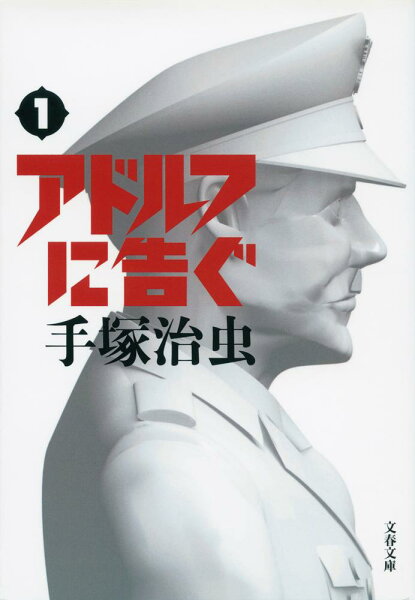
Historical / Drama
Message to Adolf
Yu's review of Message to Adolf (Adolf ni Tsugu) — Osamu Tezuka's historical epic following three men named Adolf through WWII and beyond, a devastating story of how war and ideology deform individual lives.
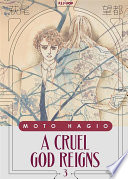
Drama / Romance
A Cruel God Reigns
Yu's review of A Cruel God Reigns by Moto Hagio — Jeremy's stepfather abuses him; Jeremy kills him; the next 16 volumes show what happens to a person after that. One of manga's most honest portraits of trauma and the possibility of recovery.
Action / Drama
Beck: Mongolian Chop Squad
Yu's review of Beck: Mongolian Chop Squad — Yukio 'Koyuki' Tanaka is a fourteen-year-old with nothing going for him until he rescues a strange dog and meets Ryusuke, a guitarist back from America with a bullet-scarred Les Paul named Lucille.
Drama / Slice of Life
Bakuman
Yu's review of Bakuman — ninth-graders Moritaka Mashiro and Akito Takagi form a manga duo and fight their way through Weekly Shonen Jump's serialization machine, driven by a promise: Mashiro will marry his crush Miho Azuki when she voices the heroine in their anime. From the Death Note team, the most honest manga ever made about making manga.
Drama
Ayako
Yu's review of Ayako — a few years after the war, the Tenge landlord family locks their youngest daughter Ayako in a storehouse to silence what she saw; she grows up underground for over twenty years; when she finally comes out, the country has moved on but the family's rot hasn't. Osamu Tezuka's darkest postwar thriller about the secrets Japan buried instead of facing.
Drama
Akane-banashi
Akane Sakurasaki's father was a promising rakugo (traditional storytelling) student. The day before his shinuchi (master) promotion, he was expelled from his school in a humiliation that broke him as a performer. Akane was a child watching it happen. Now in high school, she has secretly trained in rakugo herself — taking the stage name Akane Arakawa — and is climbing the same school's ranks to prove what her father could have been. Yuki Suenaga and Takamasa Moue's ongoing Weekly Shonen Jump manga began 2022 and has 21 volumes as of 2026. Anime adaptation began April 2026.
Written by
Yu
Manga Enthusiast from Japan
I grew up in Japan and manga literally saved me during a tough time in elementary school. My English isn't perfect, but my love for manga is real — and I want to share it with you.