Ayako Review: Tezuka's Buried Girl and the Secret Postwar Japan Couldn't Dig Up
by Osamu Tezuka
Read the first volume. If it doesn't hook you, put it down. It'll hook you.
Buy Ayako on Amazon →*Affiliate link — I earn a small commission at no extra cost to you.
I grew up reading Tezuka the safe way — Astro Boy reruns, the round eyes, the big hearts. That was the Tezuka I knew as a kid hiding in manga from the world. So the first time I opened Ayako, I kept waiting for the warmth to show up. It never did. There's a panel near the start where a little girl in a storehouse asks, in that same soft Tezuka face I'd loved my whole life, why she isn't allowed to go outside. And the answer is: because the adults need her gone. That was the moment Ayako stopped being a manga to me and became something heavier. The same hand that drew Kimba drew a child being buried alive by her own family, and somehow that made it worse.
I read all 700 pages of the Vertical omnibus in one sitting. I didn't enjoy it the way I enjoy most manga. I couldn't put it down anyway.
Quick Take
- Tezuka's most direct attack on postwar Japan — the Tenge family's buried secret is the country's buried secret
- Ayako spends over twenty years locked in a storehouse; her emergence is one of the bleakest second acts in all of manga
- M-rated for incest, imprisonment, murder, and sexual content — this is Tezuka at his most adult, nothing here is softened
Content Warnings & Age Rating
Age Rating: M (Mature)
This manga contains incest, the imprisonment of a child, child abuse, and sexual content, all central to the plot — not background detail. It also includes political murder, postwar trauma, and the systematic silencing of a victim by her own family. This is not the gentle Tezuka of Astro Boy. Please go in knowing that.
Story Overview
Japan, a few years after total defeat. The Tenge family are old landlords in rural Japan, the kind of clan whose power depended on a social order that the American occupation is busy dismantling. Their second son, Jiro, comes home from the war — but he's come back as an agent working for the occupation's intelligence apparatus, and his hands are dirty. When Jiro carries out a politically motivated killing, there's a witness: his youngest half-sister, Ayako, a small child.
Ayako is also the family's other open secret. She's the illegitimate daughter of the patriarch, Sakuemon, born out of the tangle of incestuous relationships rotting the household from the inside.
So the family makes a decision. To protect the Tenge name — to keep both the murder and the bloodline secret — the eldest son Ichiro has Ayako confined to a storehouse on the property. She is, in effect, erased. Officially she "dies." In reality she lives underground for the better part of a quarter-century, raised in the dark, fed in secret, growing into a young woman who has never seen the world she was hidden from.
That's the premise. The genius and the cruelty of Ayako is that Tezuka doesn't stop there. The story spans almost twenty-five years. Japan transforms around the storehouse — the economic miracle, the new corruption that replaces the old. And when Ayako finally comes out, the gap between her and the world isn't just years. It's everything. The second half is the chain reaction her release sets off, ending in a single catastrophe that swallows the Tenge clan whole.
Characters
Ayako — Locked away as a child to silence what she saw, she grows up emotionally arrested, shaped entirely by the storehouse. When she emerges she's beautiful and grown but unmoored — desperate for affection, terrified of the world, drifting between men because she was never taught anything else. Tezuka uses her stunted, almost simple personality deliberately: she's both a fully drawn victim and the symbol of everything the Tenge family — and Japan — chose to bury rather than face.
Jiro — The second son, a war veteran turned occupation-era intelligence agent. His secret killing is the original sin that starts everything; it's his crime that Ayako is imprisoned to cover. He spends the story being hunted by investigators who won't let the case die, and his return home in the end is what triggers the family's destruction.
Ichiro — The eldest son. He's the one who actually decides to wall Ayako up rather than let a criminal taint the family name. He's not a cartoon villain; he's a man calculating that one buried child is cheaper than a ruined reputation. That cold arithmetic is the moral center of the book.
Shiro — The younger brother who opposes Ayako's confinement and grows suspicious of Jiro. He's the closest thing to a conscience in the family, yet even his bond with Ayako curdles into something transgressive after she emerges — proof that no one in this house escapes its rot.
Sakuemon — The tyrannical patriarch, Ayako's father, who rules the household through fear and whose appetites created the incestuous tangle at the family's core.
Cultural Context
Ayako ran in Big Comic from 1972 to 1973, during Tezuka's darker gekiga-influenced adult period. It's openly modeled on the anxieties of the occupation era, and the central assassination plot echoes real unsolved cases of the time, most famously the 1949 Shimoyama incident — the mysterious death of a Japanese National Railways president that was never resolved.
What makes the book land is the parallel Tezuka builds: the Tenge family buries Ayako to protect itself, and postwar Japan, in his reading, buried its own wartime guilt and occupation-era compromises the same way — out of sight, never reckoned with, rotting underground. The storehouse is the country's basement.
What I Love About It
What I keep coming back to is everything Ayako doesn't know. Tezuka is meticulous about this. While she's underground, the world above her goes through the entire postwar economic miracle — new money, new corruption, a whole new Japan — and she experiences none of it. So when she comes out, the distance Tezuka makes you feel isn't measured in years. It's measured in how alien she is to a world that simply moved on without her, the way Japan moved on without ever digging up what it had buried.
That's the move that turns this from a family thriller into something that won't leave me alone. A lesser story would have made the imprisonment the climax — the horror of the cellar, the tragedy of a stolen childhood, end scene. Tezuka makes the imprisonment the setup. The real horror is the emergence: a person built entirely by the dark, set loose into the light, with no idea how to be a human among humans. He drew a victim who can't even be rescued, because the world she was supposed to return to no longer has a place for her. That's not melodrama. That's an argument about a whole country, smuggled inside one buried girl.
Memorable Scene ⚠️ Spoiler Warning
The ending is what nails the book shut in your memory. After more than two decades of the family closing ranks to protect Jiro and the Tenge name, the investigators finally tighten the net, and Jiro flees back home. The offending members of the family — the ones who built and maintained Ayako's prison — end up trapped together in a cave-in, the earth itself swallowing the people who used the earth to hide a child.
They die. Almost all of them. And the one person who walks out alive is Ayako.
The cruelty of it is the timing. The clan that erased her is finally gone, the secret is finally undug, and she's free — and Tezuka ends it right there, with Ayako alone, just as the story finally gets close to her as a person. No restoration. No healing arc. Just the buried girl, the last one standing, walking out into a Japan that never came looking for her. I closed the book and sat with that final image for a long time. It's one of the most unsentimental endings Tezuka ever drew, from the man who built his reputation on heart.
Art Style
This is Tezuka working across almost twenty-five years of story, aging his cast convincingly while keeping them recognizable — a genuinely hard technical feat. The storehouse sequences are drawn with a specific, pressing claustrophobia, while the full-page landscapes of hills, fields, and the changing postwar cityscape give the book a documentary weight. He even folds in photographic recreations of the era to ground the historical setting. It's the rounded, familiar Tezuka line pointed at the bleakest possible material, and the contrast is part of what makes it cut.
Pros & Cons
Pros
- Tezuka's most sustained, direct critique of postwar Japan, embedded in a gripping family thriller
- Ayako works as both a fully realized victim and a national symbol without collapsing into either
- One of his bleakest, most discussed endings — no easy catharsis
- Complete in a single 700-page omnibus; Eisner-nominated English edition
Cons
- M-rated and genuinely heavy: incest, child imprisonment, and sexual content are central, not incidental
- Rewards some background knowledge of the occupation era and the Shimoyama-style unsolved cases
- The relentless tragic twists and Ayako's deliberately flat affect won't land for everyone — that's either the point or a flaw, depending on what you came for
Is Ayako Worth Reading?
Yes — if you want to see Tezuka with the warmth stripped out and the historical anger turned all the way up. It's a thriller about a girl buried to protect a family secret, and an argument about a country that buried its own. Just know going in that it's adult, unsparing, and ends without comfort.
Similar Manga
| Title | Its Approach | How Ayako Differs |
|---|---|---|
| MW | Tezuka's other major adult political thriller, built around a remorseless killer | Ayako turns its political rot inward, into a single family and a buried child rather than a globe-trotting plot |
| Ode to Kirihito | Tezuka's medical horror about identity and dehumanization | Ayako trades the body-horror for social horror — the slow erasure of a person by the people who should protect her |
| Showa: A History of Japan | Mizuki's sweeping documentary history of the same postwar decades | Ayako compresses that whole era into one allegorical household instead of telling it as history |
Where to Buy
Read the first volume. If it doesn't hook you, put it down. It'll hook you.
This post contains affiliate links. If you purchase through these links, I may earn a small commission at no extra cost to you. As an Amazon Associate, I earn from qualifying purchases.
*Affiliate link — I earn a small commission at no extra cost to you.
More Manga You Might Like
Drama
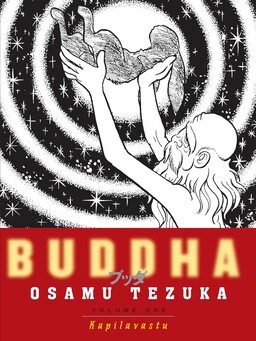
Buddha
Yu's review of Buddha — Osamu Tezuka's sweeping, fictionalized retelling of the life of Siddhartha Gautama, told through a huge cast of invented characters whose suffering makes the Buddha's questions feel like questions you actually have.
Drama / Historical
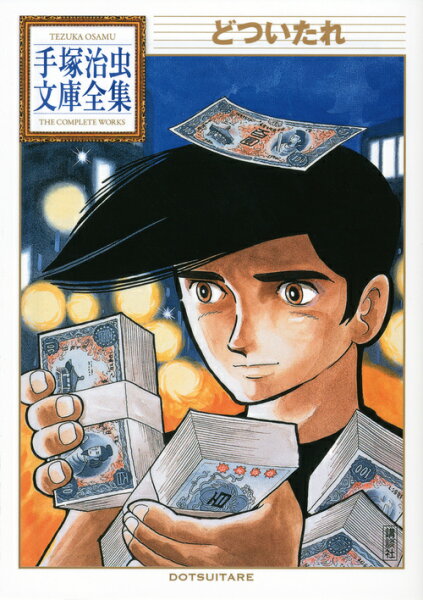
Dotsuitare
Dotsuitare is Osamu Tezuka's semi-autobiographical drama about young men scraping a life out of the burnt-out ruins of postwar Osaka — an unfinished, rarely discussed work where Tetsu, a war orphan turned shoeshine-boy boss, nurses a private rage against General MacArthur.
Historical / Drama
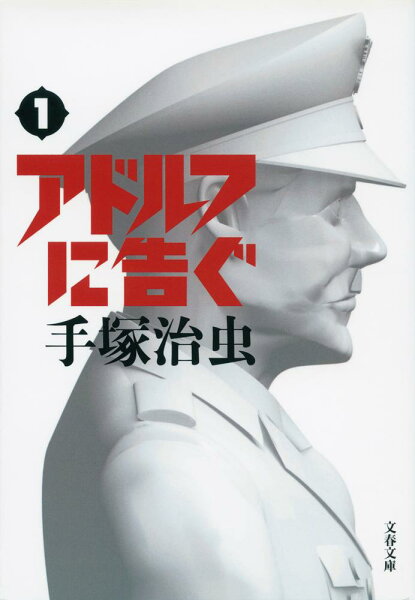
Message to Adolf
Yu's review of Message to Adolf (Adolf ni Tsugu) — Osamu Tezuka's historical epic following three men named Adolf through WWII and beyond, a devastating story of how war and ideology deform individual lives.
Horror
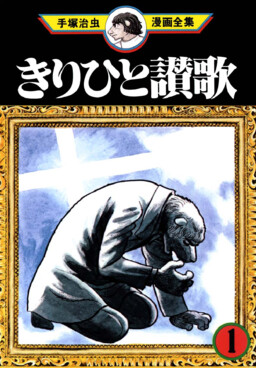
Ode to Kirihito
Yu's review of Ode to Kirihito — Dr. Osanai Kirihito investigates Monmow disease, a mysterious illness that transforms its victims into dog-like creatures; the medical establishment suppresses his findings; Osamu Tezuka's 1970 medical horror manga about a doctor reduced to subhuman status while searching for a scientific truth powerful people want hidden.
Drama / Slice of Life
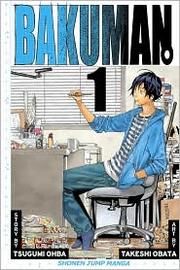
Bakuman
Yu's review of Bakuman — ninth-graders Moritaka Mashiro and Akito Takagi form a manga duo and fight their way through Weekly Shonen Jump's serialization machine, driven by a promise: Mashiro will marry his crush Miho Azuki when she voices the heroine in their anime. From the Death Note team, the most honest manga ever made about making manga.
Drama / Historical
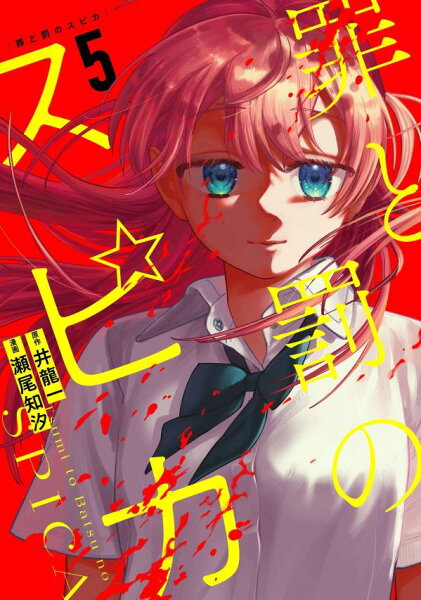
Crime and Punishment
Tezuka condensed Dostoevsky's novel into one short 1953 volume — and gave it an ending the original never had.
Written by
Yu
Manga Enthusiast from Japan
I grew up in Japan and manga literally saved me during a tough time in elementary school. My English isn't perfect, but my love for manga is real — and I want to share it with you.
Disclosure: This post contains affiliate links. As an Amazon Associate, I earn from qualifying purchases at no extra cost to you.