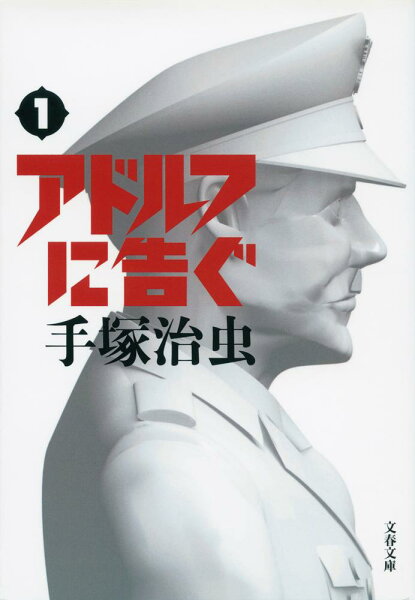
Message to Adolf Review: Tezuka's Masterpiece About Three Men Named Adolf and the War That Bound Them
by Osamu Tezuka
Read the first volume. If it doesn't hook you, put it down. It'll hook you.
Buy Message to Adolf on Amazon →*Affiliate link — I earn a small commission at no extra cost to you.
People who only know Tezuka from Astro Boy have no idea what he was capable of when he turned to adult work. Message to Adolf is the proof. It's a sprawling WWII thriller-tragedy about how ideology grinds ordinary people into instruments, and it is one of the most serious, devastating things ever put in a manga. I finished it shaken.
This is Tezuka with the gloves off, and it's extraordinary.
Quick Take
- Tezuka's mature historical masterpiece, spanning WWII and reaching into the Israeli-Palestinian conflict
- Three men named Adolf whose fates intertwine across decades, threaded through a real spy-thriller plot
- Rated M (Mature); originally serialized in Shūkan Bunshun, published in English by Vertical as two hardcover volumes
Who Is This Manga For?
- Readers who want serious, adult historical fiction
- Fans of Tezuka's mature work (MW, Ode to Kirihito)
- Anyone interested in WWII told from a Japanese vantage point
- Readers who can handle bleak, morally complex storytelling
Content Warnings & Age Rating
Age Rating: M (Mature) Content Warnings: War violence and atrocity; Holocaust themes; character death; political persecution and torture; some sexual content
The M rating is earned. This is grim, adult, historically heavy material.
Story Overview
The story opens at the 1936 Berlin Olympics, where Japanese journalist Sohei Toge learns that his student brother has been murdered in Germany. The brother had uncovered secret documents that allegedly prove Adolf Hitler has Jewish ancestry — explosive evidence that powerful people will kill to suppress. Toge's hunt for the truth becomes the thriller engine that runs through the entire saga.
Around that spine, Tezuka braids the lives of three Adolfs. Adolf Kaufmann is a half-Japanese, half-German boy living in Kobe; Adolf Kamil is a Jewish boy whose family settled in Japan; the two are close childhood friends. The third is Adolf Hitler himself, the distant force whose ideology will reach across the world to destroy that friendship. As the war unfolds, Kaufmann is sent to Germany, indoctrinated into the Nazi machine, and slowly transformed into someone capable of monstrous things, while Kamil's life is shaped by persecution and, later, the founding of Israel. The secret documents resurface again and again, pulling all the threads together. The story spans decades, refusing to end with the war, and follows its survivors into later violence — insisting that the cycle does not simply stop.
Characters
Adolf Kaufmann — The half-Japanese, half-German boy whose corruption is the tragic heart of the book. Tezuka shows, step by agonizing step, how an ordinary, even sweet child is reshaped by ideology into a Nazi capable of atrocity. His transformation is the most devastating thing in the manga precisely because it's gradual and comprehensible.
Adolf Kamil — The Jewish boy raised in Japan, Kaufmann's childhood friend, whose life is bent by the persecution of his people and later by the violent birth of Israel. The destruction of his friendship with Kaufmann is the human tragedy the whole epic turns on.
Sohei Toge — The Japanese journalist whose investigation into his brother's murder and the Hitler documents provides the thriller throughline. His dogged pursuit of the truth, at enormous personal cost, anchors the sprawling narrative.
What I Love About It
Tezuka refuses sentimentality. The friendship between the two boy Adolfs is genuine and warm — which is exactly what makes its destruction by history so unbearable. The manga's real subject isn't the spy plot (gripping as it is); it's how ordinary people are deformed by the times they're born into, how an ideology can take a kind child and, without a single implausible step, turn him into a perpetrator. And then Tezuka refuses the comfort of an ending: by carrying the story past 1945 into later cycles of violence, he insists that "the war ended" is a lie we tell ourselves. That bleak honesty is the mark of a master working at full power.
Memorable Scene ⚠️ Spoiler Warning
The ending, which follows the surviving Adolf into the Israeli-Palestinian conflict decades after the war. Tezuka deliberately denies any catharsis: having spent a thousand pages on how WWII destroyed these men, he closes by showing the violence simply continuing in a new form, with a former victim now caught in a new cycle. It's a gut-punch of an ending that reframes the entire epic — not as a story about one war, but about the permanence of the machinery that consumes people. Few manga endings are this uncompromising, and fewer earn it.
Pros & Cons
Pros
- Serious, mature historical storytelling from manga's greatest creator
- A complex, unflinching moral vision
- A genuine page-turner thanks to the spy-thriller spine
- The Vertical hardcover edition is a handsome, definitive presentation
Cons
- Heavy, often bleak — not a comfortable read
- Significant violence and difficult historical themes
- Some period-typical melodrama and caricature in places
Is Message to Adolf Worth Reading?
Absolutely — it's one of the towering achievements of adult manga and essential for understanding Tezuka's full range. Approach it knowing it's grim, serious, and uncompromising, and it will reward you completely.
Where to Buy
Read the first volume. If it doesn't hook you, put it down. It'll hook you.
This post contains affiliate links. If you purchase through these links, I may earn a small commission at no extra cost to you. As an Amazon Associate, I earn from qualifying purchases.
*Affiliate link — I earn a small commission at no extra cost to you.
More Manga You Might Like
Drama
Ayako
Yu's review of Ayako — a few years after the war, the Tenge landlord family locks their youngest daughter Ayako in a storehouse to silence what she saw; she grows up underground for over twenty years; when she finally comes out, the country has moved on but the family's rot hasn't. Osamu Tezuka's darkest postwar thriller about the secrets Japan buried instead of facing.
Drama / Historical
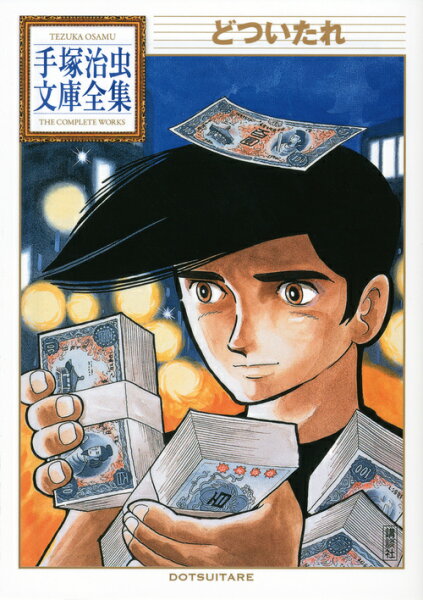
Dotsuitare
Dotsuitare is Osamu Tezuka's semi-autobiographical drama about young men scraping a life out of the burnt-out ruins of postwar Osaka — an unfinished, rarely discussed work where Tetsu, a war orphan turned shoeshine-boy boss, nurses a private rage against General MacArthur.
Drama / Historical
Crime and Punishment
Tezuka condensed Dostoevsky's novel into one short 1953 volume — and gave it an ending the original never had.

Drama / Medical
Say Hello to Black Jack
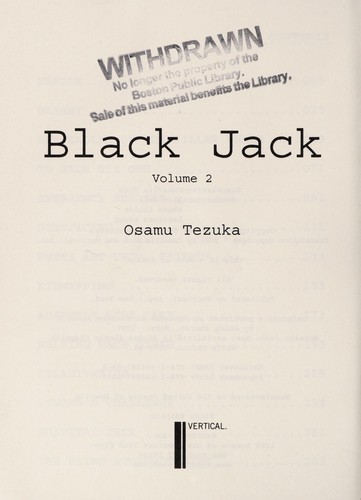
Eijiro Saito is a young medical resident who has just started at a Tokyo university hospital. He wants to help people. Across 13 volumes, Shuho Sato shows him what Japanese hospital medicine actually is — cancer wards, neonatal ICU, psychiatric care, organ transplantation, oncology — and what the system does to patients and doctors. The author released the work copyright-free in 2012. Cultural impact in Japan was significant; English licensing remains pending.
Drama
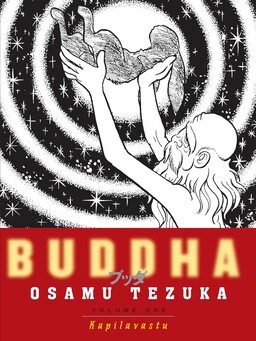
Buddha
Yu's review of Buddha — Osamu Tezuka's sweeping, fictionalized retelling of the life of Siddhartha Gautama, told through a huge cast of invented characters whose suffering makes the Buddha's questions feel like questions you actually have.
Historical / Drama
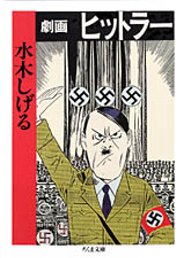
Hitler
Shigeru Mizuki, the man who drew friendly yokai in GeGeGe no Kitaro, also drew the life of Adolf Hitler — a sober, anti-war biography in a single volume.
Written by
Yu
Manga Enthusiast from Japan
I grew up in Japan and manga literally saved me during a tough time in elementary school. My English isn't perfect, but my love for manga is real — and I want to share it with you.
Disclosure: This post contains affiliate links. As an Amazon Associate, I earn from qualifying purchases at no extra cost to you.