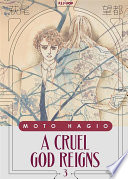
A Cruel God Reigns Review: The Manga That Shows What Surviving Actually Looks Like
by Moto Hagio
Read the first volume. If it doesn't hook you, put it down. It'll hook you.
Buy A Cruel God Reigns on Amazon →*Affiliate link — I earn a small commission at no extra cost to you.
This is not a manga you read for entertainment. You read it because some things need to be witnessed.
I came to Moto Hagio late — I had read her shorter work first, and I knew she was considered one of the founders of literary shoujo. But nothing prepared me for the scale of what she built across nine years in Petit Flower. Jeremy's story is not a story about surviving. It is a story about what the word "surviving" actually contains — the failure and relapse and the moments where someone reaches for you and you cannot take the hand.
Quick Take
- Moto Hagio's masterwork: an unflinching, precise account of childhood sexual abuse and its long aftermath
- Jeremy's arc from abuse to breakdown to the possibility of healing is one of manga's most fully realized character studies
- Age Rating: M (Mature) — 17 volumes, complete; no English translation exists
Who Is This Manga For?
- Adult readers prepared for heavy content handled with intelligence and genuine care
- Anyone interested in the history of shoujo manga and the Year 24 Group
- Readers who want literary fiction with the emotional range of a serious novel
- People who want to understand what recovery from childhood trauma actually looks like — not as triumph, but as process
Content Warnings & Age Rating
Age Rating: M (Mature) Content Warnings: Child sexual abuse, physical abuse, self-harm, drug use, suicide attempts, prostitution, PTSD, explicit trauma depictions involving a minor
This manga does not soften what happened to Jeremy. Read with full awareness of what you are engaging with.
Story Overview
Jeremy Butler is fifteen when his mother Sandra remarries. The man she marries is Gregory Roland — wealthy, polished, entirely convincing as a loving stepfather. Over the months that follow, Gregory sexually abuses Jeremy repeatedly.
Jeremy kills him. He sabotages the brakes on Gregory's car. He does not know that his mother will also be in the car. Both die. Jeremy escapes to Boston, where he spends months in heroin dependency and prostitution, unable to tell anyone what Gregory did to him or what he did to Gregory.
Ian Roland — Gregory's biological son, Jeremy's new stepbrother — knows something is catastrophically wrong with Jeremy. He does not know what. He decides, for reasons he cannot fully articulate, to stay.
What Hagio spends the next sixteen volumes doing is showing that sequence of events across time: the guilt eating through Jeremy, the self-destruction, the small and nonlinear process of someone learning to exist again in a world that continued after the worst thing. Ian uncovers the truth of what Gregory was. He has to rebuild his understanding of everything — his father, his grief, his anger. The ending of the series leaves both characters in a psychologically honest place: not healed in any clean sense, but alive and still in motion toward something.
The series won the Award for Excellence at the first Tezuka Osamu Cultural Prize in 1997.
Characters
Jeremy Butler — One of the most fully realized trauma survivors in any medium. Hagio gives him the complete complexity of a person who has been violated: the self-blame, the dissociation, the rage with nowhere to go, the brief moments of something like hope before it collapses. She does not flatten him into a symbol or a lesson.
Ian Roland — Jeremy's counterpart and the series' other center. He begins cold and suspicious, believing correctly that Jeremy caused his father's death — without knowing why. His journey toward understanding what his father actually was is as difficult as Jeremy's own recovery. His fear that he might repeat his father's patterns is one of the series' most honest character threads.
Gregory Roland — Present almost entirely in memory and in the damage he left in Jeremy's body. Hagio's construction of his presence through the past tense is a masterclass: a monster rendered without cartoonishness, through implication and the specific quality of Jeremy's face in certain panels.
Sandra — Emotionally fragile and unable to receive Jeremy's truth when it mattered most. Her presence in the early volumes is a study in how well-meaning parents can fail at the exact moment their child needs them.
Art Style
Hagio's art is classical shoujo — expressive eyes, delicate linework, extreme emotional specificity. What makes it work here is her restraint. The abuse is never depicted graphically. Hagio uses implication, negative space, and Jeremy's face to communicate what happened without illustration. The result is more disturbing than explicitness would be.
Her ability to render dissociation — the way Jeremy goes somewhere else when something triggers him — is technically extraordinary. You understand his mental state through the visual grammar before you have words for it.
Cultural Context
Hagio is one of the central figures of the "Year 24 Group" (Hana no Nijuyon-nen Gumi) — the cohort of female manga artists who in the early 1970s transformed shoujo manga into a vehicle for serious literary and psychological exploration. A Cruel God Reigns is a late-career work, running from 1992 to 2001, and it represents what decades of that tradition had built toward.
The story is set in England and America. Hagio often used Western settings for her most serious work — partly for aesthetic distance, partly because certain subjects were easier to approach outside Japanese domestic cultural codes.
What I Love About It
The integrity. Hagio refuses to make Jeremy's story comfortable or to give recovery a destination that arrives cleanly at volume 17. She shows failure and relapse. She shows the moments where Ian reaches out and Jeremy cannot take the hand being offered. She shows how trauma lives in the body even when the mind is trying to move.
And then she shows — without sentimentality — the small moments where something shifts. Not healing as a resolved state. Healing as evidence that something in Jeremy still insists on existing.
That insistence is what the manga is about.
Memorable Scene ⚠️ Spoiler Warning
The scene where Ian finally learns the full truth of what Gregory did to Jeremy is the emotional crisis of the series. His face changes in a way that Hagio gives several pages — the immediate reaction, then the slower one, as he has to reconstruct his entire understanding of his father, his grief, and his rage. She does not rush him. The silence on the page is enormous.
Pros & Cons
Pros
- One of manga's most fully realized explorations of trauma and recovery
- Hagio's restraint and precision are extraordinary throughout
- Ian and Jeremy's relationship is earned across 17 volumes
- Won the Award for Excellence at the first Tezuka Osamu Cultural Prize (1997)
Cons
- Extremely heavy content — requires preparation and genuine readiness
- No English translation available
- The pace is deliberate to the point of being exhausting at times
- Recovery is not triumphant — if you need catharsis, this may frustrate you
- The density asks more emotionally than most readers are prepared for
Is A Cruel God Reigns Worth Reading?
For the right reader, yes — this is serious literary manga at the level of the best prose fiction about trauma. It is not comfortable and does not try to be. If you can engage with it on its terms, it is genuinely important work. The absence of an English translation is a real barrier; the Japanese is readable for intermediate learners, and the complete edition (kanzenban, 10 volumes) is more widely available.
Where to Buy
No English release yet. That just means you find it before everyone else does.
This post contains affiliate links. If you purchase through these links, I may earn a small commission at no extra cost to you.
*Affiliate link — I earn a small commission at no extra cost to you.
More Manga You Might Like
Drama
Ayako
Yu's review of Ayako — a few years after the war, the Tenge landlord family locks their youngest daughter Ayako in a storehouse to silence what she saw; she grows up underground for over twenty years; when she finally comes out, the country has moved on but the family's rot hasn't. Osamu Tezuka's darkest postwar thriller about the secrets Japan buried instead of facing.
Horror / Drama
Confidential Confessions
A review of Confidential Confessions (問題提起作品集) by Reiko Momochi — the Dessert anthology that walked teenage readers straight through suicide, self-harm, prostitution, and rape without softening a single panel.
Romance / Drama
I Love Yoo
A review of I Love Yoo, the WEBTOON original by Quimchee — a drama disguised as a romance about a girl whose mother left, whose father drinks, and whose new friends are the wealthy Hirahara brothers.

Drama / Medical
Say Hello to Black Jack
Eijiro Saito is a young medical resident who has just started at a Tokyo university hospital. He wants to help people. Across 13 volumes, Shuho Sato shows him what Japanese hospital medicine actually is — cancer wards, neonatal ICU, psychiatric care, organ transplantation, oncology — and what the system does to patients and doctors. The author released the work copyright-free in 2012. Cultural impact in Japan was significant; English licensing remains pending.
Historical / Drama
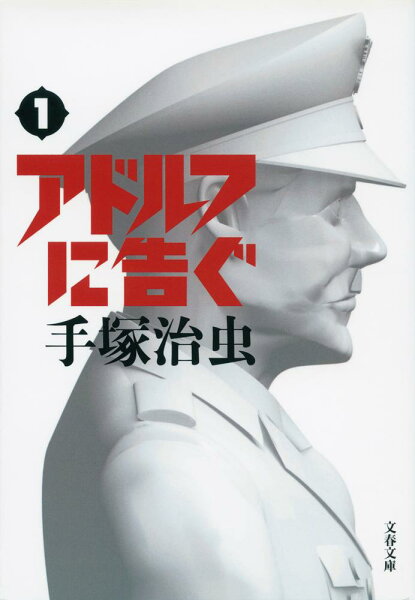
Message to Adolf
Yu's review of Message to Adolf (Adolf ni Tsugu) — Osamu Tezuka's historical epic following three men named Adolf through WWII and beyond, a devastating story of how war and ideology deform individual lives.
Drama
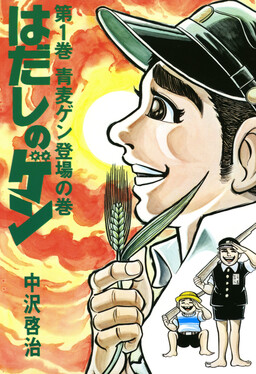
Barefoot Gen
Yu's review of Barefoot Gen (はだしのゲン) — Keiji Nakazawa's semi-autobiographical manga about a six-year-old boy who survives the Hiroshima atomic bombing on August 6, 1945, watches his father and two siblings burn under their collapsed house, and tries to keep what's left of his family alive. Drawn by a man who was actually there.
Written by
Yu
Manga Enthusiast from Japan
I grew up in Japan and manga literally saved me during a tough time in elementary school. My English isn't perfect, but my love for manga is real — and I want to share it with you.