
Beck Review: The Quietest Kid in Class Opens His Mouth and a Whole Band Stops
by Harold Sakuishi
Read the first volume. If it doesn't hook you, put it down. It'll hook you.
Buy Beck: Mongolian Chop Squad on Amazon →*Affiliate link — I earn a small commission at no extra cost to you.
When I was a kid, the thing I wanted most was to be someone other people noticed for a good reason. I was the quiet one in class, the one who disappeared into the back row. Manga was where I went to feel like I could matter. So the first time I read Beck, and I got to the panel where the most ordinary boy in the room opens his mouth to sing and the whole place goes silent, I felt something physical happen in my chest. That kid was me. That kid is a lot of us.
Beck, by Harold Sakuishi, is about a fourteen-year-old named Yukio Tanaka — everyone calls him Koyuki — who has no talent, no direction, and no reason to think he is special. Then he meets a guitar, a dog, and a guy named Ryusuke who just got back from America. I have reread this series more times than almost any other manga I own, and it still makes me want to go pick up an instrument I do not know how to play.
Quick Take
- A coming-of-age rock manga that earns every emotional beat by drawing the boring practice as carefully as the triumphant gigs
- Koyuki's growth from invisible kid to real vocalist is slow, specific, and completely believable — Sakuishi shows you the work
- Rated T (Teen): mild language, teen relationship drama, and some music-industry ugliness, but nothing graphic
Story Overview
Koyuki is fourteen and forgettable. His life changes the day he rescues a beat-up patchwork dog from some bullies. The dog is named Beck, and its owner is Ryusuke Minami, a sixteen-year-old guitar prodigy who recently came back from living in New York. Ryusuke plays a bullet-hole-ridden Gibson Les Paul he calls Lucille, and he carries the music Koyuki has never heard before.
Inspired, Koyuki starts teaching himself guitar. Ryusuke forms a band — first called Beck — with vocalist Chiba, bassist Taira, and a drummer. Koyuki comes in as a support player alongside his friend Saku, and only becomes a full member once the others actually hear him sing. That voice turns out to be the thing that was hiding in him the whole time.
From there the series follows the band's long, bumpy climb: an indie album released in America under the name Mongolian Chop Squad, a star-making set at the Grateful Sound festival, a forced breakup, a reunion built on a rough U.S. tour, and finally the band headlining the main stage at Grateful Sound 9 after a major-label debut. It is the rare music manga that takes the whole journey seriously — the dead-end gigs as much as the triumphs.
Characters
Koyuki (Yukio Tanaka) — The heart of the series. He starts with nothing he can point to as his own, and over thirty-four volumes he becomes a real singer and guitarist. What makes him work is that Sakuishi never skips the unglamorous middle: the blisters, the embarrassment, the practicing alone. His arc with Maho, Ryusuke's sister and his love interest, runs alongside the music the whole way.
Ryusuke Minami — The spark. A magnetic, difficult guitar genius shaped by his years in New York. His scarred guitar Lucille — seven bullet holes in it — carries a dark history that becomes part of the plot. Ryusuke is the one who pulls Koyuki into music and the one whose temperament keeps threatening the band he built.
Maho Minami — Ryusuke's sister, who grew up alongside the music world. She becomes Koyuki's love interest, and their relationship deepens around the band's performances rather than apart from them. She is also Koyuki's duet partner on "Moon on the Water."
The band — Chiba on vocals, Taira on bass, and Saku, Koyuki's friend, on drums. Each of them has a separate life and a separate reason for being in the room, so when they sound good together it feels assembled out of real people instead of plot convenience.
What I Love About It
There is a moment fairly early on, during a Dying Breed concert — Dying Breed being a famous American band Koyuki idolizes — where the frontman Eddie Lee pulls Koyuki up on stage in front of everyone and asks him to sing. Eddie asks what he wants to sing, and Koyuki picks his favorite, "Swimming Bare." For a second Koyuki is frozen with nerves. Then he finds the music and sings the song hard, and the crowd turns and roars, and the rest of his own bandmates are stunned all over again because they keep forgetting what is inside this quiet kid.
I love this scene because of what comes before it. Sakuishi spends pages and pages showing Koyuki as a nobody — flinching, apologizing, shrinking. So when the nerves break and the voice comes out, it does not read as a manga power-up. It reads as a real person discovering that the thing he was most afraid of is the thing he was built for. That is exactly the fantasy I needed as a kid, and the reason I clutched manga like a life raft: the idea that the unremarkable kid in the back has something nobody has noticed yet, including himself. Beck does not hand Koyuki that gift. It makes him walk all the way to it, and then it lets him sing.
Memorable Scene ⚠️ Spoiler Warning
The other moment that lives in my head is "Moon on the Water" — the quiet acoustic song Koyuki performs as a duet with Maho. After all the loud festival stages and band drama, it is a small, intimate piece, just two voices and a guitar, and it carries the entire weight of Koyuki and Maho's relationship at that point in the story. Sakuishi draws music silently, through faces and posture and the way a room leans in, and "Moon on the Water" is where that technique pays off most personally. You cannot hear it, but you feel exactly how much it means to both of them. It is the song from this series that fans remember, and it is why.
Pros & Cons
Pros
- Koyuki's growth is one of the most patient, believable character arcs in manga
- Sakuishi makes you feel music on a silent page through reaction and framing
- A complete story — the full rise of the band is on the table
- You do not need to know rock history to be pulled in
Cons
- Early volumes move deliberately slowly before the band clicks
- The romance and side drama sometimes pull focus from the music
- The art is rough and unpolished compared to glossier series — that realism is either the charm or a turnoff, and it won't work for everyone
Is Beck Worth Reading?
Yes — especially if you have ever felt like the invisible kid hoping there was something inside you worth hearing. Beck is a slow burn that rewards patience with one of the most earned coming-of-age arcs in manga, built on careful art that turns silence into sound. The pacing and rough style ask something of you, but what you get back is a band you genuinely root for.
Where to Buy
Beck's English history is messy. Tokyopop released the first 12 volumes (2005–2008), then the license lapsed and the full 34-volume run was never finished in English. The Japanese edition is the only way to read all of it.
This post contains affiliate links. If you purchase through these links, I may earn a small commission at no extra cost to you. As an Amazon Associate, I earn from qualifying purchases.
*Affiliate link — I earn a small commission at no extra cost to you.
More Manga You Might Like
Drama / Slice of Life
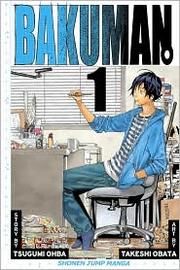
Bakuman
Yu's review of Bakuman — ninth-graders Moritaka Mashiro and Akito Takagi form a manga duo and fight their way through Weekly Shonen Jump's serialization machine, driven by a promise: Mashiro will marry his crush Miho Azuki when she voices the heroine in their anime. From the Death Note team, the most honest manga ever made about making manga.
Drama
Ayako
Yu's review of Ayako — a few years after the war, the Tenge landlord family locks their youngest daughter Ayako in a storehouse to silence what she saw; she grows up underground for over twenty years; when she finally comes out, the country has moved on but the family's rot hasn't. Osamu Tezuka's darkest postwar thriller about the secrets Japan buried instead of facing.

Drama
Act-Age
Yu's review of Act-Age — Kei Yonagi is a teenager raising her siblings alone, with a dangerous gift: she doesn't play roles, she becomes them, mining her own grief to inhabit characters. Director Sumiji Kuroyama discovers her in an audition and pulls her into professional acting. Tatsuya Matsuki and Shiro Usazaki's acting manga reached 12 volumes in Japan before it was discontinued and scrubbed from every store in 2020 after the writer's arrest — which is why almost no one can legally read it anymore.
Drama / Romance
A Cruel God Reigns
Yu's review of A Cruel God Reigns by Moto Hagio — Jeremy's stepfather abuses him; Jeremy kills him; the next 16 volumes show what happens to a person after that. One of manga's most honest portraits of trauma and the possibility of recovery.

Drama / Medical
Say Hello to Black Jack
Eijiro Saito is a young medical resident who has just started at a Tokyo university hospital. He wants to help people. Across 13 volumes, Shuho Sato shows him what Japanese hospital medicine actually is — cancer wards, neonatal ICU, psychiatric care, organ transplantation, oncology — and what the system does to patients and doctors. The author released the work copyright-free in 2012. Cultural impact in Japan was significant; English licensing remains pending.
Slice of Life / Drama
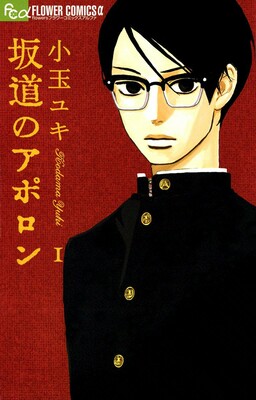
Kids on the Slope
Yu's review of Kids on the Slope (Sakamichi no Apollon) — 1966 Sasebo, Kyushu. Kaoru is a lonely classical pianist; Sentaro is a half-American delinquent who plays jazz drums in the basement of a record shop. Their friendship grows through music, the school festival, and a reunion years later at a church.
Written by
Yu
Manga Enthusiast from Japan
I grew up in Japan and manga literally saved me during a tough time in elementary school. My English isn't perfect, but my love for manga is real — and I want to share it with you.
Disclosure: This post contains affiliate links. As an Amazon Associate, I earn from qualifying purchases at no extra cost to you.