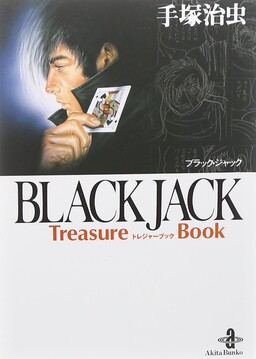
Black Jack Review — The Greatest Surgeon Alive Doesn't Have a License, and He Charges What He Wants
by Osamu Tezuka
Read the first volume. If it doesn't hook you, put it down. It'll hook you.
Buy Black Jack on Amazon →*Affiliate link — I earn a small commission at no extra cost to you.
Black Jack is one of the foundational works in manga history — Osamu Tezuka's most personal long-running project, and the manga most often cited when people argue that Japanese manga can carry the same literary weight as serious fiction in any medium. Tezuka was a trained physician who chose manga as his career. Black Jack is the work where those two halves of his life met.
Two hundred forty-two standalone chapters across ten years, each a complete medical-ethics case. Most other manga of its era did not survive that scale. Black Jack did, and is still being read today.
Quick Take
- Osamu Tezuka's greatest character work — 242 standalone chapters across ten years, each a complete medical ethics case
- Black Jack himself is one of manga's most fully realized antiheroes: capable of extraordinary tenderness and equally extraordinary cruelty in adjacent panels
- Age rating: T (Teen) — realistic surgical content, life-and-death stakes, some horror; the violence is medical rather than action
Why Does Black Jack Charge So Much?
This is one of the most-searched questions about the manga, so let me answer it directly.
Black Jack's fees are not greed. They are:
-
A filter. He charges astronomical sums (often in the tens of millions of yen — billions in some chapters) because he can save people the medical establishment has given up on. By demanding payment only the desperate would offer, he selects for cases that genuinely need him. People with merely difficult conditions go to licensed surgeons. People whose options have run out come to Black Jack.
-
A moral test. The fee is often the chapter's question. A wealthy man wants Black Jack to save his daughter; the fee strips him of his fortune. A criminal wants Black Jack to save his son; the fee strips him of his pride. Tezuka uses the fee to ask what each patient is actually willing to pay for the life they claim to value.
-
A protest. Black Jack operates outside the licensed medical system because he watched that system kill someone — a backstory the manga reveals slowly across the series. His fees are his way of saying that the existing system, which mostly serves those who can afford it anyway, has no moral standing to call him expensive.
-
He doesn't always keep it. This is the most important part of the answer. Many chapters end with Black Jack returning the fee, donating it, or giving it to someone the patient didn't expect. He keeps just enough to maintain his operation and his independence. The astronomical amount is the entry price. What he does with the money is the story.
The man you read about isn't a mercenary. He's a person who has decided that the price of being able to save lives outside the system is being misunderstood by everyone, all the time. The fees are the cost of staying free enough to do the work.
Is Young Black Jack Different from Black Jack?
If you found this article searching for Young Black Jack (ヤング ブラック・ジャック), that's a different manga:
- Young Black Jack (2011–2019, 16 volumes) is a prequel written by Yoshiaki Tabata and illustrated by Yu-go Okuma. It is not by Osamu Tezuka. It depicts Kuroo Hazama as a medical student in the late 1960s and early 1970s, before he became Black Jack
- Original Black Jack (1973–1983, 17 volumes, 242 chapters) is Osamu Tezuka's anthology — the canonical work
- Young Black Jack is licensed in English by Vertical (8 volumes published, license currently on hold)
- The original Black Jack is the work this review covers
Both exist. Both are worth reading. They are very different in tone — Young Black Jack is more conventional shonen pacing; Tezuka's original is anthology drama.
What Is Black Jack About?
The premise sounds simple: a surgeon without a license takes impossible cases for impossible fees. The structure is what makes the manga the medium-defining work it is.
Each chapter is a single case, complete in itself. A girl whose immune system makes anesthesia fatal — Black Jack must operate while she remains conscious. A man who has grown a tumor that developed its own consciousness and now refuses to be removed. A villager whose entire community will die if a specific organ transplant cannot be arranged. A politician who tries to use Black Jack's illegal status to coerce a free operation. A creature stitched together from the biological remnants of multiple people who died in the same accident.
Tezuka was a trained physician. The surgical content is rendered with anatomical knowledge other manga of the era did not have. But the medicine is not the manga's main interest. The medicine is the language in which Tezuka asks his actual questions: what is a life worth? Who decides? What does the official system protect, and what does it kill? Can a person who works outside that system be moral, or just useful?
Two hundred forty-two chapters of these questions, in 10 years, without repeating himself.
The series has one running character besides Black Jack: Pinoko. She is a creature Black Jack assembled from a teratoid cyst — a partially-formed twin that had been growing inside another person for eighteen years. Black Jack reconstructed her, gave her a body, and she has lived with him ever since, considering herself his wife despite her child-sized frame and her unique developmental situation. Pinoko is the manga's emotional anchor. Her absolute devotion to Black Jack and his quietly genuine care for her are the warmest sustained relationship in an otherwise cold examination of human worth.
Who Is This Manga For?
- Anyone who wants to understand manga history — Black Jack is one of the foundational works, and probably Tezuka's best
- Medical professionals and students — the cases hold up to medical scrutiny better than most modern medical fiction
- Readers who like anthology fiction — each chapter is a complete short story; the series can be sampled at any point
- Moral fiction readers — the ethical complexity holds up against anything in serious literature
Content Warnings & Age Rating
Age Rating: T (Teen) — 13+ Content Warnings: Realistic surgical procedures depicted in detail (Tezuka was a physician); life-and-death situations in most chapters; some chapters contain body horror or grotesque medical anomalies (the manga has a horror streak); some chapters address suicide, child death, and terminal illness; the moral complexity is sometimes genuinely disturbing
Younger teen readers (13–14) can handle the visual content with parent awareness. The thematic weight is heavier than the imagery suggests.
Story Overview (Anthology Structure)
Because each chapter is standalone, "story overview" is the wrong frame. What follows is a guide to the major recurring threads:
Origin chapters: Periodically across the run, Tezuka returns to Black Jack's backstory. A childhood accident. A surgeon who saved him. The reason for his face's scars. The specific event that turned him against the licensed medical system. These chapters are scattered through the volumes — the manga reveals its lead's history slowly, on purpose.
Pinoko chapters: Pinoko's introduction (volume 2 in the Vertical edition), her gradual integration into Black Jack's life, the ongoing tension between her conviction that she is his wife and the world's inability to accept that. The Pinoko chapters are the manga's warmest.
Medical-ethics chapters: The bulk of the run. Each one constructs a moral dilemma — usually a case where the right medical answer and the right human answer point in different directions — and lets Black Jack work through it. Some he saves. Some he refuses. Some he saves and then walks away from in a way that lands harder than refusal would have.
Horror chapters: Tezuka occasionally lets the manga veer into outright horror — body horror, supernatural intrusions, medical anomalies that shade into the uncanny. These are some of the manga's strangest and most memorable chapters.
Social chapters: Tezuka, especially in the later volumes, uses Black Jack as a vehicle to comment on specific Japanese social issues — the medical system's treatment of the elderly, environmental disasters, the politics of organ donation, the impact of the Yokkaichi pollution incidents.
Characters
Black Jack (Kuroo Hazama) — The scarred face. The white streak through his hair. The black coat. The perfect surgical technique. The willingness to charge enough to bankrupt countries. The equally documented willingness to operate on people who can't pay him anything. Tezuka constructs him not as a contradiction to be resolved but as a person whose contradictions are the point. He is not the doctor the system wants. He is the doctor patients sometimes need. The series spends 243 chapters explaining why these are not the same thing.
Pinoko — Adult consciousness, child's body. Adoptive wife to Black Jack. Absolutely clear-eyed about what she is. Tezuka draws her with care and writes her without condescension. The Pinoko-Black Jack relationship is one of the most original character pairings in any manga.
Largo / Dr. Kiriko — A recurring antagonist character: a "doctor of death" who specializes in euthanizing the terminally ill at the request of patients and families. Black Jack and Kiriko are opposites — Black Jack will save anyone he chooses to save; Kiriko will end any life that requests an ending. The chapters that bring them into the same room are some of the manga's most important.
Tezuka's recurring cast — The Star System. Tezuka used a stable of character designs across his entire career; Black Jack contains cameos and supporting roles for characters who appear in Astro Boy, Phoenix, Buddha, and other Tezuka works. Long-time Tezuka readers will recognize faces. New readers don't need this context.
Art Style
Tezuka's most controlled work. Earlier Tezuka can feel rushed or exuberant; Black Jack is mature, deliberate, technically excellent. The surgical sequences are drawn with anatomical precision and panel composition that controls information — the reader sees what they need to understand the operation without being lost in detail. Facial expressions are Tezuka's lifelong strength, and Black Jack uses them as the manga's primary emotional vehicle. Pinoko in particular is drawn with affection that radiates off the page.
Some 1970s visual conventions appear (specific period detail in clothing, technology, social setting). They date the manga without weakening it. The visual storytelling has held up across fifty years.
Cultural Context
Osamu Tezuka (1928–1989) is called the "God of Manga" (漫画の神様). He invented or codified the visual conventions modern manga relies on. Astro Boy, Princess Knight, Kimba the White Lion, Phoenix, Buddha — Tezuka. He was also a fully trained, fully licensed physician who completed his medical doctorate at Osaka University.
Black Jack ran in Weekly Shonen Champion from 1973 to 1983. It was written during a period when Tezuka's commercial standing was being challenged by younger manga artists and when his own views on the Japanese medical establishment had been hardening for decades. Black Jack is, among other things, Tezuka working out what he thought about his other profession.
He considered it among his most personal work. Some of the chapters are based on real cases. Some are based on personal experiences he had with the Japanese medical system. The Yokkaichi pollution chapter, the chapter about anesthesia complications, the chapter about cancer ethics — these are not invented hypotheticals. They are Tezuka's documented opinions in narrative form.
What I Love About It
Pinoko.
Among Tezuka's hundreds of characters across his career, Pinoko is one of the strangest and one of the most carefully written. Her introduction (volume 2 of the Vertical edition) is one of the most-discussed cases in the entire run: Black Jack operates on a young woman whose body has been carrying a teratoma — a developmentally arrested twin sister whose tissues and organs have been growing inside her for eighteen years. Black Jack extracts the teratoma and, using a synthetic body, gives it its own existence. The teratoma had its own consciousness during those eighteen years; it remembers. The being Black Jack reconstructs introduces herself as Pinoko and declares she is Black Jack's wife.
What Tezuka does with this premise is the manga's quiet thesis. Pinoko is not a sidekick. She is not comic relief. She is a person whose existence is impossible by ordinary medical and ethical frameworks, and Black Jack — who has spent the series operating outside frameworks anyway — accepts her without trying to fit her into one. He cooks for her. He scolds her. He brings her to cases. He treats her, in every panel, as if her personhood is not in question.
The implicit argument is the manga's ethic in compressed form: a life is not less of a life because the system did not authorize it. Pinoko exists. Black Jack chooses to take that existence seriously. The whole manga is, in some sense, the same choice repeated across 242 cases.
What English-Speaking Fans Say
Western readers who encounter Black Jack through Vertical Inc.'s English edition consistently rate it among the best manga ever made. The anthology format makes it accessible — readers report being able to pick up any volume and find at least three or four chapters that stick. The Tezuka community considers it his finest sustained work alongside Phoenix and Buddha.
Medical readers (doctors, nurses, students) report that the surgical content holds up surprisingly well for a manga of its era. The ethical content is taken seriously in medical humanities programs in some universities.
Memorable Scene ⚠️ Spoiler Warning
The chapters that explain Black Jack's scars and his two-toned face.
When Kuroo Hazama (Black Jack's real name) was a child, he and his mother were caught in an explosion caused by land developers improperly handling buried unexploded ordnance. The injuries were severe; the doctor who saved his life was Honma Joutarou — a surgeon who refused to give up despite the establishment medicine of the time considering the case unsalvageable. Honma's work on Black Jack included a skin graft from his close childhood friend Takashi, whose mother was Black African. The graft is the reason Black Jack's face is visibly two-toned — one side of his skin is from Takashi.
The manga makes a specific moral choice about this skin. Black Jack has the surgical skill to replace it with matching tissue. He has chosen not to. The two-toned face is, in his ethical framework, a permanent acknowledgment of what Takashi's donation made possible. He carries the friendship on his face.
Honma later dies. The chapter depicting his death is Chapter 29, "Sometimes Like Pearls" in the original serialization. Black Jack is with him at the end. The relationship between them — what Honma did for Hazama, what Hazama owes the man who made his medical career possible, and what it means to be unable to save the doctor who saved you — is the foundation of everything Black Jack later becomes as a character.
Tezuka has said that the Honma backstory drew on his own life. As a wartime child, Tezuka developed a severe arm infection that nearly killed him. A doctor saved his arm and his life. That experience — being saved by a physician — was what led Tezuka to become a physician himself. Honma is, in some sense, the doctor who saved Tezuka, written into the manga as the doctor who saved Black Jack.
Similar Manga
| Title | Its Approach | How Black Jack Differs |
|---|---|---|
| Say Hello to Black Jack (ブラックジャックによろしく) | Modern medical drama, deliberately echoing Tezuka | Sato's series engages contemporary Japanese medical system reform; Tezuka's is mythic, anthology, and broader |
| Team Medical Dragon | Medical politics drama | Continuous narrative vs. Black Jack's anthology; less philosophical |
| Doctor-X / Iryu / etc | Procedural medical drama | Less ethical complexity, more medical procedural |
| Phoenix (Hi no Tori) | Tezuka's other major late work | Phoenix is mythic-historical anthology; Black Jack is contemporary medical anthology — companion works |
Reading Order / Where to Start
Any volume. The anthology format means each chapter is complete. The Vertical Inc. edition is organized roughly chronologically with bonus material in later volumes; the chapter order is not the original Shonen Champion order.
If you want the recommended starting points: Volume 1 (foundational chapters, Pinoko's introduction is in volume 2), or Volume 5 (the volume with the largest concentration of fan-favorite chapters), or any volume that catches your eye.
Official English Translation Status
Vertical Inc. published the complete 17-volume English edition (collecting all 242 chapters plus bonus material) between 2008 and 2011. The edition is in print and digital. Young Black Jack (the prequel by other authors) has 8 volumes in English; the license is currently on hold.
Pros & Cons
Pros
- Among the most important works in manga history
- Anthology format means easy entry and easy continuation
- Tezuka at his most controlled and most personal
- Black Jack himself is one of manga's most complete characters
- Pinoko is one of manga's most original supporting characters
Cons
- The anthology format means no continuous plot
- Some 1970s social attitudes appear in specific chapters
- The realistic surgical content can be uncomfortable
- Tezuka's style — visual conventions established in the 1950s–60s — is an acquired taste for readers used to modern manga. It won't land for everyone, especially first-time classic-manga readers.
Is Black Jack Worth Reading?
Yes — unconditionally. If you have any interest in manga as an art form, Black Jack is one of the works you should read in your life. The anthology format makes the time commitment manageable; you can read three chapters or three hundred.
Format Comparison
| Format | Notes |
|---|---|
| Physical (Vertical) | All 17 volumes available in English. Standard trade paperback size |
| Digital | Available via Vertical digital and Kindle |
| Omnibus | Not available as omnibus; Vertical's volumes are already substantial (200+ pages each) |
Where to Buy
Read the first volume. If it doesn't hook you, put it down. It'll hook you.
This post contains affiliate links. If you purchase through these links, I may earn a small commission at no extra cost to you. As an Amazon Associate, I earn from qualifying purchases.
*Affiliate link — I earn a small commission at no extra cost to you.
More Manga You Might Like
Drama / Thriller
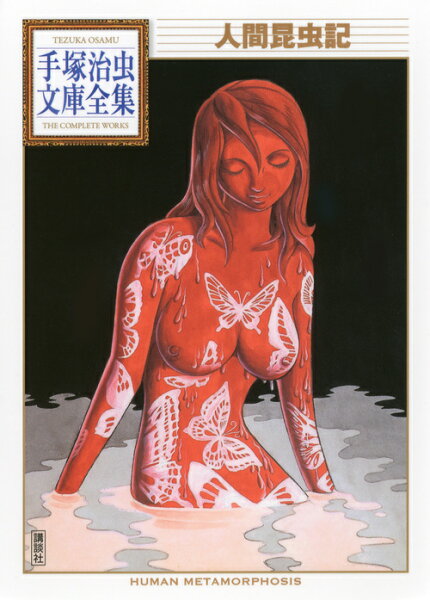
Ningen Konchuki
Ningen Konchuki (The Book of Human Insects) follows Toshiko Tomura, a beautiful and ruthless woman who absorbs the talents of creative people around her — becoming a novelist, then a designer, then an architect — by living with them, learning from them, and discarding them when she's taken everything they have.
Slice of Life / Drama
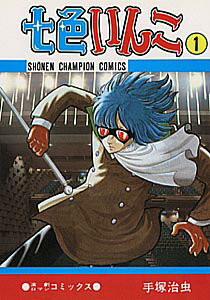
Nanairo Inko
Nanairo Inko (Rainbow Parakeet) follows a master of theatrical impersonation who steals identities to perform stage roles others have abandoned — Osamu Tezuka's late-career meditation on performance, identity, and the moral economy of art.
Medical / Drama
Dr. Koto Clinic
Kensuke Gotoh is a brilliant surgeon from a prestigious Tokyo hospital. He arrives on Koshiki Island — a remote Japanese island with no hospital, no specialists, and a population that has stopped expecting medical care — and becomes its only doctor. Takatoshi Yamada's medical manga has won the Shogakukan Manga Award, sold 12 million copies, and been adapted into multiple dramas and a 2022 film. The manga has been on author-illness-related hiatus since 2010 at 25 volumes.
Slice of Life / Historical Drama
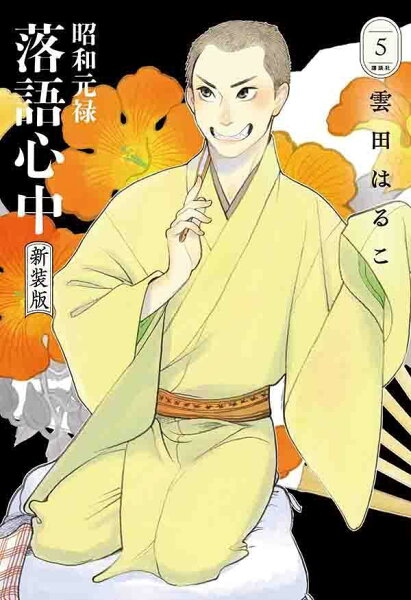
Shouwa Genroku Rakugo Shinjuu
Shouwa Genroku Rakugo Shinjuu follows the world of rakugo — traditional Japanese comic storytelling — through two performers across two generations: the transcendent and self-destructive Yakumo, and the student Yotaro who inherits what Yakumo cannot save.

Slice of Life / Biographical
The Road to Manga
The Road to Manga is the autobiographical manga by Fujiko Fujio — the duo who created Doraemon — documenting their childhood friendship, their manga obsession, and their determined journey from provincial Toyama to becoming professional manga artists in postwar Tokyo.
Slice of Life / Drama
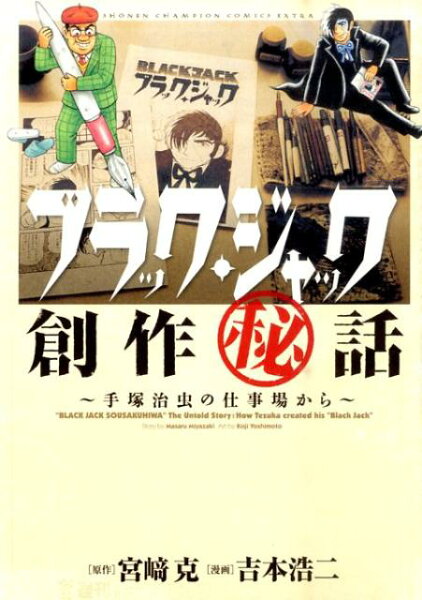
Black Jack Sousaku Hiwa
Black Jack Sousaku Hiwa is a documentary manga about how Osamu Tezuka created Black Jack — told through the editors and assistants who worked beside him, capturing both the genius and the human cost of his impossible work ethic.
Written by
Yu
Manga Enthusiast from Japan
I grew up in Japan and manga literally saved me during a tough time in elementary school. My English isn't perfect, but my love for manga is real — and I want to share it with you.
Disclosure: This post contains affiliate links. As an Amazon Associate, I earn from qualifying purchases at no extra cost to you.