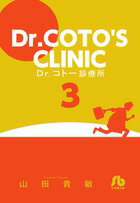
Dr. Koto Clinic Review — A Brilliant Surgeon Becomes the Only Doctor on a Remote Japanese Island
by Takatoshi Yamada
Read the first volume. If it doesn't hook you, put it down. It'll hook you.
Buy Dr. Koto Clinic on Amazon →*Affiliate link — I earn a small commission at no extra cost to you.
My mother grew up on a small island off Kagoshima. When she was a child, the island had one doctor — an elderly man who knew everyone, was on call constantly, and was the only thing standing between any island resident and a helicopter ride to the mainland in an emergency. She told me about him sometimes. He was, in her words, the kind of doctor who knew what was wrong with you before you walked through the door because he had known you since you were born.
Dr. Koto Clinic is a manga about a doctor like that. I read it the year my mother died. The manga gave me a way to think about the kind of medical care I wish she had received in her final months.
Quick Take
- Takatoshi Yamada's 25-volume medical manga (2000–on hiatus since 2010). Currently the most decorated rural-medicine manga in Japan
- Won the 2004 Shogakukan Manga Award; sold over 12 million copies
- Age rating: T (Teen) — medical content is serious but never graphic; emotional weight is the heaviest element
Is Dr. Koto Clinic Finished? (Hiatus Status)
This needs to come first because it is the most important practical fact about the manga.
The series is on indefinite hiatus, not officially completed. Specifically:
- Active serialization: 2000–2010 (Weekly Young Sunday until 2008, then Big Comic Original until 2010)
- Hiatus start: October 2010 — due to author Takatoshi Yamada's serious illness
- Current status (2026): Hiatus continues. Yamada has had periodic health issues and has not resumed serialization
- Published volumes: 25 (all available in Japan)
- 2022 theatrical film: A definitive "ending" was provided narratively through the 2022 live-action film, Dr. Koto Clinic 2022, which gave the franchise a planned conclusion. However, the manga itself has not formally concluded
For readers approaching the manga: you can read all 25 volumes, but the story ends at a natural pause point rather than at a planned ending. The 2022 film provides the closure many fans wanted.
What Is Dr. Koto Clinic About?
Kensuke Gotoh (五島 健助), called "Dr. Koto" by the islanders, is a brilliant young surgeon at a major Tokyo hospital. He has been at the top of his class throughout medical school and his early career. He is also — for reasons the manga reveals across volumes — looking for an assignment far from Tokyo.
He accepts a posting on Koshiki Island (古志木島) — a fictional remote island in the Ryukyu chain off Kagoshima, with a population of around 3,000 mostly elderly residents. The island has:
- One small clinic (the shinryoujo of the manga's title)
- No hospital
- No specialists
- Limited medical supplies
- A helicopter ride to the nearest mainland hospital
- A community that has rotated through a series of underprepared doctors who leave after their mandated terms
The islanders, when Gotoh arrives, are politely skeptical. They have seen doctors come and go. They have learned not to invest in newcomers.
Gotoh stays.
The next 25 volumes follow him as the island doctor:
- Treating the medical conditions of his community across years (childhood injuries, complicated births, chronic conditions in elderly residents, emergencies that test his improvisational skill)
- Building relationships with specific islanders whose lives the manga returns to repeatedly
- Working with Ayaka Hoshino (星野 彩佳) — the local nurse and his closest professional partner
- Slowly revealing his backstory — what happened at his Tokyo hospital, why he chose this assignment, what he has been carrying
- Engaging with Japan's larger rural healthcare crisis through specific cases that illustrate broader problems
The structure is episodic with serialized character development. Each volume contains multiple medical cases plus continuing arcs for the recurring islanders. Yamada writes the medicine accurately — readers with medical backgrounds report the procedures and diagnoses are credibly rendered — without ever turning the manga into a procedural.
Who Is Dr. Koto Clinic Based On?
The protagonist is modeled after Dr. Kenjiro Setogami (瀬戸上 健二郎), a real Japanese physician who served as the sole doctor at the Shimokoshikijima Clinic in Kagoshima Prefecture for 30 years. Dr. Setogami's work — caring for an aging remote island community with limited resources — was the direct inspiration for Yamada's fictional Dr. Koto.
The fictional Koshiki Island shares its name with the real Koshikijima (literally "Koshiki Island archipelago"), which is the inspiration for the setting. Yamada visited Shimokoshikijima for research before serialization began.
The 2003 TV drama adaptation expanded this connection by filming on Yoron Island (与論島), which has stood in for the manga's Koshikijima ever since.
Who Is This Manga For?
- Medical drama readers who want warmth rather than competition
- Slice-of-life fans willing to commit to a long-form ensemble
- Readers interested in Japanese rural communities — the manga is a sustained portrait of one
- Anyone who has experienced rural healthcare or thought about what it means
- Drama (live-action) viewers of the 2003/2006 series who want the source material
Content Warnings & Age Rating
Age Rating: T (Teen) — 13+ Content Warnings: Medical emergencies including some that are graphic in description (rendered without gratuitous imagery); deaths of recurring characters; serious illness depicted honestly; emotional weight is heavy in places; some chapters address suicide, isolation, depression in rural communities
The T rating is accurate. Younger readers (10+) can handle the manga with parental awareness; the emotional weight may be heavier than the visual content.
Story Overview
Volumes 1–5: Gotoh's arrival. The first medical cases on Koshiki Island. Establishing the recurring cast — Ayaka, the fishing cooperative leader Ando, the island elder, the elementary school children. The first hints of Gotoh's Tokyo backstory.
Volumes 6–12: Deepening relationships with the community. Specific recurring patients become major characters. The medical cases include some of the manga's most emotionally important sequences. Gotoh's relationship with Ayaka develops slowly.
Volumes 13–18: The full middle of the series. The Tokyo backstory emerges in fuller form. Young Hara — a boy patient who decides he wants to become a doctor — becomes a recurring presence whose arc spans years.
Volumes 19–25: The current Japanese-published endpoint. Gotoh is now established as the island's doctor; he has been there for years; the relationships are deep. The hiatus interrupted what was building toward a planned arc.
The 2022 film provides the franchise's narrative endpoint that the manga has not formally given.
Characters
Kensuke Gotoh (Dr. Koto) — The protagonist whose specific competence is observational rather than performative. Gotoh is not a flashy diagnostician; he listens, watches, remembers. His medical skill is real (he is a trained surgeon) but his greatest asset on the island is his patience. He waits for people to tell him what is actually wrong, and he treats what they tell him with the seriousness that the medical establishment often fails to.
Ayaka Hoshino — The local nurse. Born on Koshiki Island, returned after training in mainland Japan. Ayaka knows the islanders the way Gotoh is slowly learning to. Her partnership with Gotoh is the manga's quietest love story; the romantic development is patient and never overpowers the medical narrative.
Shigeo Ando — Fishing cooperative leader. The community's gruff middle-aged voice. Initially skeptical of Gotoh, becomes one of his closest allies. The Ando arcs are some of the manga's most affecting.
Hara Takehiro — Young patient who Gotoh treats early in the series, and who decides during his recovery that he wants to become a doctor. Hara's growth across the series — from sick child to ambitious teenager to medical student — is one of the manga's most carefully constructed long arcs.
The island elders — Multiple specific elderly residents whose conditions, families, and personalities the manga depicts in detail. The series treats elderly characters with rare respect.
Mina — Ando's daughter; provides perspective on the next generation of the island community.
Art Style
Yamada's art is clean, warm, and realistic. The Koshiki Island setting is rendered with documentary care — the sea, the houses, the school, the clinic interior, the fishing port. Medical procedures are drawn with enough accuracy to be informative without being clinical. Character faces age visibly across the series — children grow, elders weaken, Gotoh himself gains lines.
The manga's most distinctive visual feature is its landscapes. Yamada gives generous page space to the island itself: dawn over the harbor, the weather across seasons, the specific quality of light on a small Japanese island. These pages are doing emotional work; the island is a character, and Yamada makes you feel its presence.
Cultural Context
Japan's rural healthcare crisis is the manga's primary social subject. As of the 2000s and 2010s, Japan has faced documented difficulties retaining doctors in remote communities — many islands and rural mountain villages have inadequate medical infrastructure. Doctors trained in cities are reluctant to take rural posts; rural residents often have to travel hours for specialist care. Dr. Koto Clinic uses this real social condition as its setting; the manga is in dialogue with ongoing Japanese policy discussions about rural medicine.
The Koshikijima archipelago (real-world inspiration for the fictional Koshiki Island) is in Kagoshima Prefecture's Satsumasendai-shi. The actual islands have an aging population; the demographic and medical realities the manga depicts match the real region.
The 2003 TV drama adaptation (Fuji TV) starring Hidetaka Yoshioka as Gotoh was a major commercial and critical success. The drama ran for two seasons (2003 and 2006). The cast became closely associated with the characters. The 2022 theatrical film Dr. Koto Clinic 2022 reunited the original cast 16 years after Season 2.
Yoshioka's Gotoh is widely considered one of the great Japanese live-action manga performances of the 2000s.
What I Love About It
The case in volume 8 (approximate) where Gotoh treats an elderly fisherman with a condition the man has been hiding from his family.
I won't spoil specifics. Somewhere in the middle volumes, Yamada writes a case where an old fisherman comes to the clinic with what he claims is a minor complaint. Gotoh examines him and recognizes immediately that the actual condition is much more serious. The fisherman knows. He has known for some time. He has been hiding it because he does not want his children — who live on the mainland — to feel obligated to come back to take care of him.
What Gotoh does is the manga's whole ethic in one scene. He does not lecture the fisherman about disclosure. He does not call the family on the man's behalf. He sits with the fisherman and asks what the man wants to happen next. The conversation is long. Yamada draws it with care. The fisherman, eventually, makes a decision about his own medical care that reflects his own priorities — not the priorities the medical establishment would impose.
Gotoh treats him. Not as a case. As a person who has decided what he wants, even when what he wants is complicated.
The case resolves in a way I am not going to describe. What matters is what Yamada has shown: medicine practiced with respect for patient autonomy in a context where Japanese medical culture often defaults to family-centered decision-making. Gotoh trusts the patient. The patient trusts Gotoh. The relationship is what the medicine is for.
When my mother was dying, the hospital she was in did not give her that kind of conversation. The decisions were made between doctors and family without her voice carrying the weight it should have. I read this scene and understood what we had not given her. I cried for a long time.
Dr. Koto Clinic is what the medicine I wished my mother had received looks like in fiction. I am grateful for the manga even as I wish I had not needed it.
What English-Speaking Fans Say
Dr. Koto Clinic has limited English-language fan presence because the manga has never been licensed. The 2003 drama (with subtitles) is the primary English-language entry point and has a small devoted following in J-drama communities.
Readers who access the manga via Japanese editions or fan translations consistently rate it among the best medical manga ever made. The cultural specificity (rural Japan, island life, Japanese medical system) does not seem to be a barrier; emotional content translates.
Memorable Scene ⚠️ Light Spoiler
The first time Gotoh fails.
Across the early volumes, Gotoh's medical interventions almost always succeed. Yamada builds him up — he is the brilliant surgeon, he saves the patients, he restores the community's faith in medicine. Then, somewhere in the middle volumes, there is a case Gotoh cannot save.
The patient is one we have come to know across multiple chapters. The case is one Gotoh has handled meticulously. The failure is not Gotoh's fault — the condition was beyond what could be treated on a remote island with limited resources. Gotoh did everything right. The patient still dies.
The chapter after the death is the manga's most quietly important sequence. Gotoh does not collapse. He does not have a breakdown. He goes to the patient's family. He explains what happened. He stays for the wake. He answers questions. He sits with them, sometimes in silence, for a long time. He does the part of medicine that the medical establishment teaches doctors to leave to social workers and family.
Ayaka, watching him, understands something about him she had not understood before. The reader, watching with Ayaka, understands too.
That scene is the manga's argument for what a doctor is. Not someone who only wins. Someone who stays. Yamada built 8 volumes of cases just to earn the right to write this single chapter.
Similar Manga
| Title | Its Approach | How Dr. Koto Clinic Differs |
|---|---|---|
| Black Jack (Tezuka) | Anthology medical drama, unlicensed surgeon | Black Jack is mythic; Dr. Koto is realistic |
| Iryu Team Medical Dragon | Competitive hospital surgery | Iryu is institutional; Dr. Koto is rural |
| Say Hello to Black Jack | Young doctor in the Japanese medical system | Say Hello is critical of system; Dr. Koto is constructive |
| Cells at Work | Comedic anatomy education | Different register; same care for medical accuracy |
Reading Order / Where to Start
Volume 1. The community depth requires reading from the beginning.
For English readers without Japanese: watch the 2003 TV drama (with subtitles) first. It is widely considered an excellent adaptation and covers approximately the first half of the manga's emotional arc.
Official English Translation Status
Dr. Koto Clinic has no official English manga release. Shogakukan has not licensed the manga to any English publisher. The Japanese editions are widely available (25 volumes in print).
The 2003 TV drama (Fuji TV, Hidetaka Yoshioka starring) and the 2022 theatrical film Dr. Koto Clinic 2022 are available with English subtitles via various streaming services.
For English readers: the drama is the most accessible entry point.
Pros & Cons
Pros
- One of the great medical manga
- Yamada's community work across 25 volumes is exceptional
- The 2022 film provides narrative closure the hiatus denies
- Real-world rural healthcare engagement is substantive
- Dr. Setogami's real-life work as inspiration adds documentary weight
Cons
- No English manga license
- The 2010 hiatus has not concluded; the manga is incomplete formally
- 25-volume commitment is meaningful
- The slow rural-procedural pace is an acquired taste. It won't land for everyone, especially readers wanting more dramatic medical fiction.
Is Dr. Koto Clinic Worth Reading?
If you can access it (Japanese ability, fan translation, or the drama as substitute): yes, unconditionally. One of the great medical manga and one of the most affecting depictions of rural Japan in any medium.
For English-only readers: the 2003 drama is the best available entry, with the 2022 film providing closure.
Format Comparison
| Format | Notes |
|---|---|
| Physical (Japanese) | All 25 volumes available in Japan |
| Digital (Japanese) | Available via Japanese ebook services |
| English Manga | None — unlicensed |
| Drama (Fuji TV, 2003 + 2006) | Two seasons + 2022 film with English subtitles |
Where to Buy
No English release yet. That just means you find it before everyone else does.
*Affiliate link — I earn a small commission at no extra cost to you.
More Manga You Might Like
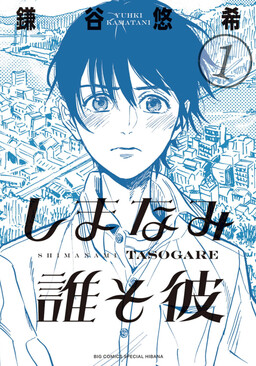
Slice of Life / Drama
Our Dreams at Dusk: Shimanami Tasogare
Yu's review of Our Dreams at Dusk — Tasuku Kaname is outed to his classmates; he goes to a building to jump; a woman in white tells him to come to a drop-in center; the center is a community of people across the LGBTQ spectrum who have found a way to be in the world; Tasuku begins to find his own way through them.
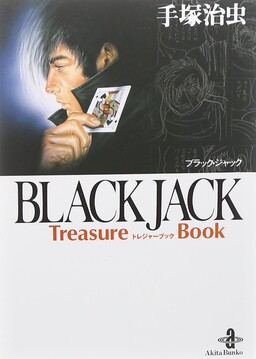
Drama / Medical
Black Jack
Black Jack is an unlicensed surgeon of impossible skill who lives on a cliff, charges fees that would bankrupt corporations, and decides which patients are worth saving. Osamu Tezuka — the God of Manga, who was himself a trained doctor — spent ten years and 242 standalone chapters on him. Vertical Inc.'s 17-volume English edition is complete.
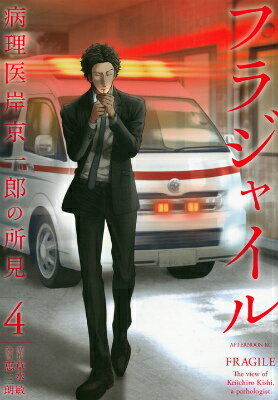
Slice of Life / Drama
Fragile
A review of Fragile, the medical manga about Keiichiro Kishi, a blunt, brilliant pathologist who reads the truth in tissue samples and changes the diagnoses other doctors get wrong.
Slice of Life / Drama
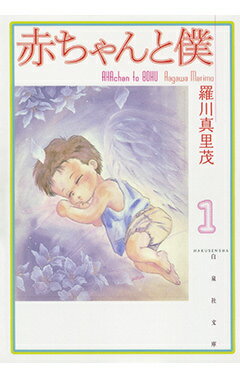
Baby and Me
Baby and Me follows Takuya Enoki, a grade-schooler who becomes a mother and a brother at the same time, raising his toddler brother Minoru after their mother dies and their father works to keep the family going.
Slice of Life / Historical Drama
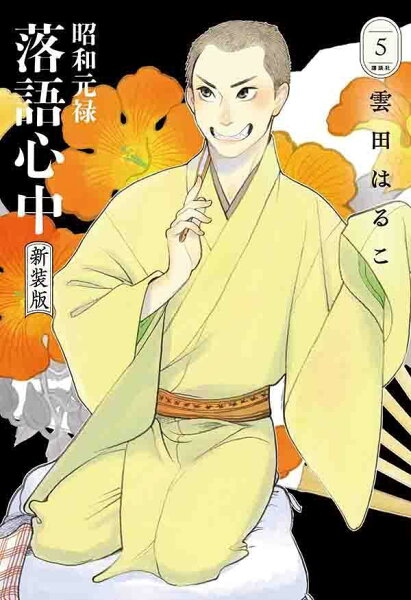
Shouwa Genroku Rakugo Shinjuu
Shouwa Genroku Rakugo Shinjuu follows the world of rakugo — traditional Japanese comic storytelling — through two performers across two generations: the transcendent and self-destructive Yakumo, and the student Yotaro who inherits what Yakumo cannot save.
Slice of Life / Drama
Umimachi Diary
Umimachi Diary follows three adult sisters in Kamakura who invite their half-sister — whom they barely know — to live with them after their estranged father's death, and the slow process of becoming a family.
Written by
Yu
Manga Enthusiast from Japan
I grew up in Japan and manga literally saved me during a tough time in elementary school. My English isn't perfect, but my love for manga is real — and I want to share it with you.