Confidential Confessions Review: The Shojo Manga That Refused to Look Away
by Reiko Momochi
Read the first volume. If it doesn't hook you, put it down. It'll hook you.
Buy Confidential Confessions on Amazon →*Affiliate link — I earn a small commission at no extra cost to you.
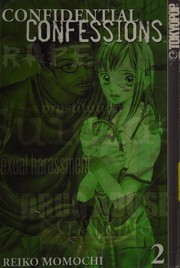
I read most of my manga to escape. Confidential Confessions is the one I read to stop escaping for a minute. I found the Tokyopop volumes second-hand, years after the English run had already gone out of print, and I almost put the first one back because the cover looked like an ordinary shojo romance. It isn't. The first story is about two girls planning to kill themselves with cyanide they ordered off the internet. I sat on the floor of my room and finished the whole volume in one sitting, and then I sat there a while longer, not really moving.
I grew up isolated. I've talked about that on this site before — the years where manga was the only thing that felt like it was on my side. So I want to be honest about why this one stayed with me. It isn't comfort reading. It's the manga that made me feel like someone had bothered to look directly at the thing instead of around it.
Quick Take
- An anthology by Reiko Momochi that addresses real teen crises — suicide, self-harm, bullying, prostitution, rape, stalking — with documentary directness instead of melodrama
- Each story is self-contained; the original Japanese title, 問題提起作品集 (Mondaiteiki Sakuhinshū), literally means "collection of works that raise problems"
- This is an M (Mature) title, and the warnings are not decoration — every one of them is depicted on the page
Story Overview
Confidential Confessions ran in Kodansha's Dessert magazine from 2000 to 2002 and was collected into six tankōbon volumes (Tokyopop published all six in English between 2003 and 2005, though that edition is now out of print). It is not one continuous narrative. Each volume gathers self-contained stories, and each story drops a different teenage girl into a different crisis pulled from the real landscape of late-'90s and early-2000s Japan: the bullying (ijime) that pushes students toward suicide, the compensated-dating and prostitution that disguises itself as easy money, the sexual assault that goes unspoken, the self-harm that nobody at home notices.
The most well-known story, "The Door," opens the series. Manatsu is a high schooler who feels her life is empty — her father left, her mother cares about grades more than about her. At school she befriends a bullied girl the others mock as "Asparagus," a girl who cuts herself to manage the pain. The two of them, half inspired by a celebrity's death, decide to die together. They raise money — including through sex work — to buy cyanide pills online and rehearse how they'll do it.
The turning point is a rooftop. Standing at the edge with the pills, Manatsu realizes she doesn't actually want to die. She slips, grabs a ledge, and begs Asparagus to pull her up — but Asparagus decides she'll jump instead. Bystanders save them both at the last second. Manatsu survives, slowly reconnects with her mother, and starts to believe that "suicide is not brave." Then she learns that Asparagus, later, alone, completed it anyway. Momochi refuses to let survival be the same thing as a happy ending.
Characters
Manatsu — Not a victim and not a cautionary cardboard figure. Her arc is the whole point: she walks all the way up to death convinced it's the only honest choice available to her, and then, in the literal last second, her body chooses life before her mind catches up. What changes her afterward isn't a lesson — it's the unbearable ordinariness of how the world keeps going.
"Asparagus" — The bullied girl whose nickname is itself an act of cruelty. She self-harms, she means it about dying, and Momochi never flinches from drawing her as a full person rather than a warning. Her death — quiet, off to the side, after she's been "saved" — is the most devastating thing in the volume precisely because it isn't dramatized.
The anthology's other girls — Across the six volumes, Momochi keeps returning to the same kind of protagonist: a young woman making the best decisions she can with the information and the resources she actually has. The girls in the prostitution and compensated-dating stories aren't framed as fallen or stupid. That refusal to moralize is exactly what keeps the series from tipping into exploitation.
What I Love About It
It's the funeral. After "The Door," Asparagus is dead, and Momochi draws the aftermath not as catharsis but as a flat, terrible nothing — the people around her death simply go on with their lives as if it didn't happen. One reader-review I came across put it the way I'd felt it: her death "changed nothing." That's the moral argument of the whole story made visual. The manga had spent the entire chapter letting you believe that dying might mean something — that it might land, that it might make someone finally see — and then it shows you that it doesn't. The world barely registers it.
That's the panel that earned my trust in Momochi. A weaker version of this story would have made Asparagus's death a tragedy that teaches everyone a lesson. Momochi makes it a death that teaches no one anything, and lets that be the warning. She understands that the lie suicidal teenagers tell themselves — they'll finally understand once I'm gone — is best dismantled not by a lecture but by drawing, honestly, how little the gone are understood. I have rarely seen a shojo manga trust its young readers with something that bleak and that responsible at the same time.
Memorable Scene ⚠️ Spoiler Warning
The rooftop in "The Door." Manatsu and Asparagus go up there to take the cyanide together, and in the instant before it's supposed to happen, Manatsu's whole resolve collapses — she slips, catches a ledge, and finds herself screaming to be saved by the same death she'd planned. The page flips the entire premise: the girl who was so sure dying was the only brave thing left is suddenly, animally, desperate to live. And Asparagus, watching her, makes the opposite choice and steps off.
What makes it stick isn't the danger — it's the asymmetry. One girl discovers in her body that she wants to live; the other, in the same five seconds, decides she's done. Momochi draws it without slow-motion heroics. It just happens, fast and ugly and survivable for one of them. The phrase Manatsu carries out of it — that suicide isn't brave — only means anything because the manga showed you how close she came to proving herself wrong.
Art Style
Momochi's art is clean, restrained shojo — and the restraint is a deliberate choice, not a limitation. She doesn't aestheticize the crises. The cutting, the rooftop, the funeral: they're drawn plainly, without the visual sugar a more decorative artist would reach for, and that plainness is what keeps the stories from becoming spectacle. The art serves the material instead of competing with it. If you come for distinctive linework, this isn't that book. The drawing is doing quieter, harder work.
Cultural Context
This came out of a specific moment. The late '90s and early 2000s in Japan saw a wave of public anxiety about youth in crisis — ijime, school refusal, compensated dating (enjo kōsai), teen suicide — all of it being argued over in classrooms, living rooms, and newspapers at once. Confidential Confessions is Momochi's response to that conversation, and the crucial detail is where she published it: Dessert, a shojo magazine aimed squarely at teenage girls. This wasn't issue-fiction packaged for concerned adults. It was written for the exact demographic living inside the problems, by an author who believed they could handle being told the truth.
What English-Speaking Fans Say
Among the Western readers who found it during the Tokyopop years, the praise is consistent: the realism. Manga Life's review of the first volume singled out its "absolute realistic depictions" and credited it for tackling issues "relevant throughout the world." It tends to get recommended less as entertainment and more as necessary reading — passed around in educational and counseling contexts. Some readers found it overwhelming; some found a few storylines a touch exaggerated; many found it validating in a way they hadn't expected from a shojo title. Nobody calls it casual.
Pros & Cons
Pros
- Addresses serious issues with accuracy and respect, never sensationalism
- Anthology format means each story is complete in itself — easy to read one and stop
- Refuses to condescend to its teenage audience or hand out tidy lessons
- Representation of experiences that almost no other shojo manga of its era touched
Cons
- Not casual reading — it genuinely requires emotional preparation
- Some stories end with limited or no resolution by design, which frustrates readers who need closure
- The art is functional rather than distinctive
- The English edition is out of print, so physical copies can be hard to find
- This is heavy, unblinking material — that's either exactly what you need or exactly what you should avoid right now.
Is Confidential Confessions Worth Reading?
For readers who can engage with its content, yes — but go in clear-eyed. This isn't entertainment, and Momochi never pretends it is. It's a shojo anthology that treated its young readers as people who deserved the truth about suicide, bullying, and exploitation, and it delivered that truth without flinching. If that's what you're looking for, there's almost nothing else like it.
Who Is This Manga For?
- Readers who want manga that addresses social issues without softening them
- Adults working with teenagers who want to understand these experiences from the inside
- People who found books like Go Ask Alice or Speak meaningful
- Anyone who can sit with difficult content for the sake of what it illuminates
Similar Manga
| Title | Its Approach | How Confidential Confessions Differs |
|---|---|---|
| Nana | Mature themes inside a shojo romance structure | Confessions has no romantic overlay — the crisis is the story |
| Solanin | Young adults facing real disappointment and grief | Solanin is melancholy slice-of-life; Confessions is acute crisis and aftermath |
| A Silent Voice | Bullying and its long consequences, with hope | Silent Voice builds toward redemption; Confessions often refuses it |
Official English Translation Status
Tokyopop published all six volumes in English (2003–2005). The series went out of print around 2009, so new copies are scarce and physical sets command collector prices. There is no omnibus and no current digital re-release of the English edition.
Where to Buy
Read the first volume. If it doesn't hook you, put it down. It'll hook you.
This post contains affiliate links. If you purchase through these links, I may earn a small commission at no extra cost to you. As an Amazon Associate, I earn from qualifying purchases.
*Affiliate link — I earn a small commission at no extra cost to you.
More Manga You Might Like
Drama / Romance
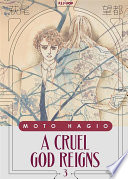
A Cruel God Reigns
Yu's review of A Cruel God Reigns by Moto Hagio — Jeremy's stepfather abuses him; Jeremy kills him; the next 16 volumes show what happens to a person after that. One of manga's most honest portraits of trauma and the possibility of recovery.
Drama
Ayako
Yu's review of Ayako — a few years after the war, the Tenge landlord family locks their youngest daughter Ayako in a storehouse to silence what she saw; she grows up underground for over twenty years; when she finally comes out, the country has moved on but the family's rot hasn't. Osamu Tezuka's darkest postwar thriller about the secrets Japan buried instead of facing.

Drama / Medical
Say Hello to Black Jack
Eijiro Saito is a young medical resident who has just started at a Tokyo university hospital. He wants to help people. Across 13 volumes, Shuho Sato shows him what Japanese hospital medicine actually is — cancer wards, neonatal ICU, psychiatric care, organ transplantation, oncology — and what the system does to patients and doctors. The author released the work copyright-free in 2012. Cultural impact in Japan was significant; English licensing remains pending.
Historical / Drama
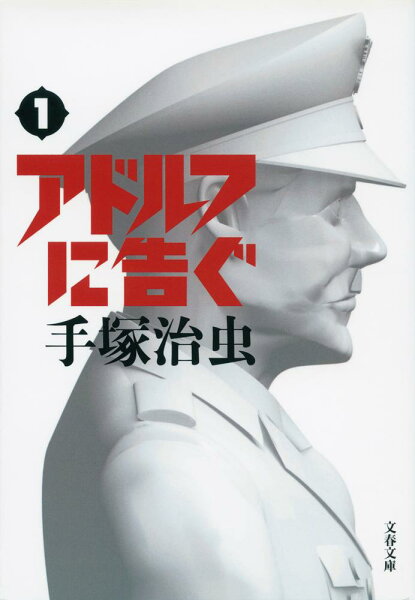
Message to Adolf
Yu's review of Message to Adolf (Adolf ni Tsugu) — Osamu Tezuka's historical epic following three men named Adolf through WWII and beyond, a devastating story of how war and ideology deform individual lives.
Drama
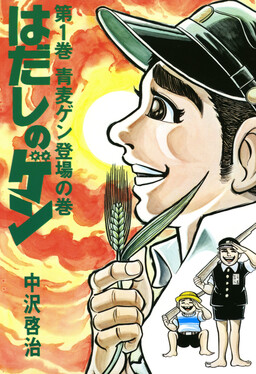
Barefoot Gen
Yu's review of Barefoot Gen (はだしのゲン) — Keiji Nakazawa's semi-autobiographical manga about a six-year-old boy who survives the Hiroshima atomic bombing on August 6, 1945, watches his father and two siblings burn under their collapsed house, and tries to keep what's left of his family alive. Drawn by a man who was actually there.
Action / Drama
Beck: Mongolian Chop Squad
Yu's review of Beck: Mongolian Chop Squad — Yukio 'Koyuki' Tanaka is a fourteen-year-old with nothing going for him until he rescues a strange dog and meets Ryusuke, a guitarist back from America with a bullet-scarred Les Paul named Lucille.
Written by
Yu
Manga Enthusiast from Japan
I grew up in Japan and manga literally saved me during a tough time in elementary school. My English isn't perfect, but my love for manga is real — and I want to share it with you.
Disclosure: This post contains affiliate links. As an Amazon Associate, I earn from qualifying purchases at no extra cost to you.