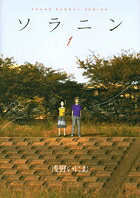
Solanin Review — Inio Asano's Two-Volume Manga About a Couple in Their Twenties Who Don't Know What Their Lives Are For
by Inio Asano
Read the first volume. If it doesn't hook you, put it down. It'll hook you.
Buy Solanin on Amazon →*Affiliate link — I earn a small commission at no extra cost to you.
I lived in a one-room apartment in Suginami for three years after university. I had a job I didn't hate enough to leave. I had friends I didn't see often enough to count as close. I had a savings account that was growing slightly every month because I wasn't spending money on anything that mattered. I was twenty-four and I was, looking back, completely lost — not in a crisis way, in the more dangerous way where everything seems fine.
I read Solanin the year I left that apartment. I cried at the end of volume one and then at the end of volume two and then in the train station the next day, and I didn't entirely understand what I was crying about. I think I understand now. Asano had drawn the specific shape of being twenty-four and unsure, and the shape was the same shape I had been living inside.
Quick Take
- Two volumes of Inio Asano (Goodnight Punpun) about a couple in their twenties who do not know what they are doing. Tokyo office life, a band that is almost something, the cost of one specific choice
- VIZ Media's English release collects both Japanese volumes in a single omnibus
- Age rating: T (Teen) — mild themes throughout, depression as sustained subtext, death of a major character, otherwise content-safe
Who Is This Manga For?
- Readers who have been twenty-something and uncertain and stayed anyway
- Music manga fans who want music without tournament structure or supernatural element
- Inio Asano readers who want him in his most accessible mode (much warmer than Goodnight Punpun)
- Anyone who has loved a band that didn't go anywhere and wants the manga that takes that experience seriously
Content Warnings & Age Rating
Age Rating: T (Teen) Content Warnings: Sustained themes of purposelessness and mild depression; death of a major character via traffic accident; the specific quiet sadness Asano writes about young adulthood; some mild substance use (drinking, smoking) as background
The sadness is realistic rather than horror-based. The single death sequence is brief and not graphic. Readers in active grief may want to know that the book's second half is processing a sudden loss.
Story Overview
Meiko Inoue is twenty-four. She lives in Tokyo with her boyfriend Taneda in a small apartment in the suburbs. She works at a generic office in a generic role. She does not hate her job. She does not love it. Two years post-graduation, she has settled into a life she did not exactly choose.
Taneda is twenty-four too. He works part-time at an illustration studio. He plays guitar in a band called Rotti with his best friend Billy (drums) and Kotti (bass). The band has existed for years. They play occasional small live shows. They are, Taneda is increasingly aware, not going anywhere.
The first half of the manga is what happens when Meiko, one ordinary day at the office, decides she has had enough. She quits her job without a plan. Taneda, watching her do this, makes a decision of his own. He will write one real song. He will record it properly. He will see if anyone responds to it.
The song is called Solanin. Taneda writes it in the manga's middle chapters. The lyrics are real and the song was later recorded by Asian Kung-Fu Generation for the live-action film adaptation, with Asano himself credited as lyricist. The manga's depiction of the song's creation — Taneda playing the same three chords for hours, Meiko half-watching from the couch, the moment when the lyrics finally arrive — is some of Asano's most carefully observed work.
Then, after the song is finished, Taneda dies. A motorcycle accident on a rainy night, sudden, off-page. The manga's second half is what Meiko, Billy, and Kotti do with what Taneda left them.
Characters
Meiko Inoue — The protagonist. Asano writes her as specifically twenty-four — not generic young-adult, but the precise mixture of competence and unmoored-ness that defines that age. Her decision to quit the office is not heroic. It is not a manifesto. It is the small, real choice of a person who knows she cannot stay where she is. Her arc — from having quit, through Taneda's death, to the final performance — is one of the most fully realized portraits of a person in their twenties in any manga.
Taneda — Guitarist, illustrator, boyfriend. Asano draws him gentle and uncertain, with a specific brand of "not yet adult" anxiety that the manga refuses to caricature. He is not a romantic genius musician. He is a person who is good enough at guitar to know he is not good enough to make it, and whose decision to record one real song before giving up is the manga's central tragedy.
Billy — Drummer, Taneda's best friend since university. Of the band, he is the one who has most quietly accepted that the band is not going to be his life. The manga's treatment of him after Taneda's death — his guilt, his confusion, his decision to be the person Meiko needs — is the manga's quietest piece of writing.
Kotti — Bassist. The fragile one. His arc after Taneda's death is the most overtly broken; Asano lets him be the character who falls apart without judgment.
Art Style
Inio Asano's art in Solanin is a study in observed Tokyo. The apartment, the office, the convenience store, the rooftop where the band plays a final show — each location is rendered with specific photographic care. Backgrounds in Asano's work are not stage dressing; they are the city the characters live in, drawn at the level of detail that says "I noticed this."
Character expressions are restrained. Asano draws people who are not currently crying as people who are not currently crying — the small physical signs of fatigue, the half-smiles, the looking-away. When a character does cry, Asano gives the moment the visual weight it has earned by being unusual rather than constant.
The performance sequences in the manga's final chapters use a different visual register — louder, more kinetic — but built on the same foundation of physical accuracy. The audience reactions, the band's movement, Meiko's face during the song — every panel does specific work.
Cultural Context
Solanin is in dialogue with the Japanese "freeter" generation — young people in the 1990s and 2000s who took part-time work, delayed career commitment, and navigated an economy that had stopped promising the lifetime-employment paths their parents had. The uncertainty Meiko and Taneda navigate is culturally specific: the gap between Japanese society's expectations (a stable salaryman or office-lady role) and what their generation was actually being offered.
The manga also engages with Asian Kung-Fu Generation, one of the defining Japanese rock bands of the 2000s. The band's relationship to Solanin became canonical: AKG's vocalist Masafumi Gotoh and Asano collaborated on the song "Solanin" for the 2010 live-action film, with Asano writing the lyrics. The song exists in the world the way it exists in the manga — as a real artifact created by a real artist about a story about people who couldn't quite become artists.
The 2010 film adaptation, directed by Takahiro Miki and starring Aoi Miyazaki as Meiko, is well-regarded. The film's ending diverges slightly from the manga but the emotional architecture is the same.
In 2017, Asano released a one-shot epilogue chapter revisiting Meiko years later. The epilogue is included in some reprint editions and reveals what Asano thinks happened to the characters in their thirties.
What I Love About It
The song.
Taneda writes Solanin in volume one, after Meiko has quit her job. The lyrics arrive late, after weeks of working on the same chord progression. Asano shows the song's writing across several chapters — Taneda noodling on the couch, the wrong words, the moment when the right ones come. The lyrics, in the manga, are presented as Taneda's specific articulation of the gap between what he wants to be and what he is.
What I love is what Asano does with the song after Taneda dies. The song exists. Taneda's voice is on a recording. Meiko, who never played guitar in her life, decides to learn it well enough to perform Solanin at the band's planned live show — the show Taneda had been preparing for.
The chapters of Meiko learning the song are the manga's emotional center. She is terrible at first. Her fingers hurt. She cannot read music. She has to ask Billy and Kotti to teach her things they had taken for granted. The band reforms around her, not because she is a good guitarist (she isn't), but because the only way to perform Taneda's song without Taneda is together.
The final performance — Meiko playing Solanin at the small venue, Billy on drums, Kotti on bass, an audience that knows what has happened — is the manga's whole project arriving at once. The song is about a person who could not become what he wanted to become. Meiko performing it is the answer the manga offers to the question of what you do when someone you loved did not get to finish. You sing his song. You finish for him. You keep being the person he saw.
I have been listening to Asian Kung-Fu Generation's version of Solanin for years. The chorus still does the same thing it did the first time. Asano wrote those lyrics. He gave them to a character who wrote them in the manga. Both of those facts are true, and the cumulative weight of both being true is what makes Solanin Solanin.
What English-Speaking Fans Say
Solanin has a devoted English-language following. The 2008 VIZ Media omnibus edition is one of the most consistently recommended Asano works for new readers — typically suggested before Goodnight Punpun on the grounds that Solanin is warmer and shorter while still doing the full Asano emotional work.
The most common reader response is recognition. People who read Solanin in their mid-twenties consistently describe the manga as "a manga about my life." People who read it later describe it as a manga about the years they remember being inside of. Both readings are accurate.
The 2017 epilogue chapter, when readers find it, is universally cited as a generous gift. Asano does not have to tell us what happens to Meiko in her thirties. He chose to. The epilogue's specific decision about what kind of adult Meiko becomes is, for many readers, the manga's final reassurance.
Memorable Scene ⚠️ Spoiler Warning
The final performance of Solanin.
Asano spends the second half of the manga building toward this concert. Meiko has been learning guitar. Billy and Kotti have been rehearsing with her. The band has decided to play the show Taneda had booked before he died, with Meiko in his place playing the song he wrote.
The performance sequence is the manga at its most visually committed. Asano draws the venue (a small Tokyo live house), the audience (people who know Taneda is not there, people who do not), Meiko walking on stage with the guitar Taneda taught her to hold. The song starts. Meiko's voice is not Taneda's voice. The song is not the song Taneda would have performed. But it is being performed.
The moment in the song where Meiko nearly stops — where she almost can't continue — is the manga's emotional climax. The panel of her face during the chorus, the panel of Billy on drums looking at her, the panel of the audience holding still — these are the pages that justify everything the manga has been building toward. The song ends. Meiko walks off stage. The manga ends shortly after.
That performance is what Solanin is for. The point of the manga is not that we get to keep the people we love. The point is that we have to figure out what to do with what they left us. Meiko sings Taneda's song. That is what she can do. The manga argues, in the small visual language Asano uses for the most important things, that what she can do is enough.
Similar Manga
| Title | Its Approach | How Solanin Differs |
|---|---|---|
| Goodnight Punpun (Asano) | Asano's longest work, much more intense | Punpun is devastating; Solanin is sad but warm. Both essential |
| Beck | Music, ambition, the dream of being in a band that matters | Beck is plot-driven; Solanin is interior |
| Honey and Clover (Umino) | Art school, early adult uncertainty, romantic complications | Honey and Clover is broader and lighter; Solanin is concentrated |
| Nana (Yazawa) | Music, friendship, growing up | Nana is melodramatic and operatic; Solanin is quiet and small |
Reading Order / Where to Start
The 2008 VIZ omnibus collects both Japanese volumes in one book. Read in one sitting if possible. The arc is short enough to hold the whole emotional shape in your head.
If you can find the 2017 epilogue chapter (it has been included in some reprint editions and is also available digitally), read it after the main story.
Official English Translation Status
VIZ Media published the complete two-volume series in a single English omnibus in 2008. The volume is in print and digitally available. The 2017 epilogue chapter has been included in select reprint editions but may require a separate digital purchase depending on edition.
Pros & Cons
Pros
- One of the most precise portraits of being twenty-something in manga
- Inio Asano in his most accessible mode — no fantasy or horror
- The song "Solanin" exists in real life via Asian Kung-Fu Generation; the experience is enhanced by listening
- Complete in one omnibus; ideal reading commitment
- The ending earns its emotional weight without sentimentality
Cons
- Sustained sadness; not a comfort read
- The death is permanent and central; readers in active grief may want to wait
- Asano's quiet style takes adjustment for readers expecting bigger plot beats
- Minimal action or external plot — pure character and feeling. That's the point, but it won't land for every reader.
Is Solanin Worth Reading?
Yes. Among the best things in slice-of-life manga, and one of the most accessible entry points to Inio Asano's catalog. The two-volume length makes it a manageable first read; the emotional weight makes it a reread for years afterward.
Format Comparison
| Format | Notes |
|---|---|
| Single English Omnibus (VIZ) | The standard format; collects both Japanese volumes |
| Digital | Available via VIZ digital storefront and Kindle |
| Japanese | Two original Shogakukan tankōbon volumes; out of print but findable |
| Live-action film | Takahiro Miki, 2010, starring Aoi Miyazaki; the film soundtrack includes AKG's "Solanin" |
Where to Buy
Read the first volume. If it doesn't hook you, put it down. It'll hook you.
This post contains affiliate links. If you purchase through these links, I may earn a small commission at no extra cost to you. As an Amazon Associate, I earn from qualifying purchases.
*Affiliate link — I earn a small commission at no extra cost to you.
More Manga You Might Like

Slice of Life / Drama
Kids on the Slope
Yu's review of Kids on the Slope (Sakamichi no Apollon) — 1966 Sasebo, Kyushu. Kaoru is a lonely classical pianist; Sentaro is a half-American delinquent who plays jazz drums in the basement of a record shop. Their friendship grows through music, the school festival, and a reunion years later at a church.
Slice of Life
Ciguatera
Yu's review of Ciguatera — Minoru Furuya's coming-of-age seinen about Yusuke Ogino, a bullied, anxious 17-year-old who dreams of a motorcycle and falls for Yumi Nagumo. A youth story that never sands down the discomfort.
Slice of Life / Drama
Black Jack Sousaku Hiwa
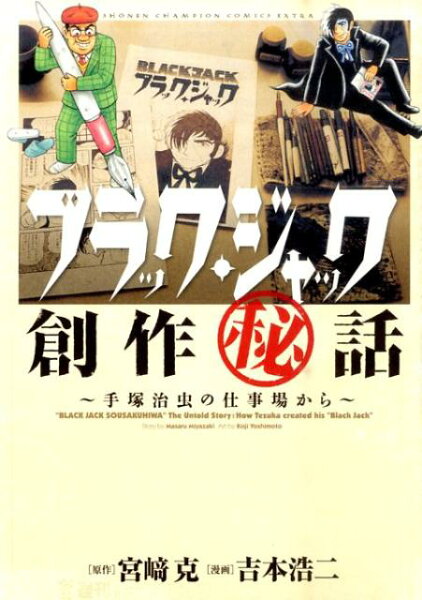
Black Jack Sousaku Hiwa is a documentary manga about how Osamu Tezuka created Black Jack — told through the editors and assistants who worked beside him, capturing both the genius and the human cost of his impossible work ethic.
Slice of Life / Drama
Naniwa Kinyuudo
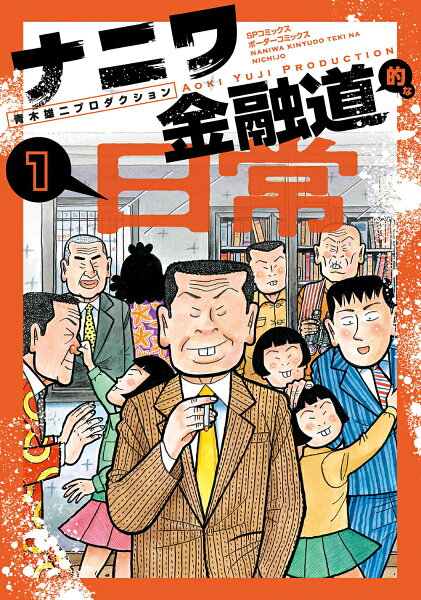
Naniwa Kinyuudo follows new employee Ginji Mita at a small-loan finance company in Osaka — a manga that uses the world of moneylending and debt collection to create one of manga's most honest portraits of Japanese economic life.
Slice of Life / Drama
Wandering Son
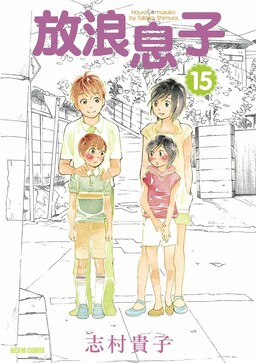
Yu's review of Wandering Son — Shuichi Nitori is a boy who wants to be a girl; his new friend Yoshino Takatsuki is a girl who wants to be a boy; the manga follows both of them from elementary school through adolescence as they navigate gender identity, friendship, and growing up; a gentle, serious work about transgender experience.
Slice of Life
Three Days of Happiness
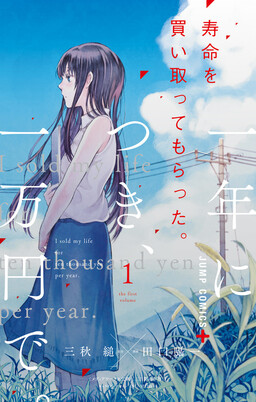
Yu's review of Three Days of Happiness — in a world where you can sell your remaining lifespan for money, Kusunoki sells most of his and discovers he has only three months left; manga adaptation of Sugaru Miaki's novel about what matters when time is finite.
Written by
Yu
Manga Enthusiast from Japan
I grew up in Japan and manga literally saved me during a tough time in elementary school. My English isn't perfect, but my love for manga is real — and I want to share it with you.
Disclosure: This post contains affiliate links. As an Amazon Associate, I earn from qualifying purchases at no extra cost to you.