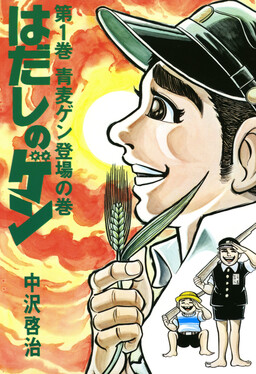
Barefoot Gen Review: The Man Who Was There Drew What He Saw
by Keiji Nakazawa
Read the first volume. If it doesn't hook you, put it down. It'll hook you.
Buy Barefoot Gen on Amazon →*Affiliate link — I earn a small commission at no extra cost to you.
I almost did not write this one. I have put it off for a long time. Most of the manga I review here are the ones I ran to as a kid — the ones that gave me somewhere to hide. Barefoot Gen is not that. It does not let you hide. It is the only manga I have ever closed and had to walk away from, more than once, just to breathe.
But I keep coming back to it, and I think you should too. Because the man who drew it, Keiji Nakazawa, was six years old in Hiroshima on the morning of August 6, 1945. He was there. He survived. And decades later he sat down and drew, as plainly as he could, what happened to a city full of people and to his own family. I do not think there is anything else in manga quite like it. Please read this review knowing it is heavy. I am not going to pretend otherwise.
Quick Take
- Semi-autobiographical witness testimony from an actual Hiroshima survivor — Nakazawa puts his own childhood on the page through a stand-in named Gen
- The graphic content is not there to shock you; it is there because softening it would be a lie about what the bomb did to human bodies
- Rated M (Mature) — this is for adult readers, and the violence is historical, sustained, and unflinching
Story Overview
The story opens in the last summer of the war. Gen Nakaoka is a small boy in Hiroshima. His father, Daikichi, openly thinks the war is wrong, and that opinion makes the whole family outcasts — neighbors treat them as traitors while everyone is starving and afraid. Gen's mother Kimie is heavily pregnant. There are older siblings, a city, a routine. Nakazawa spends real time on this ordinary, hungry, frightened life before anything happens, and that is deliberate.
The turning point is the bomb. On the morning of August 6, the flash comes, and the world Gen knew is gone in a single page-turn. Their house collapses. From there the manga becomes a survival story across the days, months, and years after the blast — radiation sickness, the search for food, the way survivors (hibakusha) were treated as if their suffering was contagious or shameful.
It does not end with the bombing; that is the point. The full ten-volume run follows Gen growing up in the ashes, losing more people, scrounging, fighting, refusing to become cruel even when cruelty would be easier. The ending is not a tidy moral. It is a boy who kept living and kept his humanity, because his father told him to.
Characters
Gen Nakaoka — Six years old when the bomb falls, and Nakazawa's stand-in for himself. His arc is not "boy becomes hero." It is a child forced into adulthood in an afternoon, who chooses, again and again, not to let what was done to him turn him hard. His wheat-shoot speech — be like wheat that is trampled and grows back — is the spine of the whole series.
Daikichi Nakaoka — Gen's father, an anti-war artisan whose pacifism makes the family hated long before the bomb. His arc ends early and it defines everything after. Trapped under the burning house, he tells Gen to stop trying to save him and to save his mother instead. That instruction becomes Gen's reason to keep going.
Kimie Nakaoka — Gen's mother, pregnant during the blast. She survives, goes into labor in the ruins, and gives birth to a daughter, Tomoko. Her arc is the long, grinding cost of survival: grief, near-madness after watching her husband and children burn, and a body slowly failing.
Tomoko — The baby born after the bomb. Her short life is one of the series' quietest, cruelest threads — a child who comes into the world out of catastrophe and cannot be kept alive in it.
What I Love About It
There is a moment, very early, when the house comes down on the family. Gen and his mother are out from under it, but Daikichi, his sister Eiko, and his little brother Shinji are pinned by a heavy beam, and the fires are already coming. Kimie pulls at the wood with her bare hands. It does not move. And Daikichi — knowing — tells his son to stop. He tells Gen to take care of his mother and the baby. Then Gen drags his screaming mother away while his father and two of his siblings burn alive behind them.
What I love is not the horror of it. It is that Nakazawa refuses to look away and also refuses to make it operatic. There is no swelling music on the page, no clever framing. The father is not a martyr posing for the reader; he is a man doing arithmetic he never should have had to do — three of us cannot get out, so let the ones who can, go. That choice, and Gen carrying it for the rest of the series, is the most honest thing I have ever seen a manga do with grief. It hit me because it is not asking me to feel something. It is just showing me, and trusting that I am human enough to feel it on my own. I was. I do, every time.
Memorable Scene ⚠️ Spoiler Warning
Later, the baby. Tomoko, born in the wreckage, is slowly starving because Kimie's malnourished body cannot make enough milk. Gen and his surviving brother go out and scrape together food — they actually get milk. And they run home with it. And they are too late. Tomoko has already died.
That is the panel I cannot shake. Not the bomb itself, not even the fire. A baby who died of hunger because the help arrived a few minutes too late, in a country that had already lost everything. Nakazawa does not stage it for maximum tears; he reports it, the way someone who lived it would. The bomb killed for years after the morning it fell, and Tomoko is how the manga makes you understand that the death toll was never just the people in the streets on August 6. It was the slow ones too.
Pros & Cons
Pros
- Direct witness testimony — Nakazawa was a six-year-old in Hiroshima and drew what he survived
- Graphic without being exploitative; the honesty is the entire moral point
- Gen is a fully human character, not a symbol — his refusal to become cruel is earned
- Complete in 10 volumes in English (Last Gasp), with an introduction by Art Spiegelman of Maus
Cons
- Genuinely brutal, sustained graphic content — burns, mass death, radiation sickness
- Emotionally exhausting from start to finish; there is little relief
- This won't work for everyone — if you read manga to escape, this is the opposite of escape, and that is exactly what it is supposed to be
Is Barefoot Gen Worth Reading?
Yes — but go in knowing what it asks of you. It is the rare manga that earns the word "important": a survivor's testimony in comic form, brutal and clear-eyed, redeemed by a boy who keeps choosing to stay human. If you want comfort, this is not it. If you want to understand what the bomb actually did to people, there is nothing better.
Similar Manga
| Title | Its Approach | How Barefoot Gen Differs |
|---|---|---|
| Onward Towards Our Noble Deaths | Mizuki's bitter war memoir from a soldier's point of view | Barefoot Gen is told through a civilian child, not a conscript, and centers the bomb's survivors |
| Showa: A History of Japan | Mizuki's sweeping documentary history of the era | Barefoot Gen is intimate and personal, one family, one city, one morning that never ends |
| In This Corner of the World | Gentle civilian wartime life, building to loss | Barefoot Gen is far more graphic and unflinching about the bomb's physical aftermath |
Where to Buy
Read the first volume. If it doesn't hook you, put it down. It'll hook you.
This post contains affiliate links. If you purchase through these links, I may earn a small commission at no extra cost to you. As an Amazon Associate, I earn from qualifying purchases.
*Affiliate link — I earn a small commission at no extra cost to you.
More Manga You Might Like
Slice of Life
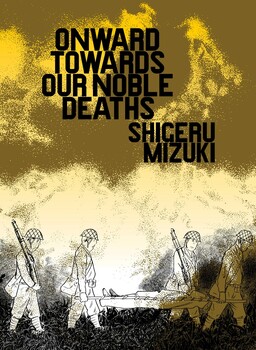
Onward Towards Our Noble Deaths
Yu's review of Onward Towards Our Noble Deaths — Shigeru Mizuki's autobiographical war manga, depicting the Japanese Imperial Army unit that survived a suicidal charge order through the Pacific Theater; the survivors were punished for failing to die; Mizuki survived; most of his unit did not.

Drama
A Drifting Life
Yu's review of A Drifting Life — Yoshihiro Tatsumi's 800-page autobiographical epic about growing up obsessed with manga in postwar Japan and helping invent gekiga, the gritty, adult comics movement that changed the medium.
Drama
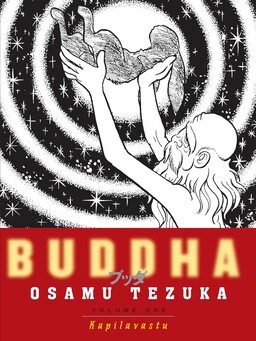
Buddha
Yu's review of Buddha — Osamu Tezuka's sweeping, fictionalized retelling of the life of Siddhartha Gautama, told through a huge cast of invented characters whose suffering makes the Buddha's questions feel like questions you actually have.
Drama / Slice of Life
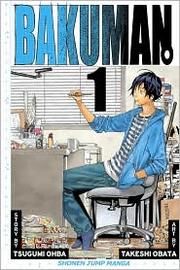
Bakuman
Yu's review of Bakuman — ninth-graders Moritaka Mashiro and Akito Takagi form a manga duo and fight their way through Weekly Shonen Jump's serialization machine, driven by a promise: Mashiro will marry his crush Miho Azuki when she voices the heroine in their anime. From the Death Note team, the most honest manga ever made about making manga.
Drama
Ayako
Yu's review of Ayako — a few years after the war, the Tenge landlord family locks their youngest daughter Ayako in a storehouse to silence what she saw; she grows up underground for over twenty years; when she finally comes out, the country has moved on but the family's rot hasn't. Osamu Tezuka's darkest postwar thriller about the secrets Japan buried instead of facing.
Drama / Romance
A Cruel God Reigns
Yu's review of A Cruel God Reigns by Moto Hagio — Jeremy's stepfather abuses him; Jeremy kills him; the next 16 volumes show what happens to a person after that. One of manga's most honest portraits of trauma and the possibility of recovery.
Written by
Yu
Manga Enthusiast from Japan
I grew up in Japan and manga literally saved me during a tough time in elementary school. My English isn't perfect, but my love for manga is real — and I want to share it with you.
Disclosure: This post contains affiliate links. As an Amazon Associate, I earn from qualifying purchases at no extra cost to you.