Ciguatera Review: The Coming-of-Age Manga That Refuses to Let Its Loser Off the Hook
by Minoru Furuya
Read the first volume. If it doesn't hook you, put it down. It'll hook you.
Buy Ciguatera on Amazon →*Affiliate link — I earn a small commission at no extra cost to you.
When I was a kid, I used to rehearse conversations in my head before I had them. Not because I was clever — because I was scared. I'd plan out what I'd say if someone talked to me, and then when they actually did, my mind went white and I said nothing. I read a lot of manga back then partly because manga heroes always knew what to say. Ciguatera is the first manga I ever read where the hero is exactly as useless as I was. And somehow that wrecked me more than any heroic speech ever did.
Yusuke Ogino is a 17-year-old who gets bullied, panics constantly, and lets his whole life happen to him. He is not cool. He does not get a redemption montage. I love him anyway, the way you love someone who reminds you of a part of yourself you've spent years trying to outgrow.
Quick Take
- Minoru Furuya writes the most honest, unsanitized portrait of an anxious bullied teenager I've found in seinen — funny and bleak in the same breath
- It's a love story where the romance is real but the boy is too frightened of himself to be trusted with it
- 6 Japanese volumes, complete in a 3-volume English omnibus from Vertical; rated T+ (Older Teen) for bullying, panic, and mature themes
Story Overview
The beginning: Yusuke Ogino is a self-described loser. School is a daily survival exercise — he is bullied, mostly by a delinquent named Taniwaki, and the only thing that gives him a sense of freedom is the dream of getting a motorcycle license. He signs up for driving school, and there he meets Yumi Nagumo, a girl he's quietly fixated on.
The turning point: To Ogino's disbelief, Yumi is the one who comes forward and tells him she likes him. He's overjoyed and immediately terrified — he half-suspects it's a trap, because a boy like him does not get the girl. He gets his license, he gets the relationship, and then has to actually live inside it, which his anxiety makes almost unbearable. Meanwhile his friend Takao Takai — a fellow bullying target whose family is sliding into money trouble — drifts further out, jealousy and desperation pulling him toward darker choices.
Where it goes: This is not a story that promises everyone a happy ending, and Furuya never pretends otherwise. The tone stays uncomfortable on purpose: small cruelties, awkward silences, and the constant gap between what Ogino feels and what he can actually do about it. Across the six volumes it stays a coming-of-age drama with a cold, watchful edge.
Characters
Yusuke Ogino — The protagonist, and one of the lowest-initiative leads I've ever followed. He's defined by fear; he operates in survival mode and second-guesses every thought he has. His arc isn't "he becomes brave." It's the slower, sadder thing of a boy being handed something he genuinely wants — Yumi — and discovering that wanting it doesn't make him capable of holding onto it.
Yumi Nagumo — The girl from driving school, and far more than a love interest. She has a reputation at school as the "worst girl," tangled up in transactional relationships with older men, and what draws her to Ogino is precisely his innocence. The series keeps complicating the easy read of her; she's more sympathetic than her rumors, a person with her own damage rather than a prize.
Takao Takai — Ogino's bike-obsessed friend and fellow target of bullying. His arc is the bleak counterweight to Ogino's: as his family's fortunes collapse, his resentment curdles, and he begins lashing out — including at Ogino out of jealousy — and edging toward genuinely alarming territory.
Taniwaki — The delinquent who torments Ogino and Takai. Furuya refuses to leave him a flat villain: he's also shown with a caring side, quietly looking after a stray cat. It's a small detail that makes the cruelty harder to dismiss, because the person dishing it out is clearly a whole human being.
What I Love About It
What I love is that Furuya draws Ogino's panic as comedy and tragedy at the exact same time, and never lets you pick just one. Reviewers kept noting that Ogino's mental breakdowns over Nagumo are laugh-out-loud funny — and they are. He spirals, he catastrophizes, his face contorts into something almost grotesque. You laugh because it's absurd. Then you stop laughing because you recognize it.
For me the truest moments aren't the loud freakouts — they're the quiet ones, where Furuya leans on tiny details. The example that stuck with me is Ogino trying to keep himself composed while he endures terrible treatment from Taniwaki: the surface stays flat, almost blank, while everything underneath is screaming. That's exactly how it felt to be a kid who couldn't fight back and couldn't run, who just stood there and absorbed it and tried to keep his face still. Most manga would give that kid a moment of triumph. Furuya gives him the much more honest gift of just being seen, in the act of not coping. That restraint is the whole reason this book hit me where it did.
Memorable Scene ⚠️ Spoiler Warning
The beat I can't shake is the confession — when Yumi Nagumo steps forward and tells Ogino she likes him. In almost any other coming-of-age manga this is the warm payoff, the music swells, the lonely kid finally wins.
Here, Ogino's first instinct is that it must be a setup. He's so conditioned by being the lowest person in every room that genuine affection reads to him as a threat. He's overjoyed and immediately can't trust the joy. That double-exposure — the thing you wanted most arriving and your own broken wiring refusing to let you have it cleanly — is the most painfully accurate thing in the book. I knew that feeling before I had words for it: the certainty that if something good happens to you, there must be a catch, because there always was. Furuya stages it without sentiment, and it lands like a confession of my own.
Pros & Cons
Pros
- The most honest portrait of an anxious, bullied teenager I've read in seinen
- Furuya's art shifts from realistic subtlety to almost zany distortion to match Ogino's inner state
- Side characters (Yumi, Takai, even Taniwaki) get real interiority, not just roles
- Complete and self-contained in three English omnibus volumes
Cons
- Ogino is deliberately passive and frustrating — things happen to him, and that's the point, not a bug
- The tone is consistently uncomfortable and at times cruel; this is not comfort reading
- The realistic, flaw-emphasizing art (crooked teeth, contorted faces) leans uncanny on purpose — if you read manga to escape into pretty people having clean feelings, this one will rub you the wrong way, and that's fine.
Is Ciguatera Worth Reading?
Yes — if you want a coming-of-age story that refuses to lie to you. It's funny, bleak, and uncomfortably true about what it's like to be a frightened teenager who gets handed something good and doesn't know how to hold it. If you need your protagonists likable and your endings warm, this isn't it. If you've ever been the kid rehearsing conversations you were too scared to have, it might be one of the most seen you'll ever feel by a manga.
Similar Manga
| Title | Its Approach | How Ciguatera Differs |
|---|---|---|
| Oyasumi Punpun | Crushing, surreal coming-of-age about anxiety and first love | Punpun goes abstract and symbolic; Ciguatera stays grounded in driving schools, bullies, and motorcycles |
| A Girl on the Shore | Inio Asano on raw, uneasy teenage relationships | Asano is melancholic and dreamy; Furuya is twitchier, funnier, and more cynical |
| Himizu (Furuya) | Furuya's own darker youth drama | Himizu is bleaker and more violent; Ciguatera keeps a thread of awkward comedy running through the dread |
Where to Buy
Read the first volume. If it doesn't hook you, put it down. It'll hook you.
This post contains affiliate links. If you purchase through these links, I may earn a small commission at no extra cost to you. As an Amazon Associate, I earn from qualifying purchases.
*Affiliate link — I earn a small commission at no extra cost to you.
More Manga You Might Like

Slice of Life
Three Days of Happiness
Yu's review of Three Days of Happiness — in a world where you can sell your remaining lifespan for money, Kusunoki sells most of his and discovers he has only three months left; manga adaptation of Sugaru Miaki's novel about what matters when time is finite.
Drama / Slice of Life
Solanin
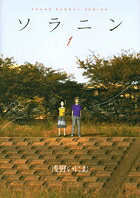
Inio Asano's two-volume manga (2005–2006) about Meiko, a 24-year-old office worker who quits her job without a plan, and her boyfriend Taneda, a guitarist in a band that has been almost-something for years. VIZ Media's English release combines both volumes into one omnibus.
Slice of Life
Bunny Drop
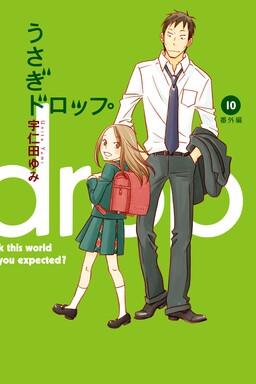
Yu's honest review of Bunny Drop (Usagi Drop) by Yumi Unita — bachelor Daikichi adopts Rin, his late grandfather's young illegitimate daughter, on impulse and learns to parent. The first half is some of the best family manga ever made; the second half time-skips and turns into something many readers reject. I tell you exactly what happens so you can decide.
Slice of Life / Drama
Black Jack Sousaku Hiwa
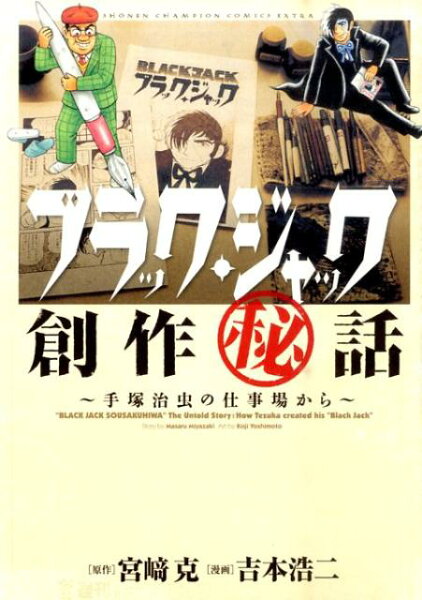
Black Jack Sousaku Hiwa is a documentary manga about how Osamu Tezuka created Black Jack — told through the editors and assistants who worked beside him, capturing both the genius and the human cost of his impossible work ethic.
Slice of Life / Drama
Naniwa Kinyuudo
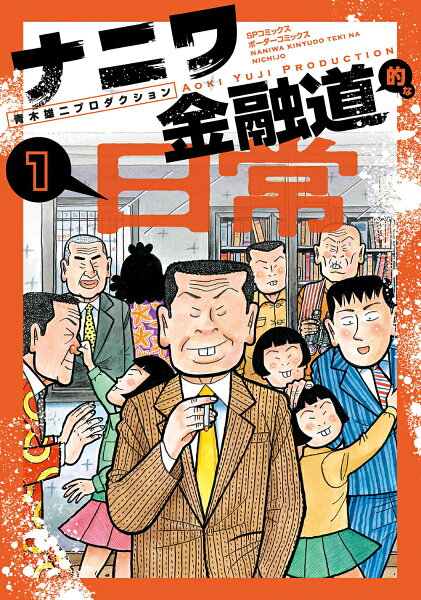
Naniwa Kinyuudo follows new employee Ginji Mita at a small-loan finance company in Osaka — a manga that uses the world of moneylending and debt collection to create one of manga's most honest portraits of Japanese economic life.
Slice of Life / Drama
Wandering Son
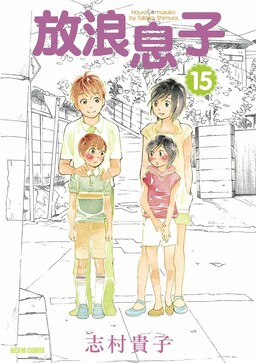
Yu's review of Wandering Son — Shuichi Nitori is a boy who wants to be a girl; his new friend Yoshino Takatsuki is a girl who wants to be a boy; the manga follows both of them from elementary school through adolescence as they navigate gender identity, friendship, and growing up; a gentle, serious work about transgender experience.
Written by
Yu
Manga Enthusiast from Japan
I grew up in Japan and manga literally saved me during a tough time in elementary school. My English isn't perfect, but my love for manga is real — and I want to share it with you.
Disclosure: This post contains affiliate links. As an Amazon Associate, I earn from qualifying purchases at no extra cost to you.