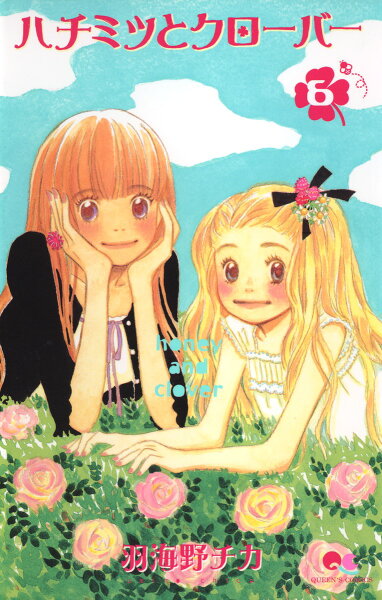
Honey and Clover Review: Art School Students Navigate Love, Ambition, and Growing Up in the Most Beautiful Manga About Youth
by Chica Umino
Read the first volume. If it doesn't hook you, put it down. It'll hook you.
Buy Honey and Clover on Amazon →*Affiliate link — I earn a small commission at no extra cost to you.
Quick Take
- Five art students, multiple unrequited loves, the question of what to do with talent and with life
- One of manga's finest examinations of the specific experience of being in your early twenties and not yet knowing what you are
- 10 volumes, complete; the ending is exactly right
Who Is This Manga For?
- Readers who want romance manga that is as much about life as about love
- Anyone who has ever been twenty-two and uncertain
- Fans of slice-of-life that takes the experience of art and ambition seriously
- Readers who want an ensemble romance where not everyone gets what they want
Content Warnings & Age Rating
Age Rating: T (Teen) Content Warnings: Unrequited love sustained without resolution, themes of artistic identity crisis and failure, melancholy pervades even the comedic sections
Gentle but not painless. The comedy is real; so is the sadness.
Yu's Rating
| Category | Score |
|---|---|
| Story Depth | ★★★★★ |
| Art Style | ★★★★★ |
| Character Development | ★★★★★ |
| Accessibility for Non-Japanese Readers | ★★★★★ |
| Reread Value | ★★★★★ |
Story Overview
Five students at a Tokyo art college share apartments and friendships and complicated feelings. Yuuta Takemoto is in his third year, undirected, aware that he does not know what he wants. Shinobu Morita is a genius who disappears for months and returns with money from unknown sources. Takumi Mayama carries feelings for someone he cannot have. Kaoru Hanamoto is a design professor who watches over them all.
And then Hagumi Hanamoto arrives — Kaoru's cousin, a tiny person whose art is genuinely extraordinary, who draws everyone's attention.
The love permutations are: Takemoto loves Hagu. Morita loves Hagu. Hagu does not know what she feels. Mayama loves Rika Harada, who is widowed and does not know what to do with being loved. Yamada loves Mayama, who doesn't see her that way.
None of this resolves in the expected ways. The manga follows where reality would go instead.
Characters
Yuuta Takemoto — The protagonist through whom we enter; his specific uncertainty — talented enough to be at the school, not yet sure what he's talented for — is what makes him the ideal lens for the series.
Shinobu Morita — The most visually dynamic character; his absurdist comedy and his genuine feeling for Hagu coexist without reducing either.
Hagumi Hanamoto — A character whose art is genuinely beyond her age and whose emotional development catches up slowly; her arc about what to do with exceptional ability is the series' most thoughtful.
Ayumi Yamada — The series' heart in the most direct sense; her experience of loving someone who will not love her back is drawn with complete empathy and without making Mayama a villain for it.
Art Style
Umino's art is distinctive and warm — the Honey and Clover visual style is immediately recognizable, with expressive simplified forms for comedy moments and detailed emotional precision for the key scenes. The art communicates affection for every character, even in their most difficult moments.
Cultural Context
Honey and Clover is set in the specific world of Japanese art university culture — the critique system, the material-making, the instructor relationships, the freelance question after graduation. Readers who know Japanese art schools will find it precisely observed; readers who don't will find it a complete picture of a world they hadn't known.
What I Love About It
Takemoto's bicycle journey. When he doesn't know what to do, he gets on his bicycle and starts riding. The journey he takes — the distance, the time, what he finds at the end, what he understands on the way back — is one of manga's most perfectly observed moments of a young person finding direction through motion. It is the scene that made me love this manga.
What English-Speaking Fans Say
Honey and Clover has a devoted Western readership that often describes it as "the manga that made me cry in a way I didn't expect." The Ayumi storyline consistently generates the strongest emotional reactions — Western readers who have been in her position recognize it precisely. The ending is often cited as one of manga's most perfectly pitched final volumes.
Memorable Scene ⚠️ Spoiler Warning
Yamada's chapter — where she reaches the point of releasing what she has been carrying — is the series' most openly emotional sequence. Umino draws Yamada not as someone who has stopped loving but as someone who has decided what to do with it, and the distinction is everything.
Similar Manga
- March Comes in Like a Lion — Same author (Chica Umino); more structured, equally warm
- Paradise Kiss — Art and ambition, adult romance, similar emotional register
- Blue Period — Art school, identity, similar examination of talent
- Nana — Young adults navigating love and ambition
Reading Order / Where to Start
Volume 1 — the ensemble establishes quickly and the comedy-sadness tone is established in the first chapter.
Official English Translation Status
VIZ Media published the complete 10-volume series. All volumes available.
Pros & Cons
Pros
- 10 volumes, complete, with a perfect ending
- Every character in the ensemble is given full emotional treatment
- The comedy and sadness are genuinely balanced
- The art school setting is observed with real knowledge
Cons
- The unrequited love structure means some readers' preferred outcome doesn't happen
- The melancholy is sustained — not for readers wanting pure warmth
- The male protagonist is less distinctive than the supporting cast
Format Comparison
| Format | Notes |
|---|---|
| Individual Volumes | VIZ Media; standard |
| Digital | Available |
Where to Buy
Read the first volume. If it doesn't hook you, put it down. It'll hook you.
This post contains affiliate links. If you purchase through these links, I may earn a small commission at no extra cost to you. As an Amazon Associate, I earn from qualifying purchases.
*Affiliate link — I earn a small commission at no extra cost to you.
More Manga You Might Like
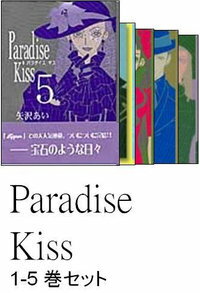
Romance / Drama
Paradise Kiss
Yu's review of Paradise Kiss — Yukari, a high-achieving student who has never questioned her path, is spotted by fashion students and asked to model their graduation collection; George, the designer, becomes the first person who sees who she might actually be.
Romance / Drama
Short Program
Short Program collects Mitsuru Adachi's short story manga — brief, precise studies of the moment when two people almost connect, or do connect, or miss each other by a margin that changes everything.
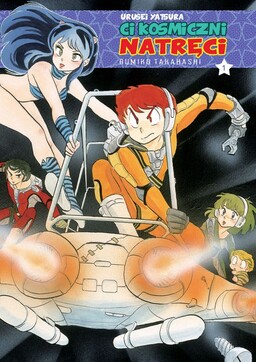
Romance / Comedy
Urusei Yatsura
Yu's review of Urusei Yatsura — Earth is invaded by aliens; a random lottery selects Ataru Moroboshi to compete against the alien princess Lum in a game of tag; he wins by grabbing her horns; his victory declaration is mistaken for a marriage proposal; Lum moves into his house; Ataru continues to chase every other girl he sees while Lum insists on being his wife.
Romance / Slice of Life
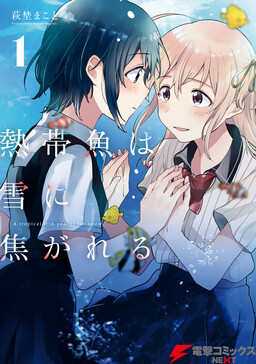
A Tropical Fish Yearns for Snow
Yu's review of A Tropical Fish Yearns for Snow — Konatsu Amano moves to a new town after her father is transferred abroad; she joins her new school's aquarium club, which has only one other member: Koyuki Honami, a capable and quietly withdrawn girl who runs it alone; their friendship becomes something more specific as they teach each other about themselves.
Romance / Comedy
Toradora!
Yu's review of Toradora! — a delinquent-looking boy and a tiny, terrifying girl make a deal to help each other confess to the other's best friend, and discover they had the wrong target all along.
Romance / Slice of Life
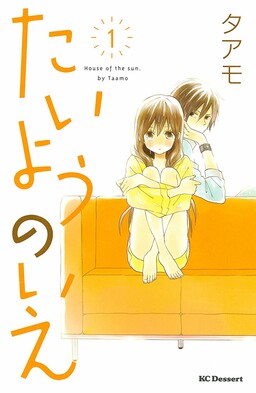
House of the Sun (Taiyou no Ie)
Yu's review of House of the Sun (Taiyou no Ie) — Mao Motomiya, whose home life fell apart when her father remarried, finds herself staying at the house of Hiro, her cheerful childhood friend; his large, warm family gradually becomes the home she didn't know she needed, and the romance that develops is built on that foundation.
Written by
Yu
Manga Enthusiast from Japan
I grew up in Japan and manga literally saved me during a tough time in elementary school. My English isn't perfect, but my love for manga is real — and I want to share it with you.
Disclosure: This post contains affiliate links. As an Amazon Associate, I earn from qualifying purchases at no extra cost to you.