
Three Days of Happiness Review: A Boy Sells His Lifespan to Buy What Money Can't — and What He Discovers
by Sugaru Miaki / Takaki Tsukiji
Read the first volume. If it doesn't hook you, put it down. It'll hook you.
Buy Three Days of Happiness on Amazon →*Affiliate link — I earn a small commission at no extra cost to you.
Quick Take
- One of the most affecting manga available — the lifespan-selling premise is used for genuine philosophical inquiry about what we value
- Kusunoki's three remaining months and what he does with them are rendered with exceptional emotional care
- 3 volumes complete; essential for readers who want manga as literature
Who Is This Manga For?
- Readers who want manga that asks serious questions about what life is for
- Anyone who wants emotional manga about finite time without melodrama
- Fans of literary manga with philosophical premises
- Readers looking for short complete manga with lasting impact
Content Warnings & Age Rating
Age Rating: T+ (Older Teen) Content Warnings: Lifespan selling; death and limited time; regret; some adult situations; emotionally serious throughout
T+ rating — older teen readers; emotionally demanding.
Yu's Rating
| Category | Score |
|---|---|
| Story Depth | ★★★★★ |
| Art Style | ★★★★★ |
| Character Development | ★★★★★ |
| Accessibility for Non-Japanese Readers | ★★★★★ |
| Reread Value | ★★★★★ |
Story Overview
In this world, you can sell your lifespan. Kusunoki has ambitions and no money, so he sells most of his remaining years. He receives the cash. He discovers he has three months left to live.
The manga follows those three months. Kusunoki meets Himeno, a life-assessor who observes people who have sold their lifespan. What he does with his remaining time — what he prioritizes, what he lets go, what he discovers about what he actually wanted — is the series' entire content.
The premise is used without melodrama. The question it asks is genuine: what would you do differently if you knew?
Characters
Kusunoki — A protagonist whose initial ambitions reveal themselves to be proxies for other things he wanted; his three months of discovery are the series' emotional content.
Himeno — The life-assessor who observes Kusunoki; her role and her own relationship to the lifespan she still has is the series' secondary emotional layer.
Art Style
Tsukiji's art is clean and emotionally precise — the specific visual weight of someone living in finite time is rendered through body language and setting detail.
Cultural Context
Three Days of Happiness is adapted from Sugaru Miaki's novel. The lifespan-selling premise is original to the work and is used as a tool for philosophical inquiry rather than genre exploitation.
What I Love About It
The honesty about what Kusunoki actually wanted. When time is short, his actual desires become clear — and they are different from what he thought he wanted. The gap between stated and actual values is the series' most precise emotional content.
What English-Speaking Fans Say
Western readers describe Three Days of Happiness as the most affecting manga about finite time — specifically noted for the philosophical inquiry being genuine rather than decorative, for the emotional content being precise without melodrama, and for the three-volume length being exactly right for the story. Consistently cited as one of the most important manga available in English.
Memorable Scene ⚠️ Spoiler Warning
The scene where Kusunoki understands what he actually wanted from life — when the distractions fall away and the real thing is visible — is the series' most precise emotional achievement.
Similar Manga
- Solanin — Similar age and regret themes without the supernatural premise
- A Silent Voice — Regret and connection without the lifespan premise
- Your Lie in April — Finite time and what it reveals about what matters
- A Distant Neighborhood — Time and regret from a different angle
Reading Order / Where to Start
Volume 1 — the lifespan premise and Kusunoki's situation are established immediately.
Official English Translation Status
Yen Press published the complete 3-volume English series.
Pros & Cons
Pros
- Philosophical inquiry is genuine
- Emotional precision without melodrama
- Complete in 3 volumes
- Among the most affecting manga available
Cons
- T+ mature themes
- Emotionally demanding throughout
- Requires reader readiness for the subject matter
Format Comparison
| Format | Notes |
|---|---|
| Individual Volumes | Yen Press; complete 3 volumes |
| Digital | Available |
Where to Buy
Read the first volume. If it doesn't hook you, put it down. It'll hook you.
This post contains affiliate links. If you purchase through these links, I may earn a small commission at no extra cost to you. As an Amazon Associate, I earn from qualifying purchases.
*Affiliate link — I earn a small commission at no extra cost to you.
More Manga You Might Like
Slice of Life
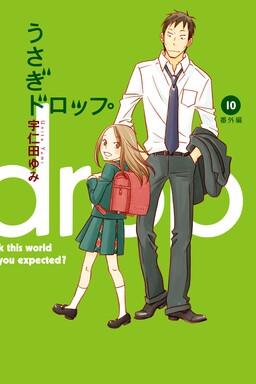
Bunny Drop
Yu's honest review of Bunny Drop (Usagi Drop) by Yumi Unita — bachelor Daikichi adopts Rin, his late grandfather's young illegitimate daughter, on impulse and learns to parent. The first half is some of the best family manga ever made; the second half time-skips and turns into something many readers reject. I tell you exactly what happens so you can decide.

Slice of Life
Sunny
Yu's review of Sunny — at a group home for children whose families cannot take care of them, a broken-down old car called Sunny becomes a private space where the children go to be alone; Taiyo Matsumoto's meditation on childhood longing, on what it means to be left, and on how children find ways to survive what adults do to them.
Slice of Life
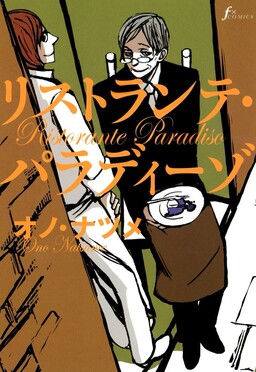
Ristorante Paradiso
Yu's review of Ristorante Paradiso — Nicoletta travels from her hometown to Rome to confront her mother, who left her as a child; her mother's husband doesn't know she exists; the restaurant Casetta dell'Orso, staffed entirely by older bespectacled gentlemen, becomes the setting for Nicoletta's unexpected new life.
Slice of Life
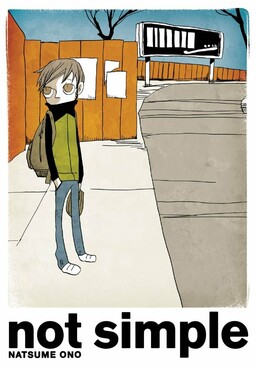
not simple
Yu's review of not simple — Ian is an English young man whose life has been defined by loss, abuse, neglect, and a desperate search for his sister; the manga tells his story in non-linear fragments, assembled by a journalist writing a novel about Ian's life, asking what it means to witness someone's suffering and what fiction can do with it.
Slice of Life
Ciguatera
Yu's review of Ciguatera — Minoru Furuya's coming-of-age seinen about Yusuke Ogino, a bullied, anxious 17-year-old who dreams of a motorcycle and falls for Yumi Nagumo. A youth story that never sands down the discomfort.

Slice of Life
Stella Women's Academy, High School Division Class C³
Yu's review of Stella Women's Academy — Yura Yamamoto transfers to Stella Women's Academy and joins the C³ Club, a survival game (airsoft) club; Millitarko's manga about a shy girl finding her place through competitive gaming, with character development that turns darker before finding resolution.
Written by
Yu
Manga Enthusiast from Japan
I grew up in Japan and manga literally saved me during a tough time in elementary school. My English isn't perfect, but my love for manga is real — and I want to share it with you.
Disclosure: This post contains affiliate links. As an Amazon Associate, I earn from qualifying purchases at no extra cost to you.