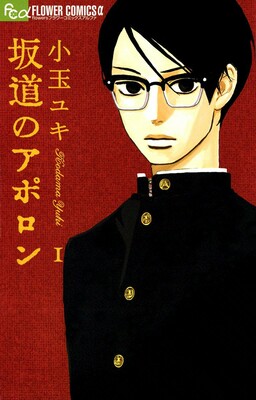
Kids on the Slope Review: The Manga Where Two Boys Who Should Hate Each Other Speak Only Through Jazz
by Yuki Kodama
Read the first volume. If it doesn't hook you, put it down. It'll hook you.
Buy Kids on the Slope on Amazon →*Affiliate link — I earn a small commission at no extra cost to you.
When I was a kid with no friends, I used to think that to be close to someone you had to be able to talk to them. Say the right things. Be interesting. I was none of those things, so I stayed quiet. Kids on the Slope is the first manga that made me feel, in my chest, that maybe I had it backwards the whole time. Kaoru and Sentaro barely know how to talk to each other. They argue, they sulk, one of them punches the other. But the moment Kaoru sits down at a piano and Sentaro picks up his drumsticks, something happens between them that words could never carry. I read the basement scene where they first play together and I had to put the book down for a minute. I wished, hard, that someone had handed me a thing like that when I was twelve.
Quick Take
- A coming-of-age story set in 1966 Sasebo where jazz is not background decoration — it is the only language two very different boys can use to be honest with each other
- Yuki Kodama draws music like it's a physical event; the playing sequences carry rhythm and weight even though paper makes no sound
- 9 volumes, complete in Japanese; rated T (Teen) for mild violence, teenage romance, and 1960s social context
Story Overview
It's 1966. Kaoru Nishimi, an anxious, well-off classical piano student, transfers to a high school in Sasebo on Kyushu. His father's work has moved the family so many times that Kaoru has simply stopped trying to make friends — moving on always hurts, so he keeps everyone at a distance. On his first days he's miserable, prone to stomachaches from stress.
The turning point comes through Sentaro Kawabuchi, the school's feared delinquent — half-American, loud, physical, the opposite of everything Kaoru is. Kaoru follows the trail to the basement beneath a record shop run by the family of their classmate Ritsuko Mukae, and finds Sentaro there hammering away at a jazz drum kit. Sentaro is dismissive of classical music; Kaoru, almost in spite of himself, buys a copy of Art Blakey's "Moanin'" and starts learning to play jazz. Through that basement, jazz standards, and the people around the record shop, Kaoru slowly learns how to have a friend — and how to want things out loud.
The series follows the three of them through their high school years and the tangled feelings between them: Kaoru's growing love for Ritsuko, Sentaro's unrequited feelings for an older girl, Yurika. It builds to the school festival performance, then to a separation, and finally to a reunion years later at a church — where the friendship picks up exactly where the music left off.
Characters
Kaoru Nishimi — The pianist. His whole personality is precision and self-control, which is also his prison: he's so careful about being hurt that he never lets himself reach for anyone. Jazz, which demands improvisation and listening to your partner rather than reading a score, is the exact thing he didn't know he was missing. His arc is learning to play — and feel — without sheet music.
Sentaro Kawabuchi — The drummer. On the surface a half-American delinquent from a hard home, raised in a Catholic family, treated as an outsider in his town. Underneath he's loyal and tender, and he carries an unspoken love for Yurika that he knows will go nowhere. His path takes him away from the others and, by the end, toward the church.
Ritsuko Mukae — The classmate whose family runs the record shop where everything happens. She's warm and steady, the person who keeps the three of them connected. The story handles her without turning her into a trophy to be won — her feelings shift over time and she's allowed to have her own view of both boys.
Yurika Fukahori — The older girl Sentaro quietly loves. Her own romantic entanglement, with a college student named Junichi, ripples outward and shapes Sentaro's choices, including his eventual disappearance from the others' lives.
What I Love About It
The basement scenes are the heart of this manga for me, and the best one is early: Kaoru, who has only ever played classical, sits down to play jazz with Sentaro for the first time, and he's terrible at it. He keeps trying to read it like a score, to get it correct, and jazz refuses to be correct. Sentaro just keeps the beat and tells him to stop counting and listen. And then, for a few bars, Kaoru lets go and follows the drums instead of his own head — and the two of them lock in.
What gets me is that Kodama doesn't write this as a friendship that's declared in dialogue. These two would never say "I trust you" to each other; they'd be too embarrassed, and Sentaro would probably make a joke. So the trust has to live in the music instead. When Kaoru finally stops trying to control the song and lets Sentaro carry the rhythm, that is the friendship — that's him admitting he needs someone else, which is the one thing he's spent his whole life refusing to do. I grew up the careful, quiet kid. Watching the careful, quiet kid on the page learn that the way in was to let go and trust the other guy's beat — that hit a part of me I usually keep closed.
Memorable Scene ⚠️ Spoiler Warning
The school festival. A rock band called Olympus is performing on stage when their electric amplifiers suddenly cut out and the crowd starts drifting away. To save it, Kaoru walks to the piano and just starts playing — and Sentaro climbs up behind the drums and joins him. With no amps, no plan, no rehearsal, the two of them launch into a medley: "My Favorite Things," "Someday My Prince Will Come," and finally "Moanin'." The audience, which was leaving, turns back and floods the room.
It's the purest version of what the whole series has been building toward. Everything else between them — the fights, the embarrassment, the things they can't say — falls away, and all that's left is two people listening to each other and answering in real time. Later, after they've been separated for years by everything life throws at them, they meet again at a church where Sentaro has become a seminarian, and the first thing they do is sit down and play "Moanin'" once more. The song is the proof that the bond never actually broke. I think about that for a long time after closing the last volume — the idea that some connections don't need to be maintained with words, that you can put one down for years and pick it right back up on the downbeat.
Pros & Cons
Pros
- Jazz is treated as real and functional, not decoration — the music carries the emotional storytelling
- The friendship between Kaoru and Sentaro is one of the most genuine in any manga I've read
- Specific, lived-in 1966 Kyushu setting with real historical texture
- 9 volumes is a complete, satisfying arc with a real ending
Cons
- Some 1960s Japanese social and historical context lands harder if you know the period
- The romance threads are messy and not everyone gets a clean resolution
- It's quiet and emotionally heavy rather than plot-driven — that's either exactly what you want or it isn't, so it won't work for everyone
Is Kids on the Slope Worth Reading?
Yes — if you want a coming-of-age story that earns its feeling instead of forcing it. It's quiet, it's about music and loneliness and the kind of friendship you can't explain, and it tells a complete story in 9 volumes. If you need fast plot and tidy romance, it may frustrate you. For everyone else, it's one of the most moving things I've read.
Where to Buy
No English release yet. That just means you find it before everyone else does.
If you read Japanese, the complete series is available from Shogakukan:
This post contains affiliate links. If you purchase through these links, I may earn a small commission at no extra cost to you. As an Amazon Associate, I earn from qualifying purchases.
*Affiliate link — I earn a small commission at no extra cost to you.
More Manga You Might Like
Slice of Life
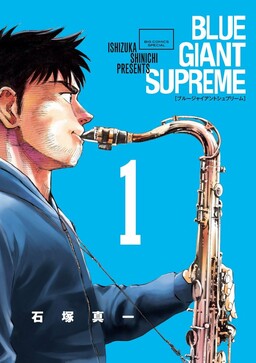
Blue Giant Supreme
Yu's review of Blue Giant Supreme — Dai Miyamoto leaves Japan with his tenor sax, lands alone in Munich, and builds a band across Europe. The Europe arc of Shinichi Ishizuka's jazz manga. No English release yet, but the Japanese volumes are out there.

Slice of Life
Blue Giant Explorer
Yu's review of Blue Giant Explorer — Dai Miyamoto lands in Seattle with a tenor sax and a thousand dollars, buys a used Honda, and drives across America building a band from strangers. The third chapter of the Blue Giant saga, complete in 9 volumes, only in Japanese.
Slice of Life / Drama
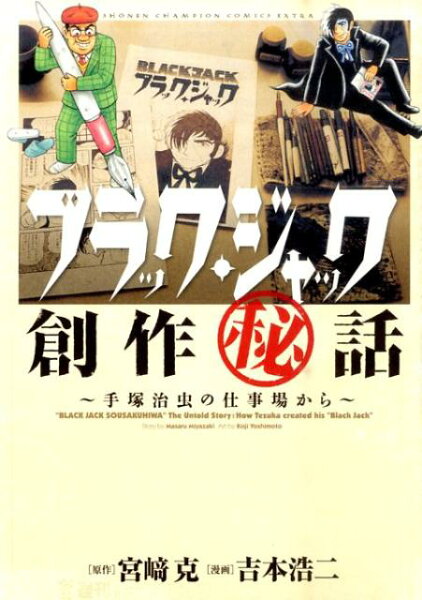
Black Jack Sousaku Hiwa
Black Jack Sousaku Hiwa is a documentary manga about how Osamu Tezuka created Black Jack — told through the editors and assistants who worked beside him, capturing both the genius and the human cost of his impossible work ethic.
Slice of Life / Drama
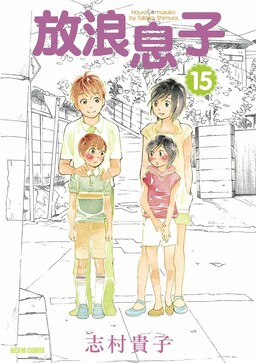
Wandering Son
Yu's review of Wandering Son — Shuichi Nitori is a boy who wants to be a girl; his new friend Yoshino Takatsuki is a girl who wants to be a boy; the manga follows both of them from elementary school through adolescence as they navigate gender identity, friendship, and growing up; a gentle, serious work about transgender experience.

Slice of Life
Sunny
Yu's review of Sunny — at a group home for children whose families cannot take care of them, a broken-down old car called Sunny becomes a private space where the children go to be alone; Taiyo Matsumoto's meditation on childhood longing, on what it means to be left, and on how children find ways to survive what adults do to them.
Slice of Life
Stargazing Dog
Yu's review of Stargazing Dog — Daddy adopts a puppy named Happie; the manga follows Happie's life with Daddy through family happiness, family collapse, and the road journey that is their final chapter together; narrated from Happie's perspective, the story is exactly as emotionally devastating as its premise suggests.
Written by
Yu
Manga Enthusiast from Japan
I grew up in Japan and manga literally saved me during a tough time in elementary school. My English isn't perfect, but my love for manga is real — and I want to share it with you.
Disclosure: This post contains affiliate links. As an Amazon Associate, I earn from qualifying purchases at no extra cost to you.