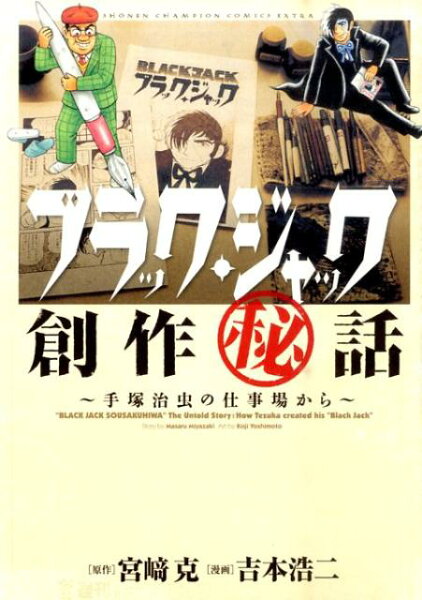
Black Jack Sousaku Hiwa Review: The Manga About a Genius Who Almost Broke Everyone Around Him
by Katsu Miyazaki (story) / Koji Yoshimoto (art)
Read the first volume. If it doesn't hook you, put it down. It'll hook you.
Buy Black Jack Sousaku Hiwa on Amazon →*Affiliate link — I earn a small commission at no extra cost to you.
I grew up worshipping Osamu Tezuka without ever meeting the man behind the work. To me he was a name on a spine, the "god of manga," a figure so far above the rest that he stopped feeling like a person. Then I read Black Jack Sousaku Hiwa, and for the first time he became a human being — exhausting, maddening, impossible to work for, and somehow more amazing for it.
I'm not going to pretend my English is perfect. But I need you to understand something: this is not a polite tribute book. It's a record of what it actually cost the people around Tezuka to help him make the manga I loved. And reading it changed how I look at every page he ever drew.
Quick Take
- A documentary manga about how Tezuka created Black Jack, told through interviews with his real editors and assistants
- It refuses to be a hagiography — it shows the genius and the damage side by side
- Rated T (Teen): no graphic content, but the unflinching look at overwork and deadline pressure gives it real weight
Story Overview
The book opens on a single unforgettable image: an Akita Shoten editor, waiting yet again for pages that aren't coming, loses control and drives his fist into a pillar at Tezuka Productions. That punch — and the hole it left — is where the series starts, and it tells you immediately this won't be a gentle nostalgia trip.
From there, Sousaku Hiwa moves through Tezuka's career as a "documentary manga" (実録漫画), reconstructed from interviews the creators conducted with the editors, assistants, and family who were actually there. The middle of the series builds case after case of his impossible pattern: never refuse a job, never finish early, always go right up to the wire where the printing press itself is waiting. The turning point isn't a single event so much as the slow realization — for the reader and the assistants alike — that Tezuka's genius and his self-destruction were the same engine.
By the end, the series has placed his work ethic next to others (most memorably Go Nagai, who calmly delivered four serializations at once with no minder), and lets you sit with the uncomfortable truth: the methods that produced masterpieces also nearly broke the people in the room.
Characters
Osamu Tezuka — We see him almost entirely through others' accounts, which is the smartest choice the book makes. The Tezuka here is a man who literally drew in a headband and running gear "like a manual laborer," who demanded the impossible and somehow delivered it, and who could not stop competing — even with friends. The famous account of his jealousy toward Shotaro Ishinomori over the experimental work Jun sits in this same emotional territory: genius that could not bear to be outshone.
The editors — The real protagonists. Their arc is the slow grind from professional pride into raw despair. The pillar-punching editor is the extreme case, but the whole book is built on people negotiating the gap between what Tezuka promised and what he physically delivered.
The assistants — Young people pulled into all-night sessions, sometimes asked to draw entire pages from Tezuka's verbal instruction. Their wonder and their exhaustion are the emotional core; one assistant's offhand opinion famously triggered Tezuka to throw out finished work and start over.
Go Nagai (as counterpoint) — Appears to throw Tezuka into relief. Same brutal conditions, four simultaneous serializations, all finished — no "minder" required. He's the book quietly asking whether the legend had to come at such a cost.
What I Love About It
There's one episode I keep coming back to, and it's the New York phone call. Tezuka flew to the United States with pages still unfinished — no fax, no email, this is the analog era — and proceeded to dictate an entire Black Jack chapter to his assistants in Japan over an international telephone line. He told them where to draw the panel borders using graph paper ("draw a line to such-and-such centimeters in the top right"), and for backgrounds he'd reference his own past work by memory: use the building from page five of a specific earlier chapter. No notes. No reference sheets. The whole thing held in his head.
What gets me about this isn't the showmanship. It's what it reveals about how completely the work lived inside him. I spent my childhood thinking great manga came from quiet inspiration, the artist alone at a desk. This scene shattered that. The genius wasn't the drawing — the assistants did the drawing here — it was the architecture, the entire chapter existing fully formed in one man's memory, transmittable down a phone line continents away. I read that chapter and finally understood what "god of manga" was supposed to mean, and it wasn't a compliment about beauty. It was about a mind that worked on a scale I can't imagine.
Memorable Scene ⚠️ Spoiler Warning
The scene that breaks me every time ties back to that opening pillar. Deadline already blown, a finished Black Jack chapter sitting ready to go to print — twenty completed pages — and a young new assistant makes an honest, lukewarm comment about it. Tezuka takes the comment to heart, collects every page, and announces he's scrapping the whole thing to redraw a completely different story. He asks for eight hours to draw twenty new pages.
The editor in the room can't take it. He's shaking with helpless rage, and that's the moment his fist goes into the wall — the panel makes a point of telling you it really sank in. And then the part that destroys me: Tezuka does it. Twenty pages, eight hours, a better story. The impossible demand met. You're supposed to feel triumph, and you do, but it's tangled up with the image of a grown man who just punched a hole in a pillar out of despair. That contradiction — the magic and the cruelty being inseparable — is the whole book compressed into one sequence.
Pros & Cons
Pros
- Built from real interviews, so the astonishing anecdotes are documented, not invented
- Refuses hagiography — the human cost gives it weight far beyond a tribute
- Complete in 5 volumes; tight, no padding
- Won Kono Manga ga Sugoi! 2012 (men's list, #1) and got a live-action TV drama — it landed hard in Japan
Cons
- No official English edition exists yet, so you'll need Japanese
- It hits hardest if you've already read Black Jack itself
- It celebrates a work culture (pushing the printing press to its limit, near-total overwork) that, viewed soberly, is genuinely troubling — and the book mostly frames that as heroic. If you can't read about glorified overwork without flinching, this won't work for everyone.
Is Black Jack Sousaku Hiwa Worth Reading?
Yes — especially if you love Tezuka or care about how manga actually gets made. It's a documented, unflinching portrait of genius and its cost, complete in five volumes, with anecdotes (the wall punch, the New York phone call, the twenty-pages-in-eight-hours redraw) you won't forget. The only real barriers are the lack of an English edition and the book's occasionally uncritical worship of brutal overwork.
Where to Buy
No English release yet. That just means you find it before everyone else does.
Search for it on Amazon.co.jp →
This post contains affiliate links. If you purchase through these links, I may earn a small commission at no extra cost to you. As an Amazon Associate, I earn from qualifying purchases.
*Affiliate link — I earn a small commission at no extra cost to you.
More Manga You Might Like
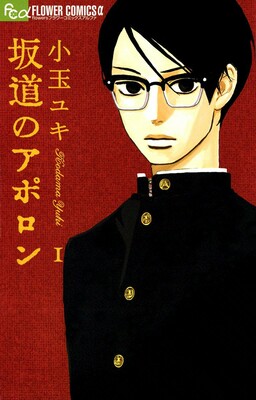
Slice of Life / Drama
Kids on the Slope
Yu's review of Kids on the Slope (Sakamichi no Apollon) — 1966 Sasebo, Kyushu. Kaoru is a lonely classical pianist; Sentaro is a half-American delinquent who plays jazz drums in the basement of a record shop. Their friendship grows through music, the school festival, and a reunion years later at a church.
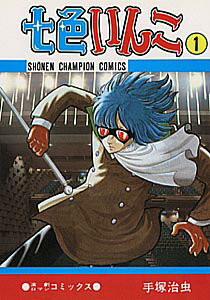
Slice of Life / Drama
Nanairo Inko
Nanairo Inko (Rainbow Parakeet) follows a master of theatrical impersonation who steals identities to perform stage roles others have abandoned — Osamu Tezuka's late-career meditation on performance, identity, and the moral economy of art.
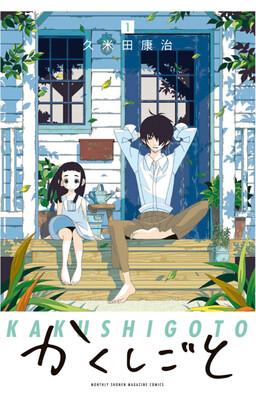
Slice of Life
Kakushigoto
Yu's review of Kakushigoto by Koji Kumeta — an ecchi manga artist hides his job from his daughter Hime, and a daily gag comedy slowly reveals itself as a father-daughter love story across ten years.
Slice of Life / Comedy
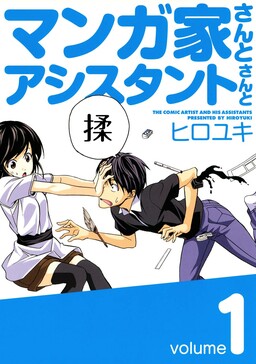
Mangaka-san to Assistant-san to
Yu's review of Mangaka-san to Assistant-san — manga artist Aito Yuuki draws romance manga but has never had a girlfriend; his assistant Ashisu Sahoto helps him understand women so he can write them authentically, which leads to increasingly absurd 'research' situations.
Slice of Life / Historical Drama
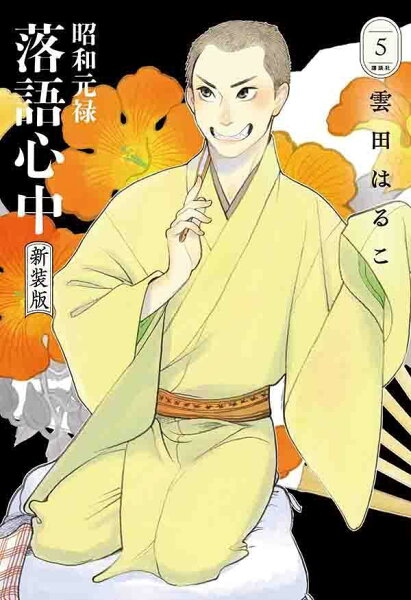
Shouwa Genroku Rakugo Shinjuu
Shouwa Genroku Rakugo Shinjuu follows the world of rakugo — traditional Japanese comic storytelling — through two performers across two generations: the transcendent and self-destructive Yakumo, and the student Yotaro who inherits what Yakumo cannot save.
Slice of Life / Drama
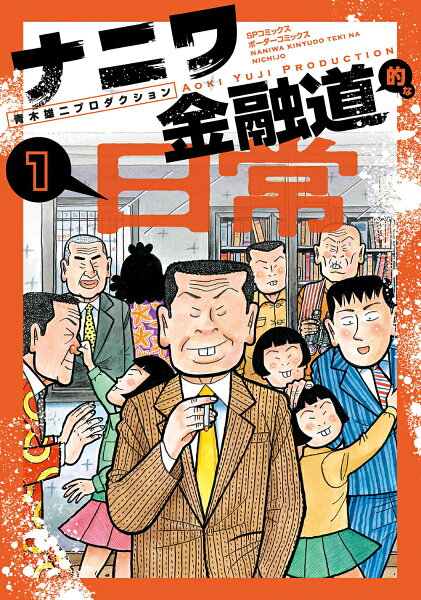
Naniwa Kinyuudo
Naniwa Kinyuudo follows new employee Ginji Mita at a small-loan finance company in Osaka — a manga that uses the world of moneylending and debt collection to create one of manga's most honest portraits of Japanese economic life.
Written by
Yu
Manga Enthusiast from Japan
I grew up in Japan and manga literally saved me during a tough time in elementary school. My English isn't perfect, but my love for manga is real — and I want to share it with you.