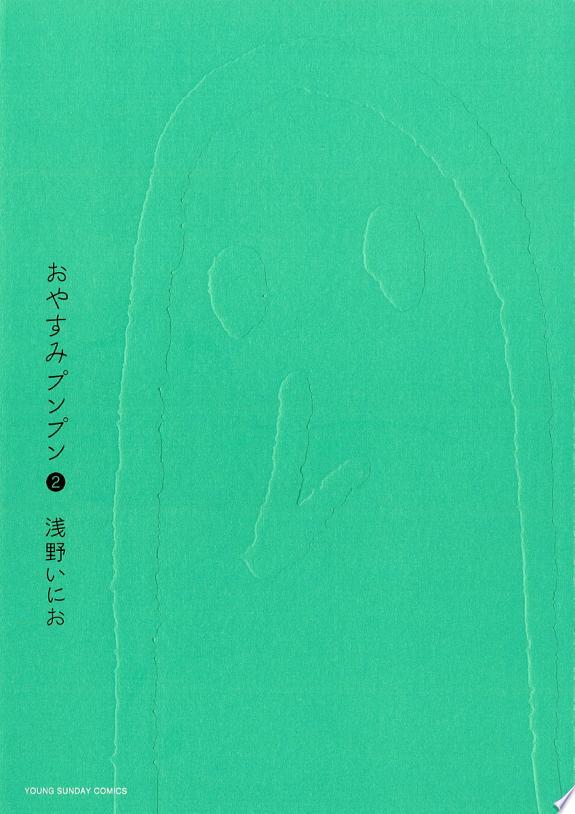
Goodnight Punpun Review: A Boy Drawn as a Bird Grows Up and the World Does Not Get Better
by Inio Asano
Read the first volume. If it doesn't hook you, put it down. It'll hook you.
Buy Goodnight Punpun on Amazon →*Affiliate link — I earn a small commission at no extra cost to you.
When I was in middle school, a teacher asked our class what we wanted to be when we grew up. Everyone answered. I don't remember what I said. I remember thinking: what if I grow up and things are still like this?
Goodnight Punpun is the manga that answered that question honestly.
Quick Take
- Punpun is drawn as a crude bird-symbol while everyone around him is human — Inio Asano designed this so readers would project themselves onto him, and it works uncomfortably well
- Follows one boy from elementary school through his early twenties, across 13 volumes of accumulating damage
- Age rating: M (Mature) — suicide, abuse, violence, sexual content; read only when you are emotionally stable
Who Is This Manga For?
- Readers who want a manga that takes depression and childhood trauma with complete honesty — not as a plot device, but as the actual subject
- Anyone who has grown up in a house where violence was the background noise
- Fans of Inio Asano's other work (Solanin, Dead Dead Demon's) who want to see what he was building toward
- Readers in a stable place who can sit with difficult material — this is not casual reading
Content Warnings & Age Rating
Age Rating: M (Mature) Content Warnings: Suicide and suicidal ideation, self-harm, abuse (physical and sexual), violence including a killing, sexual content, severe depression, psychological horror throughout
This is the most intense content in any manga covered on this site. If you are in a difficult period right now, please come back to this one later. It will still be here.
Yu's Rating
| Category | Score |
|---|---|
| Story Depth | ★★★★★ |
| Art Style | ★★★★★ |
| Character Development | ★★★★★ |
| Accessibility for Non-Japanese Readers | ★★★★★ |
| Reread Value | ★★★★★ |
Why Is Punpun Drawn as a Bird?
This is the question everyone asks first. The answer matters.
Inio Asano deliberately made Punpun a crude, sketchy bird-symbol so that readers would project themselves onto him. When you look at a realistically drawn character, you observe them. When you look at a simple abstract shape, you become them. Asano wanted you inside Punpun's perspective, not watching it from outside.
But there is a second reason that becomes clear over 13 volumes: the form changes. When Punpun is a happy child, he is a small, simple bird. As his psychological state deteriorates, the form transforms — it grows eyes, darkens, eventually distorts into something that looks like a four-sided pyramid, then something more demonic. The bird is not cute. The bird is a real-time psychological readout.
His parents and family members are also drawn as birds. The entire Onodera family exists outside the realistic visual world that everyone else inhabits. This is not accidental. The series is about a family so damaged by what happened inside their house that they can no longer fully exist in the world outside it.
Story Overview
Punpun Onodera is in elementary school. His father beats his mother. His mother ends up in the hospital after an attempted suicide. His father goes to prison. Punpun is sent to live with his uncle.
In class, a girl named Aiko Tanaka transfers in. Punpun falls immediately, completely in love with her. They make a promise — they will run away together, to Kagoshima, and everything will be better there. The promise of Kagoshima runs through the entire series like a thread that neither of them can let go.
The series follows Punpun through middle school, high school, and his early twenties. He meets a woman named Sachi who is kind to him and who he cannot bring himself to stay with. He keeps finding Aiko, and losing her, and finding her again. The love between them is real. It is also the most destructive thing in both their lives.
In the final arc, Punpun and Aiko finally try to leave for Kagoshima. Before they can leave, Aiko's abusive mother stabs Aiko. Punpun fights the mother. He strangles her to death. They bury the body and run.
They make it to Tanegashima. One night, while Punpun sleeps, Aiko hangs herself.
The ending is this: after Punpun serves his time and eventually finds something like an ordinary life, Asano cuts to a school classroom. A new girl has transferred in. A boy sees her. He falls immediately, completely in love — "just like Punpun did with Aiko, eleven years before." The cycle begins again. Not in a hopeful way. In a structural way.
Characters
Punpun Onodera — He is not a likable protagonist in the conventional sense. He is passive, dishonest, sometimes cruel, and makes almost every wrong choice available to him. This is the point. He is a child whose emotional development was arrested by what happened in his house, and he never fully recovers. Watching his bird-form change across the series — from simple sketch to something dark and distorted — is one of the most precise pieces of visual storytelling in manga.
Aiko Tanaka — Her story is given as much space and weight as Punpun's. She is not a prize or a symbol. She has her own damage, her own lies, her own moments of cruelty and tenderness. The tragedy of Aiko is that her love for Punpun is genuine — it just cannot save either of them. Her arc ends on Tanegashima in the middle of the night, and if you do not see it coming, it is one of the most devastating pages in manga.
Sachi Nanjo — She appears in Punpun's young adult years as an aspiring manga artist. She is the closest the series has to a person who is trying to live with her damage rather than be destroyed by it. Punpun's inability to choose her is one of the series' most painful points.
Uncle Yuichi — His life runs in parallel with Punpun's and serves as a preview of what Punpun might become. Yuichi has his own history of violence and guilt, his own attempt at a normal life with a woman named Midori, and his own eventual collapse. Asano uses him to show that the damage Punpun carries is generational.
God — A bizarre entity that Punpun prays to as a child. God is drawn as a strange deformed man and answers every prayer with advice that is technically a response but never actually helpful. This is Asano's most precise statement about the relationship between hope and reality, and it is in the first chapter.
Art Style
Asano's art is among the finest in manga. The backgrounds are photographically detailed — real Tokyo streets, real light, real textures. Human figures are drawn with complete precision. Against this, Punpun's crude bird-form becomes the visual language of the series: this is what dissociation looks like. This is what it means to feel like you are not fully in the real world everyone else inhabits.
The final volumes, as Punpun's self-image distorts and darkens, contain some of the most technically extraordinary panels in his career. The art is doing something the words cannot.
Cultural Context
Goodnight Punpun is read in Japan as an examination of a specific kind of damage: the boy from a violent household who is never taught what to do with what happened to him. In Japan, male emotional suppression is not a background assumption — it is an active cultural instruction. Punpun is a precise portrait of what that produces.
The series received significant engagement from Japanese mental health communities upon publication. It was selected as a recommended work at the 13th Japan Media Arts Festival. By 2019, it had reached 3 million copies sold. It was nominated for an Eisner Award in 2017.
What I Love About It
Volume 1, chapter 1. Punpun is a child. He asks God to make his family okay. God answers him. The answer is useless. Punpun accepts it anyway, because he is a child and he doesn't know what else to do.
I have read that scene many times. Each time I read it, I understand Punpun's entire life — every wrong choice, every act of self-destruction, everything that follows across 13 volumes — from those two pages alone. He is a child who learned that hope does not work and kept hoping anyway. That combination is what breaks people.
The Kagoshima promise. They are ten years old. They will leave and everything will be better. They spend the next decade circling back to this promise they made when they were too young to know what they were promising. By the time they finally go, it is too late for both of them. And yet. It was real. The love was real. Asano never lets you forget that.
What I love most about this manga is that it does not let the reader feel superior to Punpun. You understand every bad choice because you are inside his perspective. By the time he does something terrible, you have been living in his psychological state long enough that you understand why. That is not comfortable. It is also the most honest thing a piece of fiction can do.
What English-Speaking Fans Say
Goodnight Punpun is one of the most discussed manga in Western online communities, specifically in the context of "manga that affected you most." It is one of the few manga that regularly appears in mainstream literary conversations alongside works like A Little Life and The Road — fiction that is willing to go somewhere genuinely dark.
Western readers who grew up in houses like Punpun's recognize what Asano is documenting. The most common response from English-speaking readers is not "this is depressing" — it is "I felt seen in a way I didn't expect."
The content warnings also come up consistently in English-language discussions. Readers are strongly advised to approach this one with awareness of what it contains.
Memorable Scene ⚠️ Spoiler Warning
Tanegashima. The night Aiko dies.
They have traveled together for weeks. The relationship has become brutal — desperate, hostile, exhausted. But on their last evening on the island, something softens. Asano draws them quiet, close to each other, without violence. Punpun falls asleep.
He wakes up alone.
Asano does not show the act. He shows Punpun looking for Aiko. He shows what Punpun finds. The page is spare, almost empty. After hundreds of pages of accumulating damage, the quiet is the worst part.
The ending returns to a school classroom. A boy sees a girl. He falls in love instantly, the same way Punpun fell in love with Aiko in chapter 1. "Just like Punpun, eleven years before." Asano is not suggesting the cycle can be broken. He is suggesting it is structural. That is either the most nihilistic ending in manga or the most honest, depending on where you stand.
I have read it twice. I still do not know which interpretation is correct. I think that is intentional.
Similar Manga
| Title | Its Approach | How Goodnight Punpun Differs |
|---|---|---|
| Flowers of Evil | Adolescent psychological disturbance, literary tone, provocative | Less violent, more internal — Punpun goes further into adult destruction |
| A Silent Voice | Depression, guilt, self-hatred, ultimately hopeful | Punpun does not offer the same redemption arc |
| Solanin | Young adult drift, relationships, Asano's other major work | Lighter in tone, more accessible, same emotional honesty |
| March Comes in Like a Lion | Depression, isolation, found family as recovery | More hopeful; good starting point before Punpun |
Reading Order / Where to Start
Volume 1. But read the content warnings first and take them seriously.
VIZ publishes omnibus editions that collect 3 volumes each — a good format for this series, which reads better in longer sessions than week by week.
Official English Translation Status
VIZ Media published the complete English translation across the 13-volume series, also available in omnibus format. All volumes are in print.
Pros & Cons
Pros
- The bird-symbol formal device is one of manga's greatest creative decisions
- Every major character has a complete, specific arc
- The art is technically extraordinary — Asano at his peak
- 13 volumes, complete, no waiting
- Among the most formally ambitious manga published in English
Cons
- The content is the most intense in this genre — this is not hyperbole
- Requires genuine emotional preparation; not a "whenever" read
- The ending is deliberately unresolved in ways that some readers find frustrating
- If you need a protagonist you can root for cleanly, Punpun will not give you that
The pacing is relentless in the final volumes. That is either its greatest strength or its hardest obstacle, depending on you.
Is Goodnight Punpun Worth Reading?
Yes — but only when you are ready for it.
If you want a manga that takes the actual experience of growing up in a broken home seriously, with formal ambition and complete emotional honesty, there is nothing else like it. The bird-symbol device alone is worth studying. The Aiko arc is one of the best-constructed long-form character studies in manga.
If you are looking for a manga that offers comfort or resolution, this is not it. Read March Comes in Like a Lion first. Then come back to Punpun.
Format Comparison
| Format | Notes |
|---|---|
| Omnibus (3-in-1) | VIZ; recommended format — the series rewards longer reading sessions |
| Individual volumes | Available; works but the omnibus pacing is better |
| Digital | Available via VIZ and Kindle |
Where to Buy
Read the first volume. If it doesn't hook you, put it down. It'll hook you.
This post contains affiliate links. If you purchase through these links, I may earn a small commission at no extra cost to you. As an Amazon Associate, I earn from qualifying purchases.
*Affiliate link — I earn a small commission at no extra cost to you.
Reading Guides
More Manga You Might Like
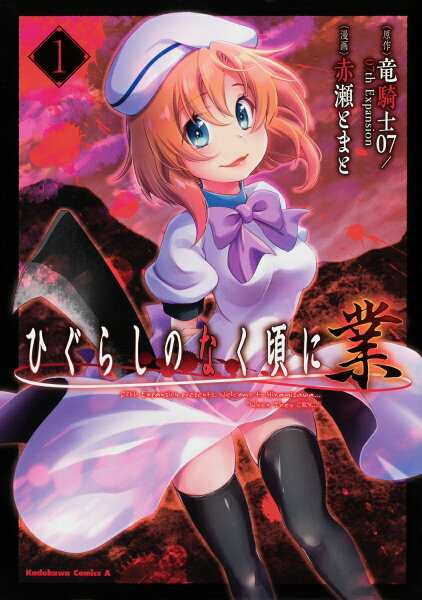
Horror / Mystery
Higurashi When They Cry
Yu's review of Higurashi When They Cry — Keiichi Maebara moves to the rural village of Hinamizawa and discovers that every year, during the village festival, someone dies and someone disappears; the story resets across multiple arcs, each showing different versions of the same events as Keiichi and his friends try to understand and survive what the village is doing to them.
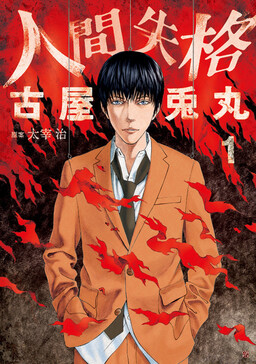
Horror / Literary
No Longer Human
Yu's review of No Longer Human manga adaptation — Usamaru Furuya adapts Osamu Dazai's 1948 autobiographical novel into a contemporary setting; the protagonist Yozo Oba is a young man who cannot believe himself to be a human being in the same sense as the people around him; the manga follows his descent through addiction, relationships, and the inability to exist in the world.

Horror
MW
Yu's review of MW — Yuki Michio is a beautiful, charming, amoral man who survived exposure to a chemical weapon as a child; the event destroyed his conscience; he works toward mass destruction while maintaining the appearance of a successful society member; a priest who loves him tries to hold him back; Osamu Tezuka's 1976 thriller about a man without conscience.
Horror / Psychological Thriller
Monster
Yu's review of Monster — a brilliant surgeon saves a boy's life over a hospital director's, ruins his career, and ten years later discovers the boy he saved has become a serial killer who is now hunting him.
Horror / Thriller
Dragon Head
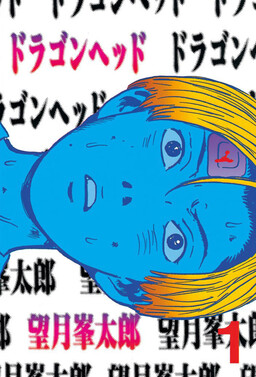
Yu's review of Dragon Head — a school-trip train derails inside a mountain tunnel and three classmates crawl out into a Japan destroyed by an unexplained cataclysm. Minetaro Mochizuki's 10-volume survival horror about fear itself, the thing that breaks people faster than the disaster does.
Horror / Psychological
Blood on the Tracks
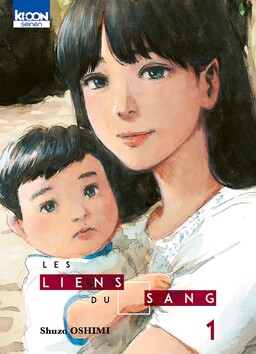
Yu's review of Blood on the Tracks (Chi no Wadachi) by Shuzo Oshimi — Seiichi Osabe is an ordinary middle schooler whose devoted mother Seiko pushes his cousin off a cliff during a mountain hike, and the boy becomes the only witness. A 17-volume slow-burn study of maternal possessiveness as horror.
Written by
Yu
Manga Enthusiast from Japan
I grew up in Japan and manga literally saved me during a tough time in elementary school. My English isn't perfect, but my love for manga is real — and I want to share it with you.
Disclosure: This post contains affiliate links. As an Amazon Associate, I earn from qualifying purchases at no extra cost to you.