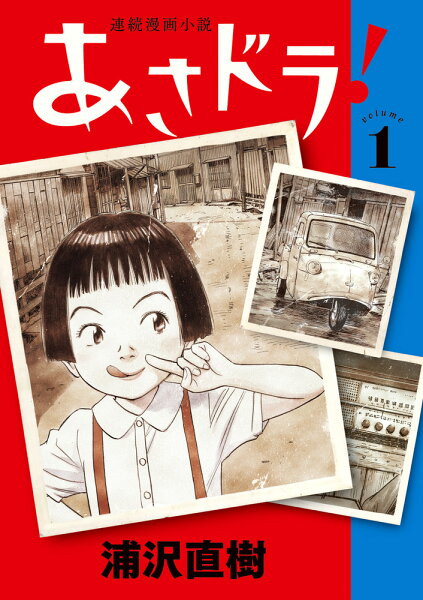
Asadora! Review — Urasawa's Late-Career Disaster Epic Starts With a Typhoon and a Footprint
by Naoki Urasawa
Read the first volume. If it doesn't hook you, put it down. It'll hook you.
Buy Asadora! on Amazon →*Affiliate link — I earn a small commission at no extra cost to you.
I read 20th Century Boys in high school and it changed what I thought manga could be. I read Monster in college and it changed how I read fiction in general. I've followed Naoki Urasawa for fifteen years and the question I always come back to with his new work is: does he still have it?
Asadora is the answer. He still has it.
Quick Take
- Naoki Urasawa's ongoing late-career disaster-mystery, beginning with the 1959 Isewan Typhoon and slowly expanding into something much larger
- The protagonist Asa is one of Urasawa's best characters in years — a tough, generous, funny fifth-grader who carries the series with the same grounded charm Yawara or Monica had
- Age rating: T (Teen) — disaster sequences are intense but the violence is restrained
Is Asadora! Good? (Short Answer)
Yes. If you've read any Urasawa before — Monster, 20th Century Boys, Pluto, Billy Bat — Asadora is doing what late Urasawa does best: long patient buildups, ordinary protagonists, slow-creeping mystery, and a sense that the small story you're following is connected to something national and terrible.
The opening volume is among the strongest first volumes Urasawa has ever drawn. The Isewan Typhoon sequence is genuinely harrowing. Asa as a protagonist works immediately. By the time the giant footprint shows up at the end of volume 1, you're already invested.
If you have not read Urasawa before — Asadora is a good entry point. It's tighter than 20th Century Boys, simpler than Monster, and currently 9 volumes in English. You can read everything that exists in English in a weekend.
The only honest negative: it's ongoing. The mystery is unresolved. If you cannot tolerate that, wait for completion.
What Is Asadora! About?
September 1959, Nagoya. Asa Asada is a tough fifth-grade girl from a large family. Five siblings. Father overseas working. Mother stretched thin. Asa is the kind of kid who fights her brothers, runs errands for the neighborhood, and gets called "boyish" by adults who don't quite know what to make of her.
Her mother goes into labor on the worst possible day. Asa is sent to find a doctor as the Isewan Typhoon — a real typhoon, one of the most destructive in Japanese history — bears down on Nagoya.
On the way, a young thief named Kasuga breaks into Asa's home. He's seventeen, hungry, on the run for petty crimes. He has no idea what he's stumbled into. By the time he realizes Asa is the kind of fifth-grader who will fight him, the typhoon has hit. The wind takes Asa's house with the two of them still inside.
They survive together. By the time they reach what's left of the city, Asa's family is gone. The Isewan Typhoon kills approximately 5,000 people in real history. Urasawa's version of the disaster is rendered with documentary care.
In the aftermath, walking through the destruction, Asa and Kasuga find something the disaster did not cause. A giant footprint. Five meters across. The shape of a foot.
That's volume 1. The rest of the series is what Asa does with the rest of her life — and what the footprint turns out to mean.
Who Is This Manga For?
- Urasawa readers who want his current work
- Disaster/historical fiction fans — the Isewan Typhoon sequence is among the best disaster rendering in any manga
- Slow-mystery enjoyers — this isn't twist-per-chapter; the reveals come patient and earned
- Readers who want strong child protagonists — Asa is in the great tradition of Urasawa kids (Yawara, Monica, Kenji as a child)
- Newcomers to Urasawa looking for a current series rather than committing to 20th Century Boys' 22 volumes
Content Warnings & Age Rating
Age Rating: T (Teen) — 13+ Content Warnings: Intense natural disaster sequences (the typhoon arc); implied death of family members; some on-page violence; themes of childhood trauma and loss; military/government conspiracy elements in later volumes
The violence is largely restrained and never gratuitous. The disaster sequences are the heaviest content — readers with sensitivity to typhoon/flood imagery should be aware that volume 1 spends significant pages on it.
Story Overview
Volumes 1–2 cover the typhoon and immediate aftermath, ending with the discovery of the footprint and Asa's first decisive choice about what she wants to do with her life.
Volumes 3–5 jump forward several years. Asa is older, working at a small airfield, training as a pilot. The footprint mystery has not gone away — it has expanded. Other anomalies are appearing. The government is involved. There are people who know something and are not telling.
Volumes 6–9 (the current English run) move into the 1964 Tokyo Olympics era. Asa is now an adult. The mystery has acquired international dimensions. Kasuga is still in the story, and his relationship with Asa across two decades is the manga's emotional backbone.
Urasawa structures the series as a slow zoom-out. Volume 1 feels like a personal disaster story. Each subsequent arc reveals a wider frame. By volume 9, you understand that the personal story has always been part of something national. By the end (whenever the series ends), the frame will likely be wider still.
Characters
Asa Asada — One of Urasawa's best protagonists in years. She is stubborn, generous, funny, and physically brave in the way only certain children are — without thinking about the consequences. The series ages her across decades, and Urasawa's character work is sharp enough that adult Asa feels continuous with fifth-grade Asa without being identical to her.
Kasuga — The teenage thief who breaks into Asa's house at the worst possible moment. Urasawa writes him as someone who never planned to be a person Asa could depend on, but who finds himself becoming one. Their relationship is one of the manga's most affecting threads.
The Asada family — Asa's siblings, mostly seen in the early volumes. The series treats their absence later as emotional weight rather than plot device. We feel the family that's gone because we knew them.
The Adult Conspiracy — Various government, military, and corporate figures whose connection to the footprint anomaly emerges across the series. Urasawa is in his comfort zone here. The conspirators are individually plausible and collectively threatening.
Art Style
Urasawa at his current level. The disaster sequences in volume 1 use techniques Urasawa has refined across his career — environmental detail, escalating panel claustrophobia, sudden quiet pages where the eye rests on a single image. Faces remain his greatest strength. Asa's expressions across the series carry massive amounts of information; you can read her interior state from a single panel of her looking at something off-screen.
The kaiju-adjacent imagery — the footprint, the anomalies that follow — is rendered with restraint. Urasawa is not drawing a monster manga. He's drawing a mystery in which the monster's existence is one of the questions, not the main attraction.
Cultural Context
The Isewan Typhoon (伊勢湾台風) is a real historical event. On September 26, 1959, it made landfall in Nagoya, killed approximately 5,000 people, and stands as one of the most destructive typhoons in modern Japanese history. Urasawa is using a real disaster as his opening. The historical specificity matters — Asadora is rooted in Showa-era Japan the way Monster was rooted in Cold War Europe.
The manga also engages with mid-century Japan's modernization — the Tokyo Olympics era, the postwar economic boom, the cost of national reinvention. Urasawa has been mining this period since Billy Bat. Asadora is his most direct engagement with it.
What I Love About It
The Isewan Typhoon sequence.
Volume 1 spends most of its pages on the typhoon itself. Urasawa renders it with documentary specificity — the wind, the rising water, the houses coming apart, the specific texture of a 1959 Nagoya neighborhood being erased in hours. He does not lean on horror conventions. He just shows you what happens.
What I love is the sequence inside Asa's house when the wind first hits. Asa and Kasuga are trapped together — she's terrified of him, he's terrified of the storm, they're both terrified for very different reasons. The house starts to come apart. Asa, eleven years old, decides that the only way she and this stranger are going to survive is if they work together. She gives him a job. He, despite being a teenage thief who broke into her house, takes the job.
The moment they decide to survive together is rendered in maybe three panels. There's no dialogue about it. They look at each other. They understand the math. They get to work.
That sequence is the manga's emotional thesis. People who under any other circumstances would not be on the same side find themselves on the same side because the alternative is dying. Asadora keeps coming back to this — across decades, across the mystery, across the conspiracy. The question of who you choose to stand with when the wind starts.
What English-Speaking Fans Say
The English Urasawa community has welcomed Asadora warmly. The general response is that it's the best new Urasawa series since Pluto. Reddit and MAL discussions tend to focus on Asa as a character — she's universally well-received — and on speculation about where the giant-footprint mystery is heading.
The most common complaint is the slow pace. Urasawa is methodical, and readers who came to him via faster series sometimes find Asadora's deliberate buildup challenging. Readers who came to him via Monster or 20th Century Boys generally have no such issue.
Memorable Scene ⚠️ Spoiler Warning
The end of volume 1, when Asa and Kasuga have walked through the wreckage of Nagoya and emerged on the edge of the disaster zone. They've seen what the typhoon did. They're processing the scale of it — Asa especially, since her family is in there somewhere.
And then they see the footprint.
The panel is full-page. Urasawa draws it from low angle, looking up at the depression in the mud. It is impossibly large. There is no creature visible. Just the print.
What I love about the reveal is what Asa does. She doesn't scream. She doesn't speculate. She walks to the edge of the footprint, looks down into it, and asks Kasuga, very quietly, what kind of thing makes a footprint like this. He has no answer. Neither does the manga. The volume ends with that question, and the rest of the series is what Asa does with the answer.
That panel is why Urasawa is still working at this level. He builds a disaster sequence that would carry an entire other manga, and then turns it into the opening act of something bigger by way of a single image. No twist. No reveal. Just a footprint. And a girl who has decided she's going to find out.
Similar Manga
| Title | Its Approach | How Asadora Differs |
|---|---|---|
| 20th Century Boys (Urasawa) | Decades-spanning mystery with childhood roots | Asadora is tighter and faster; 20th Century Boys has more characters, more sprawl |
| Monster (Urasawa) | Patient psychological thriller across Europe | Same patience, smaller geographic scope, more disaster-driven |
| Pluto (Urasawa) | Mystery wrapped around a sci-fi premise | Pluto has a finished structure; Asadora is more open |
| 20th Century Boys: 21st Century Boys (Urasawa) | Late Urasawa sci-fi | Asadora is currently his most patient and most accessible |
Reading Order / Where to Start
Volume 1. The typhoon opening is the right entry. Do not skip ahead — Asa's character arc across the time skips relies on you knowing who she was at eleven.
Official English Translation Status
VIZ Media publishes Asadora in English in print and digital. Currently 9 volumes are out in English; new volumes release roughly annually. The series is ongoing in Japan.
Pros & Cons
Pros
- Urasawa working at his current peak; one of the best new mystery manga of the late 2020s
- Asa is one of his best protagonists in years
- The Isewan Typhoon opening is exceptional
- VIZ's English release is current — you can be reading what Japan reads
- Slow buildup pays off
Cons
- Ongoing — the mystery is not yet resolved
- Slow pace; readers who want twists per chapter will find it patient
- Some readers feel the time skips between arcs are too abrupt
- Urasawa's deliberate style is an acquired taste. It won't land for everyone, especially readers used to faster shonen pacing.
Is Asadora! Worth Reading?
Yes — for Urasawa fans, unconditionally. For new readers, also yes; this is one of his most accessible series. The current 9 volumes are a strong, complete-feeling reading experience even before the series concludes.
Format Comparison
| Format | Notes |
|---|---|
| Physical (VIZ) | 9 volumes available. Standard trade paperback size |
| Digital | Available via VIZ digital storefronts, Kindle |
| Omnibus | Not available |
Where to Buy
Read the first volume. If it doesn't hook you, put it down. It'll hook you.
This post contains affiliate links. If you purchase through these links, I may earn a small commission at no extra cost to you. As an Amazon Associate, I earn from qualifying purchases.
*Affiliate link — I earn a small commission at no extra cost to you.
More Manga You Might Like
Sci-Fi / Mystery
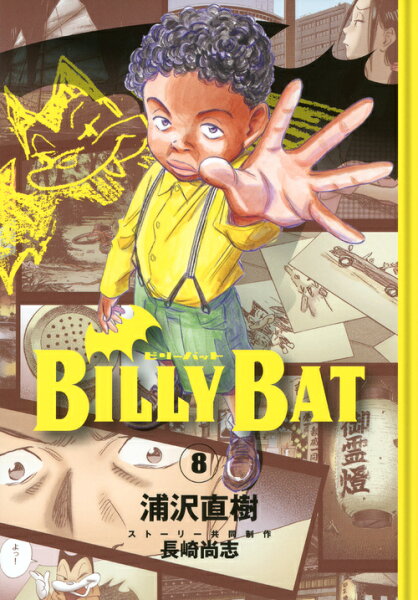
Billy Bat
A review of Naoki Urasawa and Takashi Nagasaki's Billy Bat — 20 volumes in Morning from October 2008 to August 2016. A century-spanning conspiracy centered on a cartoon bat symbol that may have shaped human history.
Sci-Fi / Drama
Galaxy Express 999
Galaxy Express 999 follows Tetsuro Hoshino, a young boy who boards the legendary space train 999 toward a planet where he can receive a free mechanical body — accompanied by the mysterious Maetel — and encounters, on each planet the train stops at, a different meditation on what it means to be human and whether eternity is worth what it costs.

Sci-Fi / Drama
Hyakuoku no Hiru to Senoku no Yoru
Hyakuoku no Hiru to Senoku no Yoru is Moto Hagio's manga adaptation of Ryu Mitsuse's celebrated science fiction novel — following the collapse of civilizations across billions of years, centered on figures from different historical periods who are drawn toward a single question: what is the nature of creation, and who is responsible for it?
Drama / Sci-Fi
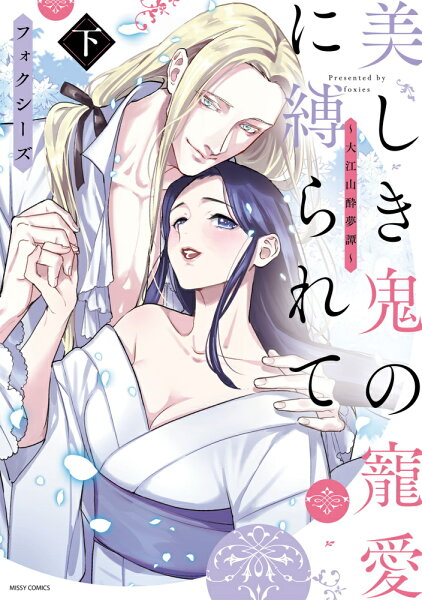
A Drunken Dream and Other Stories
A career-spanning Fantagraphics collection of ten Moto Hagio short stories — sci-fi, fantasy, and quiet domestic horror, from 1970's Bianca to 2007's The Willow Tree.
Sci-Fi / Drama
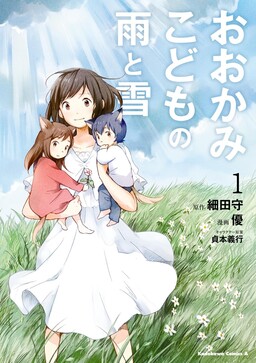
Wolf Children
Yu's review of Wolf Children — Hana falls in love with a man who is the last wolf-human; they have two children, Ame and Yuki, who can transform between human and wolf form; when their father dies suddenly, Hana must raise two wolf-children alone in a society that cannot know what they are.
Sci-Fi / Drama
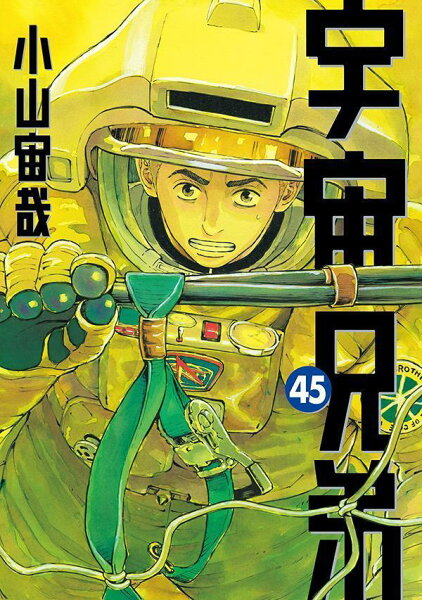
Space Brothers
Yu's review of Space Brothers — a 32-year-old man who was fired from his job reapplies to become a JAXA astronaut, following the dream he abandoned when his younger brother moved forward without him.
Written by
Yu
Manga Enthusiast from Japan
I grew up in Japan and manga literally saved me during a tough time in elementary school. My English isn't perfect, but my love for manga is real — and I want to share it with you.
Disclosure: This post contains affiliate links. As an Amazon Associate, I earn from qualifying purchases at no extra cost to you.