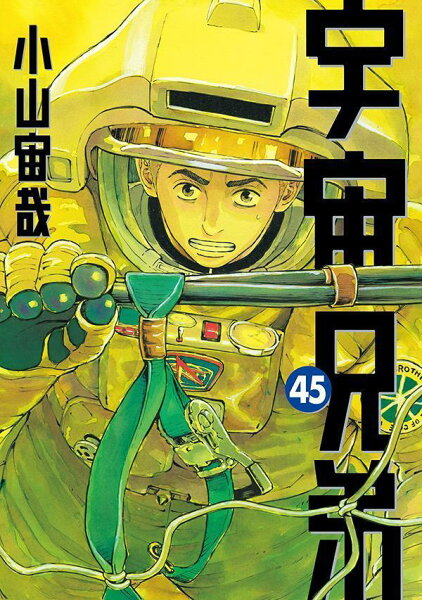
Space Brothers Review: It's Never Too Late to Chase the Dream You Abandoned
by Chuya Koyama
Read the first volume. If it doesn't hook you, put it down. It'll hook you.
Buy Space Brothers on Amazon →*Affiliate link — I earn a small commission at no extra cost to you.
Quick Take
- A 32-year-old man who was fired from his job follows his childhood dream and applies to JAXA — the Japanese space program — to become an astronaut, years after his younger brother already went to space
- The most grounded and human manga about space exploration — realistic, detailed, and genuinely inspiring
- 44+ volumes, ongoing, with an anime adaptation and a devoted readership
Who Is This Manga For?
- Readers who love space exploration and want manga that treats it with realistic detail
- Anyone who has set aside a dream and wonders if it's still possible
- Fans of drama with genuine stakes and adult characters making adult decisions
- Readers who want long-form manga with exceptional craft
Content Warnings & Age Rating
Age Rating: T (Teen) Content Warnings: Themes of professional failure and recovery, realistic depiction of astronaut selection process
Very accessible. One of the most emotionally positive manga in this guide.
Yu's Rating
| Category | Score |
|---|---|
| Story Depth | ★★★★★ |
| Art Style | ★★★★☆ |
| Character Development | ★★★★★ |
| Accessibility for Non-Japanese Readers | ★★★★☆ |
| Reread Value | ★★★★★ |
Story Overview
Mutta Nanba, at 32, is working at an automotive company and quietly failing. As a child, he and his younger brother Hibito promised to become astronauts. Hibito kept the promise — he is about to become the first Japanese astronaut to walk on the moon. Mutta got distracted by life and let the dream slip.
After being fired (for headbutting his boss who insulted Hibito), Mutta applies to JAXA's astronaut candidate program, encouraged by his mother who secretly submitted his application. What follows is the most detailed and realistic portrayal of astronaut selection in manga: group evaluation where everyone watches everyone, isolation tests, technical training, and the constant question of whether Mutta's specific combination of traits — gifted, late-blooming, fundamentally decent — is what the space program needs.
Characters
Mutta Nanba — One of manga's most fully realized adult protagonists. His self-doubt is real, his competence is genuine, and his specific way of thinking about problems — pattern recognition, encyclopedic memory, tendency to catastrophize before solving — is consistently portrayed with accuracy and warmth.
Hibito Nanba — The younger brother whose success is not a source of rivalry but of complicated love. His own arc, particularly after a crisis on the moon, develops him into a full person rather than a benchmark.
The Selection Candidates — The group of people competing alongside Mutta for limited slots; each becomes fully realized through the extended selection process.
Art Style
Koyama's art is realistic rather than stylized — the astronaut training sequences are rendered with documentary attention to detail, and the human characters are drawn with the expressive subtlety that emotional drama requires. The space sequences are appropriately awe-inspiring.
Cultural Context
Space Brothers is rooted in real JAXA history and procedures — the astronaut selection process, the psychological evaluation methods, and the technical requirements are depicted with genuine research. For Japanese readers, the manga has a patriotic resonance connected to Japan's actual space program. For Western readers, the universal human elements — age anxiety, professional failure, sibling relationships — translate completely.
What I Love About It
Mutta's specific intelligence. He does not win through conventional achievement. He wins through the kind of mind that sees connections others miss, that remembers everything and uses it in the right moment, that is chronically underestimated because it does not present as typical brilliance. That specificity — drawing a character whose gifts are real but unusual — is what makes Space Brothers exceptional.
The manga is also genuinely funny. Mutta's internal monologue, his social anxiety, and his relationship with his fellow candidates provide consistent warmth and humor alongside the drama.
What English-Speaking Fans Say
Space Brothers has a devoted Western following among readers interested in space and adult drama. The anime adaptation (77 episodes) is considered one of the better realistic drama anime. Western readers praise the realistic depiction of the space program and Mutta's character as one of manga's best adult protagonists.
Memorable Scene ⚠️ Spoiler Warning
Mutta's realization during the isolation test that he has been unconsciously solving the selection's hidden challenge — that his specific way of thinking has been the right approach all along — is the first major payoff of the manga and the moment readers fully commit to his arc.
Similar Manga
- Planetes — Realistic space, similar attention to human detail
- Vinland Saga — Adult protagonist, similar long-form patience
- Silver Spoon — Realistic setting, similar character development
- Bakuman — Adult dream-chasing, similar warmth
Reading Order / Where to Start
Volume 1. The selection arc that begins in volume 1 is where the manga proves its quality.
Official English Translation Status
Kodansha USA is publishing the series. Currently 20 volumes available in English (the series is much further ahead in Japan).
Pros & Cons
Pros
- Mutta is one of manga's great adult protagonists
- Realistic space program detail that is fascinating rather than dry
- Genuinely inspiring without being saccharine
- The ensemble cast is excellent
Cons
- Ongoing with significant gap between Japanese and English releases
- The realistic pacing means some story arcs develop slowly
- 20 English volumes is a commitment before reaching the Japanese current point
Format Comparison
| Format | Notes |
|---|---|
| Individual Volumes | Standard Kodansha USA release |
| Digital | Works well |
| Physical | Fine |
Where to Buy
Read the first volume. If it doesn't hook you, put it down. It'll hook you.
This post contains affiliate links. If you purchase through these links, I may earn a small commission at no extra cost to you. As an Amazon Associate, I earn from qualifying purchases.
*Affiliate link — I earn a small commission at no extra cost to you.
More Manga You Might Like
Sci-Fi / Drama
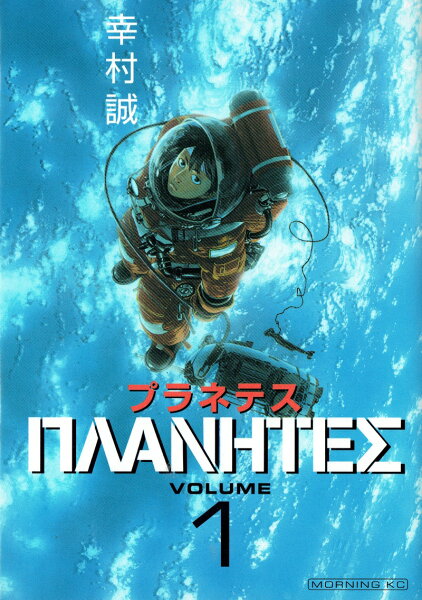
Planetes
Yu's review of Planetes — a crew of space debris collectors in the near future of 2075, where someone wants to be the first human to Jupiter and someone else just wants to survive the shift.
Sci-Fi / Drama
Galaxy Express 999
Galaxy Express 999 follows Tetsuro Hoshino, a young boy who boards the legendary space train 999 toward a planet where he can receive a free mechanical body — accompanied by the mysterious Maetel — and encounters, on each planet the train stops at, a different meditation on what it means to be human and whether eternity is worth what it costs.

Sci-Fi / Drama
Hyakuoku no Hiru to Senoku no Yoru
Hyakuoku no Hiru to Senoku no Yoru is Moto Hagio's manga adaptation of Ryu Mitsuse's celebrated science fiction novel — following the collapse of civilizations across billions of years, centered on figures from different historical periods who are drawn toward a single question: what is the nature of creation, and who is responsible for it?
Drama / Sci-Fi
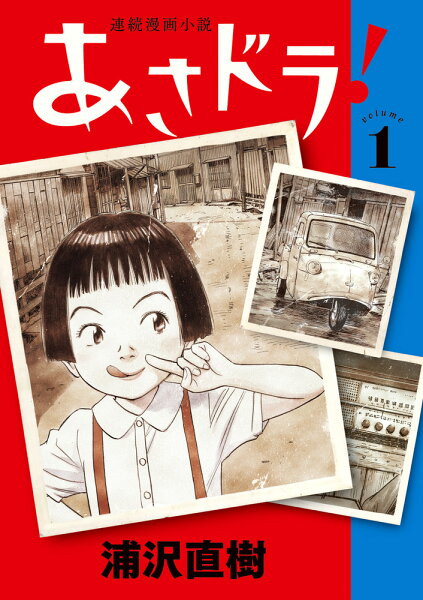
Asadora!
Nagoya, 1959. The Isewan Typhoon kills five thousand people. A tough fifth-grade girl named Asa is kidnapped by a young thief during the storm — and they survive together. Then they find a giant footprint. Naoki Urasawa's late-career masterwork builds slowly and patiently toward something much larger than the disaster it opens with.
Drama / Sci-Fi
A Drunken Dream and Other Stories
A career-spanning Fantagraphics collection of ten Moto Hagio short stories — sci-fi, fantasy, and quiet domestic horror, from 1970's Bianca to 2007's The Willow Tree.
Sci-Fi / Drama
Wolf Children
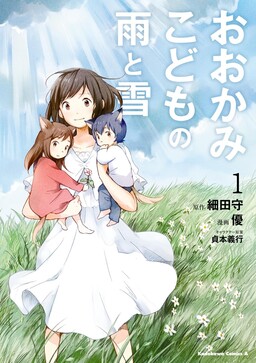
Yu's review of Wolf Children — Hana falls in love with a man who is the last wolf-human; they have two children, Ame and Yuki, who can transform between human and wolf form; when their father dies suddenly, Hana must raise two wolf-children alone in a society that cannot know what they are.
Written by
Yu
Manga Enthusiast from Japan
I grew up in Japan and manga literally saved me during a tough time in elementary school. My English isn't perfect, but my love for manga is real — and I want to share it with you.