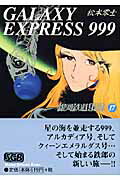
Galaxy Express 999 Review: The Boy Who Rode a Train to the Stars and Learned That Forever Is Not What He Thought
by Leiji Matsumoto
Read the first volume. If it doesn't hook you, put it down. It'll hook you.
Buy Galaxy Express 999 on Amazon →*Affiliate link — I earn a small commission at no extra cost to you.
What if you could live forever, and the price was everything that made you want to?
Quick Take
- Leiji Matsumoto's masterpiece — each planet is a different philosophical question about humanity, mortality, and desire
- Maetel is one of manga's most enigmatic figures; Tetsuro's journey is among the most emotionally complete in science fiction
- 18 volumes of episodic wonder that accumulates into something no individual episode contains
Who Is This Manga For?
- Science fiction readers who want the genre's philosophical questions treated with genuine depth
- Readers of classic manga who want to experience one of its undisputed masterpieces
- Anyone who has ever wondered what they would give up to live forever
- Fans of episodic storytelling where each episode is complete and the accumulation creates something beyond any individual entry
Content Warnings & Age Rating
Age Rating: T (Teen) Content Warnings: Death of major characters — mortality is the central theme. Existential themes. Mild violence. The ending requires emotional engagement with loss.
Suitable for teen readers.
Yu's Rating
| Category | Score |
|---|---|
| Story Depth | ★★★★★ |
| Art Style | ★★★★★ |
| Character Development | ★★★★★ |
| Accessibility for Non-Japanese Readers | ★★★★☆ |
| Reread Value | ★★★★★ |
Story Overview
Tetsuro Hoshino watches his mother killed by a machine-body aristocrat. He survives and encounters Maetel, a tall, beautiful woman who offers him a pass on the Galaxy Express 999 — the space train that makes stops across the galaxy on its way to the planet where mechanical bodies are given free to those who seek them.
Each planet the 999 stops at presents a different world, a different situation, and a different meditation on what it means to be human: a world where people have given up sleep, a world where people have given up memory, a world where people have given up the ability to die. At each stop, Tetsuro encounters someone who made the choice to trade something human for something mechanical — and sees what that trade cost them.
The question building through all of it: will Tetsuro still want a mechanical body when he reaches the planet that offers one?
Characters
Tetsuro Hoshino: A protagonist who starts with a specific revenge objective and arrives somewhere no revenge objective could have taken him — somewhere that could only be reached by the accumulation of what he witnesses on every stop between.
Maetel: The series' most powerful figure — present, guiding, warm, and withholding something that the reader senses throughout. Her nature and her relationship to Tetsuro are the series' central mystery.
The passengers and residents of each planet: Each person Tetsuro meets is a complete character whose situation illuminates one dimension of the series' central question.
Art Style
Leiji Matsumoto's art style is among the most distinctive in manga: elongated figures, expressive faces, space environments rendered with romantic grandeur. The Galaxy Express 999 itself — a steam locomotive moving through space — is visually iconic, and Matsumoto's space imagery has an elegance that decades of imitators haven't diminished.
Cultural Context
Galaxy Express 999 ran in Weekly Shonen King from 1977 to 1981. Leiji Matsumoto was simultaneously producing Captain Harlock and other works in an interconnected universe — 999 is the entry point for readers encountering that universe, and it is its emotional center.
The 1979 and 1981 films, directed by Rintaro, reached international audiences and remain among the most celebrated anime films of their era.
What I Love About It
I love Maetel.
She is the most carefully withheld character in the series — present in every episode, essential to every encounter, and never fully explained. Her relationship with Tetsuro is maternal and not; her agenda is benevolent and complicated; her own story is something the series reveals gradually and then allows to sit without resolution.
This is the handling of mystery done correctly: Maetel's unresolved nature is not a failure to explain but a choice to let the reader carry her as she is, which is more affecting than any explanation would be.
What English-Speaking Fans Say
Known in English-speaking markets primarily through the anime films, which achieved significant international distribution. The manga is less known but recognized by readers who seek it out as the more complete version — more planets, more encounters, more accumulation.
Memorable Scene ⚠️ Spoiler Warning
The moment when Tetsuro reaches the planet where mechanical bodies are given freely — and what he finds there, and what he chooses, and what Maetel says when he does. The accumulation of every previous stop makes this moment what it is. Read out of context, it would be less. Read at the end of the journey, it is everything.
Similar Manga
| Title | Its Approach | How Galaxy Express 999 Differs |
|---|---|---|
| Captain Harlock | Romantic outlaw figure in Matsumoto's universe | Philosophical journey manga vs. adventure manga — different emotional registers |
| Planetes | Near-future hard SF with human characters | Philosophical SF with romantic grandeur vs. grounded realism |
| Nausicaä of the Valley of the Wind | Epic SF manga with environmental themes | Different scope — Nausicaä is civilizational, 999 is personal |
Reading Order / Where to Start
Volume 1. The journey is sequential and the accumulation is the point — start at the beginning of the train ride.
Official English Translation Status
Galaxy Express 999 has no complete official English translation of the manga, though Viz Media published some volumes. The anime films are more widely available in English.
Pros & Cons
Pros
- One of the great works of science fiction in any medium
- Maetel is among manga's most enduring characters
- The episodic structure means every volume is satisfying while the whole is more than any part
- Complete — the journey ends where it should
Cons
- No complete English translation of the manga
- The 1970s art style requires adjustment for some modern readers
- The episodic format means no single chapter fully demonstrates the series' scope
- Emotional impact requires the full journey — difficult to recommend by excerpt
Is Galaxy Express 999 Worth Reading?
Unequivocally yes — this is one of the masterpieces of the medium, and 18 volumes is a small commitment for what it delivers. For every type of reader: the SF is serious, the characters are memorable, the emotional payoff is genuine. There are very few manga that qualify as essential regardless of genre preference. This is one of them.
Format Comparison
| Format | Notes |
|---|---|
| Physical | Japanese editions available |
| Digital | Available in Japanese |
| Omnibus | Collected editions available |
Where to Buy
No English release yet. That just means you find it before everyone else does.
*Affiliate link — I earn a small commission at no extra cost to you.
More Manga You Might Like

Sci-Fi / Drama
Hyakuoku no Hiru to Senoku no Yoru
Hyakuoku no Hiru to Senoku no Yoru is Moto Hagio's manga adaptation of Ryu Mitsuse's celebrated science fiction novel — following the collapse of civilizations across billions of years, centered on figures from different historical periods who are drawn toward a single question: what is the nature of creation, and who is responsible for it?
Sci-Fi / Drama
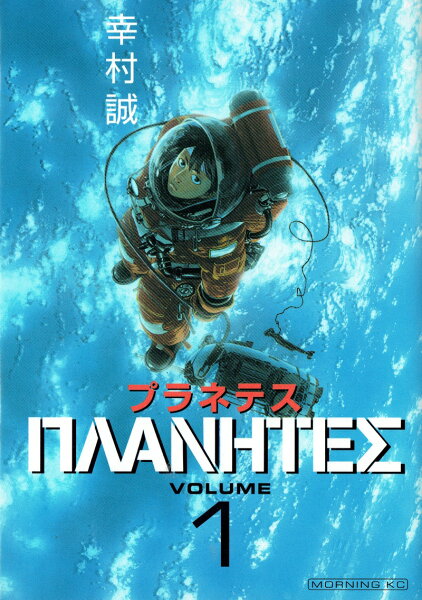
Planetes
Yu's review of Planetes — a crew of space debris collectors in the near future of 2075, where someone wants to be the first human to Jupiter and someone else just wants to survive the shift.
Sci-Fi / Mystery / Thriller
20th Century Boys
Yu's review of 20th Century Boys — childhood friends once wrote a 'Book of Prophecy' about saving the world. Decades later a cult leader called 'Friend' is using it as a blueprint for real mass murder, and convenience store manager Kenji realizes he helped write the script.
Sci-Fi / Adventure
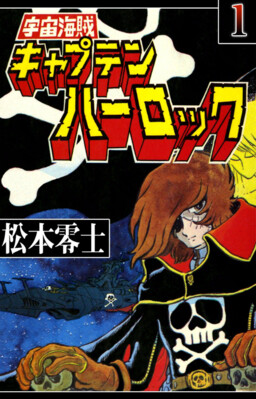
Captain Harlock
Yu's review of Captain Harlock — in 2977, humanity has grown comfortable and given up. Harlock is the one man who still fights. Aboard the Arcadia he stands against the Mazone, alien women who came back to reclaim the Earth they once seeded.
Sci-Fi / Drama
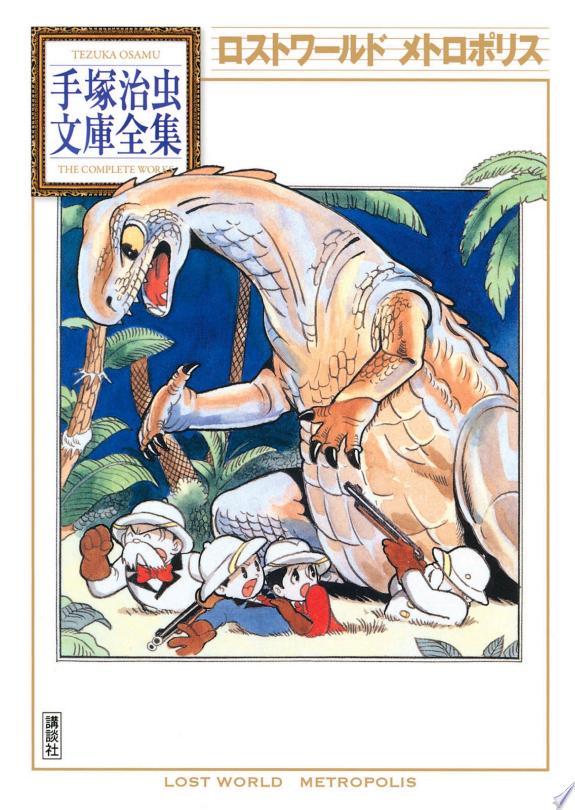
Metropolis
A review of Osamu Tezuka's Metropolis — serialized in Manga Shōnen in 1949, complete in one volume. A loose adaptation of Fritz Lang's film about a stratified city, an android child named Mitchi, and the question of what makes someone human. VIZ Media's English edition is complete.
Sci-Fi
Gin no Sankaku
Gin no Sankaku follows characters trapped across multiple timelines by a silver triangle that connects them — a complex, demanding sci-fi work by Moto Hagio that uses time loop mechanics to explore the weight of memory and the impossible arithmetic of rescue and loss.
Written by
Yu
Manga Enthusiast from Japan
I grew up in Japan and manga literally saved me during a tough time in elementary school. My English isn't perfect, but my love for manga is real — and I want to share it with you.