A Drunken Dream Review: Ten Hagio Shorts That Treat Manga as Literature
by Moto Hagio
Read the first volume. If it doesn't hook you, put it down. It'll hook you.
Buy A Drunken Dream and Other Stories on Amazon →*Affiliate link — I earn a small commission at no extra cost to you.
I didn't grow up reading shojo. As a kid hiding from the world inside Naruto and One Piece, the "girls' manga" shelf at the bookstore felt like a place I wasn't supposed to stand. It took me until adulthood — and a lot of people online telling me I was an idiot — to finally pick up Moto Hagio. A Drunken Dream and Other Stories was my entry point, and it rearranged something in my head about what manga is even capable of.
This is the book I hand to people who think manga is just spiky hair and power-ups. Ten short stories, drawn across four decades by one of the women who basically invented modern shojo, and not one of them is here to make you feel good. They're here to make you feel something — usually the thing about your own family you've been trying not to look at.
Quick Take
- Career-spanning Fantagraphics anthology — ten Hagio shorts from 1970 to 2007, translated by Matt Thorn
- Includes "Iguana Girl," "Hanshin: Half-God," and the sci-fi title story "A Drunken Dream"
- Rated M (Mature) for psychological trauma, emotional abuse, and death — these are quiet, devastating stories, not action
Story Overview
This isn't a single narrative — it's a curated set of ten standalone stories, arranged roughly in order of creation, that doubles as a guided tour through Hagio's career. The book opens with "Bianca" (1970), a sixteen-page piece about a wild, untamable girl seen through someone else's memory, and closes with "The Willow Tree" (2007), a near-wordless story that lands its whole emotional weight on a single final-page turn.
In between sit the heavy hitters. "A Drunken Dream" (1980), the title story, is pure science fiction: Dr. Lem Palimino lives on the Io Research Center, a station of sixty orbiting Jupiter's moon, when a visiting scientist named Gadan Safaash arrives — and Lem is certain they've met before. They share the same recurring, prophetic dream that reaches back into ancient times, and the story braids reincarnation and gender-shifting love across centuries until you understand they have always met, and always will. "Hanshin: Half-God" (1984) is only sixteen pages of conjoined twins. "Iguana Girl" (1991) is fifty pages of a mother and daughter, and it's the one that doesn't let go.
Editor and translator Matt Thorn bookends the collection with an essay on Hagio's place among the "Magnificent Forty-Niners" — the generation of women born around 1949 who reshaped shojo manga — and a long interview with Hagio herself.
Characters
Rika (Iguana Girl) — A girl whose mother, Yuriko, looks at her and sees a hideous iguana, and tells her so. Rika is bright, athletic, beautiful by everyone else's measure, but she internalizes her mother's rejection so completely that she believes she truly is an iguana, with real parents waiting in the Galápagos. Her arc is the long, slow work of carrying that wound into her own motherhood and only understanding it at her mother's funeral.
Yuriko (Iguana Girl) — The mother, and the secret at the story's center. She isn't simply cruel; the story reveals she has her own buried iguana — a self she chose to forget in order to be loved. She's one of the most quietly horrifying parents in manga precisely because she's not a villain.
Yudy and Yucy (Hanshin: Half-God) — Conjoined twin sisters. Yudy is intelligent but considered plain; Yucy is beautiful but mentally absent, and her body literally siphons Yudy's nutrients to survive. Yudy's whole life is spent caring for the favored, draining sister. The arc is what's left of her when separation finally comes.
Lem Palimino and Gadan Safaash (A Drunken Dream) — Two scientists on a station orbiting Io who recognize each other from a dream neither can explain. Across the story their identities and genders shift through reincarnated lifetimes, and their tragedy is that recognition never saves them.
What I Love About It
"Iguana Girl" is the reason I press this book on people, and it's built on one merciless idea: a mother who sees her own daughter as a reptile. What wrecks me isn't the fantasy — it's how Hagio refuses to make Yuriko a monster. The story gives her a secret. In a dream, Rika sees her mother as an iguana princess who once begged a witch to make her human so she could be with the man she loved. The witch warned her she'd be abandoned if the truth came out, so the princess made herself forget she was ever an iguana. Yuriko didn't hate her daughter for being different. She hated the part of herself she saw staring back.
That single twist reframes the whole fifty pages. The cruelty stops reading as cruelty and starts reading as a woman drowning in self-loathing she can't name, passing it down because she never resolved it. And Hagio doesn't hand you catharsis cheaply — Rika only sees her mother as an iguana after Yuriko is dead, standing at the funeral, finally understanding the thing that shaped her entire life one beat too late to say anything about it. That's the move that makes this literature and not a fable: the understanding arrives, and it arrives too late, and Rika has to carry it into how she loves her own child. I've reread it more times than is healthy.
Memorable Scene ⚠️ Spoiler Warning
The end of "Hanshin: Half-God" is sixteen pages that have lived in my head for years. The doctors finally separate the twins, knowing that without surgery both girls die. Yucy — the beautiful, empty, parasitic sister — does not survive. Yudy lives.
And then Hagio delivers the cruelest possible mercy. Yudy grows up healthy and, for the first time, beautiful — and the face she grows into is the living image of the dead sister who once drained the life out of her. The girl who spent her whole existence resenting the angelic twin everyone preferred becomes that twin's reflection. Is she free, or did she just erase the self she was fighting to keep? Hagio doesn't tell you. She lets the page sit there, ambiguous and aching, and trusts you to feel both readings at once. Sixteen pages. No wasted panel. That's the whole story — a question about how much of your identity is tangled up in the people who diminished you, and whether escaping them means losing yourself too.
Pros & Cons
Pros:
- A career-best sampler — if you read one Hagio book to understand why she matters, it's this
- Stories that span pure SF, domestic horror, and near-silent mood pieces without a weak entry
- Matt Thorn's essay and interview give real critical and biographical context
Cons:
- These are short stories — if you want a long, immersive serialized arc, this isn't that
- The emotional register is heavy and frequently bleak; almost nothing here has a happy ending
- Some 1970s pages look and pace differently from the 2000s work, which can feel uneven
This won't work for everyone — a collection of unflinching, mostly unhappy short stories about family is either exactly what you want or exactly what you'll bounce off of.
Is A Drunken Dream and Other Stories Worth Reading?
Yes — emphatically, if you have any interest in manga as a serious art form. It's the single best English-language introduction to one of the medium's most important creators, and "Iguana Girl" and "Hanshin" alone justify the price. Just know going in that it's a literary, emotionally demanding read, not light entertainment.
Yu's Rating
| Category | Score |
|---|---|
| Story Depth | ★★★★★ |
| Art Style | ★★★★★ |
| Character Development | ★★★★★ |
| Accessibility for Non-Japanese Readers | ★★★★☆ |
| Reread Value | ★★★★★ |
Overall: 5/5 — Essential. The book I'd save if I could only keep one shojo volume.
Content Warnings & Age Rating
Age Rating: M (Mature) Content Warnings: Emotional abuse, parental rejection, psychological trauma, death
Nothing here is graphically violent, but the emotional content is genuinely heavy — especially around mothers, children, and self-worth. Read it when you have the headspace for it.
Similar Manga
| Title | Its Approach | How A Drunken Dream Differs |
|---|---|---|
| The Heart of Thomas (Moto Hagio) | A single long shojo novel about love and grief at a boys' school | Anthology of standalone shorts across genres rather than one sustained story |
| The Poe Clan (Moto Hagio) | Hagio's interlinked vampire saga, gothic and serialized | Realist and SF family dramas, mostly grounded, complete in a few pages each |
| Solanin (Inio Asano) | Modern literary slice-of-life about young adult drift | Spans 1970–2007 and leans into fantasy/SF metaphor for emotional truth |
Official English Translation Status
A Drunken Dream and Other Stories is fully available in English. It was published by Fantagraphics in August 2010, translated and edited by Matt Thorn, as the debut title in their manga line. It collects ten stories Hagio drew between 1970 and 2007. The single hardcover volume is complete — there is nothing left to wait for.
Where to Buy
Read the first volume. If it doesn't hook you, put it down. It'll hook you.
This post contains affiliate links. If you purchase through these links, I may earn a small commission at no extra cost to you. As an Amazon Associate, I earn from qualifying purchases.
*Affiliate link — I earn a small commission at no extra cost to you.
More Manga You Might Like

Sci-Fi / Drama
Hyakuoku no Hiru to Senoku no Yoru
Hyakuoku no Hiru to Senoku no Yoru is Moto Hagio's manga adaptation of Ryu Mitsuse's celebrated science fiction novel — following the collapse of civilizations across billions of years, centered on figures from different historical periods who are drawn toward a single question: what is the nature of creation, and who is responsible for it?
Sci-Fi / Drama
They Were Eleven
Ten students take a survival exam in deep space. They check the count: there are eleven of them.
Sci-Fi / Drama
Galaxy Express 999
Galaxy Express 999 follows Tetsuro Hoshino, a young boy who boards the legendary space train 999 toward a planet where he can receive a free mechanical body — accompanied by the mysterious Maetel — and encounters, on each planet the train stops at, a different meditation on what it means to be human and whether eternity is worth what it costs.
Sci-Fi
Gin no Sankaku
Gin no Sankaku follows characters trapped across multiple timelines by a silver triangle that connects them — a complex, demanding sci-fi work by Moto Hagio that uses time loop mechanics to explore the weight of memory and the impossible arithmetic of rescue and loss.
Drama / Sci-Fi
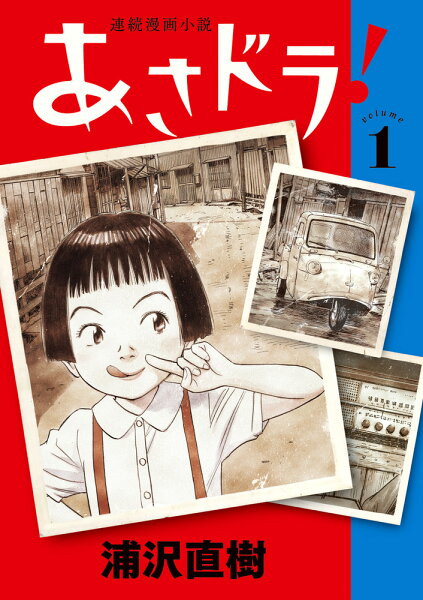
Asadora!
Nagoya, 1959. The Isewan Typhoon kills five thousand people. A tough fifth-grade girl named Asa is kidnapped by a young thief during the storm — and they survive together. Then they find a giant footprint. Naoki Urasawa's late-career masterwork builds slowly and patiently toward something much larger than the disaster it opens with.
Sci-Fi / Drama
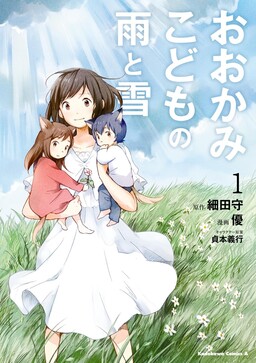
Wolf Children
Yu's review of Wolf Children — Hana falls in love with a man who is the last wolf-human; they have two children, Ame and Yuki, who can transform between human and wolf form; when their father dies suddenly, Hana must raise two wolf-children alone in a society that cannot know what they are.
Written by
Yu
Manga Enthusiast from Japan
I grew up in Japan and manga literally saved me during a tough time in elementary school. My English isn't perfect, but my love for manga is real — and I want to share it with you.
Disclosure: This post contains affiliate links. As an Amazon Associate, I earn from qualifying purchases at no extra cost to you.