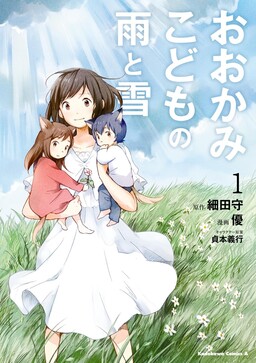
Wolf Children Review: A Woman Falls in Love With a Wolf Man — and Raises Their Two Wolf-Human Children Alone
by Mamoru Hosoda / Yu
Read the first volume. If it doesn't hook you, put it down. It'll hook you.
Buy Wolf Children on Amazon →*Affiliate link — I earn a small commission at no extra cost to you.
Quick Take
- The manga adaptation of Mamoru Hosoda's most emotionally complete film — a portrait of single motherhood and the specific love of raising children toward independence, told through the premise of wolf-human children
- Hana is one of manga's most completely realized maternal characters — her love is depicted without sentimentality, as labor and choice
- 2 volumes complete; among the most affecting short manga in English
Who Is This Manga For?
- Readers who want manga that takes parenting as seriously as any other dramatic subject
- Fans of Hosoda's films (The Girl Who Leapt Through Time, Summer Wars) who want this story in manga form
- Anyone who appreciates compact, emotionally complete manga that tells its story in the right space
- Readers who want fantasy/sci-fi that uses its premise entirely in service of human themes
Content Warnings & Age Rating
Age Rating: T (Teen) Content Warnings: The children's father dies early in the story — depicted with emotional weight but not graphically; the challenges of single parenting with unusual children are depicted specifically; some wildlife sequences as the children explore their wolf nature
The death is serious but handled with care.
Yu's Rating
| Category | Score |
|---|---|
| Story Depth | ★★★★★ |
| Art Style | ★★★★☆ |
| Character Development | ★★★★★ |
| Accessibility for Non-Japanese Readers | ★★★★★ |
| Reread Value | ★★★★★ |
Story Overview
Hana is a university student who falls in love with a man she meets at night school. She discovers he can transform into a wolf — he is the last of a lineage. She loves him anyway. They have two children: Yuki (Snow), who arrives joyfully into the world, and Ame (Rain), who arrives more quietly. Both can transform.
Their father dies while hunting food for the family. He is young. He leaves suddenly. Hana is left alone with two wolf-children in a Tokyo apartment, where discovery would be catastrophic, with no money and no help she can ask for without revealing what her children are.
She moves them to the countryside. She learns to farm. She keeps their secret. She raises them toward whatever they choose to become.
The series follows the children's growing divergence — Yuki moving toward the human world, Ame moving toward the wolf world — and Hana's specific love that is, ultimately, about letting go.
Characters
Hana — Her specific love — practical, unromantic about its difficulties, genuinely selfless — is the series' primary subject. The manga does not idealize her parenting or make it effortless. She makes mistakes, she learns, she keeps going. She is the most complete portrait of maternal love in manga.
Yuki and Ame — Their diverging paths — Yuki choosing the human world, Ame choosing the wolf world — are drawn with genuine development from childhood through adolescence. Their choices are different but the series honors both equally.
Art Style
The manga adaptation (drawn by Yu) captures Hosoda's visual warmth while adapting to the page format. The countryside settings are rendered with the same attention to seasonal texture as the film. The children's transformations are depicted with the visual wonder the premise deserves.
Cultural Context
Wolf Children is Mamoru Hosoda's third major film and the one most critics consider his masterpiece. The manga adaptation preserves the film's structure while adding detail that the runtime couldn't contain. Hosoda's films engage with themes of family transformation — The Girl Who Leapt Through Time, Summer Wars, The Boy and the Beast — but Wolf Children is his most direct engagement with parenthood.
What I Love About It
The farming sequences. Hana learns to farm from scratch — asking the neighbors, reading books, making mistakes, learning what each season requires — in the same way she learns parenting: through doing, without a guide who knows her specific situation. The parallel between learning to cultivate a field and learning to cultivate two children is the series' structural argument.
What English-Speaking Fans Say
Western readers who have seen the film describe the manga as a satisfying complement — the page format allows lingering on moments the film passes through, and the expanded detail serves the emotional content well. Readers who encounter the manga before the film cite it as one of the manga that most affected them, regardless of whether they usually read drama or fantasy.
Memorable Scene ⚠️ Spoiler Warning
Ame's departure — the specific manner of it, what Hana says, and what she does not say — is among the most precisely chosen moments in two volumes. The series knows exactly what kind of love lets children go, and it shows this without sentimentality.
Similar Manga
- Usagi Drop — Single parent raising an unexpected child, similar warmth in early volumes
- Sweetness and Lightning — Single parent and child, food as emotional language
- A Silent Voice — Single profound relationship with emotional weight, complete in short form
- The Girl Who Leapt Through Time — Same director's world, young protagonist
Reading Order / Where to Start
Volume 1 — the entire story fits comfortably in two volumes, start from the beginning.
Official English Translation Status
Yen Press published the complete 2-volume run. All volumes available.
Pros & Cons
Pros
- Among manga's most complete portraits of parenting
- The two-volume format delivers a complete emotional arc
- Universally accessible regardless of genre preference
- Hana is one of manga's finest maternal characters
Cons
- The film is arguably the more complete version for most viewers
- Two volumes may feel brief (though it is the right length)
- The fantasy premise is entirely in service of the human themes — pure fantasy readers may want more wolf content
Format Comparison
| Format | Notes |
|---|---|
| Individual Volumes | Yen Press; 2 volumes |
| Digital | Available |
Where to Buy
Read the first volume. If it doesn't hook you, put it down. It'll hook you.
This post contains affiliate links. If you purchase through these links, I may earn a small commission at no extra cost to you. As an Amazon Associate, I earn from qualifying purchases.
*Affiliate link — I earn a small commission at no extra cost to you.
More Manga You Might Like
Sci-Fi / Drama
Galaxy Express 999
Galaxy Express 999 follows Tetsuro Hoshino, a young boy who boards the legendary space train 999 toward a planet where he can receive a free mechanical body — accompanied by the mysterious Maetel — and encounters, on each planet the train stops at, a different meditation on what it means to be human and whether eternity is worth what it costs.

Sci-Fi / Drama
Hyakuoku no Hiru to Senoku no Yoru
Hyakuoku no Hiru to Senoku no Yoru is Moto Hagio's manga adaptation of Ryu Mitsuse's celebrated science fiction novel — following the collapse of civilizations across billions of years, centered on figures from different historical periods who are drawn toward a single question: what is the nature of creation, and who is responsible for it?
Sci-Fi / Drama
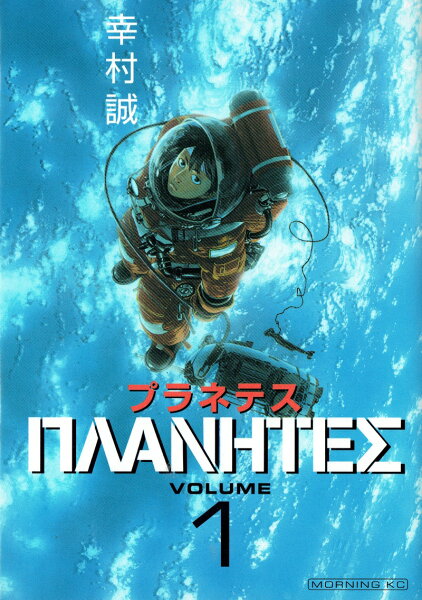
Planetes
Yu's review of Planetes — a crew of space debris collectors in the near future of 2075, where someone wants to be the first human to Jupiter and someone else just wants to survive the shift.
Sci-Fi / Fantasy
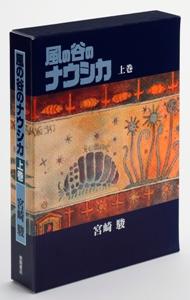
Nausicaa of the Valley of Wind
Yu's review of Nausicaa of the Valley of Wind — the manga Hayao Miyazaki serialized over twelve years, extending far beyond the film's scope: a post-catastrophic world where toxic forests cover Earth, and a princess who understands the insects that everyone else fears.
Sci-Fi / Fantasy
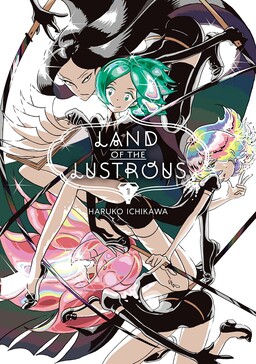
Land of the Lustrous
Yu's review of Land of the Lustrous — in a far future where humanity no longer exists, gem beings called Lustrous fight against Lunarians who wish to capture them for decoration; Phosphophyllite, the youngest and most fragile gem, wants to fight but is unfit for combat; the series follows Phos's transformation into something unrecognizable as their body is replaced piece by piece and their original self becomes inaccessible.
Sci-Fi / Drama
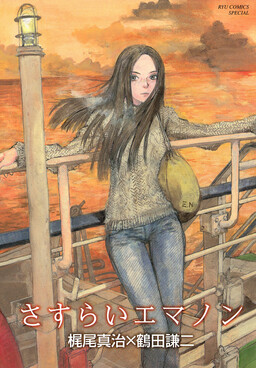
Emanon
Yu's review of Emanon — a young man on an overnight ferry meets a mysterious woman who claims to remember every life she has lived since the first single-celled organism; she carries within her the memories of three billion years of evolution; he doesn't know whether to believe her.
Written by
Yu
Manga Enthusiast from Japan
I grew up in Japan and manga literally saved me during a tough time in elementary school. My English isn't perfect, but my love for manga is real — and I want to share it with you.
Disclosure: This post contains affiliate links. As an Amazon Associate, I earn from qualifying purchases at no extra cost to you.