
Hyakuoku no Hiru to Senoku no Yoru Review: The SF Manga That Asked What Remains When God Dies
by Ryu Mitsuse (original novel) / Moto Hagio (manga)
Read the first volume. If it doesn't hook you, put it down. It'll hook you.
Buy Hyakuoku no Hiru to Senoku no Yoru on Amazon →*Affiliate link — I earn a small commission at no extra cost to you.
What if the question at the center of every civilization was the same question — and the answer was one that nobody wanted to hear?
Quick Take
- Moto Hagio adapting Ryu Mitsuse's landmark SF novel — two of Japan's greatest creative minds on a single project
- The scope is cosmic: billions of years, multiple civilizations, recurring figures across time
- 2 volumes that accomplish what most science fiction series spend decades attempting
Who Is This Manga For?
- Readers of literary science fiction who want manga at the same level of ambition
- Fans of Moto Hagio — this is among her most ambitious and fully realized works
- Anyone interested in the philosophical end of science fiction — questions about creation, time, and the nature of consciousness
- Readers who want SF that doesn't require familiarity with the genre's conventions to resonate
Content Warnings & Age Rating
Age Rating: T (Teen) Content Warnings: Philosophical themes throughout. Death of civilizations — the scale of loss is part of the subject. Religious themes treated critically. Existential content that may be challenging for some readers.
Suitable for thoughtful teen readers and above.
Yu's Rating
| Category | Score |
|---|---|
| Story Depth | ★★★★★ |
| Art Style | ★★★★★ |
| Character Development | ★★★★★ |
| Accessibility for Non-Japanese Readers | ★★★★☆ |
| Reread Value | ★★★★★ |
Story Overview
The manga moves across billions of years of human and civilizational history, following recurring figures — Plato, Siddhartha, a woman named Orionae, a mysterious boy — whose appearances across different epochs suggest they are something more than ordinary historical persons.
The connecting thread is a question: who created this universe, and what is the relationship between the creator and the created? As civilizations rise and fall, the figures pursuing this question approach an answer that the manga renders with unusual honesty — the truth, when they reach it, is neither comforting nor reassuring.
Hagio's adaptation compresses Mitsuse's sprawling novel into two volumes without losing its scope or its philosophical substance. The compression is itself an artistic achievement — knowing what to keep and what to let go.
Characters
The recurring figures: Each historical person appears as themselves but also as something larger — representatives of a type of consciousness that persists across time. Plato as philosopher, Siddhartha as seeker, Orionae as something that the narrative doesn't fully categorize.
The boy: A figure whose identity becomes clear only gradually — and whose nature, once understood, reframes everything that preceded it.
Art Style
Moto Hagio's art in this work has a spaciousness that matches the cosmic scope — figures drawn with psychological precision against backgrounds that suggest the vastness of time. The historical settings are sketched with suggestive accuracy rather than archaeological detail, keeping the focus on the figures and their encounter with the central question.
Cultural Context
The original novel by Ryu Mitsuse was published in 1973 and is considered one of the masterpieces of Japanese science fiction. Hagio's manga adaptation appeared in Shojo Comic in 1977, reaching an audience for whom the novel might have been inaccessible. The combination of Mitsuse's ideas and Hagio's visual storytelling produced something that transcends both.
What I Love About It
I love the ending's honesty.
Science fiction that asks cosmic questions — who are we, who made us, what is our relationship to creation — usually provides cosmic comfort: the universe is knowable, the creator is benevolent, the pattern makes sense. Hyakuoku no Hiru to Senoku no Yoru does not provide comfort. It provides an answer, and the answer requires something of the reader that comfort would not.
This is rarer than it sounds. To reach a genuine conclusion rather than a consolation is a form of artistic courage.
What English-Speaking Fans Say
Not known in English-speaking markets. Among readers of literary science fiction manga and Moto Hagio's complete work, this is considered one of her greatest achievements — a work that demonstrates what the manga medium can do when it aspires to the ambition of the best literary SF.
Memorable Scene ⚠️ Spoiler Warning
The moment when the recurring figures reach their destination — the source of the question they have been pursuing across billions of years — and find something that the narrative has prepared you for without preparing you for. The revelation changes nothing about the physical universe. It changes everything about how you understand everything that preceded it.
Similar Manga
| Title | Its Approach | How Hyakuoku no Hiru to Senoku no Yoru Differs |
|---|---|---|
| They Were Eleven (Moto Hagio) | Psychological SF thriller with clear resolution | Cosmic scale with philosophical rather than narrative resolution |
| The Heart of Thomas (Moto Hagio) | Intimate human drama | The same author at maximum scope rather than maximum intimacy |
| Planetes | Near-future SF with human characters | Character-scale SF vs. civilization-scale philosophical inquiry |
Reading Order / Where to Start
Volume 1. The two volumes should be read in order and together — this is a single work in two parts.
Official English Translation Status
Hyakuoku no Hiru to Senoku no Yoru has no official English translation.
Pros & Cons
Pros
- One of the most ambitious science fiction manga ever created
- Hagio's art is among her finest work
- The philosophical content is genuine — not decoration but substance
- Complete in 2 volumes — enormous ideas, appropriate length
Cons
- No English translation
- The philosophical density may challenge readers wanting narrative momentum
- Some familiarity with the figures (Plato, Siddhartha) enriches the reading
- The ending requires engagement rather than passive reception
Is Hyakuoku no Hiru to Senoku no Yoru Worth Reading?
For readers of serious science fiction and Moto Hagio's work, absolutely — this is a landmark achievement, and the two-volume length means the commitment is minimal relative to the experience. For readers who want SF adventure or approachable character drama, this is the wrong entry point. But as literary SF manga at the highest level of ambition, it is simply one of the best examples the medium has produced.
Format Comparison
| Format | Notes |
|---|---|
| Physical | Japanese editions available |
| Digital | Limited availability in Japanese |
| Omnibus | Complete in single collected edition |
Where to Buy
No English release yet. That just means you find it before everyone else does.
*Affiliate link — I earn a small commission at no extra cost to you.
More Manga You Might Like
Sci-Fi / Drama
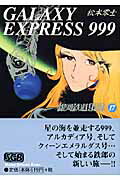
Galaxy Express 999
Galaxy Express 999 follows Tetsuro Hoshino, a young boy who boards the legendary space train 999 toward a planet where he can receive a free mechanical body — accompanied by the mysterious Maetel — and encounters, on each planet the train stops at, a different meditation on what it means to be human and whether eternity is worth what it costs.
Sci-Fi
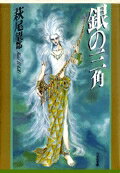
Gin no Sankaku
Gin no Sankaku follows characters trapped across multiple timelines by a silver triangle that connects them — a complex, demanding sci-fi work by Moto Hagio that uses time loop mechanics to explore the weight of memory and the impossible arithmetic of rescue and loss.
Sci-Fi / Drama
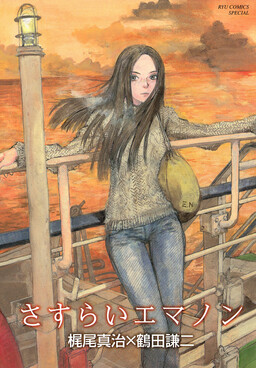
Emanon
Yu's review of Emanon — a young man on an overnight ferry meets a mysterious woman who claims to remember every life she has lived since the first single-celled organism; she carries within her the memories of three billion years of evolution; he doesn't know whether to believe her.
Sci-Fi / Mystery / Thriller
20th Century Boys
Yu's review of 20th Century Boys — childhood friends once wrote a 'Book of Prophecy' about saving the world. Decades later a cult leader called 'Friend' is using it as a blueprint for real mass murder, and convenience store manager Kenji realizes he helped write the script.
Sci-Fi / Drama
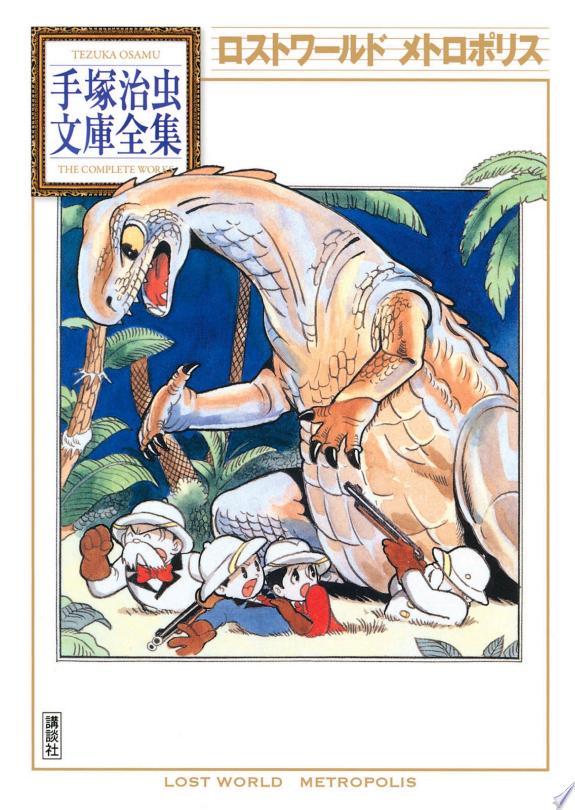
Metropolis
A review of Osamu Tezuka's Metropolis — serialized in Manga Shōnen in 1949, complete in one volume. A loose adaptation of Fritz Lang's film about a stratified city, an android child named Mitchi, and the question of what makes someone human. VIZ Media's English edition is complete.
Drama / Sci-Fi
A Drunken Dream and Other Stories
A career-spanning Fantagraphics collection of ten Moto Hagio short stories — sci-fi, fantasy, and quiet domestic horror, from 1970's Bianca to 2007's The Willow Tree.
Written by
Yu
Manga Enthusiast from Japan
I grew up in Japan and manga literally saved me during a tough time in elementary school. My English isn't perfect, but my love for manga is real — and I want to share it with you.