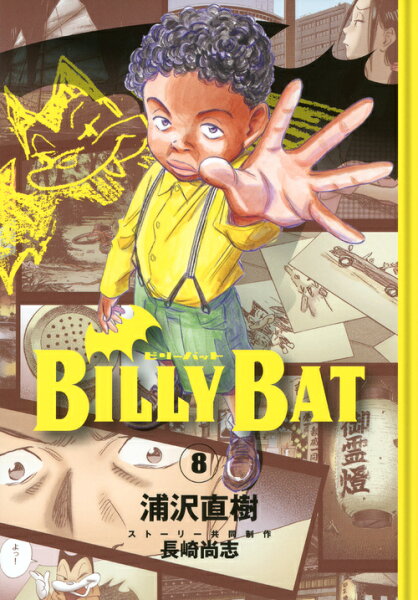
Billy Bat Review: Naoki Urasawa's Twenty-Volume Conspiracy Across Human History
by Naoki Urasawa, Takashi Nagasaki
Read the first volume. If it doesn't hook you, put it down. It'll hook you.
Buy Billy Bat on Amazon →*Affiliate link — I earn a small commission at no extra cost to you.
I read Billy Bat across several months, and the experience of watching a cartoon bat become genuinely cosmic is something I have not had with any other manga. Urasawa has made ambitious series before. This one is his most formally strange — the most willing to risk everything on a single impossible premise and see if it holds.
I'm Yu. Billy Bat is the manga I tell Urasawa fans about when they say they've read everything else he's done.
Quick Take
- Naoki Urasawa and Takashi Nagasaki's Billy Bat (BILLY BAT) ran in Kodansha's Morning from October 16, 2008 to August 18, 2016 — collected in 20 tankōbon volumes.
- No official English translation exists; the series remains unlicensed outside Japan.
- Rated M (Mature) — historical violence, war imagery, assassination, death depicted across multiple historical periods.
Story Overview
In 1949 Los Angeles, Kevin Yamagata is a nisei (Japanese-American) comic book artist whose detective series "Billy Bat" is popular enough to feel like it has a future. The bat is a simple image: a hard-boiled cartoon detective who handles cases.
Then Kevin discovers that his bat character may not be original — that the same image appears in a photograph from occupied Japan. He travels back to Japan to find the original, and what he finds begins to unravel everything he thought he understood about where ideas come from.
The bat, it turns out, has been appearing throughout human history. It appears in cave paintings. In historical scrolls from feudal Japan. In events surrounding the Shimoyama incident of 1949 — a real, unsolved case where the president of the national railway was found dead on the tracks in circumstances no one could explain. It will appear again, later, near Lee Harvey Oswald in 1963.
The series spans centuries. Multiple protagonists carry the story across different historical periods — Kevin Yamagata in postwar America, Jacky Momochi as a nisei student drawn into the bat's mystery, Kevin Goodman whose actions in the 1960s ripple outward in ways he cannot predict. Each protagonist discovers the same impossible thing: the bat is not a coincidence.
What the bat actually is — its nature, its purpose, what it wants from the humans who encounter it — is the series' central question. Urasawa and Nagasaki spend twenty volumes earning the answer.
Characters
Kevin Yamagata — A working artist in a specific moment of American history, a nisei who occupies a complicated position between two cultures in the years immediately after the war. His investigation begins as a practical question about artistic originality and becomes something else entirely.
Jacky Momochi — A nisei university student whose path into the bat's history runs parallel to Kevin's. His arc covers different historical terrain and arrives at different costs.
Kevin Goodman — A secondary protagonist whose position in the 1960s material places him at the center of real historical events. The series uses the JFK assassination not as spectacle but as a point where the bat's influence becomes impossible to deny.
Billy Bat — The character itself, the talking anthropomorphic detective, whose presence and voice within the narrative become something other than a fictional creation as the series progresses.
What I Love About It
What I love about Billy Bat is that it takes its premise completely seriously without ever losing its craft.
A lesser manga would use "the bat appeared in the JFK assassination" as a headline. Urasawa and Nagasaki use it as one data point in an argument that spans millennia, and they make the argument in a way that forces the reader to follow it. The conspiracy is not decorative — it has internal logic, and the series is patient enough to establish that logic piece by piece.
I also love what the series does with real history. The Shimoyama incident, the occupation of Japan, the political violence of 1960s America — these are not backdrops. They are places where the bat's presence changes what we think we understand about real events, and the series is careful enough to handle actual history with actual weight.
The ending is the other thing. Urasawa series do not always stick their landings. Billy Bat does. The final answer to what the bat is coheres with everything the series built. The cost to the characters who reached that answer is proportionate to how long they spent pursuing it.
Memorable Scene ⚠️ Spoiler Warning
The sequence surrounding the Shimoyama incident — where Kevin Yamagata realizes for the first time that the bat is not simply an image but something that participates in events — is the series' first proof of its premise. The historical setting is specific: Japan in 1949, before the peace treaty, the country under occupation. The case itself (unsolved in real life) becomes the site where the bat makes itself real to a protagonist who wanted it to stay fictional.
What makes the scene work is that Kevin doesn't want to believe what he's seeing. His resistance is the reader's resistance, and Urasawa draws both of them to exactly the same breaking point.
Pros & Cons
Pros:
- An ambitious, coherent conspiracy that spans centuries and multiple protagonists.
- Real historical events handled with genuine weight, not just as color.
- Urasawa's draftsmanship — facial expression, historical costume and architecture, period atmosphere — is exceptional throughout.
- The ending holds.
Cons:
- The series requires the reader to track multiple protagonists across different time periods; it is not casual reading.
- No English translation; readable only in Japanese without fan translation.
- The pacing is Urasawa-slow — twenty volumes for a story that earns every one of them, but not for readers who want fast resolution.
Is Billy Bat Worth Reading?
Yes — if you can read Japanese, or if you're willing to find translations. This is Urasawa's most formally ambitious completed work. The premise sounds impossible and the series makes it work.
Who Is This Manga For?
- Readers who have finished Monster and 20th Century Boys and want Urasawa at his most experimental.
- Readers interested in historical fiction that engages seriously with real 20th-century events.
- Mystery manga readers who want a conspiracy with genuine internal architecture.
- Anyone willing to commit to a long, patient series that earns its ending.
Official English Translation Status
Billy Bat has no official English translation. The series remains unlicensed outside Japan as of 2026.
Where to Buy
The series is available in Japanese from Kodansha. All 20 volumes are in print.
Browse Billy Bat on Amazon Japan →
This post contains affiliate links. If you purchase through these links, I may earn a small commission at no extra cost to you.
*Affiliate link — I earn a small commission at no extra cost to you.
More Manga You Might Like

Sci-Fi / Thriller
Summer Time Rendering
Yu's review of Summer Time Rendering — Shinpei Ajiro returns to Hitogashima island for the funeral of his childhood friend Ushio; something is wrong; the shadows of people on the island are not quite right; Shinpei discovers a supernatural threat that copies humans through their shadows and a time loop mechanic that allows him to restart from the same point when he dies.
Sci-Fi / Mystery / Thriller
20th Century Boys
Yu's review of 20th Century Boys — childhood friends once wrote a 'Book of Prophecy' about saving the world. Decades later a cult leader called 'Friend' is using it as a blueprint for real mass murder, and convenience store manager Kenji realizes he helped write the script.
Sci-Fi / Thriller
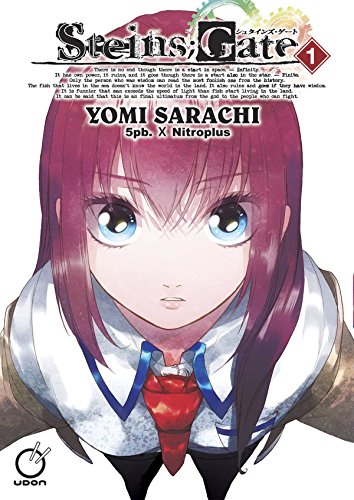
Steins;Gate
Yu's review of the Steins;Gate manga — a self-proclaimed mad scientist accidentally invents a way to send text messages to the past, and discovers that every change to the timeline costs someone something.
Drama / Sci-Fi
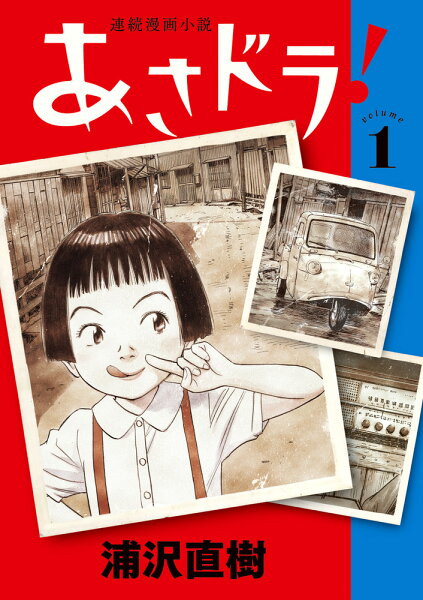
Asadora!
Nagoya, 1959. The Isewan Typhoon kills five thousand people. A tough fifth-grade girl named Asa is kidnapped by a young thief during the storm — and they survive together. Then they find a giant footprint. Naoki Urasawa's late-career masterwork builds slowly and patiently toward something much larger than the disaster it opens with.
Sci-Fi / Mystery
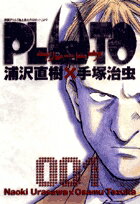
Pluto
Yu's review of Pluto — Naoki Urasawa reimagines a single Astro Boy story arc through the lens of adult science fiction: a robot detective investigates who is systematically destroying the world's seven most powerful robots.
Sci-Fi / Historical
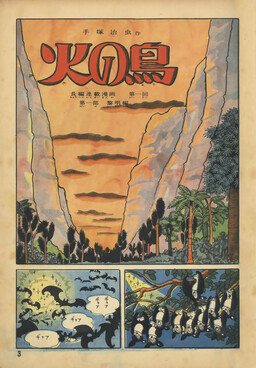
Phoenix
Yu's review of Phoenix — Tezuka Osamu's incomplete masterwork — a series of stories set throughout Japanese and universal history, connected by the Phoenix, a bird whose blood grants immortality; the Phoenix appears in each arc but cannot be caught; the arcs range from ancient Japan to the far future and examine what it means to be human across all of time.
Written by
Yu
Manga Enthusiast from Japan
I grew up in Japan and manga literally saved me during a tough time in elementary school. My English isn't perfect, but my love for manga is real — and I want to share it with you.
Disclosure: This post contains affiliate links. As an Amazon Associate, I earn from qualifying purchases at no extra cost to you.