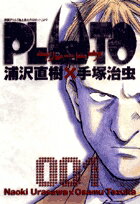
Pluto Review: A Robot Detective Investigates the Murder of the World's Greatest Robots
by Naoki Urasawa / Takashi Nagasaki (based on Astro Boy by Osamu Tezuka)
Read the first volume. If it doesn't hook you, put it down. It'll hook you.
Buy Pluto on Amazon →*Affiliate link — I earn a small commission at no extra cost to you.
Quick Take
- Naoki Urasawa (Monster, 20th Century Boys) reimagines Osamu Tezuka's Astro Boy through adult science fiction: someone is murdering the world's seven greatest robots, and a robot detective must find out who
- One of manga's great adaptations — takes a children's property and asks the questions it never had the space to ask
- 8 volumes, complete, possibly the best short-form science fiction manga
Who Is This Manga For?
- Readers who want the best of Urasawa in a short, accessible format
- Science fiction fans interested in robot consciousness and what makes something human
- Fans of Astro Boy who want to see the mythology treated seriously
- Anyone who wants a complete, compact masterpiece
Content Warnings & Age Rating
Age Rating: T (Teen) Content Warnings: Violence, war themes (including the cost of war on both humans and robots), themes of consciousness and identity
Accessible but emotionally demanding. The war themes are handled with real gravity.
Yu's Rating
| Category | Score |
|---|---|
| Story Depth | ★★★★★ |
| Art Style | ★★★★★ |
| Character Development | ★★★★★ |
| Accessibility for Non-Japanese Readers | ★★★★★ |
| Reread Value | ★★★★★ |
Story Overview
In a world where robots and humans coexist, someone is systematically destroying the seven greatest robots on Earth. Gesicht — a robot detective, one of the seven — is assigned to the case, and what he discovers pulls at threads connecting to a recent war, a small robot child who may be Atom (Astro Boy), and a being of tremendous destructive power called Pluto.
The original Tezuka story ("The Greatest Robot on Earth") is a 10-chapter Astro Boy arc from the 1960s. Urasawa and Nagasaki expand it to eight volumes by giving every character in the original full depth, asking what it means for a robot to have emotions, and centering the investigation on what war costs — in lives, in psychology, in what it creates that outlasts the conflict.
Characters
Gesicht — The robot detective whose case becomes increasingly personal as it intersects with his own history. His emotional life — his love for his wife, his relationship with a human child he is raising — is the humanity the manga uses to ask what humanity actually requires.
Atom (Astro Boy) — Present but not centered; his appearance at certain moments in the story is handled with appropriate weight.
Epsilon — A robot pacifist who refuses to fight and whose choice is handled with genuine respect.
The Antagonist — The manga's central mystery is not just "who is Pluto" but "what is a monster, and what creates one" — and the answer, when it comes, is the most compassionate the story could have given.
Art Style
Urasawa's art in Pluto is cinematic and emotionally expressive — his robots are drawn to show feeling in faces that should not be able to show feeling, and the achievement is that you believe them. The design work translates Tezuka's iconic visual vocabulary into realistic adult manga without losing what made it iconic.
What I Love About It
Epsilon. The robot who refuses to fight — who has seen what combat produces and decided the result is never worth the means — is the manga's moral center. In a story about power and destruction, Urasawa gives equal weight to the choice not to use it. Epsilon's chapters are the most affecting in the manga and the ones I return to most.
Prior knowledge of Astro Boy is not required. The manga works completely on its own. But knowing the source material makes the adaptation choices visible in ways that deepen the experience.
What English-Speaking Fans Say
Pluto is consistently cited by Western manga readers as the manga they recommend to people who claim manga cannot be serious literature — alongside Monster, 20th Century Boys, and Vagabond. Eight volumes is an accessible commitment for a manga of this quality. The Netflix anime adaptation is considered one of the best sci-fi anime of recent years.
Memorable Scene ⚠️ Spoiler Warning
Gesicht's memory of what he did during the war — the buried truth that his investigation eventually forces him to confront — is the scene that reframes everything before it. Urasawa executes it with the same precision he brings to all his major reveals.
Similar Manga
- Monster — Same author; longer psychological thriller
- 20th Century Boys — Same author; longer mystery
- Ghost in the Shell — Robot/AI consciousness, similar themes
- Astro Boy — Original source material, children's manga
Reading Order / Where to Start
Volume 1. Eight volumes is a single-weekend read. No prior Astro Boy knowledge required.
Official English Translation Status
VIZ Media published the complete 8-volume series. All volumes available.
Pros & Cons
Pros
- Eight volumes, complete, no padding
- One of manga's great short-form masterpieces
- The robot consciousness themes are handled with unusual intelligence
- Prior knowledge of Astro Boy not required
Cons
- Some Astro Boy context enriches the experience — readers interested should know the source exists
- Eight volumes may leave readers who love it wanting more
Format Comparison
| Format | Notes |
|---|---|
| Individual Volumes | Standard VIZ release |
| Digital | Works well |
| Physical | Recommended — Urasawa's art deserves print |
Where to Buy
Read the first volume. If it doesn't hook you, put it down. It'll hook you.
This post contains affiliate links. If you purchase through these links, I may earn a small commission at no extra cost to you. As an Amazon Associate, I earn from qualifying purchases.
*Affiliate link — I earn a small commission at no extra cost to you.
More Manga You Might Like
Sci-Fi / Mystery / Thriller
20th Century Boys
Yu's review of 20th Century Boys — childhood friends once wrote a 'Book of Prophecy' about saving the world. Decades later a cult leader called 'Friend' is using it as a blueprint for real mass murder, and convenience store manager Kenji realizes he helped write the script.
Sci-Fi / Drama
Galaxy Express 999
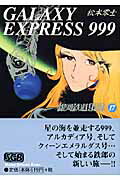
Galaxy Express 999 follows Tetsuro Hoshino, a young boy who boards the legendary space train 999 toward a planet where he can receive a free mechanical body — accompanied by the mysterious Maetel — and encounters, on each planet the train stops at, a different meditation on what it means to be human and whether eternity is worth what it costs.

Sci-Fi / Drama
Hyakuoku no Hiru to Senoku no Yoru
Hyakuoku no Hiru to Senoku no Yoru is Moto Hagio's manga adaptation of Ryu Mitsuse's celebrated science fiction novel — following the collapse of civilizations across billions of years, centered on figures from different historical periods who are drawn toward a single question: what is the nature of creation, and who is responsible for it?
Sci-Fi
Gin no Sankaku
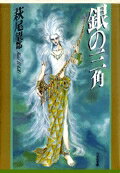
Gin no Sankaku follows characters trapped across multiple timelines by a silver triangle that connects them — a complex, demanding sci-fi work by Moto Hagio that uses time loop mechanics to explore the weight of memory and the impossible arithmetic of rescue and loss.
Sci-Fi
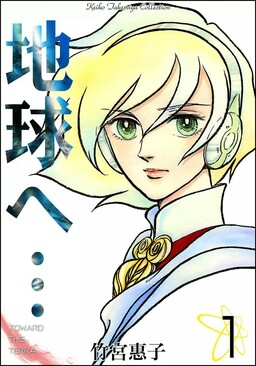
Toward the Terra
A review of Keiko Takemiya's Toward the Terra (地球へ…) — 3 volumes in Monthly Manga Shōnen from 1977. A landmark of 1970s science fiction manga about psychic humans (Mu) persecuted by an AI-controlled society on their long journey back to a forbidden Earth. Vertical's English edition is complete.
Sci-Fi / Drama
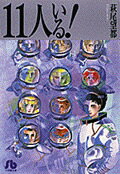
They Were Eleven
Ten students take a survival exam in deep space. They check the count: there are eleven of them.
Written by
Yu
Manga Enthusiast from Japan
I grew up in Japan and manga literally saved me during a tough time in elementary school. My English isn't perfect, but my love for manga is real — and I want to share it with you.
Disclosure: This post contains affiliate links. As an Amazon Associate, I earn from qualifying purchases at no extra cost to you.