20th Century Boys Review: The Childhood Game That Came Back to Destroy the World
by Naoki Urasawa
Read the first volume. If it doesn't hook you, put it down. It'll hook you.
Buy 20th Century Boys on Amazon →*Affiliate link — I earn a small commission at no extra cost to you.
When I was a kid, my friends and I — back when I still had friends, before the lonely years — built a "base" out of cardboard behind an apartment block and invented a whole secret world. We had a flag, a password, and a notebook of plans for the future. I have no idea where that notebook is now. It is probably in a landfill. But I still remember the feeling of believing, completely, that the games we played mattered.
20th Century Boys is built on that exact feeling, and then it does something terrifying with it. It asks: what if the silly story you wrote as a ten-year-old — the one where a great evil tries to destroy the world and a band of heroes rises to stop it — came true, decades later, line by line, because someone who was there is using your notebook as a blueprint for real murder?
I read all 22 volumes in a haze over about two weeks. I have never been so afraid of my own childhood.
Quick Take
- Childhood friends once wrote a "Book of Prophecy" about heroes saving the world from a villain — and now a masked cult leader named "Friend" is making every page come true, for real
- Naoki Urasawa (Monster, Pluto) at the absolute peak of slow-burn thriller plotting, identity mystery, and the dark underside of nostalgia
- 22 volumes plus the 2-volume sequel 21st Century Boys, complete in English; rated T (Teen) — heavy violence and cult manipulation, but not graphic gore
Story Overview
Kenji Endo is a convenience store manager in 1997, raising his missing sister's baby daughter and quietly mourning the rock-and-roll dreams he had as a kid. His life is small and ordinary. Then an old classmate kills himself, families start vanishing, and a creepy religious cult led by a masked man called "Friend" begins spreading across Japan — using a symbol Kenji recognizes. It is the symbol he and his friends drew on their secret base as children: a hand pointing skyward with a single eye.
Back in 1969–70, in their hideout, Kenji and his gang wrote the "Book of Prophecy": a story where a villain unleashes bacteria, giant robots, and global catastrophe, and a hero leads children to fight back. Now, in real life, the prophecy is unfolding step by step. Someone close enough to know that book is executing it.
The engine of the series is one question: who is Friend? He has to be one of the kids from that vacant lot. The manga jumps across timelines — late 1960s childhood, the 1997–2000 present, then a brutal time-skip into 2014–2015 — each volume reframing what came before. The first half builds toward "Bloody New Year's Eve," December 31, 2000, when Friend stages a viral massacre and a towering robot rampaging through Tokyo, then casts himself as the savior who stopped it. Kenji and his friends try to plant a bomb to stop the attack; Kenji is presumed dead.
After the time-skip, Friend has rewritten history with himself as the hero and Kenji's group branded as the terrorists who caused the disaster. Kenji's niece Kanna grows up to lead the resistance. The mystery deepens because Friend reveals a second prophecy — and the truth of who is behind the mask is not solved once but twice.
Characters
Kenji Endo — A failed musician turned convenience store manager who gets pulled into saving the world precisely because he is unqualified for it. His decency, his loyalty to childhood friends, and his stubborn belief — borrowed from his rock heroes — that one person with a guitar can change everything are the moral spine of the whole epic. He vanishes for much of the middle of the series, which only sharpens how much everyone is fighting in his memory.
Kanna Endo — Kenji's niece, raised by his friends after he disappears. In the 2014 timeline she becomes the second protagonist: hot-tempered, charismatic, leading an underground insurgency against Friend's regime. Her arc finishes the fight Kenji started, and her own parentage is tangled into the central mystery.
Otcho (Shogun) — The most capable of the old gang, who spent years in Thailand and returns as a near-mythic strategist. He's the one who survives a prison stretch and later climbs into the robot to fight off the attack. He carries the guilt of the friends who didn't make it.
Yukiji — The tomboy of the group, now a customs officer, who becomes Kanna's fierce guardian after Kenji is gone. She's the emotional anchor holding the surviving friends together.
Friend — One of manga's great mystery villains, and the reason the whole book works. He's revealed to be Fukube, a classmate scarred by humiliation and an inferiority complex toward Kenji — but the final twist in 21st Century Boys reveals Fukube actually died in childhood, and that the boy named Katsumata had been wearing the Friend identity, nursing a grudge over a petty theft Kenji once let him take the blame for. The villain is built entirely out of small childhood cruelties no one remembered.
What I Love About It
The scene that defines this manga for me is tiny and happens in flashback: ten-year-old Kenji sneaks into the school broadcasting room, hijacks the PA system, and blasts T. Rex's "20th Century Boy" across the entire school, convinced that this single act will change the world. It is the most innocent thing imaginable — a kid and a rock song and pure unearned hope. And Urasawa plants it early so that hundreds of pages later, when the adult Kenji finally picks up a guitar again to rally people against Friend, it lands like a hammer. The childhood gesture and the grown-up sacrifice are the same gesture.
What I love is how Urasawa weaponizes nostalgia. The 1960s and 70s he draws have the soft, unreal texture of actual memory. But the story keeps insisting that childhood was never the golden, simple age we remember. The cruelty that created Friend happened in that same warm summer — a kid blamed for a theft he didn't commit, a kid mocked until something broke. The same children who wrote a story about saving the world were already capable of the small betrayals that ended it. That is the scariest, truest thing the book says, and it earns every page of its 22 volumes getting there.
Memorable Scene ⚠️ Spoiler Warning
For me it's "Bloody New Year's Eve," the climax the entire first half is built toward. December 31, 2000: Friend's cult releases a lethal virus across the world's cities while a colossal robot strides through Tokyo spraying it, and crowds watch in horror as the "prophecy" comes true. Kenji and his friends move to stop it, and Kenji disappears in the chaos — for years the reader, like the characters, believes he died as the hero who planted the bomb.
The reason it never leaves my head is the inversion that follows. Friend doesn't just commit a massacre — he engineers it so that he is filmed saving the world from it, and Kenji's group is recorded as the terrorists who started it. After the time-skip, every textbook, every monument, every child's song celebrates Friend as the savior of mankind and curses Kenji's name. Watching the truth get buried and rewritten, page by page, while you alone remember what actually happened, is one of the most quietly devastating things I've read in any medium. I had to put the volume down and sit with it.
Art Style
Urasawa's art is realistic and emotionally exact — faces carry entire scenes with no dialogue. His real magic here is time: he draws the same characters across roughly fifty years of fictional life, aging and changing and still instantly recognizable. The Japan of Expo '70 and cheap rock records feels lived-in and warm; the dystopian 2015 feels like that same world gone wrong. Few artists can make memory itself a visual texture the way he does.
Cultural Context
The manga is soaked in the pop culture of postwar Japan: the title nods to T. Rex's "20th Century Boy," the kids dream around the 1970 Osaka Expo, and the cult's politics tap real anxieties about charismatic religious movements in Japan. Western readers will miss a few specific references, but the emotional core — childhood nostalgia, and the dread of a world you understood quietly disappearing — translates completely.
What English-Speaking Fans Say
English-speaking readers routinely place 20th Century Boys among the greatest manga ever made, alongside Urasawa's own Monster. It won multiple Eisner Awards for the VIZ edition. The Friend mystery is praised as one of the tightest sustained puzzles in the medium. The most common critique is that the ending, and the way Friend's identity is split between Fukube and Katsumata across the sequel, feels slightly rushed and confusing relative to the immense buildup — a frequent complaint about Urasawa's endings — but most readers still find it satisfying.
Pros & Cons
Pros
- Mystery plotting that recontextualizes itself across 22 volumes and keeps paying off
- Character work spanning fifty years of fictional time
- The Friend mystery is one of manga's great sustained puzzles
- Complete in English, including the necessary sequel
Cons
- The multi-timeline structure is genuinely hard to track in the early volumes
- Some middle arcs sag before the time-skip
- The final reveal of Friend's identity is famously divisive — some find it brilliant, others find it muddled
A 22-volume mystery that demands you hold dozens of threads in your head won't work for everyone — that's either the whole appeal or a dealbreaker, depending on you.
Is 20th Century Boys Worth Reading?
Yes — if you want the most ambitious mystery-thriller in manga and don't mind committing to a long, time-jumping puzzle. It rewards patience with some of the best chapter-ending revelations ever drawn and a theme about childhood that genuinely unsettles. Skip it only if you bounce off complex timelines or need a tidy, single-answer ending.
Similar Manga
| Title | Its Approach | How 20th Century Boys Differs |
|---|---|---|
| Monster (Naoki Urasawa) | Character-focused manhunt thriller across Europe | Bigger in scope, built on childhood nostalgia and an apocalyptic conspiracy |
| Pluto (Naoki Urasawa) | Tight, complete sci-fi murder mystery | Sprawling and decades-spanning rather than contained |
| Parasyte | Slow reveal of an invasion hiding in plain sight | Trades body horror for a human cult and a generation-long puzzle |
Reading Order / Where to Start
Start at Volume 1, and pay attention to the dates and ages — the timeline complexity begins immediately. A second read is genuinely rewarding; the first volume already hides things you won't understand until volume 10. After finishing the 22-volume main series, read the 2-volume sequel 21st Century Boys, which delivers the final answer about Friend and is essential for full resolution.
Where to Buy
Read the first volume. If it doesn't hook you, put it down. It'll hook you.
This post contains affiliate links. If you purchase through these links, I may earn a small commission at no extra cost to you. As an Amazon Associate, I earn from qualifying purchases.
*Affiliate link — I earn a small commission at no extra cost to you.
More Manga You Might Like
Sci-Fi / Drama
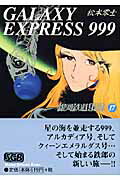
Galaxy Express 999
Galaxy Express 999 follows Tetsuro Hoshino, a young boy who boards the legendary space train 999 toward a planet where he can receive a free mechanical body — accompanied by the mysterious Maetel — and encounters, on each planet the train stops at, a different meditation on what it means to be human and whether eternity is worth what it costs.

Sci-Fi / Drama
Hyakuoku no Hiru to Senoku no Yoru
Hyakuoku no Hiru to Senoku no Yoru is Moto Hagio's manga adaptation of Ryu Mitsuse's celebrated science fiction novel — following the collapse of civilizations across billions of years, centered on figures from different historical periods who are drawn toward a single question: what is the nature of creation, and who is responsible for it?

Sci-Fi / Thriller
Summer Time Rendering
Yu's review of Summer Time Rendering — Shinpei Ajiro returns to Hitogashima island for the funeral of his childhood friend Ushio; something is wrong; the shadows of people on the island are not quite right; Shinpei discovers a supernatural threat that copies humans through their shadows and a time loop mechanic that allows him to restart from the same point when he dies.
Sci-Fi / Mystery
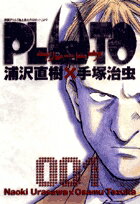
Pluto
Yu's review of Pluto — Naoki Urasawa reimagines a single Astro Boy story arc through the lens of adult science fiction: a robot detective investigates who is systematically destroying the world's seven most powerful robots.
Sci-Fi / Drama
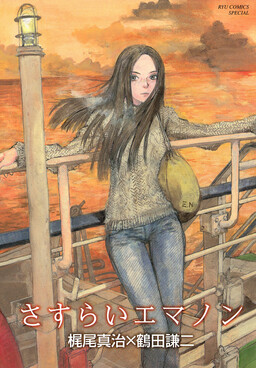
Emanon
Yu's review of Emanon — a young man on an overnight ferry meets a mysterious woman who claims to remember every life she has lived since the first single-celled organism; she carries within her the memories of three billion years of evolution; he doesn't know whether to believe her.
Sci-Fi / Mystery
Billy Bat
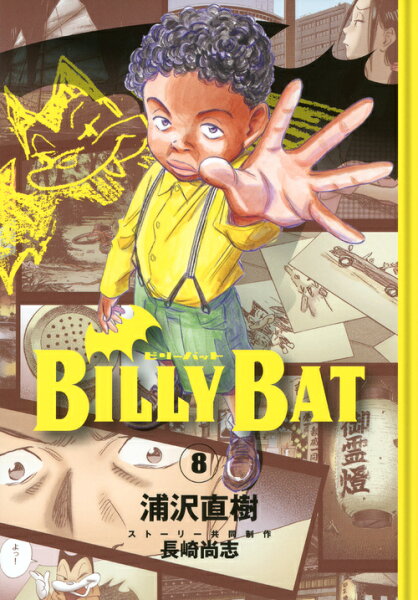
A review of Naoki Urasawa and Takashi Nagasaki's Billy Bat — 20 volumes in Morning from October 2008 to August 2016. A century-spanning conspiracy centered on a cartoon bat symbol that may have shaped human history.
Written by
Yu
Manga Enthusiast from Japan
I grew up in Japan and manga literally saved me during a tough time in elementary school. My English isn't perfect, but my love for manga is real — and I want to share it with you.
Disclosure: This post contains affiliate links. As an Amazon Associate, I earn from qualifying purchases at no extra cost to you.