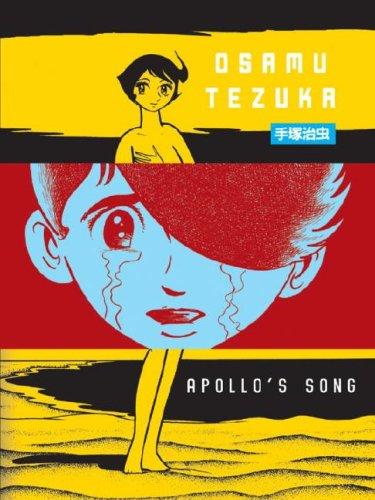
Apollo's Song Review: The Manga That Curses Its Hero to Lose Love Forever
by Osamu Tezuka
Read the first volume. If it doesn't hook you, put it down. It'll hook you.
Buy Apollo's Song on Amazon →*Affiliate link — I earn a small commission at no extra cost to you.
I read a lot of Tezuka because, as a kid, Astro Boy and Black Jack were the "safe" Tezuka — the ones everyone agreed were masterpieces. Apollo's Song is not that Tezuka. I went in expecting another tidy humanist fable and instead got slapped in the face. The opening pages show a boy stamping on mating insects, then escalating to bigger animals, because the sight of two creatures in love makes him sick with rage. I had to put the book down. I have never read another manga that opens by making me dislike its hero so completely — and then spends 500 pages forcing me to ache for him.
This is the strangest comic Tezuka ever drew, and one of the few I can't recommend cleanly. But it's stayed in my head longer than almost anything else of his.
Quick Take
- Tezuka's bleakest, most uncomfortable work — about a boy cursed to fall in love and lose her, over and over, forever
- A reincarnation-and-hallucination framework that runs from Nazi Germany to a cloned dystopian future
- M (Mature) — heavy sexual violence, animal cruelty, abuse, and relentless tragedy; this is not a gentle read
Story Overview
Shogo Chikaishi is a damaged teenager. His mother, who never knew which of her affairs produced him, beat him every time she caught him near anything tender — so Shogo grew up associating love itself with pain, and now he attacks any living thing he sees showing affection. After a violent act he's institutionalized, and a doctor subjects him to shock therapy.
During the treatment, Shogo's mind is hurled before the goddess Athena, who pronounces his curse: he will experience love across different eras, again and again, and have it torn away every single time, dying repeatedly until he finally understands what love actually means. From there the book becomes an anthology of hallucinated lives, each one a different woman with the same face, each one ending in death.
In the wartime vignette he's a soldier who falls for Elise, a Jewish woman he helps escape — and it ends in horror and a mutual killing. On an island he's stranded with a photographer, Naomi, surrounded by mating animals, until rescuers' gunfire destroys the paradise. In a cloning dystopia he's sent to assassinate Queen Sigma — who wears the same face as the woman he keeps losing — falls for her instead, and is cut down by his own replacement assassin. The framing thread is the modern Shogo, taken in by a doctor named Hiromi who trains him as a long-distance runner — the one relationship that feels like it might break the cycle. It doesn't. Tezuka refuses to let it.
Characters
Shogo Chikaishi — The most repellent protagonist Tezuka ever wrote, by design. He begins as a cruelty-machine, a boy who can only express the love he was denied as violence. The curse is his arc: by being forced to love and lose in life after life, the hatred is slowly burned out of him. He doesn't become good so much as become capable of grief, which for him is a kind of healing.
Hiromi Watari — The doctor in the present-day frame who takes Shogo under her wing and trains him for a marathon. She's the closest thing the book has to hope: tough, patient, the first person who treats Shogo as worth saving. Their bond is the emotional spine, which is exactly why the ending lands like a hammer.
Elise — The woman of the wartime hallucination, a Jewish escapee Shogo loves and tries to save. Her thread is the book's most brutal, and the one that announces this is not a story that will spare anyone.
Athena / the goddess — Not a character so much as the engine of the whole thing. She delivers the curse and reappears at the end to confirm there is no graduation, no reward — only the cycle, continuing.
What I Love About It
What I love isn't comfort — it's nerve. Tezuka built a reputation on warmth, and here he deliberately torches it. He opens on a hero killing animals for the crime of loving each other, and dares you to keep reading. That's an astonishing choice for 1970, and it tells you he's not interested in flattering anyone.
The structure is what really gets me. By disguising the book as a string of unrelated hallucinations — a soldier, a castaway, an assassin — Tezuka can keep restarting the same tragedy in new clothes, and each repetition tightens the screw. You start to dread the woman's face appearing, because you know what her face means now: she's going to die, and Shogo is going to have to feel it again. The cumulative effect is something a single linear plot could never achieve. It's love rendered as a sentence, in both senses of the word.
Memorable Scene ⚠️ Spoiler Warning
The one that won't leave me is the marathon. In the modern frame, Hiromi trains Shogo into a long-distance runner, and the race becomes the book's argument that this Shogo — softened, finally human — has earned a different ending. He hasn't. Hiromi dies, and Shogo, gutted, provokes the police into shooting him; the scene ends in an explosion that kills him instantly.
Then comes the gut-punch: he's brought before Athena one final time, and instead of release she tells him the curse stands — he will keep finding love and keep losing it, for eternity. As he turns to go, Hiromi is resurrected and quietly follows him, doomed to the same wheel. Some reviewers hate this ending, calling it tragedy for tragedy's sake, and I understand them. But that final image — two people walking into an endless loop of love and loss — is the cruelest, most honest thing Tezuka ever drew about what it costs to love someone.
Pros & Cons
Pros:
- A genuinely ambitious, formally daring structure that builds devastating cumulative weight
- Tezuka at his most personal and least sentimental
- A complete, self-contained story — no waiting, no filler
Cons:
- Heavy, repeated sexual violence and animal cruelty; deeply uncomfortable throughout
- The ending withholds catharsis on purpose — some readers find it nihilistic rather than profound
- The 1970s gender politics have aged badly in places
This is a book that wants to disturb you. That's either the point or a dealbreaker, depending entirely on you.
Is Apollo's Song Worth Reading?
If you want the comforting, humanist Tezuka, this isn't it — and it might genuinely upset you. But if you want to see one of manga's founding masters strip away every safety net and write about love as a wound that never closes, Apollo's Song is a singular, unforgettable experience. It's a 4 out of 5 for me only because the relentlessness can tip into punishment; for the right reader it's a 5.
Content Warnings & Age Rating
Age Rating: M (Mature) Content Warnings: sexual violence (including rape), animal cruelty, child abuse, suicide, and pervasive death and despair.
This is one of the heaviest things Tezuka ever published. Do not hand it to a younger reader, and approach it carefully even as an adult.
Yu's Rating
| Category | Score |
|---|---|
| Story Depth | ★★★★★ |
| Art Style | ★★★★☆ |
| Character Development | ★★★★☆ |
| Accessibility for Non-Japanese Readers | ★★★★☆ |
| Reread Value | ★★★☆☆ |
Overall: 4/5 — A brilliant, brutal experiment that earns its place in Tezuka's canon even when it hurts to read.
Official English Translation Status
Apollo's Song is fully available in English, translated and published by Vertical, Inc. It first appeared in 2007 as a single hefty volume (over 500 pages), and was later reissued as a two-volume set. Digital editions are available via Kindle. So whether you want it in print or on a screen, there's a legitimate, complete English edition to read.
Similar Manga
| Title | Its Approach | How Apollo's Song Differs |
|---|---|---|
| Ode to Kirihito by Osamu Tezuka | Tezuka's other "adult" experiment — a doctor's nightmarish odyssey through degradation | Apollo's Song turns the cruelty inward, onto the nature of love itself rather than the body |
| MW by Osamu Tezuka | Tezuka at his darkest and most cynical about humanity | Apollo's Song is bleak but reaching for transcendence, not nihilism |
| Oyasumi Punpun by Inio Asano | Modern manga about love as something that quietly destroys a person | Apollo's Song wraps the same despair in myth, reincarnation, and sci-fi instead of mundane realism |
Where to Buy
Read the first volume. If it doesn't hook you, put it down. It'll hook you.
This post contains affiliate links. If you purchase through these links, I may earn a small commission at no extra cost to you. As an Amazon Associate, I earn from qualifying purchases.
*Affiliate link — I earn a small commission at no extra cost to you.
More Manga You Might Like
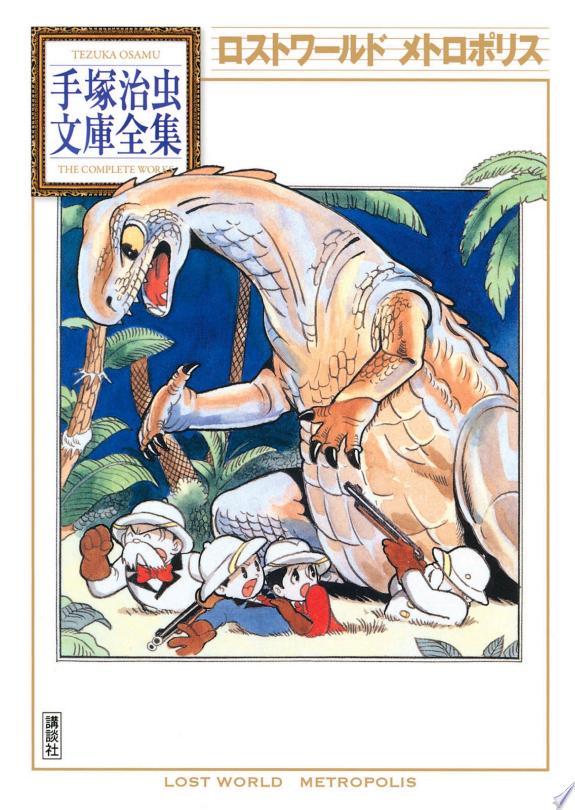
Sci-Fi / Drama
Metropolis
A review of Osamu Tezuka's Metropolis — serialized in Manga Shōnen in 1949, complete in one volume. A loose adaptation of Fritz Lang's film about a stratified city, an android child named Mitchi, and the question of what makes someone human. VIZ Media's English edition is complete.

Sci-Fi / Drama
Galaxy Express 999
Galaxy Express 999 follows Tetsuro Hoshino, a young boy who boards the legendary space train 999 toward a planet where he can receive a free mechanical body — accompanied by the mysterious Maetel — and encounters, on each planet the train stops at, a different meditation on what it means to be human and whether eternity is worth what it costs.

Sci-Fi / Drama
Hyakuoku no Hiru to Senoku no Yoru
Hyakuoku no Hiru to Senoku no Yoru is Moto Hagio's manga adaptation of Ryu Mitsuse's celebrated science fiction novel — following the collapse of civilizations across billions of years, centered on figures from different historical periods who are drawn toward a single question: what is the nature of creation, and who is responsible for it?
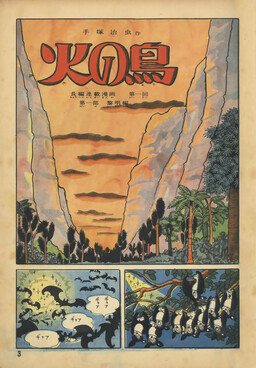
Sci-Fi / Historical
Phoenix
Yu's review of Phoenix — Tezuka Osamu's incomplete masterwork — a series of stories set throughout Japanese and universal history, connected by the Phoenix, a bird whose blood grants immortality; the Phoenix appears in each arc but cannot be caught; the arcs range from ancient Japan to the far future and examine what it means to be human across all of time.
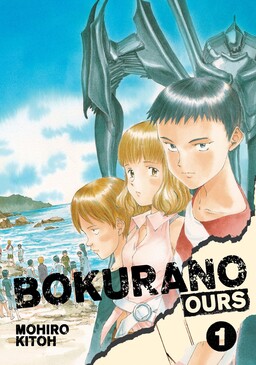
Sci-Fi / Drama
Bokurano
Yu's review of Bokurano by Mohiro Kitoh — fifteen children sign a contract to pilot a giant robot called Zearth, only to learn each victory costs the pilot's life, and that every battle won erases another Earth.
Sci-Fi / Mystery / Thriller
20th Century Boys
Yu's review of 20th Century Boys — childhood friends once wrote a 'Book of Prophecy' about saving the world. Decades later a cult leader called 'Friend' is using it as a blueprint for real mass murder, and convenience store manager Kenji realizes he helped write the script.
Written by
Yu
Manga Enthusiast from Japan
I grew up in Japan and manga literally saved me during a tough time in elementary school. My English isn't perfect, but my love for manga is real — and I want to share it with you.
Disclosure: This post contains affiliate links. As an Amazon Associate, I earn from qualifying purchases at no extra cost to you.