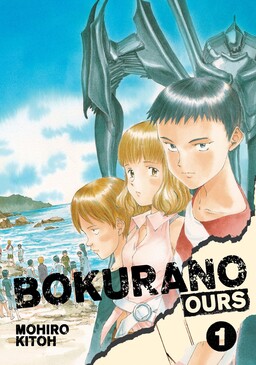
Bokurano Review: Fifteen Kids Sign a Contract to Pilot a Giant Robot, Not Knowing It Costs Their Lives
by Mohiro Kitoh
Read the first volume. If it doesn't hook you, put it down. It'll hook you.
Buy Bokurano on Amazon →*Affiliate link — I earn a small commission at no extra cost to you.
I read the first chapter of Bokurano on a train ride home, expecting a fun giant-robot story. By the time I finished volume one, I was sitting very still, not wanting to move. I grew up loving mecha — Gundam, Evangelion, all of it. I thought I knew what a "kids pilot a robot" story was supposed to feel like. Bokurano took that comfort and quietly broke it in my hands. I have read a lot of dark manga in my life, but this one stayed with me in a way that almost scared me, because it never raises its voice. It just shows you a child, lets you love them, and then makes you watch.
Quick Take
- A giant-robot story that uses the mecha genre as a delivery system for fifteen short, devastating portraits of ordinary children facing death
- Mohiro Kitoh never flinches and never sentimentalizes — the battles are almost background noise next to the human stories
- M (Mature): child death is the literal premise, plus sexual abuse, suicide themes, and mass death; this is not casual reading
Story Overview
Fifteen middle-school kids at a seaside summer camp wander into a grotto full of computers. A young programmer who calls himself Kokopelli invites them to "test" a game: pilot a giant robot called Zearth and defend Earth against a series of attacking enemy robots. All but one of them sign the contract. It seems harmless — a game.
The turning point comes after the very first battle. Takashi Waku climbs in, wins, and the kids celebrate on Zearth's giant chest. Then Waku falls, and the police find he was already dead before he hit the water. Zearth runs on the pilot's life force. Winning a battle costs the pilot everything. They will fly one at a time, in a fixed order, until either every enemy is defeated or every child is dead — and they cannot quit. A strange floating creature they nickname Koyemshi (the kids call him "Dung Beetle") manages the contract and tells them, coldly, exactly how it works.
From there the manga moves child by child, giving each pilot their own arc as they try to settle the unfinished business of their short lives before their turn comes. The deepest horror arrives later: these battles are not defending Earth from invaders. Each "enemy" is another parallel Earth's robot, and every victory means that the losing world — ten billion people — is erased from existence. The children are not heroes. They are executioners and victims at once. The final battles fall to Jun Ushiro, and the story does not offer an escape; it offers an ending, and asks what these doomed kids choose to become with the time they have left.
Characters
Takashi Waku — The first pilot. A soccer kid who lost faith in himself after realizing his talented father never made it as a pro. He wins the first fight cheerfully, gives the others a thumbs-up, and dies in the same breath — the death that teaches everyone, including the reader, what the contract really means.
Jun Ushiro — The closest thing to a protagonist. Guilt-ridden after the others believe he accidentally pushed Waku off Zearth, he carries a colder, harder edge than the rest. He turns out to be exempt from the original contract, but enters it willingly later and ends up piloting the final, most terrible battle of the series.
Kana Ushiro — Jun's gentle younger sister, the youngest of the group, too kind to want to hurt anyone. Her place in the story is one of the most quietly painful threads, and in the anime adaptation she is the one survivor who lives to narrate it all.
Chizuru Honda — One of the most harrowing arcs in the book. A girl carrying a secret pregnancy and the trauma of being manipulated and assaulted by a teacher she trusted, Chizu's turn at Zearth becomes a reckoning with the people who destroyed her.
Kokopelli & Koyemshi — Kokopelli, the smiling "programmer" who recruits them, is not what he seems; he is a pilot from another world running the same death game. Koyemshi, the floating mascot creature, is revealed to have been human once too — a participant in this endless tournament between Earths.
What I Love About It
What I love is Waku's death, because of how Kitoh chooses to draw it. He does not give us a tragic battlefield collapse or a tearful goodbye. Waku wins, the kids climb onto Zearth's enormous chest and cheer, the sky is bright, and one of them gives a thumbs-up. It looks like the triumphant final page of any normal shonen robot manga. Then Ushiro pats him on the back, Waku tips over the edge and falls into the sea, and everyone assumes Ushiro pushed him by accident. It is only afterward that we learn Waku had already been dead, standing there, the instant his time as pilot ended.
The first time I read this, I had to go back and look at the celebration panel again, knowing what I now knew. That is the genius of it. Kitoh hands you the exact image of victory that mecha stories have trained you to feel good about, and then he tells you the smiling boy in the middle of it was a corpse. It reframes the whole genre in two pages. Every cheer in every robot anime I had ever loved suddenly felt different. It hit me so hard because it was not cruel for the sake of shock — it was honest. If a child really paid for a victory with their life, this is exactly how invisible and ordinary and unbearable that moment would be. That single sequence is why I trust this manga to tell the truth about everything that comes after.
Memorable Scene ⚠️ Spoiler Warning
Chizuru Honda's battle is the one I cannot forget. By the time her turn comes, we know she is pregnant and we know what her teacher Hatagai and his friends did to her. When she takes control of Zearth, she does not just fight the enemy robot — she turns the most powerful weapon in the world on the men who assaulted her, killing them and, in the process, countless innocent people caught in the destruction. She is about to kill Hatagai too. The only thing that stops her is her older sister, who loved the same teacher and pleads with her in that final moment.
Then Chizuru dies, as the contract demands, and her unborn child dies with her — and she asks that her body and her baby be sealed inside Zearth. What stays with me is that Kitoh refuses to make her either a clean victim or a clean villain. He lets her be a wounded girl with the power of a god for a few minutes, and he lets us feel both the justice and the horror of what she does with it. It is the angriest, saddest chapter in the book, and it never once tells you how to feel.
Content Warnings & Age Rating
Age Rating: M (Mature). This is one of the heaviest manga I have ever recommended, and the rating is fully earned.
Content Warnings: Child death is the structural premise — each pilot dies after their battle. The series also contains sexual abuse and assault (Chizuru's arc), teen pregnancy, suicide themes, and the mass death of entire populations as a plot mechanic. Kitoh treats these subjects seriously, but he does not soften them.
Pros & Cons
Pros
- Each pilot's chapter is a complete, human, devastating short story in itself
- Waku's first death reframes the entire mecha genre in two pages
- The reveal of what the battles actually cost gives the premise real philosophical weight
- Eleven volumes, fully complete, with a real ending
Cons
- The relentless child death is the point, not incidental — it never lets up
- A few pilots' arcs land harder than others, so the emotional intensity isn't perfectly even
- It uses dark, genuinely upsetting subject matter to make its points, and that approach won't work for everyone
Is Bokurano Worth Reading?
Yes — if you can handle it. Bokurano is one of the most honest and emotionally demanding manga I have read, a giant-robot story that quietly dismantles every comfort the genre usually offers. If you want mecha as escapist fun, look elsewhere. If you want a series that takes the idea of "sacrifice" completely seriously and never blinks, there is nothing else quite like it.
Where to Buy
Read the first volume. If it doesn't hook you, put it down. It'll hook you.
This post contains affiliate links. If you purchase through these links, I may earn a small commission at no extra cost to you. As an Amazon Associate, I earn from qualifying purchases.
*Affiliate link — I earn a small commission at no extra cost to you.
More Manga You Might Like
Sci-Fi
Swallowing the Earth
Yu's review of Swallowing the Earth — a mysterious woman named Zephyrus is so beautiful and charismatic that every powerful man who encounters her is destroyed; Gohonmatsu Seki pursues her across decades; Tezuka's adult drama about power, beauty, and what men do to themselves in pursuit of what they desire.
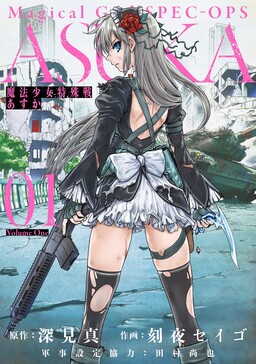
Sci-Fi / Action
Magical Girl Spec-Ops Asuka
Yu's review of Magical Girl Spec-Ops Asuka — three years after magical girls saved the world from an invasion of magical creatures, Asuka Otori is trying to live a normal high school life; she has PTSD; her allies need her back; she doesn't want to go back.
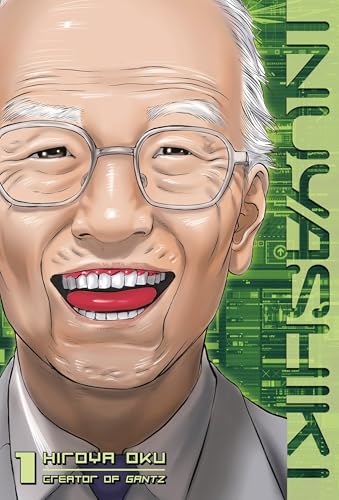
Sci-Fi / Drama
Inuyashiki
Yu's review of Inuyashiki — two people are accidentally destroyed and rebuilt as machines by aliens; a 58-year-old man no one noticed becomes a hero; a teenage boy whom everyone admired becomes a mass murderer; the series asks what the inside of a person determines when they are given absolute power.
Sci-Fi / Action
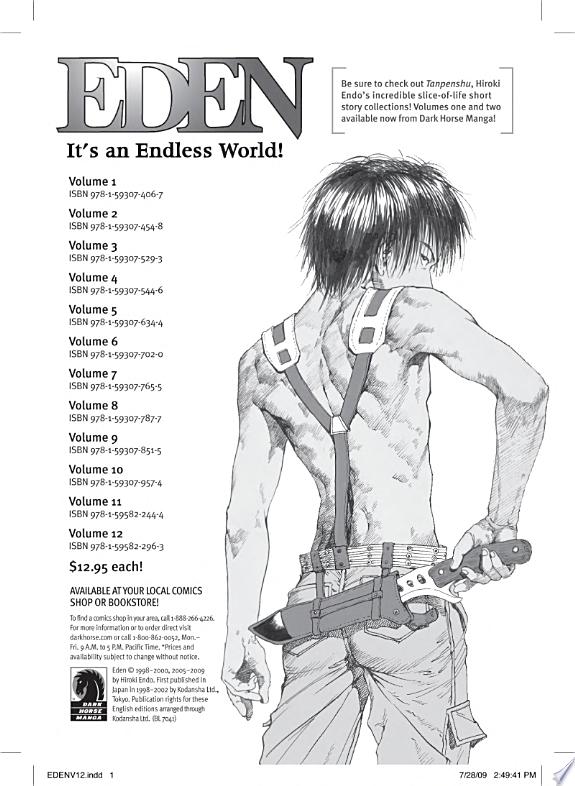
Eden: It's an Endless World!
Yu's review of Eden: It's an Endless World! — a plague destroyed most of humanity; a boy named Elijah grows up in the aftermath, in a world run by the Propater organization and his father's network of resistance, becoming something neither of them intended.
Sci-Fi / Horror
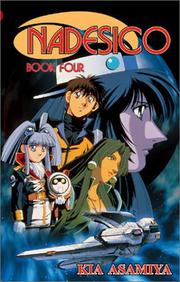
Alien Nine
Yu's review of Alien Nine — Yuri Otani, a frightened sixth-grader, is elected to her school's Alien Party and forced to fight the aliens that fall on the school grounds while wearing a symbiotic creature called a Borg on her head. Drawn in a soft, cute style that makes the body horror underneath it so much worse.
Sci-Fi
Alabaster
Yu's review of Alabaster — Osamu Tezuka's bleakest manga. A Black sports star named James Block, ruined by the racism of the woman he loved, botches an invisibility ray and turns himself into a skinless monster who hunts beautiful people out of pure envy. Tezuka hated drawing it. That's exactly why it's worth reading.
Written by
Yu
Manga Enthusiast from Japan
I grew up in Japan and manga literally saved me during a tough time in elementary school. My English isn't perfect, but my love for manga is real — and I want to share it with you.
Disclosure: This post contains affiliate links. As an Amazon Associate, I earn from qualifying purchases at no extra cost to you.