
MW Review: Tezuka's Darkest Manga — A Beautiful Man with No Conscience
by Osamu Tezuka
Read the first volume. If it doesn't hook you, put it down. It'll hook you.
Buy MW on Amazon →*Affiliate link — I earn a small commission at no extra cost to you.
Quick Take
- Tezuka's most morally disturbing work — Michio is depicted with the full range of his charm and horror
- The conscience-stripped-by-chemical-weapon premise is a philosophical thought experiment drawn at full length
- Single omnibus; the Tezuka work that most surprises readers who approach it expecting his children's output
Who Is This Manga For?
- Readers who want Tezuka at his most uncompromising
- Anyone interested in morality and psychology explored in manga form
- Fans of psychological thriller with a genuinely amoral protagonist
- Readers of mature classic manga that questions its own medium's boundaries
Content Warnings & Age Rating
Age Rating: M (Mature) Content Warnings: Protagonist is a psychopath with no remorse for any action; mass murder plot; sexual content; significant violence; chemical weapon origins story
M rating — adult readers only; genuinely disturbing content.
Yu's Rating
| Category | Score |
|---|---|
| Story Depth | ★★★★★ |
| Art Style | ★★★★★ |
| Character Development | ★★★★★ |
| Accessibility for Non-Japanese Readers | ★★★★☆ |
| Reread Value | ★★★★★ |
Story Overview
As children, Yuki Michio and Iwao Garai survived an incident on a small island where a chemical weapon — MW — was deployed, killing all other inhabitants. The exposure damaged Michio permanently: his conscience is gone.
As an adult, Michio is physically beautiful, professionally successful, charming, and completely without scruple. He works in finance. He manipulates everyone around him. He is also pursuing a goal that involves MW and mass casualties.
Garai became a priest. He is in love with Michio. He tries to stop him. His faith, his love, and his complicity are in constant conflict.
Characters
Yuki Michio — Tezuka depicts him as genuinely attractive in every sense — which is the point; the horror is that the conscience-removal didn't make him ugly.
Iwao Garai — His love for Michio and his recognition of what Michio is make him the story's moral center; his failure to act decisively despite knowing is the story's philosophical crux.
Art Style
Tezuka's art serves this story specifically: Michio's beauty is drawn as genuinely attractive, not monstrous. The gap between appearance and interior is entirely visual.
Cultural Context
MW was drawn 1976–1978. The chemical weapon premise engages with real history — Tezuka was aware of Unit 731 and the legacy of Japan's wartime chemical weapons programs. The work is structured as a thriller but operates as a moral inquiry.
What I Love About It
The love problem. Garai's love for Michio is not treated as pathological — it's treated as real. The question of whether love for a person without conscience can coexist with opposition to their actions is genuine philosophy drawn at length.
What English-Speaking Fans Say
Western readers describe MW as Tezuka's most disturbing work and often his most intellectually provocative — specifically noted for Michio being genuinely compelling rather than cartoonishly evil, for the ending being one of manga's most discussed conclusions, and for the work functioning as adult philosophical fiction in manga form.
Memorable Scene ⚠️ Spoiler Warning
The scene where Garai realizes the full scope of what Michio is planning — and that he has had every opportunity to stop him and hasn't — is the story's moral climax.
Similar Manga
- Ode to Kirihito — Tezuka's other major adult work
- Death Note — Amoral protagonist in different genre register
- Liar Game — Psychological manipulation in thriller format
- Monster — Surgical villain in similar thriller register
Reading Order / Where to Start
Single omnibus volume. Read Ode to Kirihito first for Tezuka's adult range.
Official English Translation Status
Vertical published the English omnibus edition.
Pros & Cons
Pros
- Intellectually serious and genuinely disturbing
- Michio's character is a philosophical achievement
- Tezuka at full adult power
- Complete in single omnibus
Cons
- M-rated — genuinely disturbing content
- Requires engaged reading
- Michio's charm requires readers to sit with discomfort
Format Comparison
| Format | Notes |
|---|---|
| Omnibus | Vertical; complete single volume |
Where to Buy
Read the first volume. If it doesn't hook you, put it down. It'll hook you.
This post contains affiliate links. If you purchase through these links, I may earn a small commission at no extra cost to you. As an Amazon Associate, I earn from qualifying purchases.
*Affiliate link — I earn a small commission at no extra cost to you.
Reading Guides
More Manga You Might Like
Horror
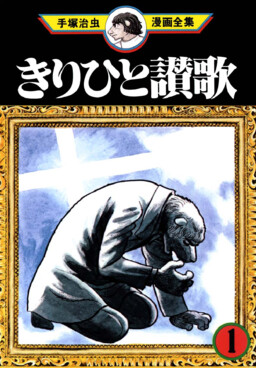
Ode to Kirihito
Yu's review of Ode to Kirihito — Dr. Osanai Kirihito investigates Monmow disease, a mysterious illness that transforms its victims into dog-like creatures; the medical establishment suppresses his findings; Osamu Tezuka's 1970 medical horror manga about a doctor reduced to subhuman status while searching for a scientific truth powerful people want hidden.
Horror / Psychological Thriller
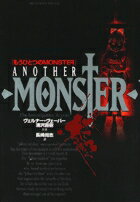
Monster
Yu's review of Monster — a brilliant surgeon saves a boy's life over a hospital director's, ruins his career, and ten years later discovers the boy he saved has become a serial killer who is now hunting him.
Horror / Thriller
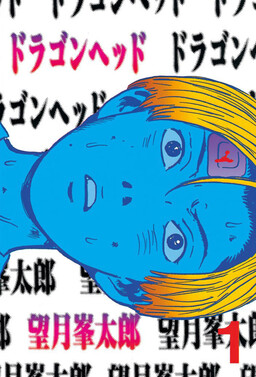
Dragon Head
Yu's review of Dragon Head — a school-trip train derails inside a mountain tunnel and three classmates crawl out into a Japan destroyed by an unexplained cataclysm. Minetaro Mochizuki's 10-volume survival horror about fear itself, the thing that breaks people faster than the disaster does.
Horror / Psychological
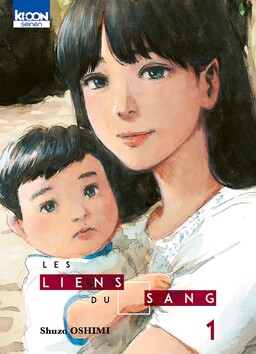
Blood on the Tracks
Yu's review of Blood on the Tracks (Chi no Wadachi) by Shuzo Oshimi — Seiichi Osabe is an ordinary middle schooler whose devoted mother Seiko pushes his cousin off a cliff during a mountain hike, and the boy becomes the only witness. A 17-volume slow-burn study of maternal possessiveness as horror.

Horror / Thriller
Life Is Money
Yu's review of Life Is Money — ten strangers agree to participate in a locked-room psychological game for a prize of 100 million yen; the rule is simple but brutal: they must maintain their sanity across ten days of engineered terror; those who break lose everything.
Horror / Thriller
Hideout
Yu's review of Hideout — Seiichi Kirishima takes his wife to a deserted island intending to kill her and stage it as an accident; before he can act, they encounter something on the island that alters the situation entirely; what follows is survival horror with a protagonist whose hands are already guilty.
Written by
Yu
Manga Enthusiast from Japan
I grew up in Japan and manga literally saved me during a tough time in elementary school. My English isn't perfect, but my love for manga is real — and I want to share it with you.
Disclosure: This post contains affiliate links. As an Amazon Associate, I earn from qualifying purchases at no extra cost to you.