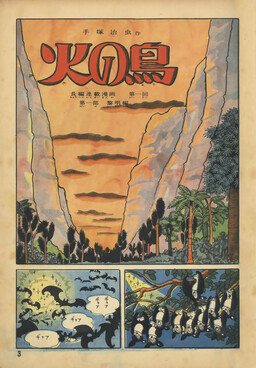
Phoenix Review: Tezuka's Greatest Work — Stories Across All of Human History and the Bird That Connects Them
by Osamu Tezuka
Read the first volume. If it doesn't hook you, put it down. It'll hook you.
Buy Phoenix on Amazon →*Affiliate link — I earn a small commission at no extra cost to you.
Quick Take
- Osamu Tezuka considered this his life's work — an incomplete masterwork that he spent decades on, which is complete enough to be among the most significant works in manga history
- Each arc is a standalone story in a different historical period, connected by the Phoenix — the ambition and scope is without equal in manga
- 12 volumes complete (Tezuka died before finishing the final arc); essential reading for anyone serious about manga as a medium
Who Is This Manga For?
- Readers who want to encounter manga's greatest work by its most important artist
- Anyone drawn to stories that examine the largest questions — what life means, what death means, what makes a civilization — through specific human stories
- Fans of historical fiction across multiple periods and settings
- Readers who can engage with anthology-format manga with a connective philosophical thread
Content Warnings & Age Rating
Age Rating: T (Teen) Content Warnings: Death is a constant across every arc; some arcs include historical war violence; existential questions are examined directly; certain arcs include disturbing content appropriate to their historical contexts
The emotional weight is substantial. These are serious stories.
Yu's Rating
| Category | Score |
|---|---|
| Story Depth | ★★★★★ |
| Art Style | ★★★★★ |
| Character Development | ★★★★★ |
| Accessibility for Non-Japanese Readers | ★★★★☆ |
| Reread Value | ★★★★★ |
Story Overview
Phoenix is structured as a series of arcs that alternate between Japan's distant past and its far future, spiraling inward toward the present. The Phoenix — an enormous bird whose blood grants immortality — appears in each arc but cannot be kept. Characters who encounter it are changed. Sometimes they drink its blood and become immortal, condemned to outlive everything they love. Sometimes they simply see it and are changed in other ways.
The Dawn arc is set in ancient Japan and concerns the founding myths of the Japanese state, power, and human sacrifice. The Future arc imagines the far future as a human civilization destroys itself and what remains after. The Yamato arc concerns the consolidation of Japanese power and what that consolidation destroyed. The Robe of Feathers arc is a science fiction story about robots developing consciousness.
Each arc is complete in itself. Each involves characters who face questions about whether life is worth living, whether any act means something across the scale of human history, and what the Phoenix — immortal, indifferent, present at every significant human moment — represents.
Characters
The characters change with each arc. What persists is the Phoenix — an entity that is never explained, never moralized, and never made into a simple symbol. Its indifference is the series' most honest feature.
Art Style
Tezuka's art across Phoenix spans decades of his career — some arcs are drawn in his earlier, more gestural style; others in the more controlled approach of his mature period. Each arc's visual register matches its subject. The Phoenix itself is depicted with genuine visual grandeur across every arc.
Cultural Context
Phoenix is Tezuka's self-described magnum opus. He worked on it from 1967 until his death in 1989 — 22 years of intermittent work across different serialization contexts. The completed arcs are extraordinary; the fact of its incompleteness is part of the work's nature. It is the only manga to span all of Japanese and speculative human history while maintaining philosophical coherence across arcs produced decades apart.
What I Love About It
The Future arc. Set after humanity has nearly destroyed itself, it follows the last two humans — one of whom becomes effectively immortal — as they watch a new civilization emerge. The specific image of watching a species begin again from outside its timeline is the most quietly devastating image in the series. It took me a week to stop thinking about it.
What English-Speaking Fans Say
Western readers who encounter Phoenix describe it as the manga that changed their understanding of what the medium can do at its most ambitious. The Dawn arc is most often cited as the best entry point; the Future arc is most often cited as the most affecting. The series is consistently described as the most important manga most readers have encountered.
Memorable Scene ⚠️ Spoiler Warning
The final pages of the Future arc — the specific image Tezuka chooses for what remains when nearly everything is gone — is the most precisely chosen ending in manga. The image is simple. The weight it carries after the preceding chapters is not.
Similar Manga
- Black Jack — Same author, different format, equally serious about human life
- Buddha — Same author, similarly ambitious historical scope
- Nausicaa — Ecological scope, speculative future, serious about human civilization
- Berserk — Span and ambition, darkness as honest examination of human nature
Reading Order / Where to Start
The Dawn arc (Volume 1) — the beginning of Tezuka's spiral through history. Some readers prefer starting with the Future arc for its accessibility.
Official English Translation Status
Viz Media published the complete English edition of the existing 12 volumes. All available arcs are in English.
Pros & Cons
Pros
- The most ambitious work in manga history
- Each arc is an extraordinary standalone story
- Tezuka at the height of every skill he developed across his career
- Incomplete but complete enough to be among the greatest works in the medium
Cons
- The incompleteness is real — several planned arcs were never drawn
- The anthology format means no continuous narrative — each arc stands alone
- Some historical arcs require engagement with Japanese history for full appreciation
Format Comparison
| Format | Notes |
|---|---|
| Individual Volumes | Viz Media; 12 volumes |
| Digital | Available |
Where to Buy
Read the first volume. If it doesn't hook you, put it down. It'll hook you.
This post contains affiliate links. If you purchase through these links, I may earn a small commission at no extra cost to you. As an Amazon Associate, I earn from qualifying purchases.
*Affiliate link — I earn a small commission at no extra cost to you.
More Manga You Might Like
Sci-Fi / Adventure
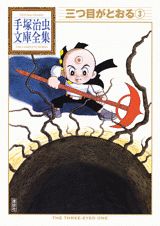
The Three-Eyed One
The Three-Eyed One follows Sharaku Hosuke, a seemingly simple-minded boy who conceals a third eye beneath a bandage — when uncovered, the third eye reveals his true identity as a descendant of a lost civilization with extraordinary mental powers and a ruthless intelligence.
Sci-Fi / Adventure
Ginga no Sannin
Ginga no Sannin is one of Osamu Tezuka's compact science fiction works — a single-volume story about three people across the galaxy whose lives intersect at a critical historical moment, demonstrating Tezuka's ability to compress epic into modest space.
Sci-Fi / Drama
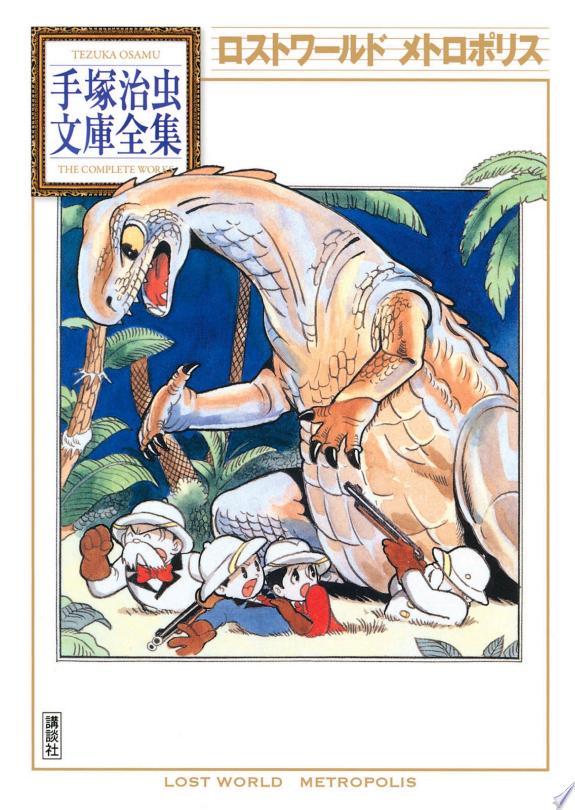
Metropolis
A review of Osamu Tezuka's Metropolis — serialized in Manga Shōnen in 1949, complete in one volume. A loose adaptation of Fritz Lang's film about a stratified city, an android child named Mitchi, and the question of what makes someone human. VIZ Media's English edition is complete.
Sci-Fi / Drama
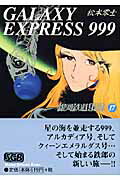
Galaxy Express 999
Galaxy Express 999 follows Tetsuro Hoshino, a young boy who boards the legendary space train 999 toward a planet where he can receive a free mechanical body — accompanied by the mysterious Maetel — and encounters, on each planet the train stops at, a different meditation on what it means to be human and whether eternity is worth what it costs.

Sci-Fi / Drama
Hyakuoku no Hiru to Senoku no Yoru
Hyakuoku no Hiru to Senoku no Yoru is Moto Hagio's manga adaptation of Ryu Mitsuse's celebrated science fiction novel — following the collapse of civilizations across billions of years, centered on figures from different historical periods who are drawn toward a single question: what is the nature of creation, and who is responsible for it?
Sci-Fi
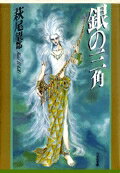
Gin no Sankaku
Gin no Sankaku follows characters trapped across multiple timelines by a silver triangle that connects them — a complex, demanding sci-fi work by Moto Hagio that uses time loop mechanics to explore the weight of memory and the impossible arithmetic of rescue and loss.
Written by
Yu
Manga Enthusiast from Japan
I grew up in Japan and manga literally saved me during a tough time in elementary school. My English isn't perfect, but my love for manga is real — and I want to share it with you.
Disclosure: This post contains affiliate links. As an Amazon Associate, I earn from qualifying purchases at no extra cost to you.