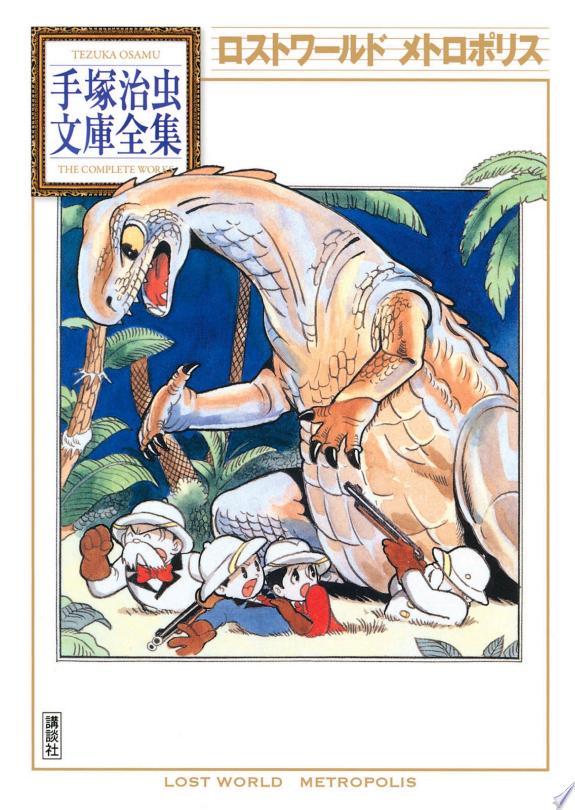
Metropolis Review: Osamu Tezuka's 1949 Science Fiction Epic, Complete in One Volume
by Osamu Tezuka
Read the first volume. If it doesn't hook you, put it down. It'll hook you.
Buy Metropolis on Amazon →*Affiliate link — I earn a small commission at no extra cost to you.
Tezuka wrote Metropolis in 1949, four years after the end of the war, while Japan was under occupation. He had not actually seen Fritz Lang's 1927 film — he worked from a still photograph and written descriptions. What he made from those materials is something entirely different from the source, and considerably more interested in the question of what consciousness owes us.
I'm Yu. Tezuka is one of the reasons I read manga at all. Metropolis is not his most famous work, but it is one of his most honest.
Quick Take
- Osamu Tezuka's Metropolis (メトロポリス) was serialized in Manga Shōnen in 1949 — complete in one volume.
- VIZ Media published the English edition; complete and available.
- Rated T (Teen) — violence, dystopian themes, some content that reflects its historical era.
Story Overview
Metropolis is a stratified city: humans in the upper zones, robots in the lower levels. A mad scientist has created Mitchi — an android child with the face and form of an innocent, built to channel enormous power. The city's ruling forces want to use Mitchi as a weapon.
Detective Ban Kenichi and his nephew Kenichi travel to Metropolis to investigate. They encounter Mitchi before understanding what Mitchi is. A friendship forms between two children — one human, one not — who don't know yet what the difference means.
The series asks one question from its first page to its last: if consciousness and feeling are present, does the substrate matter?
Characters
Mitchi — One of Tezuka's great character creations: genuinely childlike, curious about the world, capable of love, facing the discovery of their own nature with a complexity most adult characters in any medium never reach. Their response to learning what they are is the series' best writing.
Kenichi — The human entry point — young, idealistic, drawn to Mitchi without knowing why. His friendship with Mitchi represents what the world could be if it did not sort consciousness by origin.
Duke Red — The villain whose motivations are coherent even as his methods are monstrous. Tezuka gives him enough interiority that he does not read as purely functional.
What I Love About It
Tezuka is thinking about postwar Japan in Metropolis. The question of what distinguishes the human from the manufactured, what rights accrue to beings that are not fully recognized — these had immediate resonance in 1949, and they still do.
What I love more specifically: Mitchi's response to their own nature is not tragedy and is not resolution. It is something more complicated — a recognition that does not destroy the self. Tezuka does not give Mitchi an easy answer, and he does not give the reader one either.
This is a 1949 manga asking questions that science fiction keeps returning to, and getting there before most of the genre.
Memorable Scene ⚠️ Spoiler Warning
The moment when Mitchi understands what they are — and what they choose to do with that understanding — is the series' best passage. Tezuka draws the recognition with restraint. The weight is in what Mitchi does after knowing, not in the knowing itself.
Pros & Cons
Pros:
- A foundational science fiction manga from the creator who built the language of the medium.
- Mitchi is a genuinely exceptional character — their arc holds up across seven decades.
- Single volume: complete story, manageable commitment.
- Historically essential for understanding manga's development as a form.
Cons:
- 1949 art style requires adjustment for readers used to contemporary manga.
- Some content reflects the era in ways modern readers will notice.
- Loose adaptation — readers expecting Lang's film will find something significantly different.
Is Metropolis Worth Reading?
Yes — especially for readers interested in manga history or science fiction's engagement with consciousness and identity. One volume is a minimal commitment for what it offers. The 1949 art style is the only real barrier.
Who Is This Manga For?
- Readers interested in Tezuka's range beyond Astro Boy and Black Jack.
- Science fiction readers who want manga's foundational engagement with AI and identity themes.
- Anyone who wants a single-volume complete classic with genuine philosophical depth.
- Readers of Urasawa's Pluto who want the Tezuka context.
Official English Translation Status
Dark Horse Comics published the English edition of Metropolis in 2003. The print edition may be out of print; used copies and digital editions are findable.
Where to Buy
Dark Horse Comics published the English edition in 2003. Used copies are widely available; check digital storefronts for availability.
This post contains affiliate links. If you purchase through these links, I may earn a small commission at no extra cost to you. As an Amazon Associate, I earn from qualifying purchases.
*Affiliate link — I earn a small commission at no extra cost to you.
More Manga You Might Like
Sci-Fi / Drama
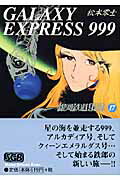
Galaxy Express 999
Galaxy Express 999 follows Tetsuro Hoshino, a young boy who boards the legendary space train 999 toward a planet where he can receive a free mechanical body — accompanied by the mysterious Maetel — and encounters, on each planet the train stops at, a different meditation on what it means to be human and whether eternity is worth what it costs.

Sci-Fi / Drama
Hyakuoku no Hiru to Senoku no Yoru
Hyakuoku no Hiru to Senoku no Yoru is Moto Hagio's manga adaptation of Ryu Mitsuse's celebrated science fiction novel — following the collapse of civilizations across billions of years, centered on figures from different historical periods who are drawn toward a single question: what is the nature of creation, and who is responsible for it?
Sci-Fi / Historical
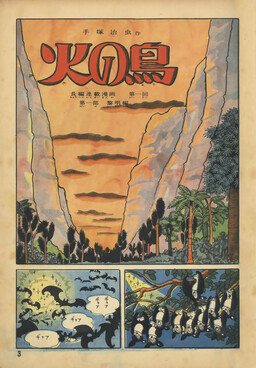
Phoenix
Yu's review of Phoenix — Tezuka Osamu's incomplete masterwork — a series of stories set throughout Japanese and universal history, connected by the Phoenix, a bird whose blood grants immortality; the Phoenix appears in each arc but cannot be caught; the arcs range from ancient Japan to the far future and examine what it means to be human across all of time.
Sci-Fi / Mystery / Thriller
20th Century Boys
Yu's review of 20th Century Boys — childhood friends once wrote a 'Book of Prophecy' about saving the world. Decades later a cult leader called 'Friend' is using it as a blueprint for real mass murder, and convenience store manager Kenji realizes he helped write the script.
Sci-Fi / Adventure
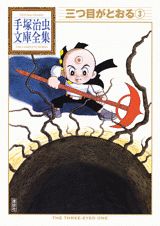
The Three-Eyed One
The Three-Eyed One follows Sharaku Hosuke, a seemingly simple-minded boy who conceals a third eye beneath a bandage — when uncovered, the third eye reveals his true identity as a descendant of a lost civilization with extraordinary mental powers and a ruthless intelligence.
Sci-Fi / Adventure
Ginga no Sannin
Ginga no Sannin is one of Osamu Tezuka's compact science fiction works — a single-volume story about three people across the galaxy whose lives intersect at a critical historical moment, demonstrating Tezuka's ability to compress epic into modest space.
Written by
Yu
Manga Enthusiast from Japan
I grew up in Japan and manga literally saved me during a tough time in elementary school. My English isn't perfect, but my love for manga is real — and I want to share it with you.
Disclosure: This post contains affiliate links. As an Amazon Associate, I earn from qualifying purchases at no extra cost to you.