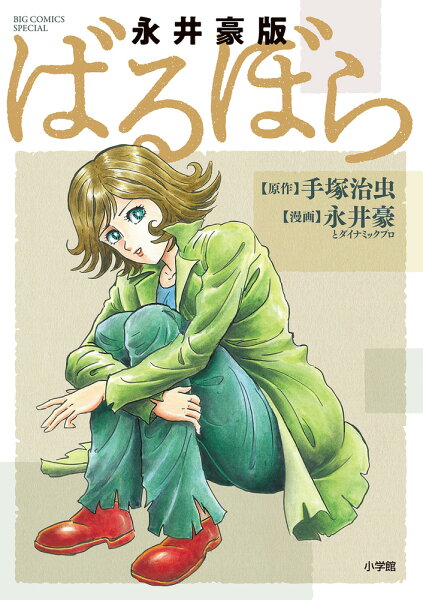
Barbara Review: Tezuka's Darkest Work — A Novelist, His Muse, and the Madness Between Art and Ruin
by Osamu Tezuka
Read the first volume. If it doesn't hook you, put it down. It'll hook you.
Buy Barbara on Amazon →*Affiliate link — I earn a small commission at no extra cost to you.
Everyone knows Tezuka for Astro Boy — the round-eyed optimism, the children's adventures, the humanism. Barbara is the other Tezuka, the one who in the 1970s turned to "Black Tezuka" works for adult magazines and looked straight into the dark. This is his most psychologically unsettling book, and one of his finest.
It is not the Tezuka you were taught about. It is better, and much harder.
Quick Take
- One of Tezuka's "Black Tezuka" adult works — a psychological horror about a novelist and the muse who may be destroying him
- Inspired by Offenbach's opera The Tales of Hoffmann; a meditation on whether creativity and self-destruction can be separated at all
- Rated M (Mature); available in English from Digital Manga Publishing as a single complete volume
Who Is This Manga For?
- Mature readers of literary manga comfortable with dark, transgressive subject matter
- Tezuka readers who want his full range — this is as far from Astro Boy as he ever went
- Anyone interested in the artist-and-muse story told without romance or comfort
- Readers who like surreal, psychologically destabilizing horror
Content Warnings & Age Rating
Age Rating: M (Mature) Content Warnings: Substance abuse depicted in detail; sexual content and sexual perversion as central themes; occult ritual including black masses; psychological disintegration; disturbing and surreal imagery
The M rating is essential. This is one of Tezuka's most adult works, and it does not flinch.
Yu's Rating
| Category | Score |
|---|---|
| Story Depth | ★★★★★ |
| Art Style | ★★★★★ |
| Character Development | ★★★★☆ |
| Accessibility for Non-Japanese Readers | ★★★★☆ |
| Reread Value | ★★★★★ |
Story Overview
Yosuke Mikura is a celebrated, successful novelist — admired, pursued, secure in his reputation. Behind that facade, he is coming apart: he conceals compulsions and perversions that are pushing him toward madness, and he has begun to fear his own mind.
One night he finds Barbara — a young woman, filthy, drunk, apparently homeless — collapsed in a train station. He takes her home. She is crude, parasitic, and constantly drinking, and yet when she is near, Mikura's writing flourishes. When she leaves, his talent withers. She seems to be exactly what an artist's muse is supposed to be — and also a force pulling him steadily downward. The story hints that Barbara may be a daughter of Mnemosyne, the muse of myth.
As Mikura's obsession with Barbara deepens, the line between reality and hallucination dissolves. The story descends through increasingly surreal and disturbing episodes — sadomasochistic underworlds, mother-goddess cults, black masses, the suggestion that Barbara may be a witch, a demon, a true muse, or simply a projection of Mikura's own breakdown. Tezuka deliberately refuses to confirm which. The book's central question is never resolved into comfort: is Barbara saving Mikura's art or destroying his life, and can those two things even be told apart? The ending offers no clean answer, only the full weight of the question.
Characters
Yosuke Mikura — A protagonist whose intelligence is no protection. He understands what is happening to him — the obsession, the disintegration, the way Barbara is bound up with both his genius and his ruin — and understanding does not let him stop. He is one of Tezuka's most psychologically complex creations, a man narrating his own descent.
Barbara — One of manga's great ambiguities. Muse, witch, demon, hallucination, or simply a damaged young woman — the book never commits, and that refusal is the point. She catalyzes in Mikura both his best work and his worst impulses, and whether she causes them or merely reveals what was already there is left open.
Art Style
Tezuka's art in Barbara is among the most accomplished of his late career. The adult subject matter demanded a register far from his children's work, and he met it: the human moments are rendered with psychological precision, and the surreal sequences are genuinely disorienting — dreamlike in the destabilizing rather than whimsical sense. He uses his cartooning fluency to make the descent feel inevitable, the normal sliding into the nightmarish without a visible seam.
Cultural Context
Barbara was serialized in Big Comic, Shogakukan's magazine for adult readers, from 1973 to 1974, as a follow-up to Ayako. It belongs to the "Black Tezuka" period — a run of 1970s works in which Tezuka, partly responding to the rise of grittier gekiga and the alternative manga movement around Garo, set out to prove he could do dark, adult, psychologically serious work. The book draws on Offenbach's opera The Tales of Hoffmann, in which a muse tries to make the artist forsake all other loves and devote himself entirely to her.
The English edition has a distinctive history: in 2012, Digital Manga Publishing made Barbara the first Osamu Tezuka work to be successfully funded and printed through Kickstarter, releasing it as a single complete volume (later in digital form as well).
What I Love About It
I love that the book refuses to resolve the question it's built on.
The addiction-and-art narrative usually has a tidy moral shape: the substance, or the muse, or the obsession is bad; the artist needs to break free; recovery is the goal. Barbara rejects this entirely. It takes seriously the most uncomfortable possibility — that the chaos Barbara brings and the creative power Mikura gains might be the same thing, inseparable, so that "curing" him would mean destroying the artist. That is an argument serious artists have actually made about themselves, and Tezuka has the nerve to dramatize it without pretending he knows the answer. The discomfort is the honesty.
Memorable Scene ⚠️ Spoiler Warning
The black mass sequence — the surreal, occult ceremony in which Mikura's relationship with Barbara is pushed toward a ritual wedding, and the boundary between what is real and what is his disintegrating mind collapses completely. Tezuka stages it as the book's hallucinatory center: the reader, like Mikura, can no longer tell whether Barbara is a supernatural being drawing him into something ancient or whether he has simply gone mad and is narrating his own delusion as if it were the world. It is the moment Barbara fully becomes horror rather than drama, and it lands precisely because Tezuka has spent the whole book refusing to tell you which reading is correct.
Similar Manga
| Title | Its Approach | How Barbara Differs |
|---|---|---|
| Ayako | Tezuka's other dark "Black Tezuka" adult work | Ayako is a family/political tragedy; Barbara is psychological-occult horror |
| MW | Tezuka's amoral crime thriller | MW is plot-driven nihilism; Barbara is interior disintegration |
| Goodnight Punpun (Inio Asano) | Modern literary manga of psychological collapse | Punpun is coming-of-age despair; Barbara is the artist-and-muse descent |
Reading Order / Where to Start
Read the complete work — it's collected as a single long story (two volumes in Japan, one omnibus volume in the English Digital Manga edition).
Official English Translation Status
Barbara is available in English from Digital Manga Publishing, released as a single complete volume via a 2012 Kickstarter and subsequently in digital formats. It is one of the more accessible "Black Tezuka" works for English readers, though as a smaller-press release it can be harder to find than mainstream manga.
Pros & Cons
Pros
- One of Tezuka's finest and most serious works — proof of his full range
- A genuinely unsettling psychological-occult horror that refuses easy answers
- Complete and concentrated — a single powerful read
- Available in a well-produced English edition
Cons
- Mature, transgressive content — not for all readers
- The deliberately unresolved ending frustrates readers who want closure
- A small-press release that can be harder to track down than mainstream titles — that's the cost of it being one of the few "Black Tezuka" works in English
Is Barbara Worth Reading?
Yes — for mature readers who want to see what Tezuka could do when he abandoned every constraint of his children's-manga reputation. It is dark, ambiguous, and one of his most psychologically sophisticated works.
Where to Buy
Read the first volume. If it doesn't hook you, put it down. It'll hook you.
This post contains affiliate links. If you purchase through these links, I may earn a small commission at no extra cost to you. As an Amazon Associate, I earn from qualifying purchases.
*Affiliate link — I earn a small commission at no extra cost to you.
Reading Guides
More Manga You Might Like
Horror
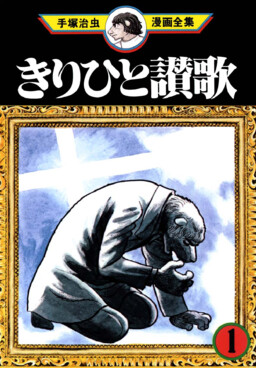
Ode to Kirihito
Yu's review of Ode to Kirihito — Dr. Osanai Kirihito investigates Monmow disease, a mysterious illness that transforms its victims into dog-like creatures; the medical establishment suppresses his findings; Osamu Tezuka's 1970 medical horror manga about a doctor reduced to subhuman status while searching for a scientific truth powerful people want hidden.
Horror / Drama
Golden Gold
Golden Gold follows Reiko, a teenage girl on a remote island who finds a small god of fortune — and discovers that luck granted by a supernatural force does not come without cost, and that the cost is paid by those around you.
Horror / Drama
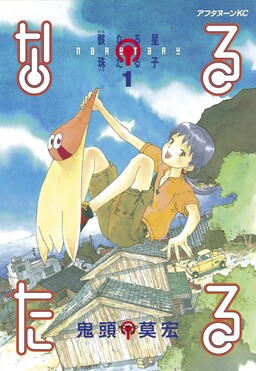
Narutaru
Yu's review of Narutaru — Shiina Tamai finds a star-shaped creature she names Hoshimaru; the story appears to begin as a creature-companion adventure and becomes something much darker, examining what happens when children with real grievances are given real power.
Horror / Drama
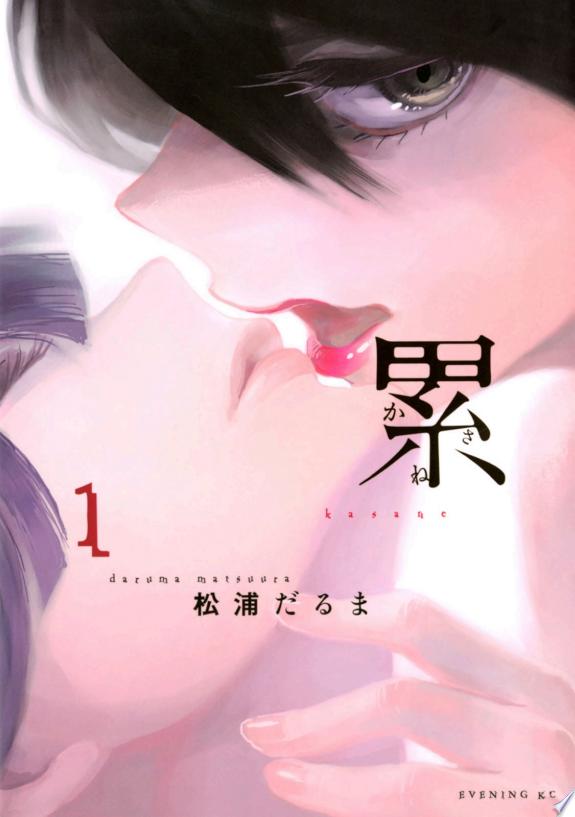
Kasane
Kasane follows a girl whose face society refuses but whose lipstick can swap her face with another's — a 14-volume Evening psychological drama where every act of becoming someone else is also an act of erasure.
Adventure / Mystery
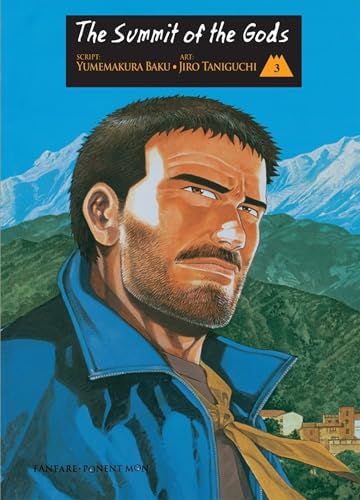
The Summit of the Gods
Yu's review of The Summit of the Gods — a photojournalist in Kathmandu may have found the camera of George Mallory, who disappeared on Everest in 1924; the mystery pulls him into the story of Habu Joji, a climber of legendary ability who disappeared years earlier.
Horror
MW
Yu's review of MW — Yuki Michio is a beautiful, charming, amoral man who survived exposure to a chemical weapon as a child; the event destroyed his conscience; he works toward mass destruction while maintaining the appearance of a successful society member; a priest who loves him tries to hold him back; Osamu Tezuka's 1976 thriller about a man without conscience.
Written by
Yu
Manga Enthusiast from Japan
I grew up in Japan and manga literally saved me during a tough time in elementary school. My English isn't perfect, but my love for manga is real — and I want to share it with you.
Disclosure: This post contains affiliate links. As an Amazon Associate, I earn from qualifying purchases at no extra cost to you.