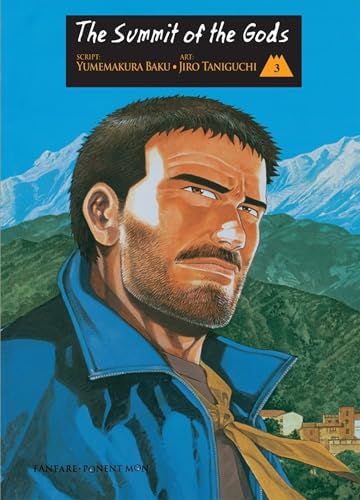
The Summit of the Gods Review: A Photographer Discovers a Mystery Camera That May Prove Who First Climbed Everest
by Jiro Taniguchi, Baku Yumemakura
Read the first volume. If it doesn't hook you, put it down. It'll hook you.
Buy The Summit of the Gods on Amazon →*Affiliate link — I earn a small commission at no extra cost to you.
Quick Take
- A mystery about who first climbed Everest wrapped around an obsessive climber's quest for the pure act of climbing
- Jiro Taniguchi's art renders mountain environments with stunning precision; Yumemakura's story is about obsession, humanity, and what the summit means
- 5 volumes, complete; one of the finest adventure manga ever published
Who Is This Manga For?
- Readers who want adventure manga with literary and philosophical depth
- Fans of mountain climbing as a subject — this is the definitive manga treatment
- Anyone who wants manga that examines obsession from inside the obsession
- Readers who want complete series with beautiful art
Content Warnings & Age Rating
Age Rating: T (Teen) Content Warnings: Mountain climbing danger and death in extreme environments, obsession portrayed with psychological depth
The danger is environmental. The horror is in the beauty and the cost of pursuing it.
Yu's Rating
| Category | Score |
|---|---|
| Story Depth | ★★★★★ |
| Art Style | ★★★★★ |
| Character Development | ★★★★★ |
| Accessibility for Non-Japanese Readers | ★★★★★ |
| Reread Value | ★★★★★ |
Story Overview
Makoto Fukamachi is a photo journalist covering mountaineering. In Kathmandu, he glimpses a camera in a market — a Kodak Vest Pocket camera that might be the one George Mallory carried when he disappeared on Everest in 1924. If Mallory's camera contains photos of the summit, it would prove he and Irvine reached it before Hillary and Tenzing.
The camera disappears. Fukamachi follows the trail, which leads him to Habu Joji — a Japanese climber of legendary ability who disappeared from the climbing world years earlier. The story Fukamachi pieces together becomes a meditation on why people climb and what the summit means to someone for whom climbing is the entire world.
Characters
Habu Joji — The story's central figure; a climber whose talent and obsession are so complete that conventional life has no place in them. His climbs are described and depicted with technical accuracy that makes them genuinely terrifying.
Makoto Fukamachi — The photojournalist whose investigation frames the story; his growing understanding of Habu is the reader's own understanding.
Art Style
Taniguchi's art is among manga's finest — the mountain environments are rendered with photographic precision, the physical difficulty of climbing is depicted with anatomical accuracy, and the vast scale of high-altitude landscapes is achieved through compositional mastery. Every summit sequence is art.
Cultural Context
The Summit of the Gods engages with a specific era of mountaineering history — the period when Himalayan peaks were being climbed for the first time, and the philosophies of what climbing means were being debated. The Mallory mystery (did he reach the summit in 1924?) is a genuine historical question that remains unresolved.
What I Love About It
Habu's answer to why he climbs. Not because it is there — the famous Mallory answer — but something more honest and more frightening: because it is the only thing that makes him feel completely real. The clarity of that answer, and everything the manga shows us about what that kind of clarity costs, is what the series is about.
What English-Speaking Fans Say
The Summit of the Gods has a devoted Western readership among manga readers who want literary manga and among mountaineering enthusiasts who find it the most accurate and affecting fictional treatment of high-altitude climbing. Taniguchi's art is consistently cited as essential viewing.
Memorable Scene ⚠️ Spoiler Warning
Habu's solo winter ascent — the sequence depicted in full, in silence, without dialogue, only Taniguchi's art and the mountain — is one of the most beautiful extended sequences in manga.
Similar Manga
- Master Keaton — Sophisticated adventure manga, similar adult tone
- Vinland Saga — Adventure with philosophical weight
- Vagabond — Similar examination of obsession and physical mastery
- A Distant Neighborhood — Same author (Taniguchi); similar reflective quality
Reading Order / Where to Start
Volume 1 — the historical mystery and character investigation run in order.
Official English Translation Status
Fanfare/Ponent Mon published the complete 5-volume series. All volumes available.
Pros & Cons
Pros
- 5 volumes, complete
- Taniguchi's art is extraordinary — worth the read for the art alone
- The philosophical examination of obsession is handled with genuine depth
- One of the best adventure manga ever published
Cons
- Small publisher — may be harder to find in standard retail
- Some technical mountaineering content requires engagement
- The deliberate pacing is not for action readers
Format Comparison
| Format | Notes |
|---|---|
| Individual Volumes | Fanfare/Ponent Mon; check availability |
| Digital | Available |
Where to Buy
Read the first volume. If it doesn't hook you, put it down. It'll hook you.
This post contains affiliate links. If you purchase through these links, I may earn a small commission at no extra cost to you. As an Amazon Associate, I earn from qualifying purchases.
*Affiliate link — I earn a small commission at no extra cost to you.
Reading Guides
More Manga You Might Like
Mystery / Adventure
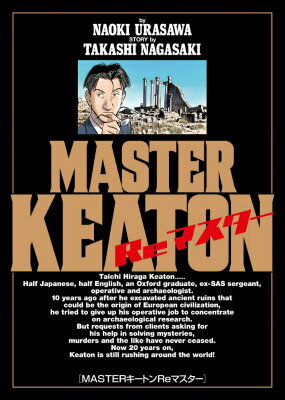
Master Keaton
Yu's review of Master Keaton — Taichi Hiraga Keaton is a half-British, half-Japanese former SAS survival expert who works as an insurance investigator for Lloyd's of London while dreaming of becoming an archaeologist; each case takes him somewhere in Europe with a different mystery.
Horror / Drama
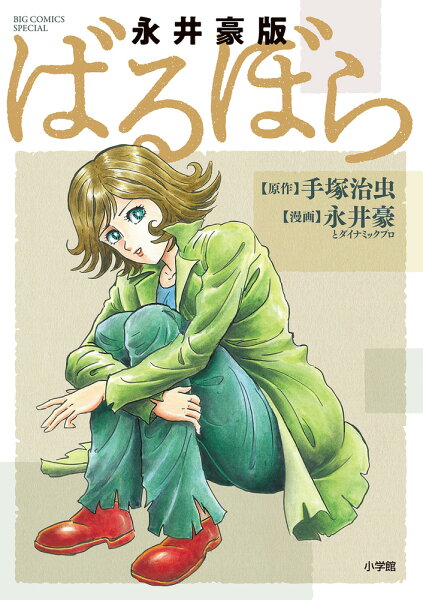
Barbara
Yu's review of Barbara — Osamu Tezuka's adult psychological horror about Yosuke Mikura, a celebrated novelist who takes in a filthy, drunken muse named Barbara and descends through black masses, perversion, and madness as he loses the ability to tell art from destruction.
Horror / Mystery
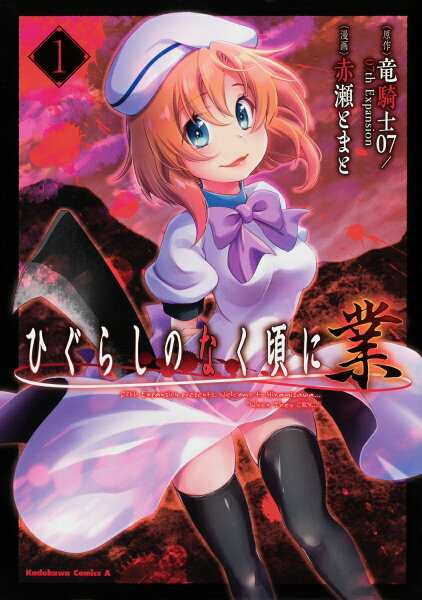
Higurashi When They Cry
Yu's review of Higurashi When They Cry — Keiichi Maebara moves to the rural village of Hinamizawa and discovers that every year, during the village festival, someone dies and someone disappears; the story resets across multiple arcs, each showing different versions of the same events as Keiichi and his friends try to understand and survive what the village is doing to them.
Horror / Mystery
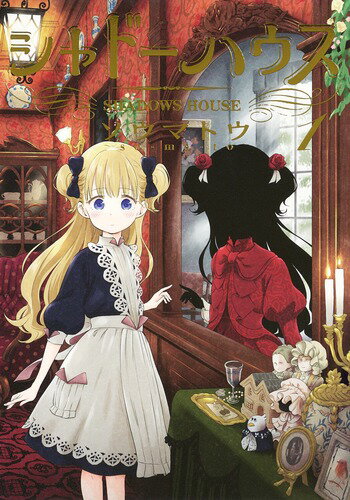
Shadows' House
Yu's review of Shadows' House — Kate is a shadow noble whose face is obscured by soot; Emilico is her 'Living Doll' — a human servant who functions as Kate's face and emotional expression; together they navigate the mysterious house and begin to understand what it truly is.

Horror / Mystery
Higurashi: When They Cry
Yu's review of Higurashi: When They Cry — Keiichi Maebara moves to the small village of Hinamizawa and befriends a group of girls; every June, during the annual Watanagashi Festival, someone dies and someone disappears; the story resets and repeats from different perspectives, each time revealing more of what is actually happening.
Horror / Mystery
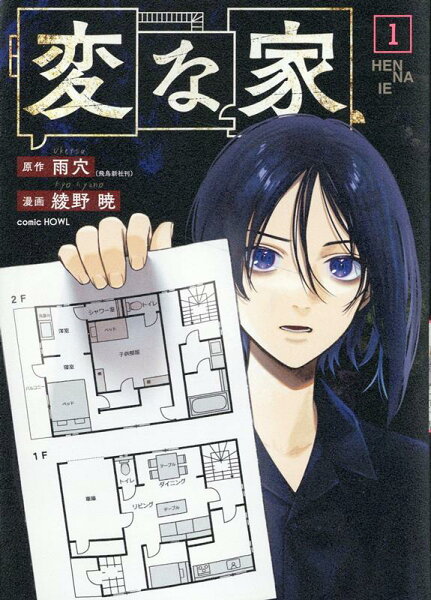
Strange House
A review of Takumi Yai's Strange House — 2 volumes from Manga Plus. A man asks an architectural friend to explain why a house's floor plan makes no sense; the answer is much darker than any real estate concern. Adapted from Yai's viral web novel. VIZ Media's English edition is complete.
Written by
Yu
Manga Enthusiast from Japan
I grew up in Japan and manga literally saved me during a tough time in elementary school. My English isn't perfect, but my love for manga is real — and I want to share it with you.
Disclosure: This post contains affiliate links. As an Amazon Associate, I earn from qualifying purchases at no extra cost to you.