Golden Gold Review: The Horror Manga About What Luck Actually Costs
by Seita Horio
Read the first volume. If it doesn't hook you, put it down. It'll hook you.
Buy Golden Gold on Amazon →*Affiliate link — I earn a small commission at no extra cost to you.
Quick Take
- Horror that uses the folklore concept of fortune gods to examine what wanting luck actually means
- The island setting creates a closed ecosystem where the horror spreads systematically
- Horio's approach to the supernatural is grounded in human psychology rather than monster-mechanics
Who Is This Manga For?
- Horror readers who want the genre used for something more than scares
- Fans of folk horror — the supernatural emerging from specific place and community
- Readers interested in social dynamics in small communities — the horror is also a social diagnosis
- Anyone who has thought about what good fortune actually looks like — the series has a dark answer
Content Warnings & Age Rating
Age Rating: M (Mature) Content Warnings: Psychological horror throughout; disturbing depictions of how desire and luck interact; some scenes are unsettling rather than gory
Mature horror content.
Yu's Rating
| Category | Score |
|---|---|
| Story Depth | ★★★★★ |
| Art Style | ★★★★☆ |
| Character Development | ★★★★☆ |
| Accessibility for Non-Japanese Readers | ★★★★★ |
| Reread Value | ★★★★☆ |
Story Overview
Reiko lives on a small island. She finds a small figure — a god of fortune, the kind that exists in Japanese folklore, the kind that brings luck to those in its favor. She doesn't know what she has found. She begins to experience good fortune.
The fortune is real. Good things happen. But the things that happen to Reiko happen in zero-sum ways — her gains are other people's losses. The island is small. The community is tight. The shifts accumulate.
The series follows the spreading effect of Reiko's luck through the island's community — relationships, businesses, families — with the horror being not that something supernatural is present, but that luck, when it becomes real, is a moral problem.
Characters
Reiko: A protagonist who didn't choose what she found and can't easily undo it. Her moral discomfort with what's happening — her awareness that her fortune has a source and a cost — is the series' emotional engine.
The island community: Rendered with enough depth that each person's change registers as a loss specific to that person, not just as narrative collateral.
The fortune god: Present as a figure whose logic is not evil — it simply does what it does, indifferent to human moral categories.
Art Style
Horio's art is precise and slightly unnerving — character designs that are ordinary rather than stylized, which makes the supernatural disruptions more disturbing by contrast. The island setting is drawn with the specific isolation of remote communities. The horror is in expression and staging rather than in graphic content.
Cultural Context
Fortune gods (福の神) are a significant part of Japanese folk religious culture — specific deities associated with wealth, luck, and business success. The series takes this folklore seriously as a premise and examines what a real fortune god would mean in contemporary social terms.
Small island communities in Japan have a specific texture — economically marginal, tightly interdependent, where individual fortunes are visibly connected to community stability. The series uses this setting with understanding.
What I Love About It
I love the series' argument that zero-sum luck is indistinguishable from harm.
Most supernatural luck stories treat good fortune as simply good — you get lucky, things go well, others may also benefit. Golden Gold refuses this. Reiko's fortune is clearly real and clearly causes harm. The causal chain is not always direct or visible, but it is always present.
This is a horror about a specific kind of ethical problem: what do you do when you are the beneficiary of a system that hurts people? You didn't build the system. You didn't choose to find it. But you're using it. What does that make you?
What English-Speaking Fans Say
Not known in English-speaking markets. Among horror manga readers who read in Japanese, it is recognized as one of the more intellectually serious horror manga of recent years — praised for using the supernatural as a vehicle for genuine moral examination rather than as an occasion for scares.
Memorable Scene
A chapter that tracks the fortune as it passes through a chain of people on the island — from Reiko outward, step by step, showing how one instance of luck becomes a series of harms in people who have no connection to Reiko except that they share an island. The chapter is structured like a proof.
Similar Manga
- Uzumaki: Island horror with systematic spread through a community, different mechanism
- Dungeon Food (Delicious in Dungeon): Not horror, but similar structural use of folklore logic
- Mushishi: Folk supernatural with similar respect for the spiritual world's indifference to human categories
Reading Order / Where to Start
Volume 1. The horror builds from the first discovery.
Official English Translation Status
Golden Gold has no official English translation.
Pros & Cons
Pros
- Intellectually serious horror with genuine moral weight
- Complete at 11 volumes
- Folk horror grounding in actual Japanese supernatural tradition
- The systematic spread structure is formally impressive
Cons
- No English translation
- The horror is slow and psychological rather than immediately intense
- Resolution requires accepting the series' dark premises
Format Comparison
| Format | Notes |
|---|---|
| Physical | Japanese editions available |
| Digital | Available in Japanese |
| Omnibus | Not available |
Where to Buy
No English release yet. That just means you find it before everyone else does.
*Affiliate link — I earn a small commission at no extra cost to you.
Reading Guides
More Manga You Might Like
Horror / Drama
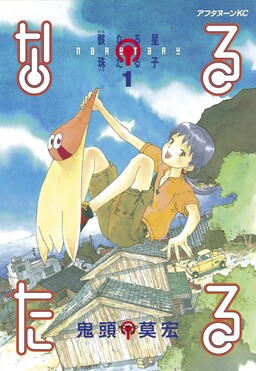
Narutaru
Yu's review of Narutaru — Shiina Tamai finds a star-shaped creature she names Hoshimaru; the story appears to begin as a creature-companion adventure and becomes something much darker, examining what happens when children with real grievances are given real power.
Horror / Drama
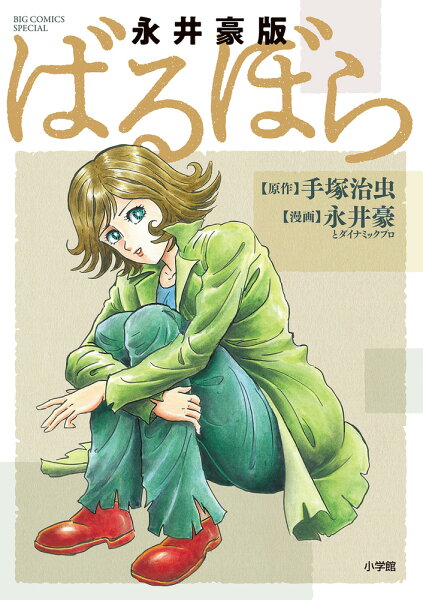
Barbara
Yu's review of Barbara — Osamu Tezuka's adult psychological horror about Yosuke Mikura, a celebrated novelist who takes in a filthy, drunken muse named Barbara and descends through black masses, perversion, and madness as he loses the ability to tell art from destruction.
Horror / Drama
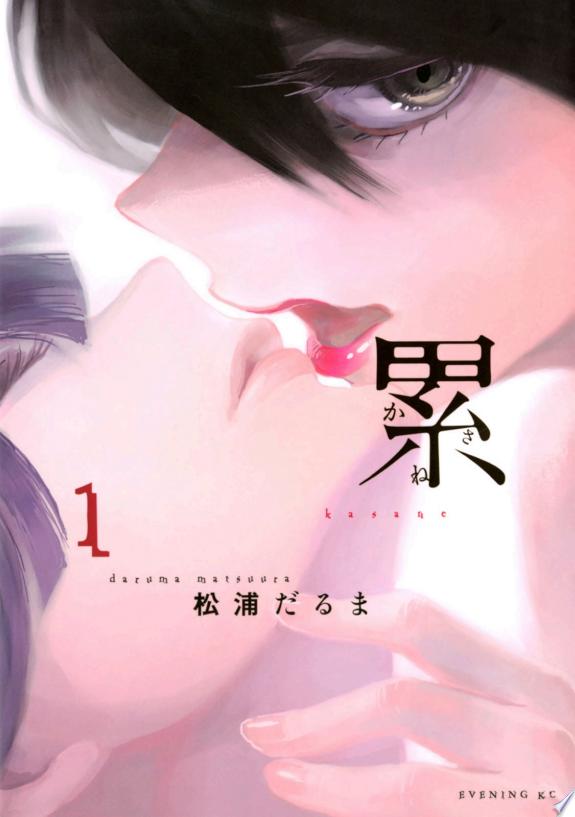
Kasane
Kasane follows a girl whose face society refuses but whose lipstick can swap her face with another's — a 14-volume Evening psychological drama where every act of becoming someone else is also an act of erasure.
Horror / Comedy
Voynich Hotel
Yu's review of Voynich Hotel — Taizou Kuzuki, a man with a shady past, arrives at a remote island hotel staffed by witch maids and surrounded by assassins, ghosts, and other supernatural complications; Douman Seiman's dark comedy-horror is compact, strange, and genuinely funny in ways that shouldn't work.
Horror / Fantasy
Rozen Maiden
Yu's review of Rozen Maiden — Jun Sakurada is a socially withdrawn boy who refused to attend school; a doll named Shinku arrives and he winds her key, forming a contract that makes him her medium; she is one of the Rozen Maidens, dolls crafted by the legendary dollmaker Rozen who must fight each other until one remains to become Alice.
Horror
Nijigahara Holograph
Yu's review of Nijigahara Holograph — two timelines, childhood and adulthood, converge around a group of children who threw a girl into a tunnel; what lives at the bottom of the tunnel, and what the act of throwing her in did to everyone involved; Inio Asano's most formally complex and disturbing work.
Written by
Yu
Manga Enthusiast from Japan
I grew up in Japan and manga literally saved me during a tough time in elementary school. My English isn't perfect, but my love for manga is real — and I want to share it with you.