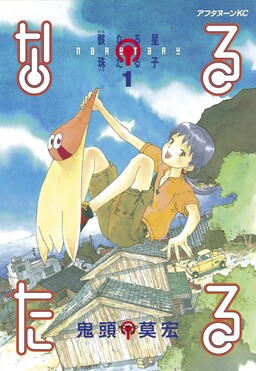
Narutaru Review: A Girl Finds a Star-Shaped Creature and Discovers That Children's Wishes Are Capable of Terrible Things
by Mohiro Kitoh
Read the first volume. If it doesn't hook you, put it down. It'll hook you.
Buy Narutaru on Amazon →*Affiliate link — I earn a small commission at no extra cost to you.
Quick Take
- One of manga's most deliberately deceptive works — the creature-companion premise is a vehicle for examining trauma, violence, and what children do with power that adults can't control
- Kitoh's understanding of how children process genuine suffering — and what they will do with capability — is the series' central and disturbing insight
- 12 volumes complete in English; essential reading for horror manga that uses the genre seriously
Who Is This Manga For?
- Readers who want horror manga that uses darkness for genuine thematic purpose, not shock
- Anyone interested in works that examine childhood trauma and its consequences honestly
- Fans of Kitoh's other work (Bokurano) who want to understand his worldview more completely
- Readers who can engage with genuinely dark content without requiring narrative reassurance
Content Warnings & Age Rating
Age Rating: M (Mature) Content Warnings: Severe violence including violence against children; psychological horror throughout; abuse and trauma as narrative content; not appropriate for sensitive readers or those who need reassurance in their fiction
This rating is earnest — this is not dark-for-spectacle but dark-for-meaning, and the distinction does not make it easier to read.
Yu's Rating
| Category | Score |
|---|---|
| Story Depth | ★★★★★ |
| Art Style | ★★★★☆ |
| Character Development | ★★★★☆ |
| Accessibility for Non-Japanese Readers | ★★★☆☆ |
| Reread Value | ★★★☆☆ |
Story Overview
Shiina Tamai is visiting her grandparents during summer vacation. She finds a small star-shaped creature in the ocean who attaches himself to her; she names him Hoshimaru. He floats beside her. He protects her without being asked. She is delighted.
This is where most creature-companion stories live. Narutaru does not stay here.
Other children have similar creatures. Some of those children are in pain — genuinely, specifically, from families and situations that are real. Their creatures respond to what they feel. When children with no other recourse are given something that responds to their pain with capability, the results are not what the adventure-story framework promises.
The series is about what children do when the world gives them something that makes their grievances actionable.
Characters
Shiina — A protagonist who is genuinely good-natured; her cheerfulness is the series' moral center and the thing most threatened by what she witnesses.
The other child-wielders — Each represents a different kind of suffering and a different response to being given power — the series is interested in the variety of what children do when hurt and capable.
Hoshimaru — A creature whose nature and purpose become the series' central mystery, which the ending addresses in terms that reframe everything that came before.
Art Style
Kitoh's art has a softness that makes the content more affecting than aggressive imagery would — the violence is rendered matter-of-factly, in the same visual register as the peaceful moments, which is part of how the series achieves its effect. Character designs are gentle. What happens to gentle-looking characters is not.
Cultural Context
Narutaru ran in Monthly Afternoon from 1998 to 2003 — a seinen publication that gave Kitoh space to pursue his actual interest in childhood trauma and violence without shonen editorial constraints. Kitoh later created Bokurano, which has structural similarities. His work represents a specific tradition in Japanese manga of using apparently accessible premises (children, creatures, adventure) to examine adult themes of powerlessness, suffering, and the damage adults cause children.
What I Love About It
The series does not condemn the children who do terrible things with their creatures. It understands them. The child who uses her creature against people who hurt her is not presented as a monster — the people who hurt her are presented as what they are, and her response as comprehensible even when it is devastating. That refusal to make the horror simple is what makes the series worth reading.
What English-Speaking Fans Say
Western readers describe Narutaru as one of the most disturbing manga available in English — and the most deliberately so. Specifically noted for Kitoh's refusal to comfort the reader, for the creature-companion premise being used with complete sincerity to examine its inverse, and for the ending being one of the most complete statements about the series' themes in manga history. Frequently recommended alongside Bokurano as essential Kitoh.
Memorable Scene ⚠️ Spoiler Warning
The sequence involving the child whose suffering has been prolonged and specific — and what her creature enables her to do with that suffering — is the series' most complete realization of its central question about what children do when given power.
Similar Manga
- Bokurano — Kitoh's later work with similar structural premise and thematic darkness
- Blood on the Tracks — Psychological horror around parent-child dynamics
- Franken Fran — Dark content with similar matter-of-fact register
- Happy Sugar Life — Psychological darkness with gentle surface aesthetic
Reading Order / Where to Start
Volume 1 — The creature-companion premise is established in full before the series begins its gradual revelation of what it actually is.
Official English Translation Status
Dark Horse Comics has published the complete English series. All 12 volumes available.
Pros & Cons
Pros
- Uses horror for genuine thematic purpose around trauma and power
- Kitoh's understanding of childhood suffering is specific and real
- Complete — the full arc and its disturbing conclusion are available
- Does not simplify what it examines
Cons
- Genuinely difficult content — not appropriate for all readers
- The series' purpose requires accepting its darkness
- Not a series for readers who need narrative reassurance
Format Comparison
| Format | Notes |
|---|---|
| Individual Volumes | Dark Horse; complete series available |
| Digital | Limited availability |
Where to Buy
Read the first volume. If it doesn't hook you, put it down. It'll hook you.
This post contains affiliate links. If you purchase through these links, I may earn a small commission at no extra cost to you. As an Amazon Associate, I earn from qualifying purchases.
*Affiliate link — I earn a small commission at no extra cost to you.
Reading Guides
More Manga You Might Like
Horror / Drama
Golden Gold
Golden Gold follows Reiko, a teenage girl on a remote island who finds a small god of fortune — and discovers that luck granted by a supernatural force does not come without cost, and that the cost is paid by those around you.
Horror / Sci-Fi
Vampire Hunter D
Yu's review of Vampire Hunter D — set 12,000 years in the future in a world where vampires ruled humanity and have since fallen; D is a half-human half-vampire dhampir who hunts his own father's kind; stoic, nearly invincible, and accompanied by a parasitic demon in his hand, he is one of horror manga's most iconic loners.
Horror
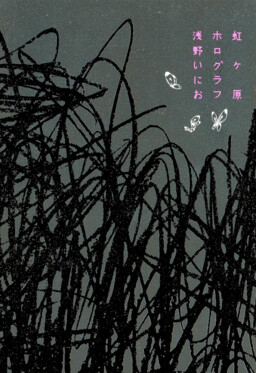
Nijigahara Holograph
Yu's review of Nijigahara Holograph — two timelines, childhood and adulthood, converge around a group of children who threw a girl into a tunnel; what lives at the bottom of the tunnel, and what the act of throwing her in did to everyone involved; Inio Asano's most formally complex and disturbing work.
Horror / Thriller
Hideout
Yu's review of Hideout — Seiichi Kirishima takes his wife to a deserted island intending to kill her and stage it as an accident; before he can act, they encounter something on the island that alters the situation entirely; what follows is survival horror with a protagonist whose hands are already guilty.
Horror / Sci-Fi
Elfen Lied
Yu's review of Elfen Lied — Lucy, a Diclonius with invisible killing 'vectors,' escapes a research facility in a bloodbath, takes a head wound, and wakes up as the childlike Nyu on a beach in Kamakura. Two students take her in, never knowing what she did or what she carries.
Horror / Drama
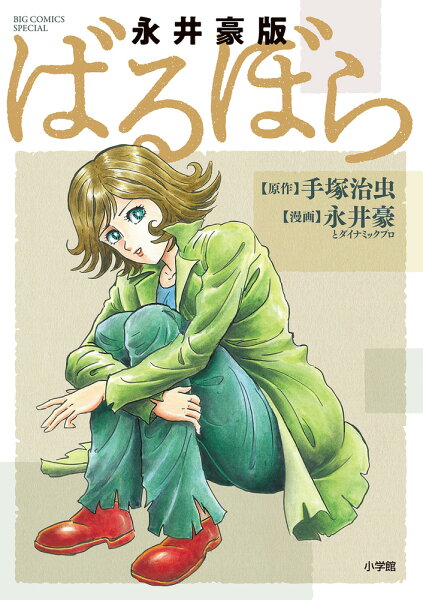
Barbara
Yu's review of Barbara — Osamu Tezuka's adult psychological horror about Yosuke Mikura, a celebrated novelist who takes in a filthy, drunken muse named Barbara and descends through black masses, perversion, and madness as he loses the ability to tell art from destruction.
Written by
Yu
Manga Enthusiast from Japan
I grew up in Japan and manga literally saved me during a tough time in elementary school. My English isn't perfect, but my love for manga is real — and I want to share it with you.
Disclosure: This post contains affiliate links. As an Amazon Associate, I earn from qualifying purchases at no extra cost to you.