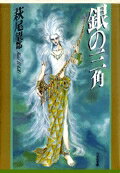
Gin no Sankaku Review: The Time Loop Manga That Made You Feel the Weight of Infinite Repetition
by Moto Hagio
Read the first volume. If it doesn't hook you, put it down. It'll hook you.
Buy Gin no Sankaku on Amazon →*Affiliate link — I earn a small commission at no extra cost to you.
Some stories ask you to follow. Gin no Sankaku asks you to understand.
Quick Take
- Moto Hagio's most complex sci-fi work — a time loop narrative across multiple timelines, connected by a silver triangle artifact
- Dense, demanding, emotionally overwhelming — the kind of story that requires patience and rewards it with something genuinely difficult to find elsewhere
- A single long volume that functions as one of shojo manga's most ambitious science fiction achievements
Who Is This Manga For?
- Moto Hagio readers who want her at her most formally ambitious
- Sci-fi manga readers who want cerebral, emotionally driven narrative rather than action
- Readers comfortable with complexity — this is not a casual read, and that is not a criticism
- Anyone interested in the history of time loop narratives — this arrived well before the concept became common
Content Warnings & Age Rating
Age Rating: T (Teen) Content Warnings: Complex time loop mechanics, existential themes, the emotional weight of repeated loss. Nothing graphic.
Suitable for teen readers and above.
Yu's Rating
| Category | Score |
|---|---|
| Story Depth | ★★★★★ |
| Art Style | ★★★★★ |
| Character Development | ★★★★★ |
| Accessibility for Non-Japanese Readers | ★★★☆☆ |
| Reread Value | ★★★★★ |
Story Overview
A silver triangle connects people across time — not the romantic connection of a shared object but the violent connection of a temporal structure that traps people in patterns they cannot escape without understanding what the triangle is and why they keep returning to the same points.
Characters across different timelines attempt rescue operations that they cannot fully understand because their understanding is itself shaped by the timeline they're in. Each perspective contains partial truth. The complete picture requires assembling information from people who cannot communicate across the time barriers that separate them.
The emotional core is the weight of repetition — the particular grief of someone who knows they have lived through something before and cannot prevent it from happening again, who must watch the same loss repeat while holding the memory of every previous repetition. Hagio renders this with the precision of someone who has thought carefully about what memory costs.
Characters
The linked figures: Each character carries fragments of a timeline they can only partially see — their individual perspectives are the series' puzzle pieces, and the act of reading assembles them into something complete.
Art Style
Hagio's art in Gin no Sankaku is among her most refined — clean figures, careful use of panel geometry to suggest temporal structure, the visual language of her science fiction work at its most precise.
Cultural Context
Gin no Sankaku was serialized in Petit Flower in the early 1980s. It appeared during Hagio's most ambitious period, when she was expanding the possibilities of shojo science fiction far beyond what the genre had previously imagined.
The work predates most popular time loop narratives by decades and engages with the genre's philosophical implications — what repetition means, what rescue means, what it costs to understand — with the seriousness of someone who had been thinking about these questions for years.
What I Love About It
I love that it makes you feel the repetition.
Time loop narratives often tell you about repetition — characters state that they've lived through something before, the plot marks the returns. Gin no Sankaku constructs its panels so that the reader experiences something like what the characters experience: the recognition of a pattern, the slight displacement of understanding that comes from seeing the same event from a different angle, the grief of knowing what happens next. It's a formal achievement that goes beyond plot.
What English-Speaking Fans Say
Known among English-language Hagio readers — a small but serious community. The work is regarded as among her finest and as one of shojo manga's most significant science fiction achievements. Its difficulty is noted by everyone who discusses it; so is the reward.
Memorable Scene ⚠️ Spoiler Warning
The moment when a character realizes that the rescue they are attempting has already been attempted — that they are the latest version of a gesture that has been made before, will be made again, and cannot be completed without information that exists only in a timeline they cannot reach. The scene's power is not in the revelation but in the character's response to it.
Similar Manga
| Title | Its Approach | How Gin no Sankaku Differs |
|---|---|---|
| Hyakuoku no Hiru to Senoku no Yoru | Complex sci-fi with scale across cosmic time | Loop structure rather than linear cosmic scale; more intimate |
| A-A' | Hagio sci-fi with character emotional focus | More formally demanding — the structure IS the content |
| Terra e... | Sci-fi epic with generational scope and action | Smaller cast, deeper formal complexity |
Reading Order / Where to Start
You need no prerequisite — but familiarity with Hagio's work helps calibrate what to expect. Go slowly. The first reading establishes the structure; subsequent readings reveal what was there all along.
Official English Translation Status
Gin no Sankaku has no official English translation.
Pros & Cons
Pros
- One of shojo manga's most formally ambitious works
- The time loop mechanics are emotionally rather than mechanically driven
- Hagio's art serves the complex temporal structure precisely
- A single volume — the commitment is manageable even if the difficulty is not
Cons
- No English translation
- Demanding enough that casual reading will miss significant content
- The complexity may alienate readers who want accessible sci-fi
- Requires re-reading to fully appreciate — not a one-and-done experience
Is Gin no Sankaku Worth Reading?
For readers prepared for formal complexity and willing to work with it, yes — this is one of the most serious and rewarding science fiction manga ever written, and it delivers what serious science fiction rarely delivers: genuine emotional weight combined with rigorous formal ambition. For readers who want accessible sci-fi or clear narrative progression, this requires more patience than they may want to give. But patience is exactly what it repays.
Format Comparison
| Format | Notes |
|---|---|
| Physical | Japanese editions available |
| Digital | Available in Japanese |
| Omnibus | Included in Hagio complete works collections |
Where to Buy
No English release yet. That just means you find it before everyone else does.
*Affiliate link — I earn a small commission at no extra cost to you.
More Manga You Might Like

Sci-Fi / Drama
Hyakuoku no Hiru to Senoku no Yoru
Hyakuoku no Hiru to Senoku no Yoru is Moto Hagio's manga adaptation of Ryu Mitsuse's celebrated science fiction novel — following the collapse of civilizations across billions of years, centered on figures from different historical periods who are drawn toward a single question: what is the nature of creation, and who is responsible for it?
Sci-Fi / Drama
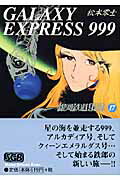
Galaxy Express 999
Galaxy Express 999 follows Tetsuro Hoshino, a young boy who boards the legendary space train 999 toward a planet where he can receive a free mechanical body — accompanied by the mysterious Maetel — and encounters, on each planet the train stops at, a different meditation on what it means to be human and whether eternity is worth what it costs.
Sci-Fi
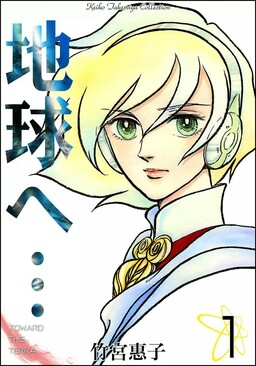
Toward the Terra
A review of Keiko Takemiya's Toward the Terra (地球へ…) — 3 volumes in Monthly Manga Shōnen from 1977. A landmark of 1970s science fiction manga about psychic humans (Mu) persecuted by an AI-controlled society on their long journey back to a forbidden Earth. Vertical's English edition is complete.
Sci-Fi / Drama
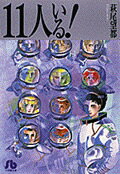
They Were Eleven
Ten students take a survival exam in deep space. They check the count: there are eleven of them.
Sci-Fi / Political
Sanctuary
Yu's review of Sanctuary — two survivors of the Cambodian killing fields make a pact to change Japan from the inside: one through legitimate politics, one through the yakuza; a politically serious manga by the creators of Crying Freeman and Mai the Psychic Girl about power, ambition, and what it costs to change a corrupt system.
Sci-Fi / Romance
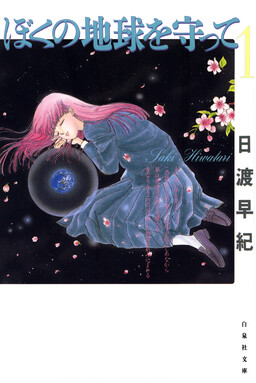
Please Save My Earth
Yu's review of Please Save My Earth — Alice Sakaguchi and six other teenagers in contemporary Tokyo discover they are the reincarnations of seven alien scientists who lived on the Moon observing Earth; their past life memories surface through shared dreams; past life emotions and relationships carry into present lives in ways that are not always welcome.
Written by
Yu
Manga Enthusiast from Japan
I grew up in Japan and manga literally saved me during a tough time in elementary school. My English isn't perfect, but my love for manga is real — and I want to share it with you.