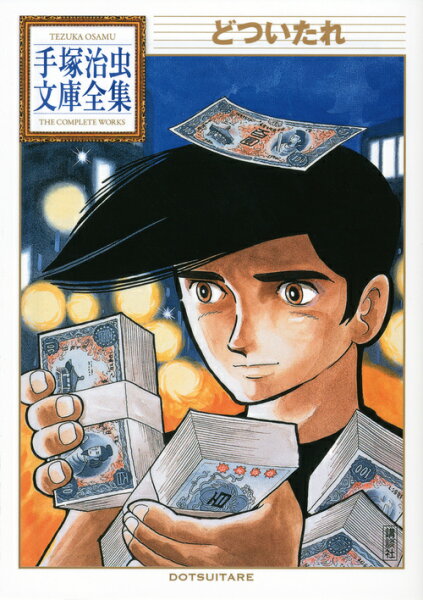
Dotsuitare Review: The Tezuka Manga Where He Drew His Own Hungry Postwar Youth
by Osamu Tezuka
Read the first volume. If it doesn't hook you, put it down. It'll hook you.
Buy Dotsuitare on Amazon →*Affiliate link — I earn a small commission at no extra cost to you.
I grew up on Tezuka the way most people grow up on him — through Astro Boy, through Black Jack, through the round-faced kindness of his most famous pages. So the first time I opened "Dotsuitare," I almost didn't believe it was the same man. There's no robot here, no doctor, no cosmic morality. There's just hungry kids in a burnt city, picking through ash for something to eat. I read it knowing it was unfinished, knowing it had been cut off twice, and that knowledge sat on me the whole time like a weight. This is Tezuka writing about the Osaka he actually survived.
Quick Take
- A semi-autobiographical drama by Osamu Tezuka, set in the scorched ruins of Osaka right after Japan's 1945 defeat — far from the sci-fi he's famous for
- Follows Tetsu, a war orphan who leads a pack of shoeshine boys and quietly plans revenge against General MacArthur, alongside a young manga artist named Shu who is Tezuka himself
- Rated T (Teen) — heavy themes of war, starvation, and a sister forced into street prostitution, but nothing drawn for shock value
Story Overview
The series opens in 1945, in an Osaka that the war has flattened into a wasteland of ash and rubble. Tetsu (Yamashita Tetsu) is a war orphan surviving in the chaos. He becomes the leader of a band of shoeshine children working the streets, and beneath his toughness he carries a single fixed idea: that General MacArthur, the face of the American occupation, is the enemy who killed his parents. That hatred is the engine of his arc.
The turning point comes as Tetsu's world widens past simple survival. He takes shelter with — and works for — Katsuragi, the young heir of a small manufacturing works, and his life tangles with a cast of others trying to claw their way up out of the wreckage: tough street toughs Hiroyan and Tomoyan, and Takatsuka Shu, an aspiring manga artist who is openly a stand-in for Tezuka himself. The deeper wound underneath Tetsu's revenge is personal — his sister Miho falls into street prostitution to survive, and that shame eats at him as much as any grand hatred of the occupiers.
There is no clean ending, and I won't pretend otherwise. "Dotsuitare" was serialized in two parts and both were cut short — Part 1 in 1979, Part 2 in 1980 — so the story simply stops rather than resolves. What Tezuka leaves us is not a finished narrative but a vivid, incomplete sketch of how the postwar generation survived, and a rare look at his own raw memory of those years.
Characters
Tetsu (Yamashita Tetsu) — A war orphan who hardens into the boss of a crew of shoeshine boys. His defining trait is the revenge he nurses against MacArthur, whom he blames for his parents' deaths. But his real arc is quieter and sadder: the helplessness of watching his sister sell herself to survive while he can't stop it.
Takatsuka Shu — A young man who dreams of becoming a manga artist. He is unmistakably Tezuka's own self-portrait dropped into the story, which is what makes the whole thing feel like memoir wearing the mask of fiction.
Katsuragi Kenji — The young heir of a manufacturing works who takes Tetsu in. He is modeled on Kenzo Kasai, the real businessman who founded Aprica and who, years later, financially rescued Tezuka's collapsing Mushi Production. Knowing that, his presence in the story reads like Tezuka's quiet thank-you.
Hiroyan and Tomoyan — Two tough street guys scraping by in the postwar chaos, drawn from real men connected to Kasai's life. They give the book its texture of ordinary people just trying to eat another day.
What I Love About It
What I love is that Tezuka let himself be hungry on the page. There's a moment early on of kids in the burnt-out city scrounging for food — picking up dropped chocolate from the rubble, begging rice off farmers in the countryside because the city has nothing. It is such a small, un-heroic thing. No drama of speeches, no villain monologue, just the plain animal fact of children who haven't eaten. And it landed on me harder than almost anything in his more famous work, because I knew he wasn't inventing it. He lived in that Osaka. He was a teenager when the bombs came.
That's the thing that hit me. Most of Tezuka's catalog is him reaching for the universal — robots and gods and the whole sweep of life and death. "Dotsuitare" is the opposite. It's him reaching backward, into the specific, into the ash of his own youth, and not flinching from how undignified survival actually was. The fact that he buried this in an unfinished, half-forgotten series instead of one of his masterpieces somehow makes it more honest to me. It feels like the memory he couldn't quite finish telling.
Memorable Scene ⚠️ Spoiler Warning
The image I can't shake is Tetsu's hatred of MacArthur set against the reality of his sister Miho. Here is a boy who has built his whole identity around a grand enemy — the American general, the symbol of the occupation, the man he blames for everything. It's a clean, almost comforting kind of rage, because it points outward at a faraway figure.
And then the real ruin is right next to him: his own sister, driven to selling herself on the street just to live. The revenge fantasy and the domestic shame sit side by side, and the contrast is the whole tragedy. The enemy he wants to fight is unreachable and abstract; the suffering he actually has to live with is intimate and powerless to stop. That tension is what stays with me — Tezuka showing how postwar rage was often a way of not looking at the closer, quieter devastation.
Pros & Cons
Pros
- A rare, deeply personal Tezuka work — his own postwar Osaka, drawn from memory
- The real-people roots (Kasai/Aprica, the manga-artist self-portrait) give it documentary weight
- Unflinching about poverty, hunger, and the human cost of occupation
- Short — two volumes — so it never overstays
Cons
- It's unfinished; both serializations were cut short, so the story doesn't resolve
- No official English edition exists
- It is not sci-fi or the polished Tezuka most readers expect — the tone is grim and grounded
- This is a fragment of a memoir more than a complete story, and that incompleteness won't work for everyone.
Is Dotsuitare Worth Reading?
If you only know Tezuka through Astro Boy and Black Jack, "Dotsuitare" is worth it precisely because it's so unlike them — it's the man drawing his own hungry, angry youth in the ruins of Osaka. Just go in knowing it's a fragment, not a finished story. For readers who want resolution and polish, the unfinished state will frustrate. For anyone curious about who Tezuka was before he was a legend, it's a quietly devastating window.
Where to Buy
No English release yet. That just means you find it before everyone else does.
The only legitimate way to read it right now is the Japanese edition, collected in the Osamu Tezuka Complete Works (Tezuka Osamu Bunko Zenshu).
This post contains affiliate links. If you purchase through these links, I may earn a small commission at no extra cost to you. As an Amazon Associate, I earn from qualifying purchases.
*Affiliate link — I earn a small commission at no extra cost to you.
More Manga You Might Like
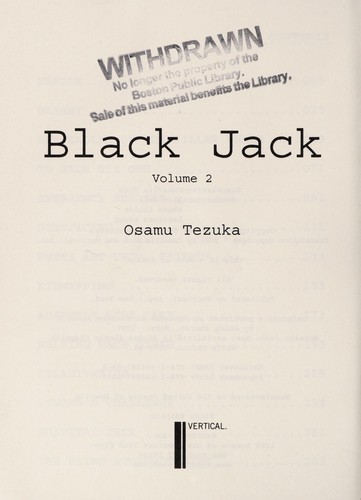
Drama
Ayako
Yu's review of Ayako — a few years after the war, the Tenge landlord family locks their youngest daughter Ayako in a storehouse to silence what she saw; she grows up underground for over twenty years; when she finally comes out, the country has moved on but the family's rot hasn't. Osamu Tezuka's darkest postwar thriller about the secrets Japan buried instead of facing.
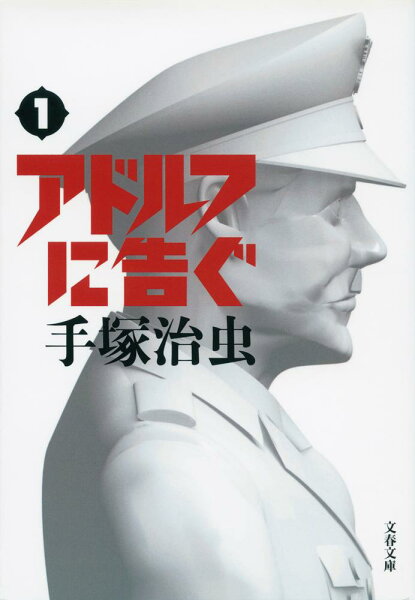
Historical / Drama
Message to Adolf
Yu's review of Message to Adolf (Adolf ni Tsugu) — Osamu Tezuka's historical epic following three men named Adolf through WWII and beyond, a devastating story of how war and ideology deform individual lives.
Drama / Historical
Crime and Punishment
Tezuka condensed Dostoevsky's novel into one short 1953 volume — and gave it an ending the original never had.
Drama
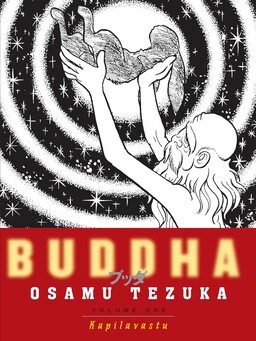
Buddha
Yu's review of Buddha — Osamu Tezuka's sweeping, fictionalized retelling of the life of Siddhartha Gautama, told through a huge cast of invented characters whose suffering makes the Buddha's questions feel like questions you actually have.
Drama / Romance
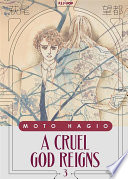
A Cruel God Reigns
Yu's review of A Cruel God Reigns by Moto Hagio — Jeremy's stepfather abuses him; Jeremy kills him; the next 16 volumes show what happens to a person after that. One of manga's most honest portraits of trauma and the possibility of recovery.

Drama / Medical
Say Hello to Black Jack
Eijiro Saito is a young medical resident who has just started at a Tokyo university hospital. He wants to help people. Across 13 volumes, Shuho Sato shows him what Japanese hospital medicine actually is — cancer wards, neonatal ICU, psychiatric care, organ transplantation, oncology — and what the system does to patients and doctors. The author released the work copyright-free in 2012. Cultural impact in Japan was significant; English licensing remains pending.
Written by
Yu
Manga Enthusiast from Japan
I grew up in Japan and manga literally saved me during a tough time in elementary school. My English isn't perfect, but my love for manga is real — and I want to share it with you.