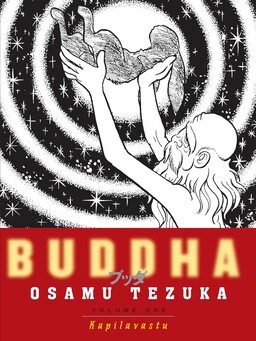
Buddha Review: Tezuka Drew the Most Sacred Man in History — and Let Him Be Wrong
by Osamu Tezuka
Read the first volume. If it doesn't hook you, put it down. It'll hook you.
Buy Buddha on Amazon →*Affiliate link — I earn a small commission at no extra cost to you.
I grew up scared of "important" books. The kind people tell you that you should read, the kind that sit there looking heavy. For a long time Buddha was that book to me — a fat row of hardcovers about a holy man, written by the man everyone calls the god of manga. I assumed it would lecture me. I was a kid who hid in manga to get away from being told how to live. The last thing I wanted was a sermon.
So I came to it late, and embarrassed at how wrong I'd been. Tezuka does not write a sermon. He writes about thieves and slaves and a soldier who lies about who his mother is, and somewhere in the middle of all that human mess, a prince slowly figures out why everyone around him is in pain. I want to tell you about it honestly, because this one matters to me.
Quick Take
- Tezuka's most human epic — the title is "Buddha," but most of the heart lives in the invented characters around him, and that's the trick that makes it land
- Siddhartha is drawn as someone who gets things wrong — he doubts, he despairs, he keeps searching even after he thinks he's arrived, and that's what makes the enlightenment feel earned
- Rated T (Teen) — but the caste violence and death are real and heavy; this is not a soft read
Story Overview
The series does not open on a prince. It opens on the people at the bottom. We meet Chapra, a boy born into the Shudra caste — near the bottom of ancient India's rigid social ladder — and Tatta, a Pariah (untouchable) child who can throw his mind into animals. Tezuka spends the early volumes building this world of slaves, monks, and warring kingdoms before he lets his "holy man" really take the stage. That's deliberate. He wants you to feel the system the Buddha will eventually push against.
Siddhartha is born a prince of the Shakya clan in Kapilavastu, raised inside walls so that he never sees poverty, sickness, or death. When he finally encounters all of it, he breaks, abandons his wife and newborn son, and walks out to find out why people suffer. The middle of the series is his long failure: years of extreme asceticism that nearly kills him, teachers who can't give him an answer, despair that doesn't lift.
The turning point is when he stops trying to torture the answer out of himself. He accepts food, sits beneath the Bodhi tree, and finally sees. But Tezuka refuses to end there. The later volumes follow the Buddha as a teacher dealing with very human problems — a jealous disciple who tries to murder him, a war that wipes out his home clan, and the plain fact that even an enlightened man grows old and dies. The ending is not triumphant. It's quiet and sad and accepting, which is the whole point.
Characters
Siddhartha / Buddha — Tezuka's biggest gamble is that his Buddha is weak. He runs from his responsibilities. He's arrogant before he's wise. Even after enlightenment, Tezuka keeps drawing him as a man who still grieves and still doubts. His arc isn't "prince becomes saint" — it's a slow, costly accumulation of understanding.
Chapra — A Shudra boy who is taken in by a Kosalan general and raised as a high-caste warrior. He's brilliant and brave and he buries his origins to climb. His arc is the tragedy of a man who almost beats the system that says he's worthless — and gets crushed by it anyway.
Tatta — The untouchable boy who can possess animals, and arguably the soul of the series. He starts as comic relief and a survivor, becomes Siddhartha's earliest devoted follower, but he never lets go of his hatred for Kosala, the kingdom that destroyed his family. His arc is the limit of the Buddha's teaching: love and forgiveness, set against a man whose rage is completely justified.
Naradatta — A young Brahmin monk, disciple of the seer Asita, sent to find the child prophesied to save the world. As punishment for killing animals to save one human's life, he's cursed to live as a beast in the wilderness for decades — a walking embodiment of the series' question about whether any one life is worth more than another.
What I Love About It
It's the cruelty that disarmed me, honestly. I expected gentleness from a book about the Buddha, and instead Tezuka opens by showing me exactly how a caste society grinds its people. But what I love is that he never lets the cruelty be the final word. He keeps interrupting the brutality with these absurd, cartoonish faces — Tezuka's own self-insert characters wander in, animals crack jokes, the art swings from breathtaking landscapes to slapstick in a single page. The first time it happened I thought it was a mistake, a tonal failure. Then I understood it was mercy. He won't let you drown.
The thing that hit me hardest is how Tezuka treats Siddhartha's failure. There's a long stretch where he starves himself half to death convinced that pain is the path, and he's simply wrong. A lesser version of this story would skip it, or treat it as a noble trial on the way to glory. Tezuka draws it as a dead end. He lets his hero be foolish, and then he lets him be humble enough to eat a bowl of rice and start over. I sat with that for a long time. I spent a lot of my own life thinking suffering was supposed to mean something, that if I just endured enough it would pay out. Watching the Buddha himself try that and fail, and then choose to stop — that did something to me no sermon ever has.
Memorable Scene ⚠️ Spoiler Warning
Chapra's death never left me. After clawing his way up to become a celebrated young officer for Kosala, his secret comes out — he was born Shudra, and worse, the lowborn woman he publicly disowned is his real mother. The society he tried to join turns on him instantly. He and his mother try to flee, and the soldiers run them down.
The panel that wrecked me is the kill itself. Chapra throws his body in front of his mother to shield her from a spear thrust — and the spear goes through both of them at once, pinning the two of them together. All his cleverness, all his climbing, and the system kills mother and son with a single weapon, as if to say they were never anything but one disposable thing to it. Tezuka draws it almost plainly, no melodrama. And it's this death that lights the fuse for Tatta's lifelong hatred of Kosala, which then bends the entire rest of the saga. It's an early volume, and it tells you immediately that this book is not going to comfort you with easy mercy. It earns its later gentleness by showing you, first, exactly what the Buddha is up against.
Pros & Cons
Pros
- Tezuka's most emotionally accessible epic — the human cast pulls you through the philosophy
- A genuinely flawed, searching Buddha instead of a serene statue
- Sweeping art that ranges from gorgeous landscapes to expressive, alive faces
- Complete in English (8 Vertical hardcovers) and one of the most important works in manga history
Cons
- The caste violence and death in the early volumes are heavy and direct
- It takes major liberties with history and Buddhist doctrine — this is Tezuka's invention, not scripture
- The constant tonal swings — slapstick interrupting tragedy — are part of the design, but if you want a solemn, unbroken epic, that whiplash genuinely won't work for everyone
Is Buddha Worth Reading?
Yes — and not as homework. It's a fictionalized epic that uses one of history's most famous lives to ask what suffering is for, and it answers through people you actually come to love. If you can handle real cruelty balanced against real tenderness (and the occasional silly face mid-tragedy), it's one of the most rewarding things manga has produced.
Where to Buy
Read the first volume. If it doesn't hook you, put it down. It'll hook you.
This post contains affiliate links. If you purchase through these links, I may earn a small commission at no extra cost to you. As an Amazon Associate, I earn from qualifying purchases.
*Affiliate link — I earn a small commission at no extra cost to you.
More Manga You Might Like
Drama
Ayako
Yu's review of Ayako — a few years after the war, the Tenge landlord family locks their youngest daughter Ayako in a storehouse to silence what she saw; she grows up underground for over twenty years; when she finally comes out, the country has moved on but the family's rot hasn't. Osamu Tezuka's darkest postwar thriller about the secrets Japan buried instead of facing.
Historical / Drama
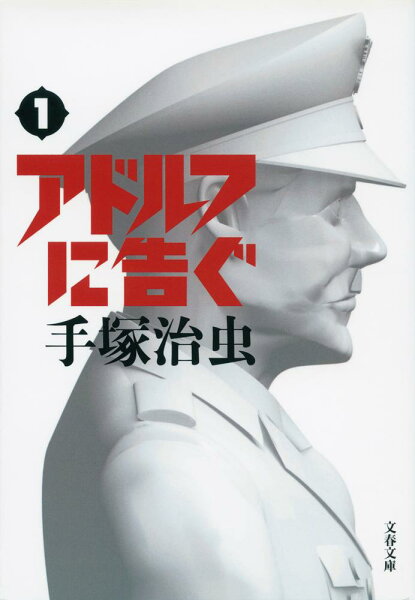
Message to Adolf
Yu's review of Message to Adolf (Adolf ni Tsugu) — Osamu Tezuka's historical epic following three men named Adolf through WWII and beyond, a devastating story of how war and ideology deform individual lives.
Drama
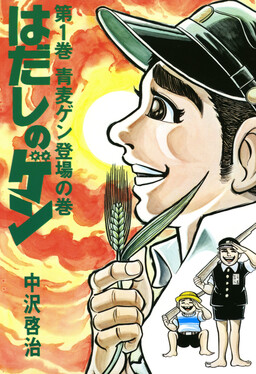
Barefoot Gen
Yu's review of Barefoot Gen (はだしのゲン) — Keiji Nakazawa's semi-autobiographical manga about a six-year-old boy who survives the Hiroshima atomic bombing on August 6, 1945, watches his father and two siblings burn under their collapsed house, and tries to keep what's left of his family alive. Drawn by a man who was actually there.
Sci-Fi / Historical
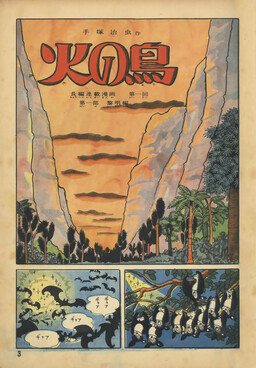
Phoenix
Yu's review of Phoenix — Tezuka Osamu's incomplete masterwork — a series of stories set throughout Japanese and universal history, connected by the Phoenix, a bird whose blood grants immortality; the Phoenix appears in each arc but cannot be caught; the arcs range from ancient Japan to the far future and examine what it means to be human across all of time.
Drama / Slice of Life
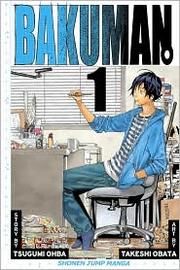
Bakuman
Yu's review of Bakuman — ninth-graders Moritaka Mashiro and Akito Takagi form a manga duo and fight their way through Weekly Shonen Jump's serialization machine, driven by a promise: Mashiro will marry his crush Miho Azuki when she voices the heroine in their anime. From the Death Note team, the most honest manga ever made about making manga.
Drama / Historical
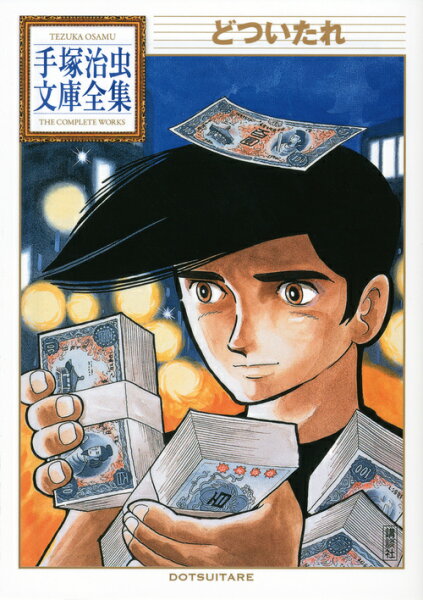
Dotsuitare
Dotsuitare is Osamu Tezuka's semi-autobiographical drama about young men scraping a life out of the burnt-out ruins of postwar Osaka — an unfinished, rarely discussed work where Tetsu, a war orphan turned shoeshine-boy boss, nurses a private rage against General MacArthur.
Written by
Yu
Manga Enthusiast from Japan
I grew up in Japan and manga literally saved me during a tough time in elementary school. My English isn't perfect, but my love for manga is real — and I want to share it with you.
Disclosure: This post contains affiliate links. As an Amazon Associate, I earn from qualifying purchases at no extra cost to you.