Crime and Punishment Review: Tezuka Adapts Dostoevsky
by Osamu Tezuka
Read the first volume. If it doesn't hook you, put it down. It'll hook you.
Buy Crime and Punishment on Amazon →*Affiliate link — I earn a small commission at no extra cost to you.
I read Dostoevsky's Crime and Punishment in translation when I was a teenager, and honestly, I bounced off it. Hundreds of pages of one feverish student talking himself in circles. I admired it more than I enjoyed it. So when I found out Osamu Tezuka had turned the whole thing into a single thin manga back in 1953 — drawn in that round, almost Disney-ish cartoon style he was using in his early years — I didn't know whether to be excited or worried. How do you shrink one of the heaviest novels in the world into something a child could read in an afternoon?
The strange thing is: he did it, and it works. Not as a replacement for the novel — it isn't one — but as a teenage Tezuka teaching himself how to adapt, how to cut, and how to make a moral argument with pictures. And then, near the end, he does something Dostoevsky never did, something that turns the whole book into Tezuka's own statement. That ending is the reason I keep this one on my shelf.
Quick Take
- Tezuka adapts Dostoevsky's Crime and Punishment into one short standalone volume from 1953
- Aggressively cut and surprisingly readable, with an ending that diverges hard from the novel
- Age rating: T (Teen) — murder and psychological distress, but nothing graphic on the page
Story Overview
The setup follows the novel closely. Raskolnikov is a poor student in St. Petersburg who has published an essay arguing that "extraordinary" people stand above ordinary notions of right and wrong — that for them, even murder can be permitted. He decides to test his own theory and kills an old woman who works as a pawnbroker and loan shark, taking her valuables, telling himself it's justified because he could use the money to help his struggling family.
The turning point is the slow unraveling. The investigating judge, Porfiry (drawn using one of Tezuka's recurring "Star System" actor-characters), reads Raskolnikov's essay and quietly begins to suspect him. There's no chase — it's a war of nerves, the judge circling closer while Raskolnikov tries to hold his composure. At the same time, Sonya, a young prostitute, keeps pressing him to confess and accept punishment.
Where Tezuka breaks from Dostoevsky is the ending. The novel ends with confession, prison in Siberia, and a quiet spiritual awakening through Sonya in the epilogue. Tezuka cuts the epilogue, shrinks Sonya's redemptive role, and instead pushes the story's argument about violence and "extraordinary men" outward into a full-blown street riot — turning a private moral crisis into a public, revolutionary one. It's not Dostoevsky's ending. It's Tezuka's.
Characters
Raskolnikov is the whole engine. He's not a thug — he's a smart, broke, proud young man who has thought his way into a crime. Tezuka draws him with big sympathetic eyes, which makes the gap between how harmless he looks and what he does feel even worse. His arc is the slow collapse of the theory he murdered to prove.
Sonya is the prostitute who becomes his conscience. In the novel she's the spiritual center; here Tezuka keeps her as the voice telling Raskolnikov to confess and face what he did, but he deliberately reduces her redemptive importance compared to Dostoevsky, especially by dropping the epilogue.
Porfiry, the investigating judge, is the patient hunter. He never raises his voice. He just keeps coming back, asking the next quiet question, letting Raskolnikov's own guilt do the work. The scenes where the two of them circle each other over Raskolnikov's "extraordinary man" essay are the intellectual heart of the book.
The pawnbroker is the victim — an old woman, a loan shark, the person whose death is supposed to be Raskolnikov's "proof." Tezuka keeps her almost faceless, which is part of the point: she's an idea to Raskolnikov before she's a person, and that's exactly the sickness the story is about.
What I Love About It
What I love is how Tezuka handles the murder itself — by refusing to show it. In Dostoevsky there's a second killing and a lot of blood. Tezuka collapses it to a single death, and he stages it behind a closed door so you literally cannot see what happens. After all the buildup of Raskolnikov talking himself into being "above" morality, the actual crime is hidden from us. We're left outside the door, the way Raskolnikov can never quite face it inside himself.
That choice tells you everything about why this little book still matters. A lesser adapter would have leaned on the shock — drawn the axe, the blood, the body — because that's the cheap way to make murder feel like murder. Tezuka, even as a young cartoonist working in a rounded, friendly style, understood that the horror of Crime and Punishment was never the gore. It's the rationalization. So he keeps the gore offstage and keeps the camera on the rationalizing, sympathetic face instead. You spend the book liking a murderer, which is the most uncomfortable and most faithful thing this adaptation does.
Memorable Scene ⚠️ Spoiler Warning
The ending is what stays with me. Dostoevsky closes with Siberia and a quiet, religious turn toward redemption through Sonya. Tezuka throws that out. Instead he takes Raskolnikov's idea — that some people are "extraordinary" and may do violence others can't — and detonates it on a public scale, ending the manga in a full street riot, a churning revolutionary crowd.
It's a wild swing, and the first time I hit it I actually stopped and reread the last pages. The intimate question — can one clever man justify one murder? — suddenly becomes the question of a whole mob in the streets. Reading it now, knowing this came out in 1953, the move feels almost like Tezuka asking what happens when a nation, not just a student, decides it's above right and wrong. He took a 19th-century novel about one guilty conscience and bent it into a 20th-century warning about crowds and violence. Whether you think that's brilliant or a betrayal of Dostoevsky, it is unmistakably Tezuka putting his own fingerprint on a classic.
Pros & Cons
Pros:
- A genuinely readable on-ramp to one of literature's heaviest novels
- Smart adaptation choices — the hidden murder, the focus on rationalization over gore
- A bold, distinctly Tezuka ending that makes the book worth reading even if you know the novel
Cons:
- Aggressively compressed — character depth and side plots from the novel are gone
- The early-1950s cartoon art clashes tonally with the grim subject for some readers
- It rewrites Dostoevsky's ending entirely — if you want a faithful adaptation, this isn't it, and that won't work for everyone
Is Crime and Punishment Worth Reading?
Yes — with the right expectations. Don't read it instead of Dostoevsky; read it alongside, or as a way in. As a short, fast, smartly-cut adaptation with a famously divergent riot ending, it's a fascinating look at a young Tezuka wrestling a giant onto the page and refusing to lose. If you love Tezuka, or you've ever struggled with the novel, it's an easy recommendation.
Where to Buy
Read the first volume. If it doesn't hook you, put it down. It'll hook you.
This post contains affiliate links. If you purchase through these links, I may earn a small commission at no extra cost to you. As an Amazon Associate, I earn from qualifying purchases.
*Affiliate link — I earn a small commission at no extra cost to you.
More Manga You Might Like
Historical / Drama
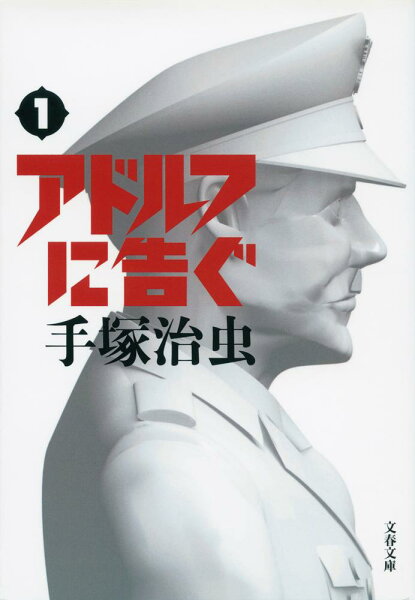
Message to Adolf
Yu's review of Message to Adolf (Adolf ni Tsugu) — Osamu Tezuka's historical epic following three men named Adolf through WWII and beyond, a devastating story of how war and ideology deform individual lives.
Drama
Ayako
Yu's review of Ayako — a few years after the war, the Tenge landlord family locks their youngest daughter Ayako in a storehouse to silence what she saw; she grows up underground for over twenty years; when she finally comes out, the country has moved on but the family's rot hasn't. Osamu Tezuka's darkest postwar thriller about the secrets Japan buried instead of facing.
Drama / Historical
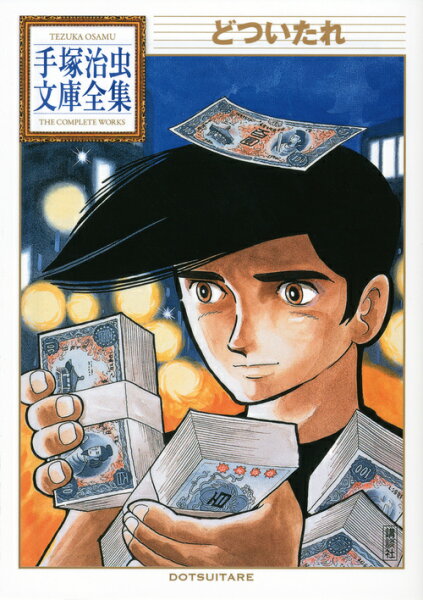
Dotsuitare
Dotsuitare is Osamu Tezuka's semi-autobiographical drama about young men scraping a life out of the burnt-out ruins of postwar Osaka — an unfinished, rarely discussed work where Tetsu, a war orphan turned shoeshine-boy boss, nurses a private rage against General MacArthur.
Drama
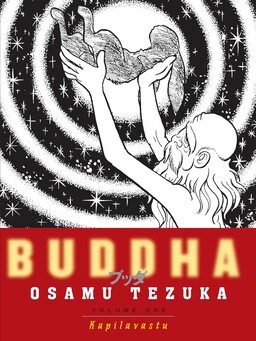
Buddha
Yu's review of Buddha — Osamu Tezuka's sweeping, fictionalized retelling of the life of Siddhartha Gautama, told through a huge cast of invented characters whose suffering makes the Buddha's questions feel like questions you actually have.
Drama / Romance
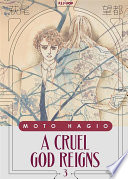
A Cruel God Reigns
Yu's review of A Cruel God Reigns by Moto Hagio — Jeremy's stepfather abuses him; Jeremy kills him; the next 16 volumes show what happens to a person after that. One of manga's most honest portraits of trauma and the possibility of recovery.

Drama / Medical
Say Hello to Black Jack
Eijiro Saito is a young medical resident who has just started at a Tokyo university hospital. He wants to help people. Across 13 volumes, Shuho Sato shows him what Japanese hospital medicine actually is — cancer wards, neonatal ICU, psychiatric care, organ transplantation, oncology — and what the system does to patients and doctors. The author released the work copyright-free in 2012. Cultural impact in Japan was significant; English licensing remains pending.
Written by
Yu
Manga Enthusiast from Japan
I grew up in Japan and manga literally saved me during a tough time in elementary school. My English isn't perfect, but my love for manga is real — and I want to share it with you.
Disclosure: This post contains affiliate links. As an Amazon Associate, I earn from qualifying purchases at no extra cost to you.