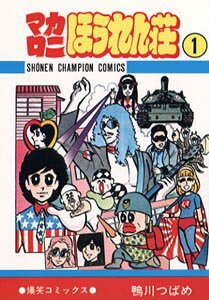
Macaroni Houren-sou Review: The Gag Manga That Forgot It Was Supposed to Make Sense
by Kamogawa Tsugame
Read the first volume. If it doesn't hook you, put it down. It'll hook you.
Buy Macaroni Houren-sou on Amazon →*Affiliate link — I earn a small commission at no extra cost to you.
What if a school comedy stopped following any rules about what school comedies are supposed to do?
Quick Take
- Late 1970s surreal comedy landmark — Macaroni Houren-sou broke the genre's conventions before the genre had fully established them
- The trio dynamic is the engine: straight man, wildcard, and deadpan cool guy cycling through situations that keep escalating past logic
- 12 volumes that influenced everything that came after it in Japanese gag manga
Who Is This Manga For?
- Fans of absurdist comedy who want the jokes to arrive from genuinely unexpected directions
- Readers of classic gag manga interested in one of the works that established the conventions
- Anyone who finds the "school life" setting funnier when the school itself isn't the point
- Readers curious about Kamogawa Tsugame, a singular creator who disappeared after this work
Content Warnings & Age Rating
Age Rating: T (Teen) Content Warnings: Surreal comedy. Occasional crude humor. Absurdism that may disorient readers expecting conventional narrative.
Suitable for teen readers.
Yu's Rating
| Category | Score |
|---|---|
| Story Depth | ★★★☆☆ |
| Art Style | ★★★★☆ |
| Character Development | ★★★☆☆ |
| Accessibility for Non-Japanese Readers | ★★★☆☆ |
| Reread Value | ★★★★☆ |
Story Overview
Three high school students share a boarding house: Shingami, who functions as the series' nominal straight man; Kinoshita, whose behavior defies consistent description; and Trapp, a foreign exchange student whose calm in the face of ongoing chaos defines his character.
The setting is high school, but Macaroni Houren-sou is not a school manga in any conventional sense. School is where the characters happen to be, not what the manga is about. What it is about is the interaction between three distinct comedy types — and the increasingly surreal situations that their dynamic generates.
The gags are fast, the escalation is consistent, and the willingness to abandon any setup that isn't working in favor of something stranger is the series' defining quality.
Characters
Shingami: The straight man who keeps trying to establish normalcy and keeps finding it impossible — not because the situations are inherently abnormal, but because his companions make normalcy structurally unavailable.
Kinoshita: A character whose behavior is consistent only in its refusal to be consistent. He is the series' primary chaos agent.
Trapp: The foreign student who responds to everything with the same cool equanimity — which functions as comedy by being perfectly inappropriate to each situation.
Art Style
Kamogawa's art has a kinetic, slightly rough quality that matches the content — the lines are loose enough to suggest spontaneity, and the character expressions are exaggerated with precision. The surreal elements are drawn with the same matter-of-fact quality as the realistic ones, which is part of what makes the comedy work.
Cultural Context
Macaroni Houren-sou ran in Weekly Shonen Champion from 1977 to 1979. It appeared during a period when gag manga was establishing its conventions, and it helped establish them by demonstrating how far those conventions could be stretched. Its influence on subsequent comedy manga — particularly in its trio structure and its willingness to escalate past logic — is difficult to overstate.
Kamogawa Tsugame largely withdrew from manga production after the series ended, making this his defining work.
What I Love About It
I love how fast the gags move.
There's no setup inflation — the gag arrives, the punchline lands, and the next setup begins before you've finished registering the previous one. Modern comedy manga sometimes mistakes elaboration for humor, adding context and build and expectation. Macaroni Houren-sou understands that the joke is the surprise, and the surprise requires speed.
What English-Speaking Fans Say
Not known in English-speaking markets. Among Japanese gag manga historians, Macaroni Houren-sou is treated as a pivotal work — the clearest example of late-70s comedy pushing against its own genre constraints.
Memorable Scene ⚠️ Spoiler Warning
A situation where an entirely ordinary school activity becomes, through the specific contributions of all three characters, something that bears no resemblance to what it was supposed to be — and the teacher's response is to continue as if nothing unusual has happened, which is somehow funnier than any explicit acknowledgment would be.
Similar Manga
| Title | Its Approach | How Macaroni Houren-sou Differs |
|---|---|---|
| Tensai Bakabon | Father-child duo in pure gag comedy | Trio of peers in school setting with surreal escalation |
| Kochikame | Long-running comedy with consistent world | Short-run comedy that abandons consistency as a comic tool |
| Cromartie High School | Surreal school comedy with deadpan delivery | Earlier, faster, more chaotic predecessor to the genre |
Reading Order / Where to Start
Volume 1. The trio dynamic is established in the first chapter and everything builds from it.
Official English Translation Status
Macaroni Houren-sou has no official English translation.
Pros & Cons
Pros
- Historically influential — a landmark of Japanese gag manga
- The trio dynamic is one of the genre's best examples
- The speed of the comedy is genuinely refreshing
- Complete and self-contained — 12 volumes
Cons
- No English translation
- The cultural density of the humor may not translate for non-Japanese readers
- No narrative depth — pure comedy with no emotional floor
- Won't work for everyone — absurdism either clicks or it doesn't
Is Macaroni Houren-sou Worth Reading?
For fans of absurdist comedy and classic gag manga, yes — this is historically important and genuinely funny, which is not always the same thing. For readers wanting emotional depth or narrative structure, this is the wrong place to look. But for what it is — fast, surreal, inventive comedy — it remains one of the best examples.
Format Comparison
| Format | Notes |
|---|---|
| Physical | Japanese editions available |
| Digital | Limited digital availability in Japanese |
| Omnibus | Collected editions available |
Where to Buy
No English release yet. That just means you find it before everyone else does.
*Affiliate link — I earn a small commission at no extra cost to you.
More Manga You Might Like
Slice of Life / Comedy
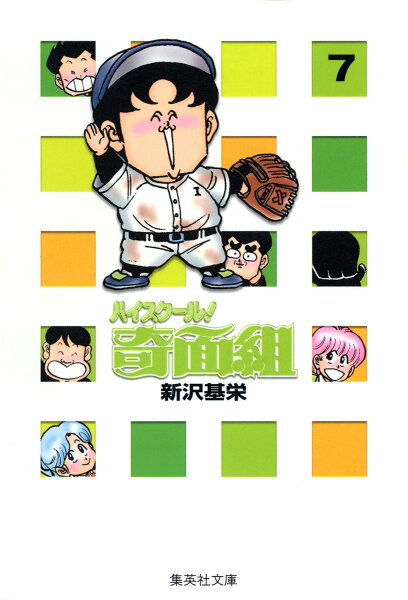
High School! Kimengumi
High School! Kimengumi follows five boys who turn their strange faces into a way of life, building one of the loudest, weirdest gag manga of 1980s Shonen Jump.
Slice of Life / Comedy
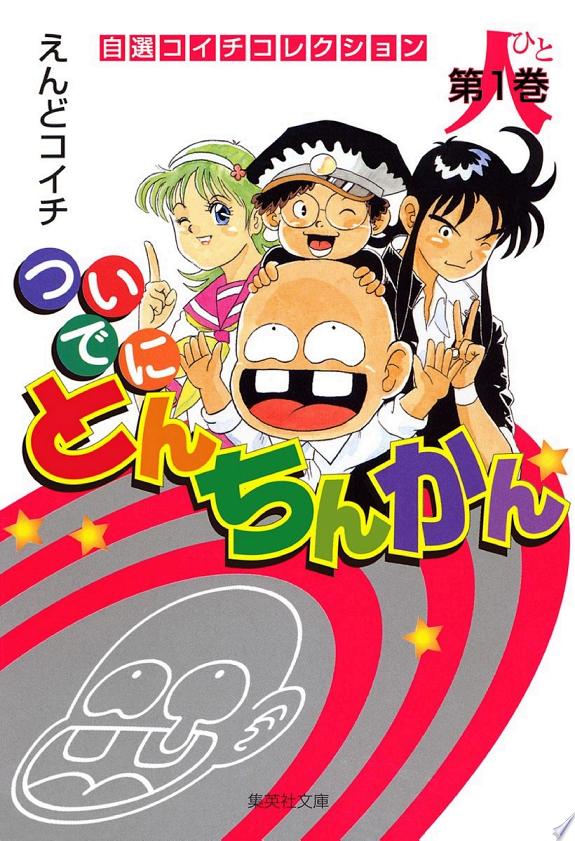
Tondemo-kun
Tondemo-kun follows a trio of delinquent students whose plans to cause trouble consistently backfire in ways that are so spectacularly wrong they accidentally create good outcomes — a comedy built entirely on the gap between intention and result.
Slice of Life / Comedy
Azumanga Daioh
Yu's review of Azumanga Daioh — Kiyohiko Azuma's four-panel comedy that follows six high school girls across three years of ordinary school life, from Chiyo the child prodigy to Osaka the daydreamer.
Slice of Life / Comedy
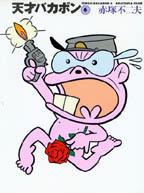
Tensai Bakabon
Tensai Bakabon is Fujio Akatsuka's landmark gag manga about the Bakabon family — a household where the father's complete detachment from logic is presented as wisdom, and the world's attempts to impose reason are the actual problem.
Slice of Life / Comedy
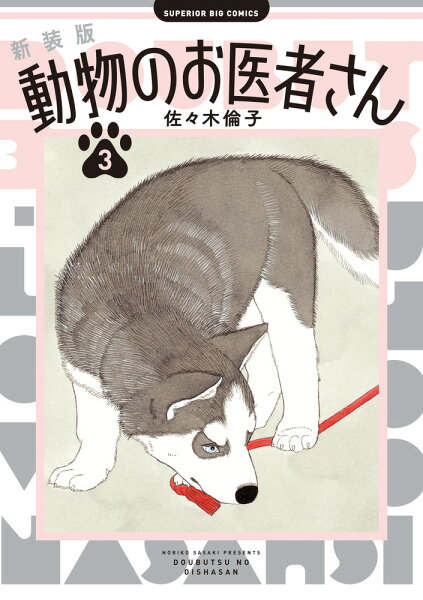
Doubutsu no Oisha-san
Doubutsu no Oisha-san follows Hamutaro, a quiet veterinary student in Hokkaido, his deadpan husky Chobi, and the warm chaos of vet-school life — a 12-volume Hana to Yume comedy so popular it set off a real Siberian Husky boom across Japan.
Slice of Life / Comedy
Nichijou: My Ordinary Life
Yu's review of Nichijou — a high school slice-of-life where ordinary situations escalate to catastrophic absurdity, a robot girl tries to hide what she is, and the Professor is an eight-year-old genius who made her.
Written by
Yu
Manga Enthusiast from Japan
I grew up in Japan and manga literally saved me during a tough time in elementary school. My English isn't perfect, but my love for manga is real — and I want to share it with you.