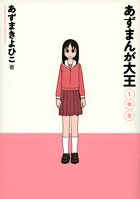
Azumanga Daioh Review: Three Years Where Nothing and Everything Happens
by Kiyohiko Azuma
Read the first volume. If it doesn't hook you, put it down. It'll hook you.
Buy Azumanga Daioh on Amazon →*Affiliate link — I earn a small commission at no extra cost to you.
When I was a kid with no friends, the thing I wanted most was not adventure. It was a normal classroom where nothing went wrong. A place to belong, where the biggest problem of the day was a test you forgot to study for. Azumanga Daioh is that classroom. It is six girls going to high school for three years, and almost nothing happens, and I love it more than almost any "big" story I have read. Reading it feels like being allowed to sit at a desk near the window and just listen to people be kind to each other in silly ways.
I came back to it years later, expecting it to feel small. It did not. It felt like coming home.
Quick Take
- The four-panel (4-koma) comedy that helped shape the entire "cute girls doing ordinary things" school-comedy genre — light, funny, complete in four volumes
- No real plot, no romance, just three school years built from tiny accumulated moments and a cast where every single character is funny in a different way
- Rated T (Teen) — clean overall, with one caveat (a creepy teacher played for comedy) that I'll be honest about below
Story Overview
Azumanga Daioh begins with two arrivals in the same class. Chiyo Mihama, a ten-year-old genius who skipped ahead five grades, joins a high school full of teenagers. And Ayumu Kasuga, a transfer student from Osaka who is so slow and dreamy that her classmates nickname her "Osaka" — and then are baffled when she turns out to be nothing like the loud Osaka stereotype. Around them are the rest of the class and two teachers: the lazy, reckless homeroom teacher Yukari and her calmer friend Minamo ("Nyamo"), the PE teacher.
There is no turning point in the usual sense, because there is no real plot to turn. Instead the manga walks through three years of the Japanese school calendar — sports festivals, the cultural festival, summer trips to a vacation house, a class trip to Okinawa, New Year's dreams, and finally exam season. The accumulation is the point. You watch these girls grow from first-years who barely know each other into third-years facing the end of something.
The ending is graduation. The girls split toward different futures — Chiyo, oddly, skips the college entrance exams entirely because she is going to study abroad in America, while the others head to universities. It is quiet and a little sad, the way the real end of high school is.
Characters
Chiyo Mihama — The ten-year-old prodigy. The joke is never just "smart kid"; it is the gap between her university-level brain and her completely ordinary ten-year-old heart. She can solve anything academic and still cries when Yukari drives like a maniac. Her arc is the most touching one: by graduation she has gone from the strange little kid the class didn't know how to treat, to someone they genuinely love, and she leaves them to study overseas.
Osaka (Ayumu Kasuga) — The transfer student who seems spacey but is really just running on a different frequency. The series is clear that she doesn't think slowly — she thinks sideways. She's terrible at sports and grades, yet she's weirdly good at certain riddles. Her imagination is the engine of some of the manga's best moments.
Sakaki — Tall, quiet, admired by everyone as cool — and secretly desperate to pet cute animals that all reject her. Her running heartbreak is Kamineko, a gray cat with bear-trap teeth that bites her hand every time she reaches out. Her arc is the most rewarding in the book, and it pays off in Okinawa (see below).
Tomo and Yomi — A pair, really. Tomo is loud, competitive energy with no ability to back it up; Yomi is the exhausted glasses-wearing straight-man who studies hard and quietly worries about her weight. Their bickering looks like dislike but reads as the oldest, most genuine friendship in the class.
What I Love About It
Osaka, and one specific running joke about Chiyo's pigtails. Chiyo wears two long pigtails, and Osaka becomes convinced they might be detachable — that they could be unscrewed, or that they flap like little wings and could be swapped out. She doesn't say this to be funny. She says it because she has genuinely thought about it and arrived somewhere no one else would go. That is the whole Osaka experience in one image: she reports honestly on a world that is just slightly to the left of the one everyone else is standing in.
What gets me is that Azuma never makes Osaka the butt of the joke. The humor isn't "look at the dumb girl." It's the gentle vertigo of realizing her logic is internally consistent — of course you'd test whether the pigtails come off, if you sincerely believed they might. I was a kid who lived in my own head, who said things that made other kids look at me funny. Osaka is the first character I ever read who made that feel like a gift instead of a defect. Every time she opens her mouth I brace for the small, perfect derailment, and Azuma's timing in that fourth panel almost never misses.
Memorable Scene ⚠️ Spoiler Warning
The strangest, most unforgettable thing in the manga is Chiyo's father — "Chiyo-chichi." He first shows up in Sakaki's New Year's dream as a peculiar floating cat-like creature. Chiyo introduces him as an abandoned cat that needs help, so Sakaki, who loves animals more than anything, takes care of him. Then the creature calmly reveals he is not a cat at all — he is Chiyo's actual father, and he thanks Sakaki for looking after his daughter.
He is everything dream logic should be: a yellow, vaguely cat-shaped thing with an unsettling face, prone to sudden anger, who can levitate, who is rumored to be bulletproof and dislikes the color red, and who drifts between places like he owns the air. The reason it sticks with me is the source. Later, Osaka gives Chiyo a stuffed toy that looks exactly like this creature — strongly implying that the impossible dream-father everyone keeps seeing came out of Osaka's head and leaked into other people's sleep. A four-panel school comedy quietly built a tiny piece of shared, surreal mythology out of nothing but a plush toy and a daydreaming girl. I have never forgotten it.
Pros & Cons
Pros
- Genuinely warm, genuinely funny — the comedy holds up decades later
- Osaka is one of the great comedic characters in all of manga
- Complete in four volumes (or one omnibus); you can read it in an afternoon
- Every character earns their laughs differently, so the humor never feels repetitive
Cons
- The 4-koma format means there's no sustained story — if you need plot momentum, this isn't it
- Some cultural references feel dated, and the teacher Kimura — who openly leers at his female students as a "joke" — is genuinely uncomfortable even within its comedic framing
- This is a quiet, plotless, gag-based manga: that's either exactly your thing or exactly not, and there's no middle ground
Is Azumanga Daioh Worth Reading?
Yes — if you want pure, gentle school comedy with no romance and no stakes, built on characters you'll miss when it's over. It's short, complete, funny, and historically important to the whole slice-of-life genre. Skip it only if you can't enjoy a manga that has no real plot, or if the dated Kimura gags would ruin it for you.
Who Is This Manga For?
- Readers who want pure school comedy with no romance and no melodrama
- Anyone curious about where the modern "cute girls" slice-of-life genre came from
- Fans of ensemble casts where every character is funny in a distinct way
- People who want something short, light, and complete in a single sitting
Similar Manga
| Title | Its Approach | How Azumanga Daioh Differs |
|---|---|---|
| Yotsuba&! | Azuma's later work; a small child discovering the everyday world, in full pages | Azumanga is 4-koma gag comedy about teenagers, not a single child's wonder |
| K-On! | Cute-girls school comedy organized around a club (music) | Azumanga has no club hook — it's just the class and the calendar |
| Lucky Star | More self-referential, otaku-joke-heavy 4-koma | Azumanga's humor is gentler and character-first, less reference-driven |
Content Warnings & Age Rating
Age Rating: T (Teen) Content Warnings: Kimura, a teacher who openly expresses attraction to his female students. It's framed as comedy, but it's inappropriate even in that framing, and most readers just push past it as a product-of-its-era gag.
The Kimura material is the one real caveat in an otherwise clean, gentle manga.
Where to Buy
Read the first volume. If it doesn't hook you, put it down. It'll hook you.
This post contains affiliate links. If you purchase through these links, I may earn a small commission at no extra cost to you. As an Amazon Associate, I earn from qualifying purchases.
*Affiliate link — I earn a small commission at no extra cost to you.
More Manga You Might Like
Slice of Life / Comedy
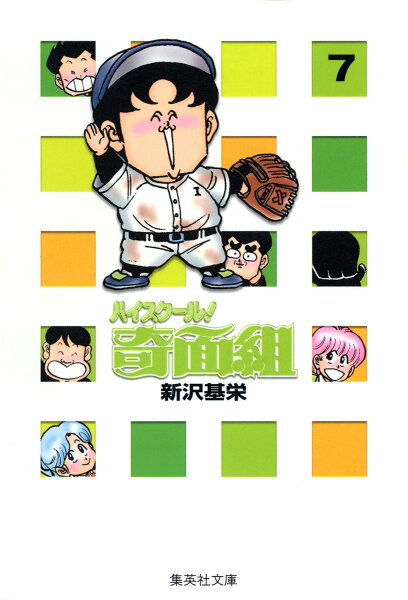
High School! Kimengumi
High School! Kimengumi follows five boys who turn their strange faces into a way of life, building one of the loudest, weirdest gag manga of 1980s Shonen Jump.
Slice of Life / Comedy
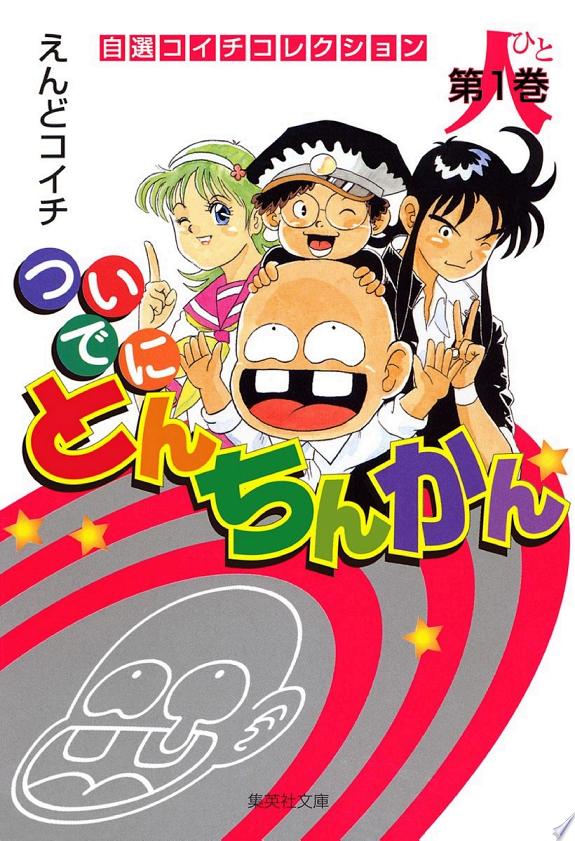
Tondemo-kun
Tondemo-kun follows a trio of delinquent students whose plans to cause trouble consistently backfire in ways that are so spectacularly wrong they accidentally create good outcomes — a comedy built entirely on the gap between intention and result.
Comedy / Slice of Life
Macaroni Houren-sou
Macaroni Houren-sou follows three high school students living together in a boarding house — Toshio Shingami, the energetic straight man; Kinoshita, the eccentric wildcard; and Trapp, the cool foreigner — in a surreal comedy that uses the school-life setting as a launching pad for increasingly unhinged humor.
Slice of Life / Comedy
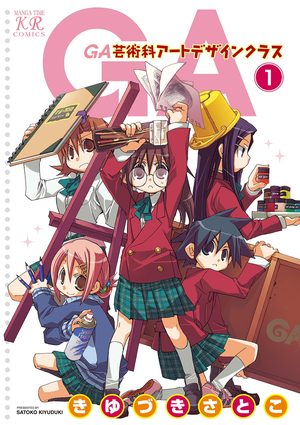
GA: Geijutsuka Art Design Class
Yu's review of GA: Geijutsuka Art Design Class — a four-panel comedy about five girls in a high-school art and design course, where color theory and a freeze-tag game become the punchline.
Slice of Life / Comedy
Tensai Bakabon
Tensai Bakabon is Fujio Akatsuka's landmark gag manga about the Bakabon family — a household where the father's complete detachment from logic is presented as wisdom, and the world's attempts to impose reason are the actual problem.
Slice of Life / Comedy
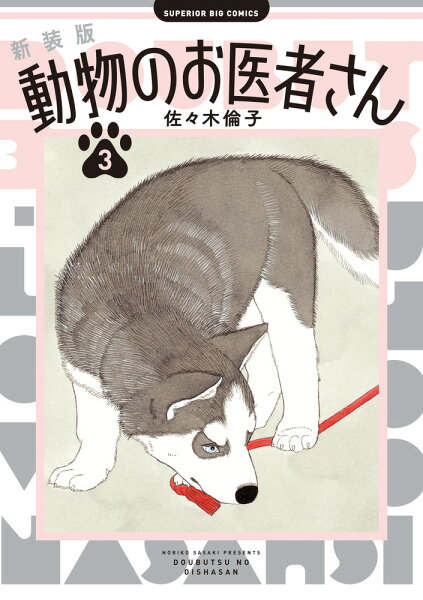
Doubutsu no Oisha-san
Doubutsu no Oisha-san follows Hamutaro, a quiet veterinary student in Hokkaido, his deadpan husky Chobi, and the warm chaos of vet-school life — a 12-volume Hana to Yume comedy so popular it set off a real Siberian Husky boom across Japan.
Written by
Yu
Manga Enthusiast from Japan
I grew up in Japan and manga literally saved me during a tough time in elementary school. My English isn't perfect, but my love for manga is real — and I want to share it with you.
Disclosure: This post contains affiliate links. As an Amazon Associate, I earn from qualifying purchases at no extra cost to you.