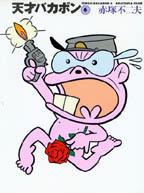
Tensai Bakabon Review: The Manga That Made Nonsense Into Philosophy
by Fujio Akatsuka
Read the first volume. If it doesn't hook you, put it down. It'll hook you.
Buy Tensai Bakabon on Amazon →*Affiliate link — I earn a small commission at no extra cost to you.
What if the person with no logic was actually the only one making sense?
Quick Take
- Fujio Akatsuka's masterwork — the gag manga that defined Japanese comedy manga for a generation
- Bakabon's father is the heart of it: a man who operates by a logic entirely his own, declared genius by himself and nobody else
- The phrase "These are fine the way they are!" became a Japanese cultural touchstone — and the manga that produced it is still funny decades later
Who Is This Manga For?
- Readers of Akatsuka's Osomatsu-san who want the original master work
- Fans of absurdist comedy who want the Japanese equivalent of the best European nonsense tradition
- Anyone interested in manga history — this is one of the founding texts of Japanese comedy manga
- Readers who find social logic itself funny when examined without its usual assumptions
Content Warnings & Age Rating
Age Rating: All Ages Content Warnings: Absurdist gag comedy. No concerning content.
Appropriate for all readers.
Yu's Rating
| Category | Score |
|---|---|
| Story Depth | ★★★★★ |
| Art Style | ★★★★★ |
| Character Development | ★★★☆☆ |
| Accessibility for Non-Japanese Readers | ★★★★☆ |
| Reread Value | ★★★★★ |
Story Overview
The Bakabon family consists of Bakabon (the young son whose name the series takes), Bakabon's Papa (the father, who is the actual protagonist), Mama, and Hajime (the genius baby brother). Papa is unemployed, apparently without ambition, and possessed of a worldview that does not intersect with conventional logic at any detectable point.
Each episode presents Papa with a situation that has a socially conventional resolution. Papa finds a different resolution — one that follows from his own internal logic with perfect consistency, even when that logic produces outcomes that are completely wrong from any external perspective.
The joke is not that Papa is stupid (he insists he is a genius, and the manga treats this as comedy). The joke is that his alternative logic, however wrong its outcomes, is at least as coherent as the social logic it replaces — and that the people around him who insist on correct behavior are often producing worse outcomes through more acceptable means.
Akatsuka's genius was to make this observation funny rather than cynical. Papa is not a critique of society; he is its most sincere celebrant, celebrating the version of it that exists in his head.
Characters
Bakabon's Papa: One of manga's truly great characters — a man whose self-belief is absolute and whose connection to shared reality is minimal. He is consistently wrong in ways that are consistently hilarious, but never malicious.
Mama: The family's practical center, who has made peace with Papa's worldview in ways that are themselves quietly funny.
Bakabon: The child protagonist in name, but Papa's foil in practice — the person who has to navigate the gap between his father's world and everyone else's.
Art Style
Akatsuka's art is the expressive, rubber-faced comedy style that influenced generations of manga artists — faces that stretch and contort to register absurdity, visual punchlines that land with mechanical precision. Simple enough to read instantly, precise enough that every beat works.
Cultural Context
Tensai Bakabon ran in Weekly Shonen Magazine from 1967 to 1977, with later serializations in other magazines. It appeared alongside Akatsuka's other works and helped establish him as the master of Japanese gag manga — a tradition that continues to produce major artists who cite him as the foundation.
The phrase "Kore de ii no da!" ("These are fine the way they are!") became a broadly used Japanese expression of contentment-through-acceptance.
Multiple anime adaptations have aired across decades.
What I Love About It
I love Papa's completeness as a character.
He is not simply a vehicle for non-sequiturs. His logic, however disconnected from shared reality, is internally consistent — he applies it the same way every time, which means you can predict, after a few volumes, how he will respond to any situation. That predictability is what makes him funny: you know the wrongness is coming, and the specific shape it takes still surprises you. That combination — anticipated wrongness with unanticipated specificity — is extremely hard to sustain across 20 volumes, and Akatsuka sustains it.
What English-Speaking Fans Say
Not known in English-speaking markets, though Akatsuka's influence is recognized by manga scholars globally. Among readers of Japanese comedy manga, Tensai Bakabon is the foundation text — the work you have to understand to understand what came after.
Memorable Scene ⚠️ Spoiler Warning
Papa encounters a situation with a clearly correct resolution, proceeds toward a completely different resolution through his own logic, arrives at an outcome that is objectively worse for everyone involved — and declares "Kore de ii no da!" with complete satisfaction. This happens in approximately every episode. It never stops being funny, which is the entire point.
Similar Manga
| Title | Its Approach | How Tensai Bakabon Differs |
|---|---|---|
| Osomatsu-san | Sextuplet slacker comedy by Akatsuka | Same artist, less pure logic-inversion, more character ensemble |
| Doraemon | Warmhearted family comedy with gadgets | Darker, more absurdist, comedy as philosophy not sentiment |
| Crayon Shin-chan | Child's-eye view of adult absurdity | Adult's-eye view of a world that makes no adult sense |
Reading Order / Where to Start
Volume 1. The episodic structure makes any starting point viable, but the first volume establishes Papa's logic most clearly.
Official English Translation Status
Tensai Bakabon has no official English translation.
Pros & Cons
Pros
- Foundational text of Japanese gag manga
- Papa is one of manga's most original characters
- The comedy holds up across decades
- Akatsuka's art timing is still the benchmark
Cons
- No English translation
- Some cultural references require knowledge of late 1960s Japan
- The pure gag format offers no narrative progression
- The repetitive structure is the point, but it won't appeal to everyone
Is Tensai Bakabon Worth Reading?
For comedy manga readers, yes — this is where much of Japanese comedy manga comes from, and reading it explains things you've seen in dozens of later works without knowing the source. For readers wanting narrative or character development, the pure gag format isn't that. But as comedy craft? Irreplaceable.
Format Comparison
| Format | Notes |
|---|---|
| Physical | Japanese editions available |
| Digital | Available in Japanese |
| Omnibus | Collected editions available |
Where to Buy
No English release yet. That just means you find it before everyone else does.
*Affiliate link — I earn a small commission at no extra cost to you.
More Manga You Might Like
Slice of Life / Comedy
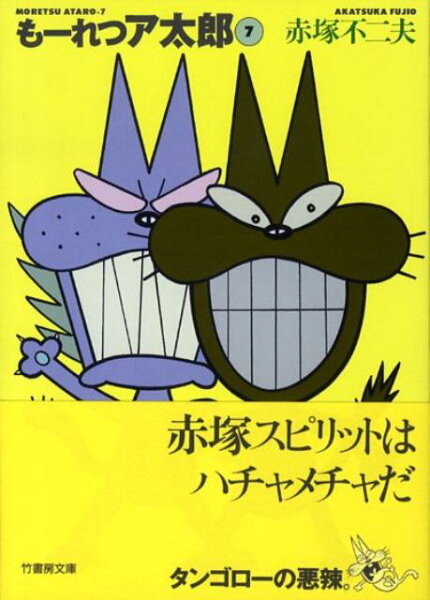
Moretsu Ataro
Moretsu Ataro is Fujio Akatsuka's late-1960s gag manga following Ataro, a young boy who runs his late father's vegetable shop while surrounded by an outlandish cast of friends and neighbors — a foundational work of Japanese gag comedy from one of its greatest masters.
Slice of Life / Comedy
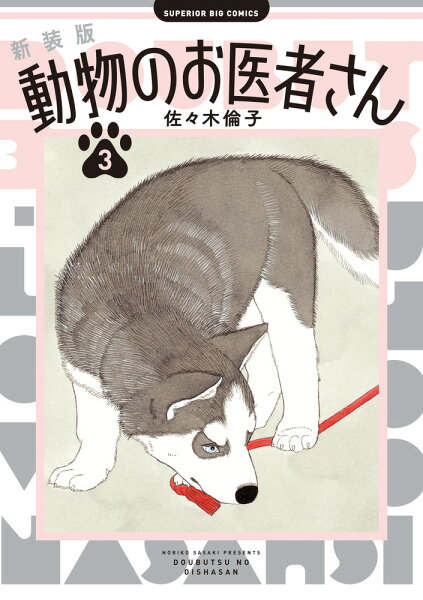
Doubutsu no Oisha-san
Doubutsu no Oisha-san follows Hamutaro, a quiet veterinary student in Hokkaido, his deadpan husky Chobi, and the warm chaos of vet-school life — a 12-volume Hana to Yume comedy so popular it set off a real Siberian Husky boom across Japan.
Slice of Life / Comedy
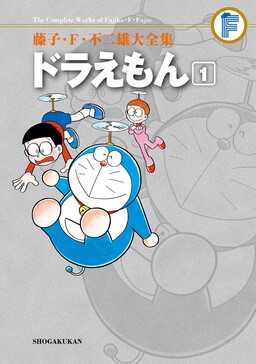
Doraemon
Yu's review of Doraemon — a robot cat from the 22nd century, sent back to help a hopeless boy named Nobita with gadgets from his four-dimensional pocket. Fujiko F. Fujio's most beloved work, and the manga every Japanese kid grows up inside.
Slice of Life / Comedy
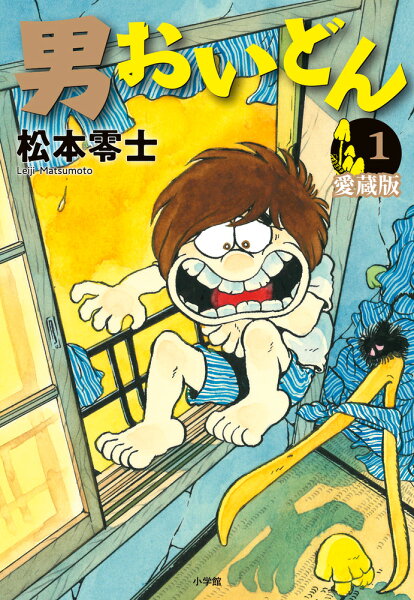
Otoko Oidon
Otoko Oidon follows Saburo Oyama, a young man from Kyushu trying to make it in Tokyo — living in a tiny boarding house, perpetually broke, hopelessly unlucky in love, and stubbornly determined to become someone despite all evidence suggesting otherwise.
Slice of Life / Comedy
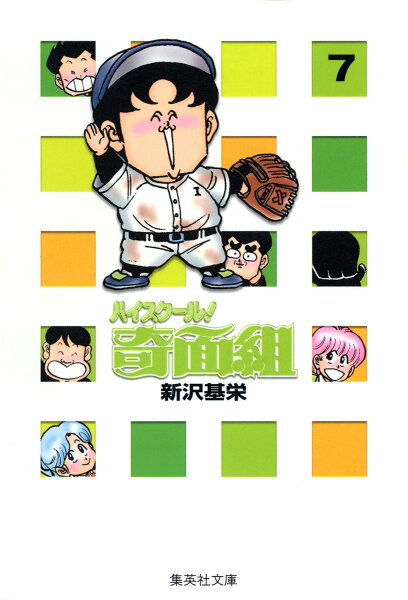
High School! Kimengumi
High School! Kimengumi follows five boys who turn their strange faces into a way of life, building one of the loudest, weirdest gag manga of 1980s Shonen Jump.
Slice of Life / Comedy
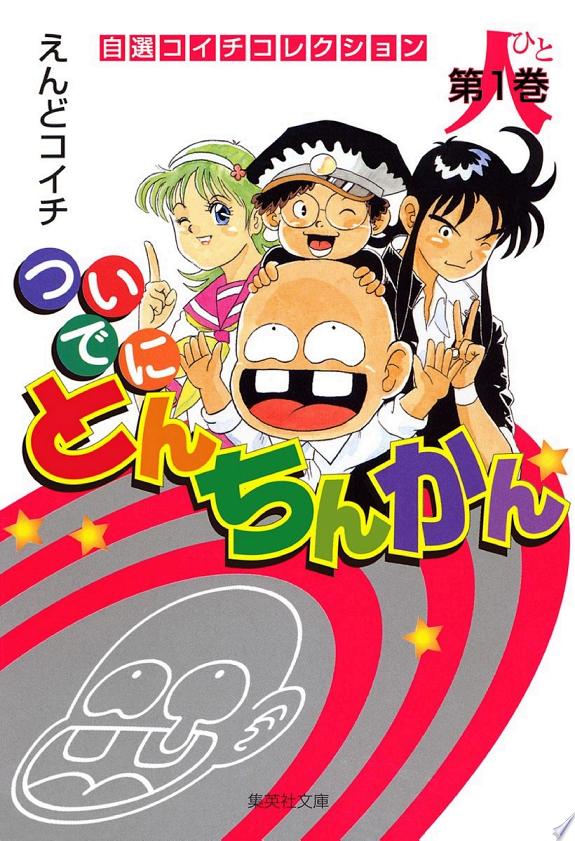
Tondemo-kun
Tondemo-kun follows a trio of delinquent students whose plans to cause trouble consistently backfire in ways that are so spectacularly wrong they accidentally create good outcomes — a comedy built entirely on the gap between intention and result.
Written by
Yu
Manga Enthusiast from Japan
I grew up in Japan and manga literally saved me during a tough time in elementary school. My English isn't perfect, but my love for manga is real — and I want to share it with you.