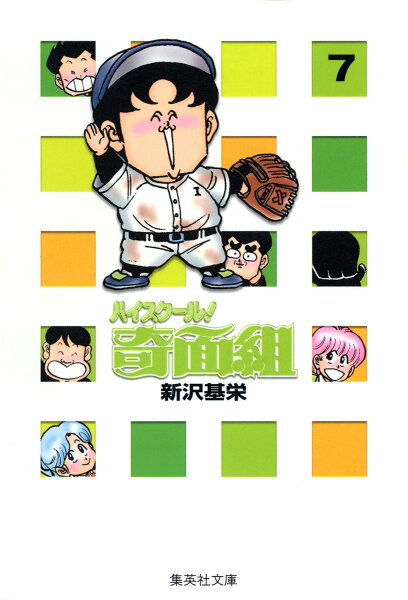
High School! Kimengumi Review: Five Weird Faces That Made My Childhood Louder
by Motoei Shinzawa
Read the first volume. If it doesn't hook you, put it down. It'll hook you.
Buy High School! Kimengumi on Amazon →*Affiliate link — I earn a small commission at no extra cost to you.
My uncle had a stack of old Jump tankobon in his closet, and the spines that always pulled my hand were the ones with five goofy faces crammed onto the cover. I was too young to get half the wordplay in their names, but I didn't need to. I just laughed at the eyebrowless boy doing impossible things with his body. Years later I went back and read the whole run properly, and I realized the thing I loved as a kid was the same thing I love now: this is a manga about people who decided that being weird wasn't a problem to fix.
Quick Take
- Motoei Shinzawa's late-Jump gag manga about five boys whose "strange faces" are their whole identity — a defining 1980s school comedy
- Ensemble comedy where the joke is never one weirdo against normal people, but five weirdos who are perfectly normal to each other
- Age rating: T (Teen) — slapstick and some crude/lecherous gags, but nothing graphic
Story Overview
High School! Kimengumi is built around five boys who form the "Kimengumi" — a club whose entire philosophy is pursuing individuality through having strange faces. The series picks up the cast from Shinzawa's earlier Third Year Funny-face Club and follows them from junior high into high school, where their combined oddness turns the school into a daily disaster zone.
There isn't a single rising plotline so much as an escalating series of school events — sports competitions, club rivalries, festivals, and the slow-burn romantic tangle around the two main girls who orbit the group. The turning point of the series isn't dramatic in the usual sense; it's that the world stops treating the Kimengumi as a problem to be managed and starts simply living alongside them. The boys never reform, never grow normal. The comedy comes from everyone else adjusting.
The ending is famous in Japan, and not entirely in a good way. The final chapter appears to reset everything back to the beginning, framed as if heroine Yui might have dreamed the whole thing. Shinzawa later pushed back on the "dream ending" reading, saying the point was that the world of Kimengumi never truly ends — it just loops forever. I'll get to that below.
Characters
Ichido Rei (一堂零) — The eyebrowless leader, the "spiritual pillar" of the group. His name puns on ichido rei, the polite "everyone, bow" command, which is the exact opposite of how he behaves. He's a terrible student who repeated his third year twice, but he has absurd physical "techniques" — most famously transforming his own face.
Reietsu Go (冷越豪) — Big-eyed, heavily-built, and obsessed with pro wrestling. His name plays on reiketsu (cold-blooded). He's the violent comedic foil, the one who delivers the harsh punchline or drops a wrestling hold on someone mid-scene, all while genuinely respecting Rei's leadership.
Shusse Kiyoshi (出瀬潔) — The buck-toothed one, supposedly the most sensible member by attendance, undercut completely by being a confirmed and shameless lecher. The gap between "responsible member" and "compulsive pervert" is the entire joke, and it never stops being funny.
Monohoshi Dai (物星大) — The small-mouthed, delicate one with a feminine streak and an odd, coquettish charm that brings a softer texture to a group of loud idiots. His name puns on monohoshidai (a laundry-drying rack), which is exactly the kind of everyday absurdity Shinzawa loved.
Daima Jin (大間仁) — The fifth member, the gentle big eater with a plump, beaming "ebisu" face — nicknamed Ebisu no Jin after the lucky god. He's the warm, easygoing center of the group, the one whose appetite and good nature offset the others' chaos.
The two girls anchor the cast too. Kawa Yui (河川唯) — her name sounding out kawayui (cute) — is the heroine, an excellent student who's drawn to the group precisely because their individuality is so strong. Uru Chie (宇留千絵), the florist's daughter, starts as the stabilizing voice of reason and gradually becomes an active participant in the chaos herself.
What I Love About It
What I love most is the "Kimen Flash" (奇面フラッシュ) — the running gag where the boys literally weaponize their strange faces. At the peak of some ridiculous situation, the group strikes a pose and their distinctive features distort into something impossible, the panels exploding into exaggerated lines and reactions. As a kid I had no idea what was being parodied; I just thought it was the funniest thing in the world that a manga would treat "making a weird face" as a special move on the level of any battle manga technique.
Reading it as an adult, I love it for a different reason. The Kimen Flash is Shinzawa quietly arguing with the entire genre around him. This was Shonen Jump in the mid-80s, when the magazine was tilting hard toward power-ups and finishing moves. Kimengumi takes that exact visual grammar — the dramatic pose, the build-up, the screen-tone burst — and points it at five boys whose only "power" is being themselves. The joke lands because it's affectionate. It's not mocking battle manga so much as saying: individuality is its own superpower, and you don't need to fix the part of you that's strange. That's the message that hit me as a lonely kid, and it's the one that still gets me.
Memorable Scene ⚠️ Spoiler Warning
The ending is the scene I can't shake. After a long run of pure comedy, the manga goes somewhere unexpected: Rei is hit by a truck and hospitalized, and for a stretch it looks like he might have a terminal tumor. It turns out to be a false alarm — but the tonal whiplash of a gag manga suddenly flirting with death is jarring on purpose.
Then the real gut-punch: the final pages appear to wake heroine Yui back up in junior high, the setting of the original series, wondering whether the Kimengumi ever existed at all or were just her imagination. For readers who'd followed these characters for years, it felt like a betrayal — a yumeochi, the dreaded "it was all a dream." In later editions Shinzawa added a tiny silhouette of Rei running down the hallway, a quiet "they were real after all." His own stance was that it was never meant as a dream ending; the Kimengumi's world simply never ends, it loops. Whether that lands as profound or as a cop-out is genuinely up to you, and that argument is part of why the ending is so memorable.
Pros & Cons
Pros
- Ensemble structure that's smarter than it looks — five weirdos normal to each other, strange to the world
- The Kimen Flash is one of the great recurring gags in 80s Jump
- Compact 20-volume run with a real beginning, middle, and (very debated) end
- Genuine warmth under the slapstick — these boys like each other
Cons
- No official English release, so the dense name-pun humor is hard to access
- Some gags (Kiyoshi's lechery especially) are very much of their 1980s moment
- The much-argued ending will frustrate readers who want a clean payoff
- It's pure gag comedy with no real stakes — if you need narrative momentum, this style won't work for everyone
Is High School! Kimengumi Worth Reading?
If you love ensemble gag manga and you're curious about what made Shonen Jump funny before battle series took over, yes — the Kimengumi dynamic produces consistent laughs across all 20 volumes, and the Kimen Flash alone is worth the visit. If you need plot progression or you can't read Japanese, the wordplay-heavy humor and lack of a translation are real barriers. It's craft, not story — and that's the whole point.
Where to Buy
No English release yet. That just means you find it before everyone else does.
If you read Japanese, the original tankobon and digital editions are the only legitimate way to enjoy it: search High School! Kimengumi on Amazon.co.jp →
This post contains affiliate links. If you purchase through these links, I may earn a small commission at no extra cost to you. As an Amazon Associate, I earn from qualifying purchases.
*Affiliate link — I earn a small commission at no extra cost to you.
More Manga You Might Like
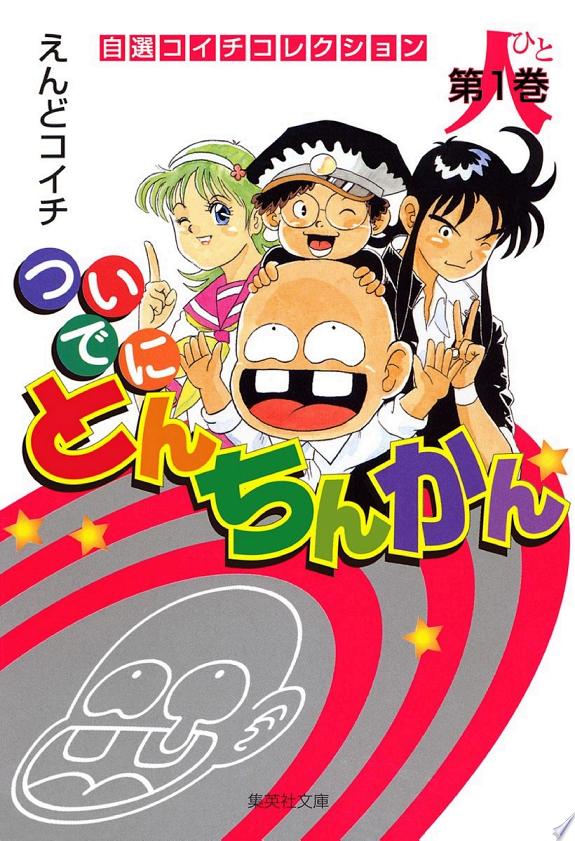
Slice of Life / Comedy
Tondemo-kun
Tondemo-kun follows a trio of delinquent students whose plans to cause trouble consistently backfire in ways that are so spectacularly wrong they accidentally create good outcomes — a comedy built entirely on the gap between intention and result.
Comedy / Slice of Life
Macaroni Houren-sou
Macaroni Houren-sou follows three high school students living together in a boarding house — Toshio Shingami, the energetic straight man; Kinoshita, the eccentric wildcard; and Trapp, the cool foreigner — in a surreal comedy that uses the school-life setting as a launching pad for increasingly unhinged humor.
Slice of Life / Comedy
Azumanga Daioh
Yu's review of Azumanga Daioh — Kiyohiko Azuma's four-panel comedy that follows six high school girls across three years of ordinary school life, from Chiyo the child prodigy to Osaka the daydreamer.
Slice of Life / Comedy
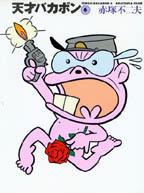
Tensai Bakabon
Tensai Bakabon is Fujio Akatsuka's landmark gag manga about the Bakabon family — a household where the father's complete detachment from logic is presented as wisdom, and the world's attempts to impose reason are the actual problem.
Slice of Life / Comedy
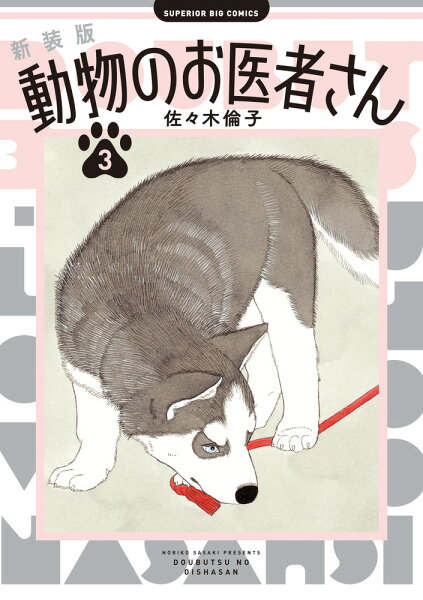
Doubutsu no Oisha-san
Doubutsu no Oisha-san follows Hamutaro, a quiet veterinary student in Hokkaido, his deadpan husky Chobi, and the warm chaos of vet-school life — a 12-volume Hana to Yume comedy so popular it set off a real Siberian Husky boom across Japan.
Slice of Life / Comedy
Nichijou: My Ordinary Life
Yu's review of Nichijou — a high school slice-of-life where ordinary situations escalate to catastrophic absurdity, a robot girl tries to hide what she is, and the Professor is an eight-year-old genius who made her.
Written by
Yu
Manga Enthusiast from Japan
I grew up in Japan and manga literally saved me during a tough time in elementary school. My English isn't perfect, but my love for manga is real — and I want to share it with you.