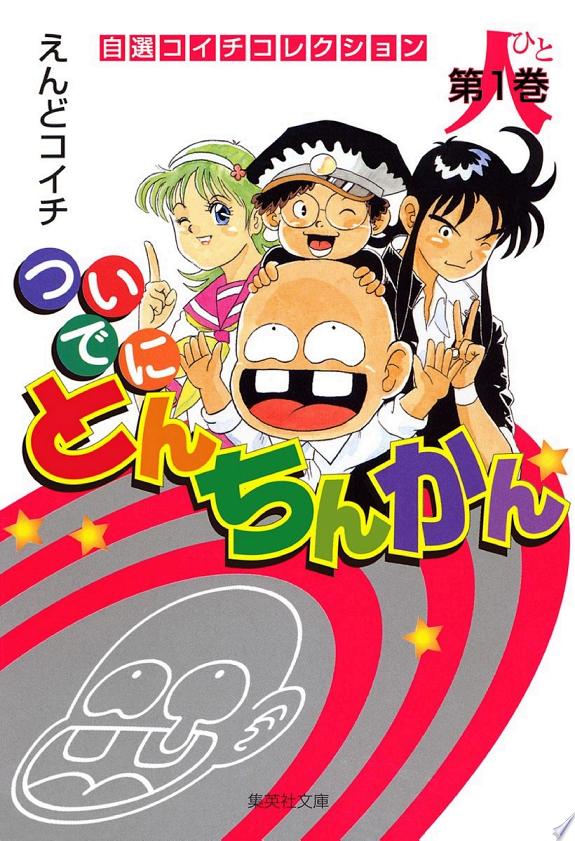
Tondemo-kun Review: The Delinquent Comedy That Made Stupid Feel Like Strategy
by Etou Asuka
Read the first volume. If it doesn't hook you, put it down. It'll hook you.
Buy Tondemo-kun on Amazon →*Affiliate link — I earn a small commission at no extra cost to you.
What if being completely useless at being bad was actually a superpower?
Quick Take
- Etou Asuka's Jump comedy about three delinquents who fail at delinquency in increasingly elaborate ways
- The humor comes entirely from the gap between what the characters intend and what actually happens
- A 1980s Jump classic — 14 volumes of pure comedic timing that never stops being funny
Who Is This Manga For?
- Fans of gag manga who want comedy built on escalating failure rather than slapstick violence
- Readers of Kochikame or Dr. Slump who want similar energy in a school delinquent setting
- Anyone who finds incompetent villains funnier than competent ones
- Readers interested in 1980s Shonen Jump's comedy golden age
Content Warnings & Age Rating
Age Rating: All Ages Content Warnings: Slapstick comedy. Mild delinquent themes (planning trouble, failing to execute it). No concerning content.
Appropriate for all readers.
Yu's Rating
| Category | Score |
|---|---|
| Story Depth | ★★★☆☆ |
| Art Style | ★★★★☆ |
| Character Development | ★★★☆☆ |
| Accessibility for Non-Japanese Readers | ★★★☆☆ |
| Reread Value | ★★★★☆ |
Story Overview
The three main characters of Tondemo-kun are delinquents in self-image only. In practice, every scheme they devise to assert their toughness or cause trouble ends in complete failure — and usually in outcomes that are better for everyone around them than if they had succeeded.
The comedy structure is reliable: setup (the trio decides to do something bad), escalation (the plan develops complications), collapse (everything goes wrong in a specific and funny way), resolution (the outcome is somehow better than the original plan would have been). Repeat for 14 volumes.
What makes this work is that the trio genuinely believe they are intimidating. Their self-assessment never changes. The comedy comes from the audience seeing what the characters cannot: that they are, functionally, good people who are very bad at being bad people.
Characters
The Tondemo trio: Three distinct personalities that generate three different failure modes. One is the aggressive planner whose plans have too many steps. One is the muscle who applies the wrong kind of force at the wrong time. One is the lookout who looks out for the wrong things. Together they are catastrophically ineffective.
The supporting cast: Teachers, classmates, and bystanders who variously benefit from the trio's failed schemes.
Art Style
Etou Asuka's art has the expressive elasticity that 1980s Jump comedy required — faces stretch to register disaster, bodies contort through physical gags, and the panel pacing gives every punchline its proper beat. The visual comedy is as consistent as the written comedy.
Cultural Context
Tondemo-kun ran in Weekly Shonen Jump from 1984 to 1987. The delinquent school genre was a Jump staple, but Etou's contribution was to apply that genre's energy to pure comedy — the delinquent as figure of fun rather than figure of cool or menace. The series ran alongside other Jump comedy classics and helped define what the magazine's lighter side could do.
What I Love About It
I love that the trio never learns.
Most comedy manga — even when the comedy comes from failure — give the characters moments of growth or competence as reward. Tondemo-kun doesn't. The trio is exactly as useless in volume 14 as in volume 1. Their self-belief never wavers. This sounds like it should get old, but it doesn't, because the situations change while the characters stay constant — which is, it turns out, the correct formula for sustained comedy.
What English-Speaking Fans Say
Not known in English-speaking markets. Among readers of classic Jump comedy, Tondemo-kun is remembered as one of the better examples of pure failure comedy — the kind where the setup is predictable but the specific shape of the disaster is always fresh.
Memorable Scene ⚠️ Spoiler Warning
A scheme that requires the trio to be in three specific places at the same time leads to all three being in the wrong place simultaneously, producing exactly the outcome they were trying to prevent while generating a better outcome for everyone they were targeting. The precision of the failure is the joke.
Similar Manga
| Title | Its Approach | How Tondemo-kun Differs |
|---|---|---|
| Kochikame | Hapless cop fails through overconfidence | Hapless delinquents fail at being bad |
| Cromartie High School | Deadpan absurdist delinquent comedy | Warmer, more slapstick failure structure |
| Kimen-Gumi | Ensemble strangeness generating chaos | Trio whose failure specifically and always misfires |
Reading Order / Where to Start
Volume 1. The comedy is episodic and accessible immediately.
Official English Translation Status
Tondemo-kun has no official English translation.
Pros & Cons
Pros
- Pure comedic timing, consistently executed
- The failure structure never stops generating laughs
- Short enough to be satisfying without overstaying
- Classic Jump energy in concentrated form
Cons
- No English translation
- No narrative progression — purely episodic
- The repetitive formula may not suit readers wanting variety
- If pure slapstick comedy isn't your mode, this won't land
Is Tondemo-kun Worth Reading?
For gag manga fans, yes — the failure comedy formula is executed with real skill and the timing is reliable from first volume to last. For readers wanting story development or character growth, look elsewhere. This is comedy as pure craft.
Format Comparison
| Format | Notes |
|---|---|
| Physical | Japanese editions available |
| Digital | Available in Japanese |
| Omnibus | Collected editions available |
Where to Buy
No English release yet. That just means you find it before everyone else does.
*Affiliate link — I earn a small commission at no extra cost to you.
More Manga You Might Like
Slice of Life / Comedy
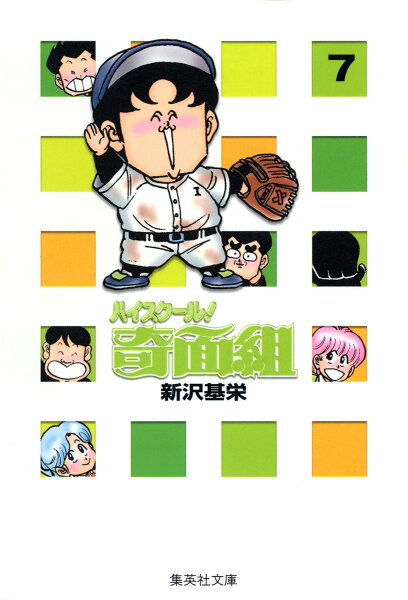
High School! Kimengumi
High School! Kimengumi follows five boys who turn their strange faces into a way of life, building one of the loudest, weirdest gag manga of 1980s Shonen Jump.
Comedy / Slice of Life
Macaroni Houren-sou
Macaroni Houren-sou follows three high school students living together in a boarding house — Toshio Shingami, the energetic straight man; Kinoshita, the eccentric wildcard; and Trapp, the cool foreigner — in a surreal comedy that uses the school-life setting as a launching pad for increasingly unhinged humor.
Slice of Life / Comedy
Azumanga Daioh
Yu's review of Azumanga Daioh — Kiyohiko Azuma's four-panel comedy that follows six high school girls across three years of ordinary school life, from Chiyo the child prodigy to Osaka the daydreamer.
Slice of Life / Comedy
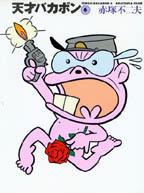
Tensai Bakabon
Tensai Bakabon is Fujio Akatsuka's landmark gag manga about the Bakabon family — a household where the father's complete detachment from logic is presented as wisdom, and the world's attempts to impose reason are the actual problem.
Slice of Life / Comedy
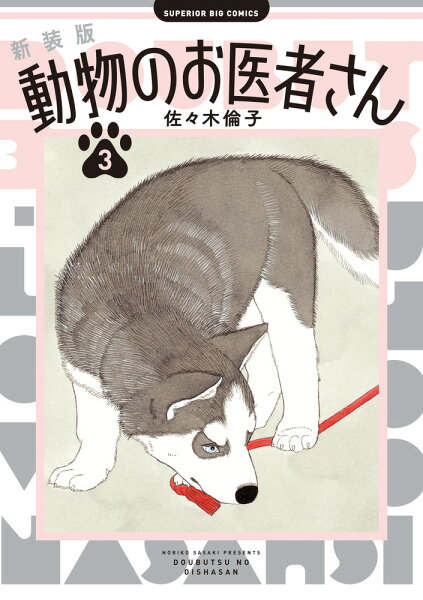
Doubutsu no Oisha-san
Doubutsu no Oisha-san follows Hamutaro, a quiet veterinary student in Hokkaido, his deadpan husky Chobi, and the warm chaos of vet-school life — a 12-volume Hana to Yume comedy so popular it set off a real Siberian Husky boom across Japan.

Slice of Life / Comedy
Nichijou: My Ordinary Life
Yu's review of Nichijou — a high school slice-of-life where ordinary situations escalate to catastrophic absurdity, a robot girl tries to hide what she is, and the Professor is an eight-year-old genius who made her.
Written by
Yu
Manga Enthusiast from Japan
I grew up in Japan and manga literally saved me during a tough time in elementary school. My English isn't perfect, but my love for manga is real — and I want to share it with you.