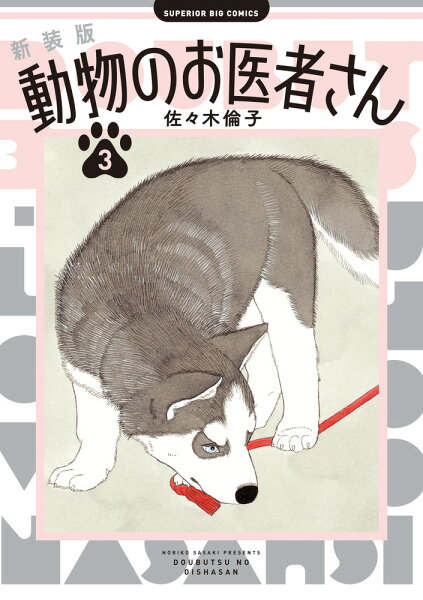
Doubutsu no Oisha-san Review: The Husky Manga That Started a National Dog Boom
by Noriko Sasaki
Read the first volume. If it doesn't hook you, put it down. It'll hook you.
Buy Doubutsu no Oisha-san on Amazon →*Affiliate link — I earn a small commission at no extra cost to you.
When I was a kid hiding from everyone at lunch, I used to wish I had a dog. Not a smart, loyal, story-dog. Just a big dumb friendly one who would sit next to me and not ask anything. The first time I read Doubutsu no Oisha-san and met Chobi — a Siberian Husky who mostly stands there looking blank — I thought, yes. That one. That is the dog I wanted. My English is not perfect, so let me just say it plain: this is one of the most comforting comedies I have ever read, and I want you to know about it.
Quick Take
- Noriko Sasaki's 12-volume Hana to Yume classic (1988–1993, 119 chapters) — vet-school life in Hokkaido told through gentle, dry comedy
- Chobi the husky and the deadpan cast made this such a hit that Siberian Huskies became a genuine fad in Japan, and vet-school applications reportedly rose
- Age rating: All Ages — the only thing to know is that real veterinary medicine means animals sometimes get sick
Who Is This Manga For?
- Animal lovers who want animals written as animals, not as cartoon sidekicks
- Slice-of-life readers who like quiet, observational humor over big plot
- Fans of dry, deadpan comedy — almost nobody in this cast raises their voice except Nikaido
- Anyone who ever wanted a big, useless, wonderful dog
Story Overview
This is an episodic comedy, so I want to be honest with you up front: there is no grand storyline, no villain, no looming deadline. It is one-chapter-at-a-time, but time genuinely moves forward — the students age, advance through their studies, and graduate.
It starts with the moment that decides everything. In high school, Hamutaro (real name Nishine Masaki) and his friend Nikaido find a husky puppy hiding behind a gravestone. The puppy's eccentric owner-to-be, Professor Urushihara, turns up looking for the dog, points at Hamutaro, and announces that this boy will become a veterinarian — then more or less dumps the puppy on him. That puppy is Chobi.
From there the manga follows Hamutaro into the veterinary department of "H University" (openly modeled on Hokkaido University) in Sapporo, alongside Nikaido and the strange senior student Hishinuma Seiko. The chapters are about exams, lab work, the eccentric Professor Urushihara, the household full of animals — Chobi the husky, Mike the cat, Hiyo-chan the rooster, a Mongolian gerbil — and the slow, funny grind of actually learning to treat animals. The comedy stays grounded because the veterinary detail is real; Sasaki clearly did her homework, and you come away having quietly learned things.
Characters
Hamutaro (Nishine Masaki): The protagonist, and an unusual one — calm, unbothered, almost flat. He doesn't dream big or make speeches. He lives with his grandmother and a houseful of animals, accepts the prophecy that he'll be a vet, and just... gets on with it. His arc is the quiet one: drifting into the profession by accident, then genuinely becoming competent at it.
Chobi: The Siberian Husky who reorganizes the whole household. Chobi is famous precisely for doing almost nothing. He has a blank, slightly menacing face and very little visible inner life, and the comedy comes from how seriously everyone around him reacts to a dog who is mostly just standing there. He is the heart of the series without ever performing.
Nikaido: Hamutaro's best friend and classmate, and the emotional opposite of him. Where Hamutaro is flat, Nikaido is loud, panicky, and quick to anger — the running joke is the vein popping on his forehead. He's the one who voices the reaction the reader is having.
Hishinuma Seiko: The older student and one of the strangest, most beloved characters in the cast — brilliant in her own field, bizarre in daily life, with an unsettling fascination for things most people find gross (bacteria, mold, insects). She's the kind of character who steals every chapter she's in.
What I Love About It
I love that the funniest character in this whole manga is a dog who basically refuses to be funny. Chobi doesn't do tricks. He doesn't mug for the camera. He stands there with that famous blank husky stare while the humans around him spiral, and that gap — the dog's total indifference versus everyone else's overreaction — is where the comedy lives. Sasaki understood something most animal manga misses: a real dog isn't a tiny person in fur. A real dog is a strange, large, unbothered creature, and that is funnier and warmer than any talking pet.
There's a small craft choice I keep thinking about, too. When the animals "speak," Sasaki writes their lines as plain text outside the speech bubbles, while humans get normal bubbles. It's a quiet trick, but it means the animals never become cartoons — they read as actual animals whose inner lives we're only guessing at. That restraint is the whole charm. I came to this manga as comfort reading, expecting cute, and instead found something genuinely well-made: a comedy that respects its animals enough to let them just be animals.
Memorable Scene ⚠️ Spoiler Warning
The scene that defines the entire series is the first one. Professor Urushihara, hunting for his runaway husky puppy, finds Hamutaro and Nikaido by the gravestone where the puppy is hiding, points at the unsuspecting high-schooler, and flatly declares: "You — in the future — will become a veterinarian!" Then he hands over the dog and walks off, leaving Hamutaro holding Chobi and his entire future.
Japanese fans cite this as one of the most iconic (and most absurd) moments in the manga, and I understand why. It's the whole tone of the series in one page — a life-changing prophecy delivered with zero ceremony, accepted with zero protest, and sealed by getting stuck with a dog. No drama, no destiny music. Just a weird professor, a blank puppy, and a boy who shrugs and goes along with it. Everything good about Doubutsu no Oisha-san grows out of that quiet, deadpan beginning.
Cultural Context
Doubutsu no Oisha-san wasn't just popular — it changed real-world behavior. After the manga took off, Siberian Huskies became a genuine fad in Japan, with people rushing to buy the breed they'd fallen for through Chobi. (Many of those owners, sadly, weren't ready for an actual high-energy husky, which is its own quiet lesson.) The series is also widely credited with boosting applications to veterinary programs, especially at Hokkaido University, the real-life model for "H University." By 2020 the manga had over 21 million copies in circulation. A live-action TV drama aired in 2003. Not many slice-of-life comedies leave that kind of footprint on a country.
Pros & Cons
Pros
- Chobi is one of the most genuinely dog-like, genuinely funny animals in manga
- The veterinary world is specific, warm, and quietly educational
- Deadpan ensemble comedy that holds up across all 12 volumes
- Complete at 12 volumes — it ends before it wears out its welcome
Cons
- No official English release
- Veterinary content means animals do get sick; some cases don't end happily
- Almost no overarching plot — it's pure episodic comfort reading
- The slow, plotless, observational pace is either exactly what you want or exactly what you don't — depends entirely on you
Is Doubutsu no Oisha-san Worth Reading?
For slice-of-life fans and animal lovers, absolutely yes. This is one of the warmest, driest, most genuinely crafted comedies in manga, and Chobi alone is worth the whole run. If you need plot, stakes, or momentum, this isn't that — it's a quieter, gentler thing. But as comfort manga that earns its warmth honestly, it's a classic for a reason.
Where to Buy
No English release yet. That just means you find it before everyone else does.
The Japanese print and digital editions are the only legitimate way to read it for now.
Search Doubutsu no Oisha-san on Amazon.co.jp →
This post contains affiliate links. If you purchase through these links, I may earn a small commission at no extra cost to you. As an Amazon Associate, I earn from qualifying purchases.
*Affiliate link — I earn a small commission at no extra cost to you.
More Manga You Might Like
Slice of Life / Comedy
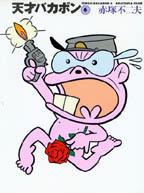
Tensai Bakabon
Tensai Bakabon is Fujio Akatsuka's landmark gag manga about the Bakabon family — a household where the father's complete detachment from logic is presented as wisdom, and the world's attempts to impose reason are the actual problem.
Slice of Life / Comedy
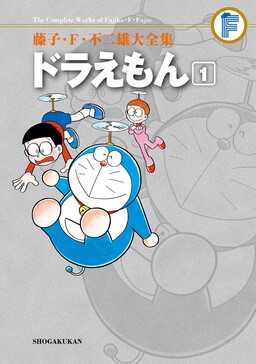
Doraemon
Yu's review of Doraemon — a robot cat from the 22nd century, sent back to help a hopeless boy named Nobita with gadgets from his four-dimensional pocket. Fujiko F. Fujio's most beloved work, and the manga every Japanese kid grows up inside.
Slice of Life / Comedy
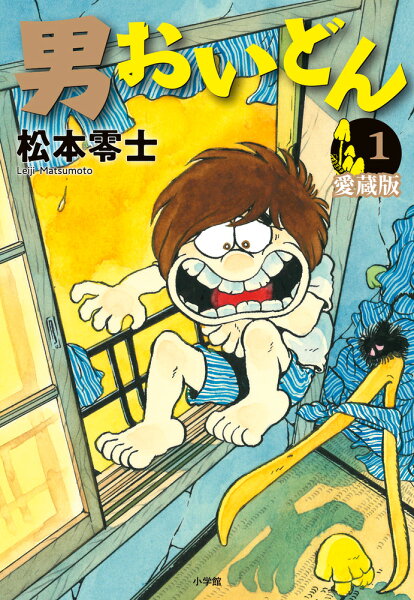
Otoko Oidon
Otoko Oidon follows Saburo Oyama, a young man from Kyushu trying to make it in Tokyo — living in a tiny boarding house, perpetually broke, hopelessly unlucky in love, and stubbornly determined to become someone despite all evidence suggesting otherwise.
Slice of Life / Comedy
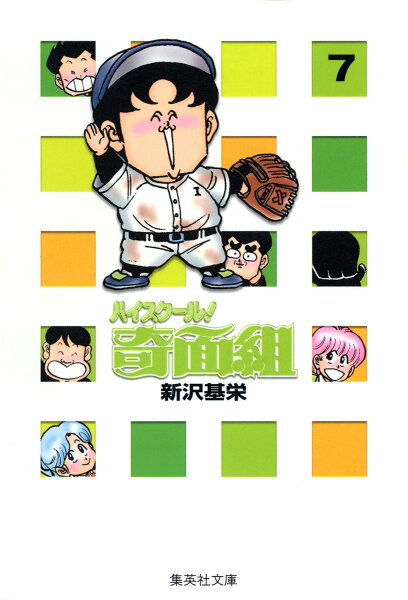
High School! Kimengumi
High School! Kimengumi follows five boys who turn their strange faces into a way of life, building one of the loudest, weirdest gag manga of 1980s Shonen Jump.
Slice of Life / Comedy
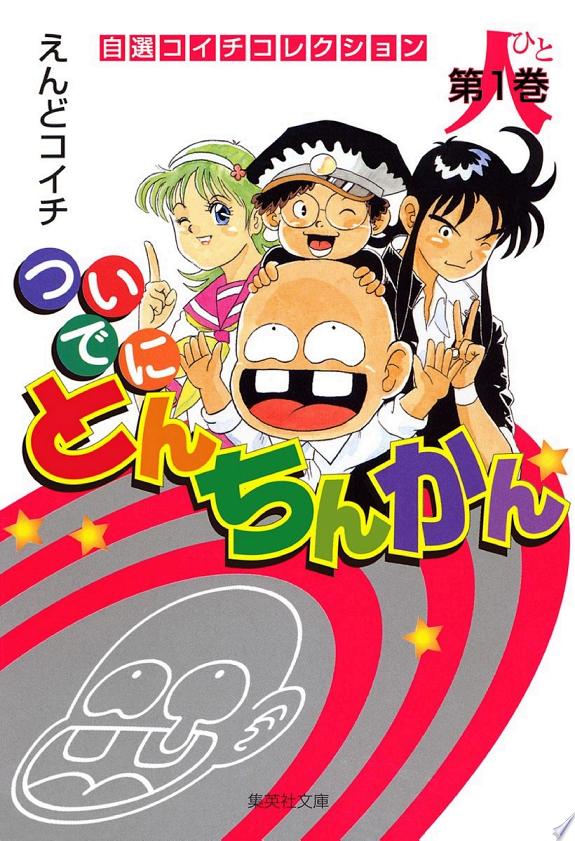
Tondemo-kun
Tondemo-kun follows a trio of delinquent students whose plans to cause trouble consistently backfire in ways that are so spectacularly wrong they accidentally create good outcomes — a comedy built entirely on the gap between intention and result.
Comedy / Slice of Life
Macaroni Houren-sou
Macaroni Houren-sou follows three high school students living together in a boarding house — Toshio Shingami, the energetic straight man; Kinoshita, the eccentric wildcard; and Trapp, the cool foreigner — in a surreal comedy that uses the school-life setting as a launching pad for increasingly unhinged humor.
Written by
Yu
Manga Enthusiast from Japan
I grew up in Japan and manga literally saved me during a tough time in elementary school. My English isn't perfect, but my love for manga is real — and I want to share it with you.