Blood+ Review: The Manga Where Saya Cuts Off the One Person Who Loves Her Most
by Asuka Katsura
Read the first volume. If it doesn't hook you, put it down. It'll hook you.
Buy Blood+ on Amazon →*Affiliate link — I earn a small commission at no extra cost to you.
I came to Blood+ backwards. I watched the Production I.G anime first — all fifty episodes of it, late at night, the year I was failing to make friends and using the TV as a wall against the quiet. I loved how slow it was, how the show let Saya stay confused and afraid for a long time before she became a weapon. So when I found out Asuka Katsura had drawn a manga version, I assumed it would be the same story in fewer pages. A souvenir.
It isn't. Katsura took the bones of the anime and rebroke them. The manga is only five volumes, and it moves fast and hits harder, and it makes one change that reframes the whole thing: here, Haji isn't just Saya's devoted chevalier. He's the man she used to love, from a life she can't remember. That single shift turns every quiet moment between them into something that aches. I read all five volumes in a weekend, and the page I keep coming back to is the one where Saya, out of her mind with bloodlust, cuts her own past to pieces — literally — and only weeps for it afterward, when she doesn't even understand why.
Quick Take
- Asuka Katsura's manga retelling of the Blood+ anime — same skeleton, different, darker flesh.
- Five complete volumes, faster and more violent than the show, with a romance subplot the anime never gave you.
- Age rating: M (Mature) — graphic Chiropteran horror, dismemberment, and body horror throughout.
Story Overview
Saya Otonashi is a high-school girl in Okinawa with a hole where the last year of her memory should be. She lives with her adoptive family — the kind, gruff diner-owner father George Miyagusuku, her hot-headed brother Kai, and her gentle younger brother Riku — and the only crack in her ordinary life is a cellist named Haji who keeps appearing at the edges of it.
Then the monsters come. They're called Chiropterans: shape-shifting things that feed on human blood, and the one weapon that can kill them is Saya's own blood, which crystallizes them from the inside. Haji opens her hand, cuts it on the blade of a sword he carries for her, and Saya wakes up — not just physically, but as the warrior she used to be. From there the story leaves Okinawa and becomes a hunt that crosses continents, tangled up with a paramilitary organization called Red Shield and a secret war that's been running for over a century.
The engine underneath all of it is a pair of sisters: Saya and Diva, two Chiropteran queens whose blood is lethal to each other. The turning point of the series is the slow, awful revelation of what Saya was before she lost her memory — that the gentle Okinawan schoolgirl and the thing that drinks monsters into crystal are the same person, and that the people she loves are standing very close to the blast radius. The manga drives toward a final confrontation between the two sisters in New York. What happens on the way there is where Katsura's version stops being a copy of the anime.
Characters
Saya Otonashi is the spine of the story, and Katsura draws her as two people fighting for the same body. There's the Okinawan girl who eats George's cooking like it's the best thing in the world (the reviewers I read kept singling out how happily she's drawn eating) — and there's the berserker who comes out when her blood is up, who doesn't recognize friend from enemy. Her arc is the terror of slowly learning she is the monster the story has been afraid of.
Haji is Saya's chevalier — a being bound to her by her own blood, who serves and protects her. The manga's key change is that here Haji was also her lover in the life she's forgotten. So his devotion isn't just duty; it's grief. He keeps loving a woman who doesn't remember loving him back, and his line — "I am Haji. Your one and only chevalier" — lands like a wound rather than a vow.
Kai Miyagusuku is the brother who refuses to be sidelined. Reckless, stubborn, in over his head from the first volume, he becomes the human anchor of the story. The manga leans into something the anime kept softer: Kai can give Saya a kind of ordinary, family warmth that Haji — frozen in the past, bound by blood — never can.
Riku is the youngest Miyagusuku, the soft heart of the family. In the anime his fate is one of the cruelest turns in the whole show. Diva, Saya's twin in blood, is the queen on the other side of the war — raised in captivity, shaped into something monstrous by the people who experimented on her, and the only creature whose blood can end Saya's.
What I Love About It
What I love is that the manga refuses to let Saya off the hook. In a lot of vampire stories the hero's monstrous side is a cool upgrade — claws come out, problem solved. Katsura draws Saya's awakening as something closer to a seizure. When she goes berserk she stops seeing people. And the manga puts the proof of that on the page in the most painful way it can: in the Vietnam sequence, Saya, lost to bloodlust and goaded into a rage, lashes out and cuts off Haji's arm. Her own chevalier. The man who, in this version, once loved her.
The detail that flattened me is what comes after. She doesn't apologize, because the berserk Saya isn't capable of it — but she cries. Tears she can't explain, for a man she can't remember, for a wound she doesn't know she caused. Katsura draws female faces with this delicate, exact attention — multiple Japanese reviewers praised exactly that, the precision of her expressions — and she spends it here, on a girl weeping without understanding her own grief. That single beat tells you everything the manga is about: a person carrying a love and a violence she has no memory of, both of them leaking out of her at once.
Memorable Scene ⚠️ Spoiler Warning
The ending is where Katsura's manga quietly breaks from the anime, and where it stuck with me.
If you only know the show, you know how brutal its endgame is — how many of the people around Saya don't make it, how Diva's bloodline carries forward into the next generation. The manga pulls back from that cliff. Here, Riku, George, and Solomon survive. Diva never mates with Riku, so the twins who define the anime's epilogue are simply never born. Katsura chose to let more of the family walk out the other side.
But she keeps the image that matters most. The story still comes home to Okinawa. Saya, her war finally over, lies down to sleep — the long Chiropteran sleep that will take years from her — and Kai is left behind, living, waiting. And in the final note, Kai finds traces of Haji at the Miyagusuku family grave: proof that the man who loved a woman who couldn't remember him is still out there, still keeping his vow, still circling the place where she lies sleeping. After a story this loud, ending on a quiet headstone wrecked me.
Manga vs. Anime — What's Different
This is the question I'd have wanted answered before buying, so here it is plainly. The manga and the anime tell the same story in broad shape and even share a lot of the same key lines at the big moments — but the progression is very different, and several major beats are "comic original."
The biggest changes: Haji is written as Saya's former lover, which colors all of their scenes. The violence is more graphic than broadcast TV would allow. And the ending spares characters the anime kills — Riku, George, and Solomon live, and the anime's famous epilogue twins don't exist. If you loved the anime, the manga isn't a recap; it's an alternate cut.
Pros & Cons
Pros:
- A complete five-volume story with a real, intentional ending — no waiting, no dangling threads.
- Katsura's art is genuinely beautiful, especially faces and quiet emotional beats.
- The Haji-as-former-lover angle gives the manga an emotional core the anime doesn't have.
Cons:
- It compresses fifty episodes into five volumes, so the pacing is brisk — supporting characters get less room than the show gave them.
- The violence is heavier and more explicit than the anime; squeamish readers should know that going in.
- It assumes you don't mind a retelling that diverges. If you want the manga to match the anime exactly, this will frustrate you — that's either a flaw or a feature depending on you.
Is Blood+ Worth Reading?
Yes — especially if you've seen the anime and want a darker, more romantic, more violent version of the same story that actually ends on its own terms. As a standalone it's a tight, gorgeously drawn vampire-horror series; as a companion to the show it's an alternate cut that changes who lives and who Saya was. Five volumes, no filler, real payoff.
Content Warnings & Age Rating
Age Rating: M (Mature) Content Warnings: Graphic vampire/Chiropteran horror, dismemberment, body horror, blood, dark themes
This is the mature, more explicit version of Blood+. Not for younger readers.
Yu's Rating
| Category | Score |
|---|---|
| Story Depth | ★★★★☆ |
| Art Style | ★★★★☆ |
| Character Development | ★★★★☆ |
| Accessibility for Non-Japanese Readers | ★★★★☆ |
| Reread Value | ★★★☆☆ |
Overall: 4/5 — A sharp, beautifully drawn alternate cut of Blood+ that earns its own ending.
Similar Manga
| Title | Its Approach | How Blood+ Differs |
|---|---|---|
| Hellsing by Kouta Hirano | Loud, stylish vampire-vs-vampire warfare with a smirk | Blood+ is quieter and sadder, built on amnesia and lost love rather than swagger |
| Vampire Knight by Matsuri Hino | Vampire romance through a shoujo lens | Blood+ is horror first — the romance is buried under bloodlust and a war Saya can't remember |
| Dance in the Vampire Bund by Nozomu Tamaki | Vampire politics and intrigue with a ruling bloodline | Blood+ keeps its scope personal — two sisters whose blood kills each other, not a kingdom |
Where to Buy
Read the first volume. If it doesn't hook you, put it down. It'll hook you.
This post contains affiliate links. If you purchase through these links, I may earn a small commission at no extra cost to you. As an Amazon Associate, I earn from qualifying purchases.
*Affiliate link — I earn a small commission at no extra cost to you.
Reading Guides
More Manga You Might Like
Horror / Action
Hellsing
A comprehensive review of Hellsing — plot, characters, art style, and whether it's worth reading.
Horror / Action
Higanjima
Akira Miyamoto travels to a remote island called Higanjima to find his missing brother. He discovers the island is ruled by an ancient vampire named Miyabi, and the humans on it are livestock. The English release covers the brutal first 8 volumes of a 33-volume horror epic.
Horror / Sci-Fi Action
Gantz
Yu's review of Gantz — two teenagers die in a subway accident and wake up in an apartment with other recently deceased people, commanded by a black sphere to hunt and kill aliens for points.
Horror / Dark Action
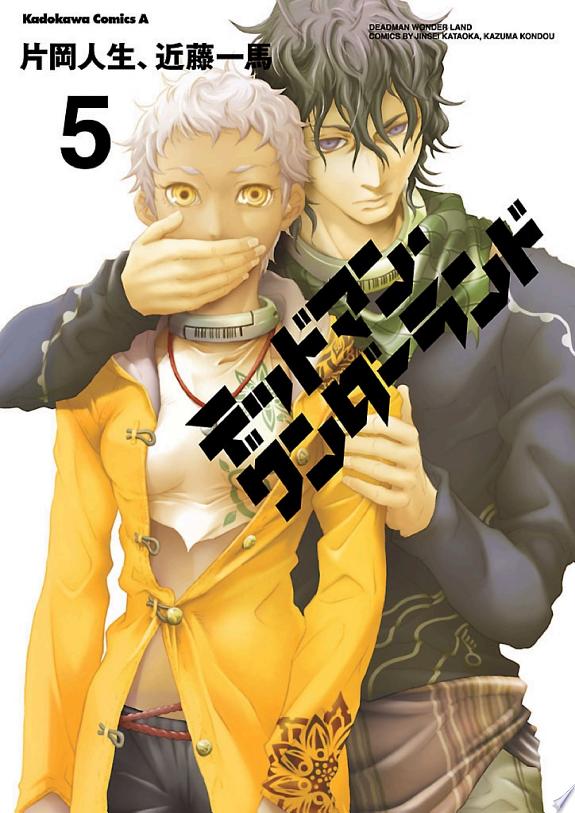
Deadman Wonderland
Yu's review of Deadman Wonderland — a middle schooler is framed for massacring his class, sent to a privatized prison that doubles as a theme park, and dragged into a hidden death game. But the real story is a girl named Shiro and a lullaby his mother wrote.
Horror / Action
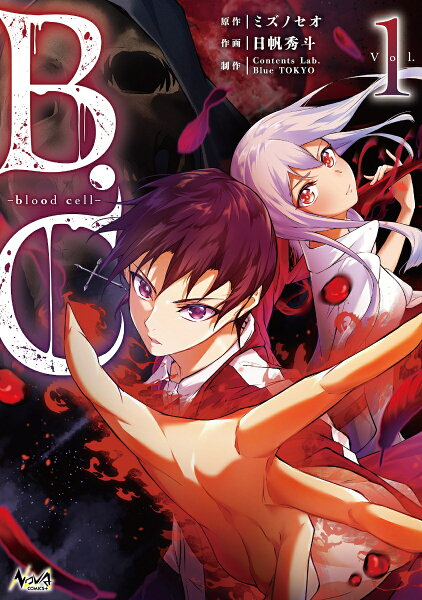
Blood-C
A review of Blood-C, the horror manga drawn by Ranmaru Kotone from a CLAMP and Production I.G story that uses a sweet shrine-maiden heroine to set up one of the cruelest reveals in the genre.
Horror / Mystery
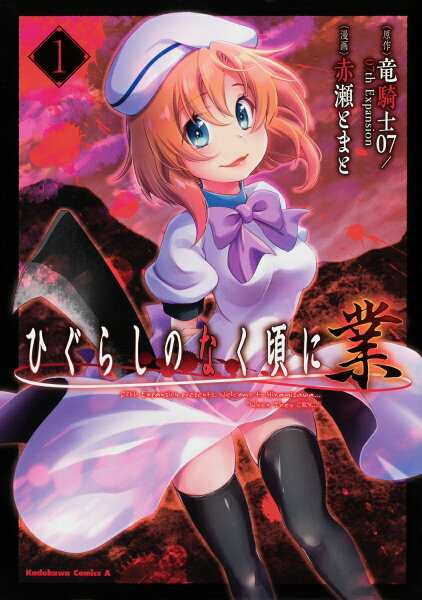
Higurashi When They Cry
Yu's review of Higurashi When They Cry — Keiichi Maebara moves to the rural village of Hinamizawa and discovers that every year, during the village festival, someone dies and someone disappears; the story resets across multiple arcs, each showing different versions of the same events as Keiichi and his friends try to understand and survive what the village is doing to them.
Written by
Yu
Manga Enthusiast from Japan
I grew up in Japan and manga literally saved me during a tough time in elementary school. My English isn't perfect, but my love for manga is real — and I want to share it with you.
Disclosure: This post contains affiliate links. As an Amazon Associate, I earn from qualifying purchases at no extra cost to you.