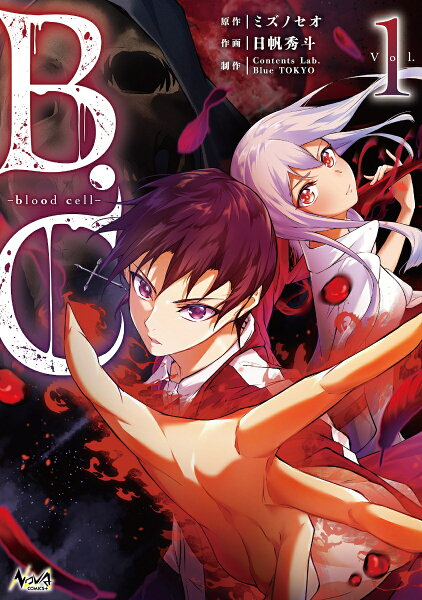
Blood-C Review: The Cheerful Shrine Girl Was the Lie All Along
by CLAMP & Production I.G (story), Ranmaru Kotone (art)
Read the first volume. If it doesn't hook you, put it down. It'll hook you.
Buy Blood-C on Amazon →*Affiliate link — I earn a small commission at no extra cost to you.
I have a soft spot for stories that pretend to be one thing and then quietly sharpen a knife behind their back. When I was a kid, the cheerful-girl-with-a-secret-job premise was everywhere — the smiling student who is secretly a hero at night. It always felt safe. You knew the heroine would be fine.
Blood-C takes that exact promise and uses it against you. I picked up the manga expecting a CLAMP monster-of-the-week action piece. What I got was a story that spends three volumes making you trust a sweet, clumsy shrine girl named Saya, and then spends its final stretch showing you that every kind moment you believed was staged for an audience. I have read a lot of horror manga. Few of them made me feel as used — in the best, most intentional way — as this one did.
Quick Take
- A CLAMP and Production I.G story drawn by Ranmaru Kotone that disguises bleak horror as a gentle slice-of-life-with-monsters tale.
- The cruelty is not random — it is the punchline. The whole town is a stage, and the violence is what happens when the play ends.
- Age rating: M (Mature). Extreme gore, on-page dismemberment, and a betrayal that turns the entire cast into casualties.
Story Overview
Saya Kisaragi is a slightly clumsy, very cheerful girl living in a quiet rural town. She helps at her father Tadayoshi's shrine, goes to school, loves her friends, and hums a little song to herself on the path each morning. At night she becomes something else: a sword-wielding warrior who hunts Elder Bairns, monstrous creatures that devour humans, bound by an oath never to harm people.
For the first half of the series, the cracks are subtle. Saya keeps almost-remembering things that slip away. A line of dialogue repeats. Townspeople react a half-second too slow, or too perfectly. The Elder Bairn attacks escalate, and her classmates start dying — but even the grief feels oddly managed.
Then the floor drops out. The town is not a town. It is a constructed set, a controlled experiment, and almost everyone in Saya's life is a paid actor playing a role. The man behind it is Fumito Nanahara, the gentle café owner Saya trusted most. The experiment's question is cold: Saya is herself an Elder Bairn, and Fumito wants to know whether her vow not to hurt humans can be broken — whether the kind girl was ever real, or just a leash. The back half of the story, carried into The Last Dark, is Saya recovering her true memory and her true self, and going after the man who built her cage.
Characters
Saya Kisaragi is the engine of the whole trick. The "real" Saya — sweet, devoted, a little useless in a fight off the battlefield — is a personality installed on top of a far older, far more dangerous creature. Her arc is the slow, horrible process of waking up: realizing the father isn't her father, the friends were never friends, and the girl she thought she was is a story someone wrote for her.
Fumito Nanahara is the best kind of antagonist — the one you like. He runs the café, he is soft-spoken, he is the safe adult. He is also the architect of every death in the series, treating the cast as actors who can be "removed from the stage" the moment they stop being useful. His calm is the scariest thing in the book.
Tadayoshi Kisaragi, Saya's supposed father, is revealed to be a human–Elder Bairn hybrid. When his role collapses he goes berserk, and Saya is forced to put him down — the first family bond the story reveals as fake, then makes her destroy with her own blade.
The Motoe twins, Nene and Nono, are Saya's bubbly classmates, and the story uses them as its cruelest demonstration. Yūka Amino is the one classmate left standing — not by luck, but because she was in on it, an accomplice trading the others' lives for power. Alongside them, mercenary Tokizane, teacher-researcher Kanako Tsutsutori, and the quiet Itsuki Tomofusa each turn out to be a piece on Fumito's board rather than a person in Saya's life.
What I Love About It
What I love is how patient the cruelty is. The CLAMP-and-Production-I.G script doesn't open with shock; it opens with comfort. It spends real pages on Saya's morning walk, on classroom banter, on the warmth of Fumito's café. Ranmaru Kotone draws all of it sincerely — soft faces, gentle light — so you lower your guard exactly the way the story needs you to. The manga even lays its foreshadowing more openly than the anime does, so on a reread the clues are sitting right there in plain sight, which makes the trust you gave the first time feel like your own fault.
Then the contrast does the work. When the monster designs arrive, they are genuinely creepier than anything in the older Blood material, and the action is staged with weight. But the gut-punch isn't the gore — it is the realization that the kindness was the weapon. Every comforting beat was bait. I have rarely seen a horror manga where the setup and the payoff are this precisely the same trick viewed from two sides. That's the part I keep thinking about.
Memorable Scene ⚠️ Spoiler Warning
The moment that broke me is the Motoe twins. When Fumito decides the experiment no longer needs them, he says — almost bored — that actors who won't perform should be taken off the stage. And then the story shows you what that means. One twin is torn in half by her legs. The other, in pure animal panic, sells her own sister out to try to live, and it buys her nothing. Kanako watches, horrified, as the remains are eaten, and Fumito simply notes that her protective talisman was a fake from the very start — that he always knew she would turn on him.
It is grotesque, but what makes it stay with me is the framing. Fumito's theatre metaphor reframes the entire series in one line: these weren't friends dying, they were performers being struck from a set. The cheerful school comedy I'd been reading was a rehearsal, and this is the curtain falling. The town massacre that follows — the Elder Bairn splitting and rampaging, escapees gunned down — is horrifying, but it's the twins' scene that tells you exactly how little any of these people mattered to the man Saya trusted.
Pros & Cons
Pros:
- A complete, four-volume story with a real shape — setup, reveal, and payoff that earns its darkness.
- The gentle-then-brutal contrast is executed with unusual discipline; the foreshadowing rewards a reread.
- Kotone's monster and action art is genuinely menacing without losing CLAMP's clean line.
Cons:
- The gore is extreme and explicit; the dismemberment is on the page, not implied.
- The cruelty is the point, which means there's little comfort or catharsis to soften it.
- If you want your sweet shrine-maiden story to stay sweet, this manga is built specifically to betray that wish — that's either the appeal or the dealbreaker, depending entirely on you.
Is Blood-C Worth Reading?
If you like horror that weaponizes tone — that earns its shocks by first making you comfortable — Blood-C is a tight, four-volume gut-punch worth your time. If you bounce off graphic gore or you want a heroine whose warmth stays intact, this one is built to hurt you on purpose, and you should skip it.
Similar Manga
| Title | Its Approach | How Blood-C Differs |
|---|---|---|
| Puella Magi Madoka Magica | Deconstructs the magical-girl genre by revealing a cruel system behind the cuteness | Blood-C targets the gentle-heroine archetype itself, making her sweetness the literal experiment |
| Another | Slow-burn small-town horror where the calm surface hides a death machine | Blood-C's "town" is a deliberate stage, and the reveal is betrayal rather than curse |
| Tokyo Ghoul | Contrasts an ordinary student life against body horror and predation | Blood-C inverts it — the ordinary life was fake the whole time, not a refuge from the horror |
Official English Translation Status
Blood-C is fully available in English. Dark Horse Comics released all four volumes between 2013 and 2015, drawn by Ranmaru Kotone from the CLAMP / Production I.G story. It is a completed series — no waiting on new chapters.
Where to Buy
Read the first volume. If it doesn't hook you, put it down. It'll hook you.
This post contains affiliate links. If you purchase through these links, I may earn a small commission at no extra cost to you. As an Amazon Associate, I earn from qualifying purchases.
*Affiliate link — I earn a small commission at no extra cost to you.
Reading Guides
More Manga You Might Like
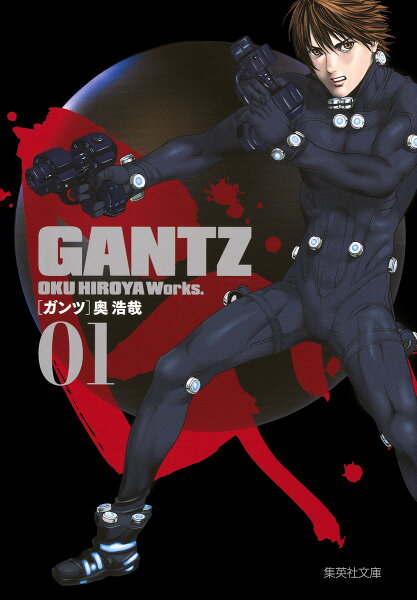
Horror / Sci-Fi Action
Gantz
Yu's review of Gantz — two teenagers die in a subway accident and wake up in an apartment with other recently deceased people, commanded by a black sphere to hunt and kill aliens for points.
Horror / Action
Devilman Lady
Devilman's apocalypse retold through Jun Fudo, a P.E. teacher who turns demon — Go Nagai going even darker than the original.
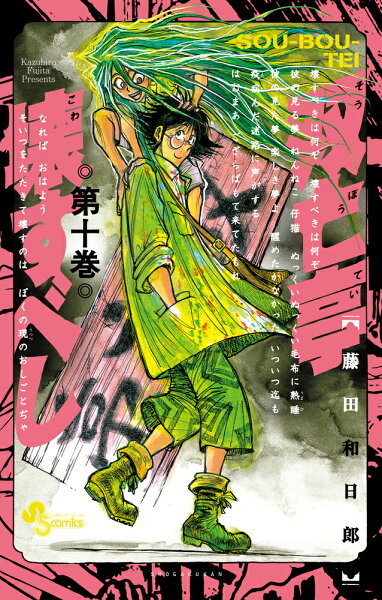
Horror / Action
Souboutei Kowasu Beshi
Ushio and Tora's creator returns with his bleakest, most ambitious horror — a haunted mansion that swallows everyone who enters.
Horror / Mystery
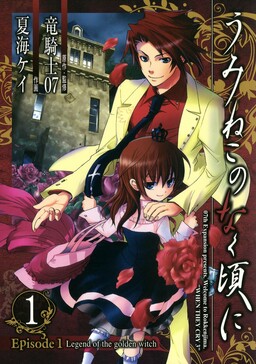
Umineko: When They Cry
On the private island of Rokkenjima in 1986, the Ushiromiya family gathers for an annual meeting. A typhoon traps them. The murders begin. Then they repeat. A golden witch named Beatrice claims responsibility — and the manga spends 53 volumes across 8 Episodes arguing about whether magic exists. Adapted from Ryukishi07's visual novel.
Horror / Thriller
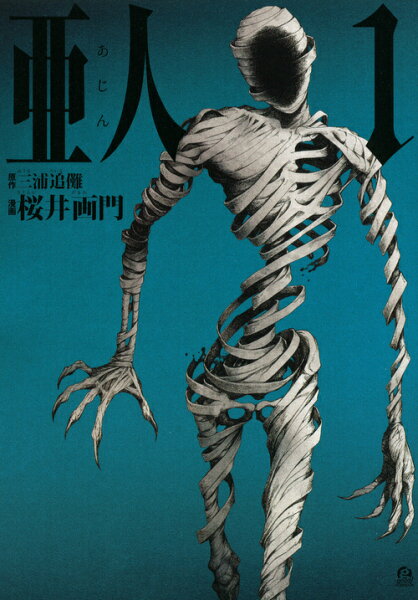
Ajin: Demi-Human
Yu's review of Ajin: Demi-Human — a horror thriller about immortal beings who cannot die, the government that experiments on them endlessly because they can't, and Satou, one of the most terrifyingly competent villains in modern manga.
Horror / Action
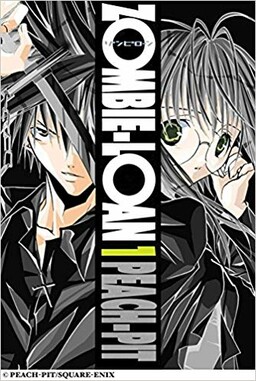
Zombie-Loan
Yu's review of Zombie-Loan — Michiru Kita has the shinigami eyes ability to see death rings around people's necks; two boys at her school, Chika Akatsuki and Shito Tachibana, have black rings indicating they should already be dead; they are alive because they made a contract with a Zombie-Loan office, exchanging their continued existence for debt repayment through zombie hunting.
Written by
Yu
Manga Enthusiast from Japan
I grew up in Japan and manga literally saved me during a tough time in elementary school. My English isn't perfect, but my love for manga is real — and I want to share it with you.
Disclosure: This post contains affiliate links. As an Amazon Associate, I earn from qualifying purchases at no extra cost to you.