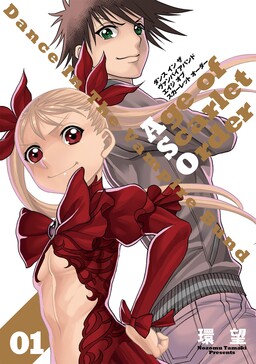
Dance in the Vampire Bund Review: The Vampire Queen Who Bought a Country and Told the World on Live TV
by Nozomu Tamaki
Read the first volume. If it doesn't hook you, put it down. It'll hook you.
Buy Dance in the Vampire Bund on Amazon →*Affiliate link — I earn a small commission at no extra cost to you.
I came to Dance in the Vampire Bund the way I came to a lot of dark manga in my twenties: I'd burned through Hellsing, I wanted more vampires who weren't sparkling or brooding in a school courtyard, and someone online told me this one had "actual politics." That phrase is what hooked me. A vampire who doesn't hide in a castle but buys land in Tokyo Bay and announces her species to the United Nations — that's a premise I had to see drawn.
I'll be honest with you up front, because this site is built on honesty and I'd rather you hear it from me than feel ambushed at volume two. The queen at the center of this story is centuries old but drawn as a small girl, and the early volumes lean hard into fanservice that put her in barely anything. I skimmed past those panels feeling uncomfortable, and I think a lot of readers will. I'm reviewing this manga for the political story underneath, which I genuinely admire — but I'm not going to pretend the wrapping isn't there.
Quick Take
- A genuinely political vampire manga: Mina Tepes reveals vampires to humanity and establishes a sovereign vampire territory, and the story treats that as statecraft — factional infighting, human government fear, terrorist opposition — not romance window-dressing.
- Nozomu Tamaki builds a coherent world: the vampire clan hierarchy, the werewolf covenant guarding the royal line, the economics of buying sovereignty. It holds together across 14 volumes.
- Rated M (Mature) — and the rating is not just about violence. The child-bodied queen is sexualized in the early volumes, which is the single biggest reason this won't be for everyone.
Who Is This Manga For?
- Readers who want vampire fiction that reads like political thriller more than paranormal romance
- Fans of supernatural world-building with internal rules and consequences
- People who liked Hellsing's tone but want a longer, more plot-driven arc
- Adult readers who can stomach (or skim) the loli fanservice for the story underneath
Content Warnings & Age Rating
Age Rating: M (Mature)
Content Warnings: Sexualized depiction of a character with a child's body — Mina spends much of the first several volumes in minimal clothing, and the romance framing around her is the most divisive thing about the series. Beyond that: vampire violence and gore, nudity, terrorist and political violence, supernatural body horror.
I'm putting the first warning in bold on purpose. The M rating here is earned by more than blood. Go in knowing it.
Story Overview
The world doesn't know vampires are real — until Mina Tepes makes it know. Wilhelmina Vlad Tepes, born in the 16th century and ruler of all vampires, uses her family's staggering wealth to clear a nation's debt and, in exchange, purchase a man-made island in Tokyo Bay. She names it the Bund: a sovereign district where vampires can finally live in the open. Then she goes public, declaring the existence of her kind to humanity.
That declaration is the engine of the whole series. Revelation doesn't bring peace — it brings panic, opportunists, and enemies on every side. Humans fear what they can no longer deny. Vampire factions who profited from secrecy see Mina as a threat to be removed. A terrorist organization, Telomere, attacks the Bund repeatedly. And the three great vampire clans below the royal family — Li, Rozenmann, and Ivanovic — circle, having already devoured weaker noble houses and killed the previous queen, Lucretia. They pressure Mina toward marriage to "preserve" the bloodline, a political trap dressed as tradition.
Running alongside the statecraft is the relationship that gives the book its heart: Mina and Akira Kaburagi, the werewolf sworn to protect her. The early arc is built on his amnesia — he begins the story not even knowing he's a werewolf — and the slow, painful recovery of who he is and what he promised her. The mid-series turns on an impostor: a false Mina is installed while the real one is captive, and unmasking the decoy becomes a major arc. By the final volumes Mina has been freed, Akira has awakened to a new power inside him, and the battle to retake the Bund collides with mass human panic over a vampire pandemic gripping Tokyo.
Characters
Mina Tepes — The achievement of the series. She is over four hundred years old, drawn as a small girl, and that gap is the entire point of her character: everyone underestimates the child, and she lets them, then ruins them. Her decision to reveal vampires isn't idealism — it's the calculation of a ruler who concluded that managed exposure beats inevitable discovery. She treats sentiment as a resource. Tamaki gives her a hidden adult form too — a grown, winged true shape capable of bearing children — which the plot uses as a literal stake in the clan-marriage politics. She is, underneath the uncomfortable presentation, one of the more credible political minds in supernatural manga.
Akira Kaburagi Regendorf — Son of Wolfgang Regendorf, head of the Earth Clan werewolves who guard the royal Tepes line — the "Beowolf" guard. At age ten he made a covenant with Mina to be her protector. When the story opens he has lost his memories through psychological trauma and doesn't know he's a werewolf at all. His arc is recovery: of memory, of his oath, and of the love beneath it. He's the reader's way into Mina's cold world — the one person whose attachment to her is uncalculated.
Yuki Saegusa — Akira's human classmate, who starts out afraid of vampires and becomes genuinely close to Mina. After a serious head injury she ends up wired with communication tech, and that turns her into the person who helps expose the impostor Mina — a human girl deciding the fate of the vampire throne.
The Three Clans (Li, Rozenmann, Ivanovic) — The great vampire houses beneath the crown. They consumed rival nobles, were complicit in Queen Lucretia's death, and spend the series probing whether Mina is losing her grip — the aristocratic threat that makes the Bund's sovereignty fragile.
What I Love About It
It's Mina's politics, and specifically the opening move. The premise isn't "vampires exist and hide" — it's that the most powerful vampire alive looked at eternity in the shadows and decided secrecy was the worse risk. So she clears a country's national debt, buys an island, and goes public on her own terms. That's not a monster-of-the-week setup. That's a head of state making a bet with the survival of her species as the wager.
What I love is that Tamaki actually follows through on the consequences. Most supernatural manga would use "vampires revealed!" as a one-chapter shock and move on to fights. Here it's the spine of fourteen volumes: the human governments don't just panic and vanish, the rival clans don't just attack, they maneuver — the marriage pressure, the impostor, Telomere's bombings, the eventual pandemic panic. A child-bodied queen who wins because she understands leverage better than anyone in the room is rarer than it should be in this genre, and it's the reason I kept reading past my discomfort with the art.
Memorable Scene ⚠️ Spoiler Warning
The reveal itself. Mina doesn't whisper her secret to one frightened human — she makes the existence of vampires a public fact the world has to accommodate, backed by the legal reality of the Bund she already paid for. By the time anyone in power reacts, the territory is bought, the announcement is made, and she's negotiating from a position she engineered in advance.
What sticks with me is the framing: it's never a request. She isn't asking for tolerance or a place to hide. She's presenting humanity with a done deal and daring them to undo it. That single move tells you everything about who she is — the small girl on screen has already won the round before the adults understand a game is being played. It reframes the whole series from "will the vampires survive among us" to "how do you govern a truth you can never put back in the box." That's the scene I think about when people ask why I'd defend a manga with this much baggage.
Pros & Cons
Pros
- Political world-building with real follow-through across 14 volumes
- Mina is a genuinely sharp, credible ruler character
- Complete, resolved run — no abandoned plot threads
- Vampire/werewolf hierarchy and the Bund's logic stay internally consistent
Cons
- The sexualized child-bodied protagonist is a serious, recurring problem in the early volumes
- The romance framing around Mina and Akira will repel many readers regardless of the in-story mythology
- The art prioritizes fanservice over consistency — faces drift between panels
- Some readers will find the politics underexplained and the pacing uneven
The fanservice is either a dealbreaker or something you skim past for the story — and which one you are is the whole question. This one genuinely won't work for everyone, and that's fair.
Is Dance in the Vampire Bund Worth Reading?
If you want vampire fiction that's really about statecraft — a queen who reveals her species to the world and then has to govern the fallout — there's a smart, complete 14-volume epic here. But it comes wrapped in loli fanservice that's a legitimate dealbreaker for a lot of people. Worth reading if the political core appeals and you can stomach (or skip) the rest; skip it entirely if the presentation is a hard no.
Similar Manga
| Title | Its Approach | How Dance in the Vampire Bund Differs |
|---|---|---|
| Hellsing | Vampire action and horror spectacle, lean on politics | Trades spectacle for statecraft and a multi-volume sovereignty arc |
| Vampire Knight | Vampire boarding-school romance, gothic and dreamy | Treats vampires as a geopolitical reality, not a romance backdrop |
| Tokyo Ghoul | Hidden monster society colliding with human authority | Centers a ruler choosing revelation over secrecy as policy |
Official English Translation Status
Seven Seas Entertainment published all 14 volumes of the original series in English; it's complete and in print. Seven Seas has also licensed the follow-up series (Scarlet Order / Age of Scarlet Order) and side stories.
Where to Buy
Read the first volume. If it doesn't hook you, put it down. It'll hook you.
This post contains affiliate links. If you purchase through these links, I may earn a small commission at no extra cost to you. As an Amazon Associate, I earn from qualifying purchases.
*Affiliate link — I earn a small commission at no extra cost to you.
Reading Guides
More Manga You Might Like
Horror / Comedy
Voynich Hotel
Yu's review of Voynich Hotel — Taizou Kuzuki, a man with a shady past, arrives at a remote island hotel staffed by witch maids and surrounded by assassins, ghosts, and other supernatural complications; Douman Seiman's dark comedy-horror is compact, strange, and genuinely funny in ways that shouldn't work.
Horror / Supernatural
Shiki
Yu's review of Shiki — people begin dying mysteriously in a rural Japanese village during summer, and the doctors, priests, and survivors must confront what is happening and what they are willing to do in response.
Horror / Sci-Fi
Vampire Hunter D
Yu's review of Vampire Hunter D — set 12,000 years in the future in a world where vampires ruled humanity and have since fallen; D is a half-human half-vampire dhampir who hunts his own father's kind; stoic, nearly invincible, and accompanied by a parasitic demon in his hand, he is one of horror manga's most iconic loners.
Horror / Fantasy
Rozen Maiden
Yu's review of Rozen Maiden — Jun Sakurada is a socially withdrawn boy who refused to attend school; a doll named Shinku arrives and he winds her key, forming a contract that makes him her medium; she is one of the Rozen Maidens, dolls crafted by the legendary dollmaker Rozen who must fight each other until one remains to become Alice.

Horror / Historical
Me & The Devil Blues
Yu's review of Me & The Devil Blues — Robert Johnson, the legendary blues musician, makes a deal at the crossroads and suddenly can play the blues like nobody alive; the manga follows his rise alongside RJ, a friend trying to understand what Johnson has become; a horror manga set in the 1930s American South that takes its historical setting seriously.
Horror
Yu's review of Mail — private detective Reiji Akiba carries a gun loaded with special bullets and a job: send the dead to where they belong; each story is a ghost encounter, a backstory, and a resolution that may or may not be comforting; procedural ghost horror with a quiet protagonist.
Written by
Yu
Manga Enthusiast from Japan
I grew up in Japan and manga literally saved me during a tough time in elementary school. My English isn't perfect, but my love for manga is real — and I want to share it with you.
Disclosure: This post contains affiliate links. As an Amazon Associate, I earn from qualifying purchases at no extra cost to you.