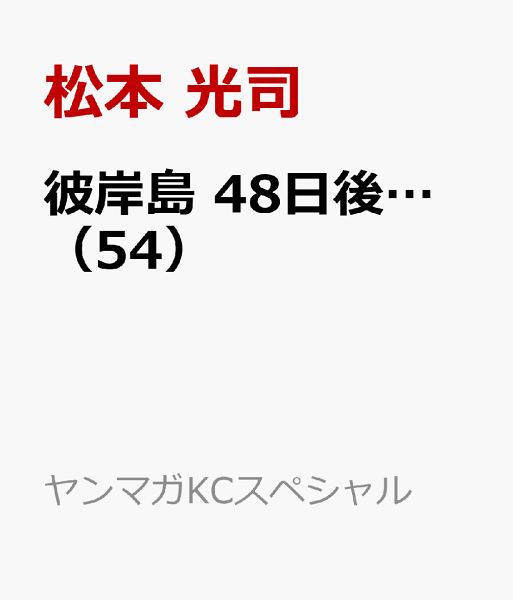
Higanjima Review — A Vampire Island Where the Survival Math Is Always Against You
by Koji Matsumoto
Read the first volume. If it doesn't hook you, put it down. It'll hook you.
Buy Higanjima on Amazon →*Affiliate link — I earn a small commission at no extra cost to you.
The first time I read Higanjima, I was on a night bus from Tokyo to Osaka. The bus was dark. The reading light over my seat was broken. I was reading on my phone, in the dark, with strangers asleep around me, and there was a sequence where one of Akira's friends gets dragged into the trees by something that turns out to be much, much worse than what they thought was out there.
I didn't sleep on that bus. I got to Osaka and immediately read four more volumes.
Quick Take
- An ordinary group of college kids land on a vampire island that has been written to kill them — the survival math is real and the body count is real
- One of the longer-running survival horror manga in Japanese seinen, with a meme-tier reputation that hides genuine craftsmanship
- Age rating: M (Mature) — extreme graphic violence, body horror, on-page deaths of named characters
What Is Higanjima About?
Akira Miyamoto is a college freshman in Tokyo. His older brother Atsushi vanished two years ago. Akira has spent two years assuming Atsushi is dead.
A young woman named Rei Aoyama finds Akira. She tells him Atsushi is alive — on an island called Higanjima, in the Pacific, accessible by boat from a small mainland port. She begs Akira to come with her to find his brother. Akira recruits four friends from his college: Ken, Nishiyama, Yuki, and Pon. They take a boat to Higanjima.
What they find:
- The island is real
- Atsushi is alive
- The island is controlled by Miyabi — an ancient vampire of overwhelming physical power
- Miyabi has converted most of the original islanders into lesser vampires (called kyuuketsuki, "blood-drinkers")
- The remaining humans are kept alive as livestock and labor
- The boats don't go back
The manga then runs for 33 volumes following the survival, escape attempts, eventual resistance, and very personal war between Akira and Miyabi. The English release by DrMaster covers volumes 1–8 — essentially the initial arrival on the island and the first major escape attempt. The rest of the series exists in Japanese only.
What Does "Higanjima" Mean?
The title 彼岸島 translates as "Island of the Far Shore" or "Island of the Beyond."
- 彼岸 (higan) is a Buddhist term referring to the "other shore" — the world of the dead, enlightenment, or the realm beyond suffering. It's the same word used in Higan-e, the Japanese equinox festival when the dead are believed to be close to the living
- 島 (jima/shima) = island
The title is doing thematic work. Crossing to Higanjima is crossing to the world of the dead. The boat ride is the metaphorical river. The vampires are what the dead become when the boundary fails. Matsumoto names the island this on purpose; the manga is, underneath the gore, a story about people who have crossed over and are trying to come back.
Who Is This Manga For?
- Survival horror readers who want bodies-on-the-page, not just atmospheric dread
- Vampire fiction fans who prefer the older "vampire as overwhelming physical predator" tradition over romantic vampires
- Battle Royale / Tokyo Ghoul / Gantz readers for whom graphic horror is part of the experience
- Readers comfortable with character death — the manga kills people you care about, repeatedly
- Japanese readers: the full 33-volume series is Japanese-only; English readers get the first arc
Content Warnings & Age Rating
Age Rating: M (Mature) — 18+ Content Warnings: Extreme graphic violence (limb removal, body horror, on-page killings); vampires depicted as physical predators (not romantic); deaths of named characters, frequently and graphically; survival horror including starvation, injury, and despair sequences; some sexual content in later (Japanese-only) volumes
The "M (Mature)" rating is accurate for the English DrMaster release. The later Japanese volumes — particularly the Higanjima: Saigo no 47 Hibi and Higanjima: Last 47 Days continuations — escalate further.
Story Overview
The English release covers what I'd call the First Island Arc:
- Volumes 1–2: Arrival. Discovery of what the island actually is. The first deaths
- Volumes 3–5: Survival. The protagonists hide, scavenge, learn the rules of the vampires (sunlight, the log — a heavy wooden weapon Akira improvises that becomes the manga's signature). The first attempt to find Atsushi
- Volumes 6–8: Reunion and confrontation. Akira finds Atsushi. The state Atsushi is in is one of the manga's bleakest reveals. The arc ends with a major escape attempt and a partial resolution
If you continue into Japanese-only volumes, the manga takes Akira off the island and back to Japan, where Miyabi follows and brings the war to the mainland. The continuations — Higanjima: Saigo no Yon-juu Nana Nichikan (Last 47 Days, 16 volumes, 2010–2014) and Higanjima: 48 Nichi Go... (48 Days Later, ongoing since 2014, 53+ volumes) — escalate to apocalyptic scale.
The English DrMaster volumes give you a complete-feeling arc. They don't give you the full story.
Characters
Akira Miyamoto — Ordinary, in the way the manga insists on. He has no special abilities. He is not secretly chosen. His older brother is the strong one in his family, and Akira has spent his life knowing it. The manga's emotional core is what he becomes when the strong brother is the one who needs saving.
Atsushi Miyamoto — Akira's older brother. The state Atsushi is in when Akira finds him is what the manga is actually about. I won't spoil it. Suffice to say: Atsushi has not been waiting.
Miyabi — The vampire lord. Matsumoto draws him as physically beautiful and physically wrong at the same time — too tall, too still, with a presence that the manga uses panel composition to convey. His later forms (the manga lets him transform in increasingly nightmarish ways) are some of the best monster designs in horror manga. The Japanese internet has spent twenty years making memes about Miyabi's forms; the memes are funny because the original images are genuinely terrifying.
Rei Aoyama — The girl who brings Akira to the island. Her relationship to Higanjima predates Akira's involvement. The series doesn't fully reveal her history until later volumes, and the reveal recontextualizes the opening.
Akira's friends (Ken, Nishiyama, Yuki, Pon) — Each is developed enough to matter. The manga does not protect them.
Art Style
Matsumoto's art is rough by design. Early volumes have visible inconsistencies — character faces drift, perspective wobbles. By volume 4 or so, the style settles into what becomes its signature: angular, scratchy linework that conveys exhaustion and damage well, with set-piece spreads of vampire forms that are unironically excellent.
The action sequences use weight effectively. When Akira swings a log, you feel the log. When a vampire moves at speed, the panel breaks into motion lines that read clearly. The body horror is rendered with a specific kind of ugliness that some readers find unbearable and others find essential.
Cultural Context
Higanjima sits in the Japanese tradition of island horror — stories where being cut off from the mainland becomes the source of the horror itself. The premise has roots in classical Japanese ghost stories (the isolated village, the closed community with a secret) and in postwar literature about communities that the modernization of Japan left behind.
Matsumoto's vampires are closer to Western tradition (Stoker, the physical vampire as predator) than to Japanese yokai. But the island is deeply Japanese — Higanjima feels like a real Japanese rural island that something has gone wrong with, not like a Gothic castle transplanted.
The manga is also a cultural touchstone in Japanese internet humor. Lines like "貴様!" (vampire challenge), "丸太は持ったな!!" ("you brought the log, right?!"), and Miyabi's various horror forms have become memes far beyond the manga's actual readership. The memes are affectionate. Most Japanese readers under 40 know the memes even if they haven't read the manga.
What I Love About It
The log.
Akira's signature weapon is a heavy wooden log — basically a small tree trunk, stripped of branches, used as a two-handed bludgeon. The manga gives this its full weight. Akira is not a samurai. He doesn't have a katana. He has a log because that's what he could find in the forest of an island he wasn't supposed to be on.
What I love is that Matsumoto never elevates the log into a Heroic Weapon. It stays a log. It's heavy. It's awkward. Akira tires from swinging it. When a vampire breaks it, Akira has to find another one. The log is the manga's thesis in a single object: this is what survival looks like when you don't get to be special. You find a log. You swing it as hard as you can. You hope it's enough.
There's a scene — I won't say which volume — where Akira and a friend are running for their lives, the friend is being pulled down by a vampire, and Akira hesitates with the log. Not because he's afraid. Because if he hits with full force, he'll hit his friend too. The manga shows him do the math in three panels. Then he swings.
That's Higanjima. The horror isn't that monsters exist. The horror is that survival in a place where monsters exist requires you to make those calculations, alone, in the dark, with a log.
What English-Speaking Fans Say
The English fan base is small and frustrated. DrMaster published the first 8 volumes years ago and then the license lapsed; the remaining 25 volumes of the original series plus the continuations are Japanese-only or fan-scanlated. The most common English-language comment is some version of "the first 8 volumes are excellent, please someone license the rest."
Among readers who continued via Japanese imports or scanlation: opinions on the full series vary. The first arc is universally praised. The mainland arc divides readers — some love that the war comes home, others miss the island isolation. The Last 47 Days continuations are the most polarizing; they push the horror into territory that some readers find brilliant and others find exhausting.
Memorable Scene ⚠️ Spoiler Warning
The first time Akira sees what Atsushi has become.
I'm going to keep this oblique because the specifics are the horror. What I'll say: Akira has spent years convinced his brother is dead. He travels to the island specifically because Rei said Atsushi is alive. He fights through vampires, watches friends die, and eventually finds his brother.
Atsushi is alive. Atsushi is also not Atsushi anymore. What's left of him recognizes Akira. Some of the original brother is in there. Some of him is something else.
The scene is drawn with a specific restraint Matsumoto only uses for this kind of moment. The panel where Akira's face changes from relief to comprehension to refusal is three panels long. There's no dialogue for the refusal. Just Akira's face, and his brother's face, and the small distance between them that no escape attempt is going to close.
The rest of the manga is what Akira does with that knowledge. The horror genre rarely earns its reveals. Higanjima earns this one.
Similar Manga
| Title | Its Approach | How Higanjima Differs |
|---|---|---|
| Battle Royale | Survival horror with no special powers, friends dying | Battle Royale is contained to one event; Higanjima is sustained across volumes with monsters that escalate |
| Gantz | Mature survival horror with elaborate threat design | Gantz is sci-fi and metaphysical; Higanjima is grounded and rural |
| Gannibal | Rural Japanese closed-community horror | Gannibal is psychological and human-evil; Higanjima is physical and monster-evil |
| Drifting Classroom (Umezz) | Closed-community horror with ordinary protagonists | The granddaddy of this whole tradition; Higanjima is its more violent grandchild |
Reading Order / Where to Start
Volume 1. The English DrMaster release covers volumes 1–8, which is the complete First Island Arc.
For readers who want the full series: continue with the Japanese editions of volumes 9–33 (original Higanjima), then Higanjima: Last 47 Days (16 volumes), then Higanjima: 48 Days Later (53+ volumes, ongoing). The total is over 100 volumes if you count all three continuous series. This is a major commitment in Japanese.
Official English Translation Status
DrMaster published the first 8 volumes in English between 2007 and 2008. The license was not renewed. The remaining 25 volumes of the original 33-volume series, plus the continuations (Last 47 Days, 48 Days Later), are all Japanese-only.
The DrMaster volumes are out of print. They can be found on secondhand markets (eBay, AbeBooks, Mercari) but prices for full sets have risen in recent years.
Pros & Cons
Pros
- Survival horror that maintains real tension across its length
- Ordinary protagonists with no powers — the survival math feels honest
- Miyabi is one of the best vampire antagonists in manga
- The "log" weapon design is one of the most distinctive choices in horror manga
- The first arc (DrMaster's English release) is genuinely complete-feeling
Cons
- English release covers only 8 of 33+ volumes
- The DrMaster volumes are out of print and increasingly expensive
- Art is rough in early volumes
- The longer Japanese run has uneven pacing and some readers find later arcs repetitive
- This style of "extended survival with body horror" is an acquired taste. It won't land for everyone.
Is Higanjima Worth Reading?
If you can find the DrMaster English volumes at reasonable prices: yes, for the first arc alone. The 8 volumes form a complete enough story to satisfy without the full series.
If the prices have gotten ridiculous: skip until/unless a new English license appears. The full series is great but requires Japanese.
Format Comparison
| Format | Notes |
|---|---|
| Physical (DrMaster English) | 8 volumes, out of print, available secondhand |
| Digital (English) | Limited availability; check current platforms |
| Japanese | All 33 volumes of original Higanjima plus continuations available physically and digitally in Japan |
Where to Buy
Read the first volume. If it doesn't hook you, put it down. It'll hook you.
This post contains affiliate links. If you purchase through these links, I may earn a small commission at no extra cost to you. As an Amazon Associate, I earn from qualifying purchases.
*Affiliate link — I earn a small commission at no extra cost to you.
Reading Guides
More Manga You Might Like
Horror / Thriller
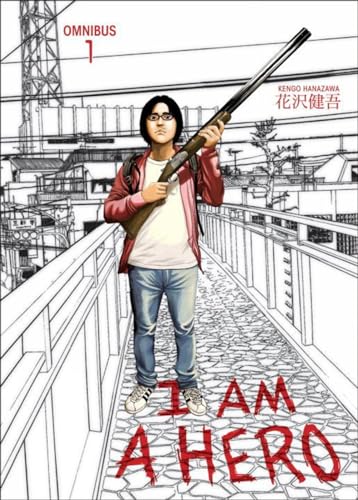
I Am a Hero
Yu's review of I Am a Hero — an unsuccessful manga artist becomes, entirely against his nature, a survivor of the Japanese zombie apocalypse.
Horror / Survival
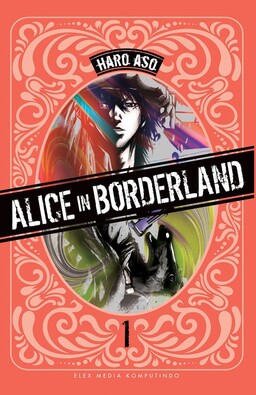
Alice in Borderland
Yu's review of Alice in Borderland — a survival horror manga where a directionless young man and his friends are pulled into a deserted Tokyo and forced to clear deadly games rated by playing cards, slowly uncovering what the Borderland actually is.
Horror / Thriller
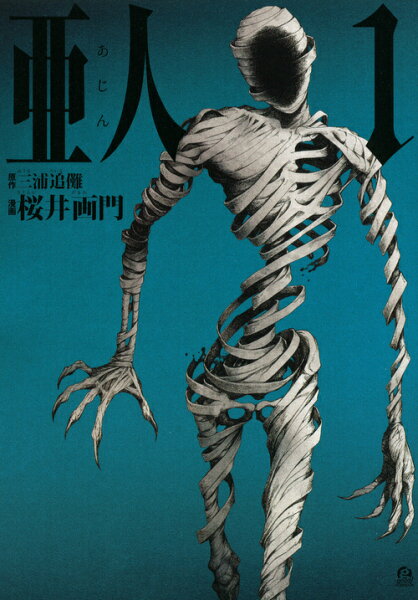
Ajin: Demi-Human
Yu's review of Ajin: Demi-Human — a horror thriller about immortal beings who cannot die, the government that experiments on them endlessly because they can't, and Satou, one of the most terrifyingly competent villains in modern manga.

Horror / Sci-Fi
Vampire Hunter D
Yu's review of Vampire Hunter D — set 12,000 years in the future in a world where vampires ruled humanity and have since fallen; D is a half-human half-vampire dhampir who hunts his own father's kind; stoic, nearly invincible, and accompanied by a parasitic demon in his hand, he is one of horror manga's most iconic loners.
Horror / Thriller
Starving Anonymous
Yu's review of Starving Anonymous — passengers on a bus wake up in a facility where they discover the horrifying truth about what they're being used for.
Horror / Action
Hellsing
A comprehensive review of Hellsing — plot, characters, art style, and whether it's worth reading.
Written by
Yu
Manga Enthusiast from Japan
I grew up in Japan and manga literally saved me during a tough time in elementary school. My English isn't perfect, but my love for manga is real — and I want to share it with you.
Disclosure: This post contains affiliate links. As an Amazon Associate, I earn from qualifying purchases at no extra cost to you.