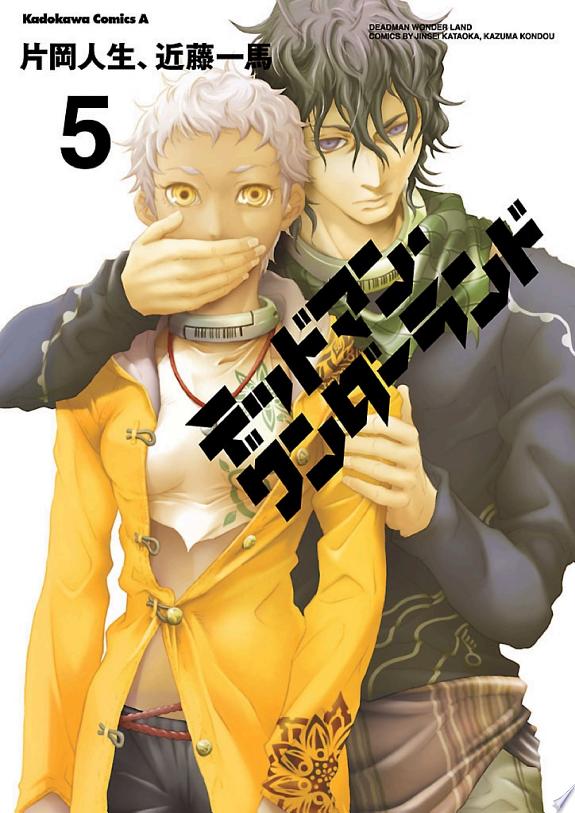
Deadman Wonderland Review: A Prison Theme Park, and a Lullaby That Breaks Your Heart
by Jinsei Kataoka / Kazuma Kondou
Read the first volume. If it doesn't hook you, put it down. It'll hook you.
Buy Deadman Wonderland on Amazon →*Affiliate link — I earn a small commission at no extra cost to you.
I almost dropped this manga in volume two. I want to say that up front, because the early chapters of Deadman Wonderland are loud and mean and they wear their influences on their sleeve — Battle Royale, Gantz, every "kids forced to kill" story I'd already read. I kept going because a friend told me, "Just stay for Shiro." So I stayed. And somewhere around the end, when I finally understood what Shiro was and what the song meant, I had to put the book down and sit with it for a while. This is one of those series where the cover sells you blood and screaming, and the inside is actually about a mother's guilt and a child who chose to forget how to feel pain.
It's not a perfect manga. But it earned the quiet it ends on, and I didn't see it coming.
Quick Take
- A 14-year-old is framed for the massacre of his entire class and sent to Deadman Wonderland — a privatized prison in post-earthquake Tokyo that operates as a public theme park — where he discovers he can weaponize his own blood
- Dark survival action that starts as a clear Battle Royale descendant but gradually reveals itself as a tragedy about human experimentation, a fractured girl, and a lullaby
- M (Mature) — graphic violence, torture, human experimentation, body horror. Not for younger readers.
Content Warnings & Age Rating
Age Rating: M (Mature) Content Warnings: Graphic violence, torture sequences, human experimentation on a child, body horror (the blood-weapon "Branches of Sin"), dark psychological themes
This is genuinely dark, and the darkness isn't decorative — the core of the plot is what was done to a little girl in a lab. The experimentation flashbacks are the most disturbing material in the book, more than any of the arena fights.
Story Overview
Ganta Igarashi is a normal middle schooler until a floating figure in red — "the Red Man" — appears outside his classroom window and slaughters everyone in the room except him. Before vanishing, the Red Man pushes a red crystal shard into Ganta's chest. Ganta survives, is blamed for the massacre, and in a rigged trial is sentenced to death and shipped to Deadman Wonderland, a privatized prison built on the ruins of Tokyo after a catastrophic earthquake. The cruelty of the setup is the hook: the prison is also a tourist attraction, and the inmates' suffering is the entertainment.
Inside, prisoners wear collars that inject a lethal poison; the only antidote is "Candy" they must buy with points earned by performing in dangerous "attractions." Then Ganta learns the truth about himself. The shard the Red Man left him makes him a Deadman — someone who can crystallize and control their own blood as a weapon, a power called a Branch of Sin. He's dragged down to the prison's hidden level, G-Block, where Deadmen are forced to fight each other to the death in an underground gladiator show called the Carnival Corpse, run for a private audience of wealthy spectators.
The turn that elevates the series is the discovery of where the Branches of Sin come from. They all trace back to a single source: a girl. Shiro — the strange, cheerful albino girl who has been at Ganta's side almost since he arrived — is revealed to be both the origin of the Deadman virus and, in her other personality, the Red Man who killed his class. The manga ends not with a battle won but with Ganta refusing to kill her, the theme park collapsing into the sea, and a final, devastatingly quiet scene I'll discuss in the spoiler section.
Characters
Ganta Igarashi — Starts as a kid in freefall: framed, condemned, watching everyone tell him he's a monster. His arc is the slow climb from pure terror toward agency — first just trying to survive a single Carnival Corpse match, then trying to find the Red Man and clear his name, and finally arriving at a choice no fourteen-year-old should have to make. What's interesting is that his "growth" lands him in front of the one person he most wanted revenge on, and the manga asks whether he can let go of that. His childhood nickname, Woodpecker, turns out to matter enormously.
Shiro — The heart of the whole thing and the best reason to read it. On the surface she's a guileless, barefoot girl in a skintight suit who calls Ganta by a pet name and seems to live in her own world. Underneath, she is the artificial daughter of the scientist Hagire Rinichiro, infected with a virus and subjected to years of agonizing nanomachine experiments to evolve it into the Branch of Sin. To survive that pain, her mind split off a second personality — the Wretched Egg, the homicidal "Red Man." She is, in the cruelest way, both Ganta's closest friend and the murderer of his class.
Senji "Crow" Kiyomasa — A former police officer turned Deadman, and the first Deadman Ganta truly faces. His Branch of Sin, Crow Claw, turns his blood into scythe blades that can cut through steel. After Ganta survives a match against him, Senji becomes a blunt, pragmatic mentor — the guy who teaches Ganta how to actually fight instead of flailing, and whose honesty is a relief in a world built on lies.
Sorae Igarashi — Ganta's mother, and the character whose presence haunts the ending. A researcher tied to the experiments on Shiro, she's the one who wrote the lullaby that keeps the Wretched Egg suppressed. By the time she composed it, she had begun to feel genuine remorse for everything she'd done to Shiro — which is why the song carries the weight it does.
What I Love About It
The lullaby. Of everything in this manga, the thing that reorganized my whole reading of it is the song.
For most of the series it's just an ambient detail — a soft melody, the "Mother Goose System," something that plays through the facility. You don't think much of it. Then you learn what it actually is: a lullaby Ganta's mother, Sorae, wrote, and used to sing to Ganta and Shiro when they were small children together. It's a song about a woodpecker — which is Ganta's old nickname. And it functions as a leash. The Mother Goose System broadcasts that lullaby specifically to keep the Wretched Egg's powers suppressed inside Shiro. The thing that comforts her and the thing that cages her are the same thing, written by the same woman who hurt her. Sorae cried every time she played it, because she knew what it was and what she'd done.
That's the trick this manga pulls that I didn't expect from a book that opens with a death-game arena. It takes a piece of pure tenderness — a mother singing to two little kids — and reveals it as both an act of love and an instrument of control, born from guilt. Once you know that, every fight and every drop of blood in the series traces back to one child being tortured in a lab and one adult's failure to protect her. The horror stops being about gore and becomes about responsibility. I've read a lot of dark manga; very few of them have a single image that recontextualizes the entire story the way the lullaby does here.
Memorable Scene ⚠️ Spoiler Warning
The ending. Once Shiro and the Wretched Egg integrate — once the lullaby can no longer keep her split — she tells Ganta the unbearable thing: she did what she did, including killing his class, because she wanted him, the one person she loves, to be the one who finally ends her suffering. She's asking him to kill her, framed as the only mercy left.
Their final confrontation tears the theme park apart, and as it crumbles into the ocean, Ganta makes his choice — he can't do it. He won't be her executioner. He saves her from the falling wreckage instead and refuses the role she begged him into. There's no triumphant victory; the prison just collapses and shuts down, and the survivors scatter.
Then the epilogue, which is the part that stayed with me. It catches up with the other characters moving on with their lives, and finally settles on Shiro, alone in a coma. One day Ganta comes to visit her. She wakes. And he asks her — quietly, no fanfare — whether she'd like to finish the song. That's the last beat. After all the blood, the manga ends on a half-sung lullaby between two people who were children together, one of whom murdered the other's classmates. It shouldn't work as a resolution. Somehow it does, and it left me staring at the page.
Pros & Cons
Pros
- Shiro's arc is one of the most affecting reveals in dark manga, and the lullaby ties it together perfectly
- 13 volumes, fully complete, with an ending that actually pays off the setup
- The Branch of Sin / blood-weapon designs are inventive and visually distinct across the cast
- The conspiracy is more layered than the "death-game prison" premise promises
Cons
- The graphic violence and torture content genuinely limits who can read it
- The early prison arc leans hard on familiar Battle Royale / Gantz beats before it finds its own identity
- Ganta is a less compelling lead than Shiro, and the middle stretch can drag
- The anime adaptation famously stops around volume 5, so newcomers expecting it to match the show will be surprised — that's either a draw or a frustration depending on you
Is Deadman Wonderland Worth Reading?
Yes — if you can stomach the content and you're willing to push through a derivative opening. The first volumes sell you a brutal survival game, but the series quietly becomes a tragedy about a tortured child, a guilty mother, and a song. Stay for Shiro. The complete manga is far more than its premise, and the ending earns the patience.
What English-Speaking Fans Say
In Western fandom, Deadman Wonderland is best known through its anime, which ended around volume 5 and never reached the manga's real conclusion. Readers who continued into the back half consistently say the manga is significantly better than the show led them to expect, and Shiro's arc and the ending are the most-praised elements. The torture and experimentation content is also the most commonly cited reason people warn others off it.
Similar Manga
| Title | Its Approach | How Deadman Wonderland Differs |
|---|---|---|
| Gantz | Strangers forced into lethal games by an unexplained system, extreme violence | Deadman Wonderland's death game is a front for a single tragic origin — one experimented-on child — rather than an alien mystery |
| Ajin | Biological "immortals" hunted by a conspiracy, cold institutional horror | Deadman Wonderland is more emotional than clinical; its conspiracy resolves into a personal story about guilt and a lullaby |
| Future Diary (Mirai Nikki) | Survival game driven by an unstable girl's obsessive love for the protagonist | Deadman Wonderland frames its "yandere" reveal as the result of trauma and experimentation, ending on mercy rather than escalation |
Reading Order / Where to Start
Volume 1. If you've only seen the anime, it adapts roughly through volume 5 — but it diverges and never reaches the true ending, so don't treat it as a substitute. Read the manga from the start; the back half is the whole point.
Official English Translation Status
Originally licensed by Tokyopop (5 volumes, 2010–2011) before that edition went out of print. VIZ Media later picked up the series and published the complete 13 volumes (2014–2016). All volumes are available in English.
Where to Buy
Read the first volume. If it doesn't hook you, put it down. It'll hook you.
This post contains affiliate links. If you purchase through these links, I may earn a small commission at no extra cost to you. As an Amazon Associate, I earn from qualifying purchases.
*Affiliate link — I earn a small commission at no extra cost to you.
Reading Guides
More Manga You Might Like
Horror / Sci-Fi Action
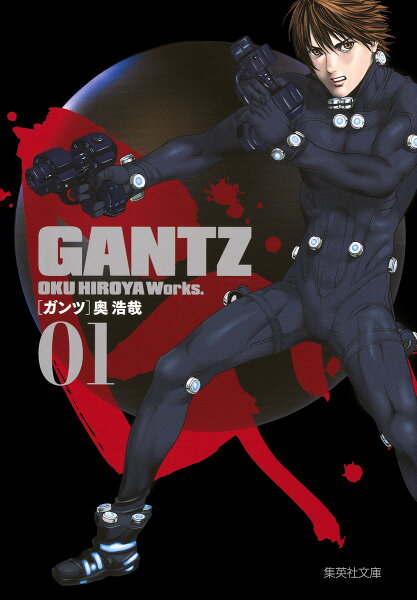
Gantz
Yu's review of Gantz — two teenagers die in a subway accident and wake up in an apartment with other recently deceased people, commanded by a black sphere to hunt and kill aliens for points.
Horror / Action
Mermaid Saga
Yu's review of Mermaid Saga — Yuta ate mermaid flesh 500 years ago and became immortal; now he searches for a way to die; each arc is a horror story about what immortality actually looks like when the people around you keep dying and the mermaid flesh keeps producing monsters; Rumiko Takahashi's horror masterwork.
Horror / Action
Zombie-Loan
Yu's review of Zombie-Loan — Michiru Kita has the shinigami eyes ability to see death rings around people's necks; two boys at her school, Chika Akatsuki and Shito Tachibana, have black rings indicating they should already be dead; they are alive because they made a contract with a Zombie-Loan office, exchanging their continued existence for debt repayment through zombie hunting.
Horror
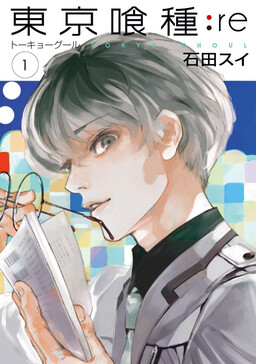
Tokyo Ghoul:re
Yu's review of Tokyo Ghoul:re — Haise Sasaki is a half-ghoul CCG investigator with no memory of his past; he is, in fact, Ken Kaneki — the protagonist of Tokyo Ghoul — with his identity surgically suppressed; Sui Ishida's continuation of Tokyo Ghoul follows Kaneki's reconstruction through Haise as the war between humans and ghouls reaches its final scale.
Horror / Drama
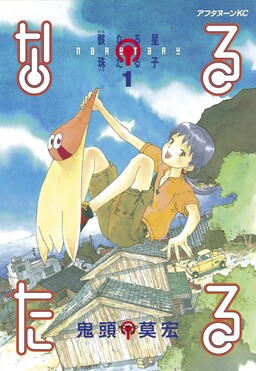
Narutaru
Yu's review of Narutaru — Shiina Tamai finds a star-shaped creature she names Hoshimaru; the story appears to begin as a creature-companion adventure and becomes something much darker, examining what happens when children with real grievances are given real power.
Horror / Action
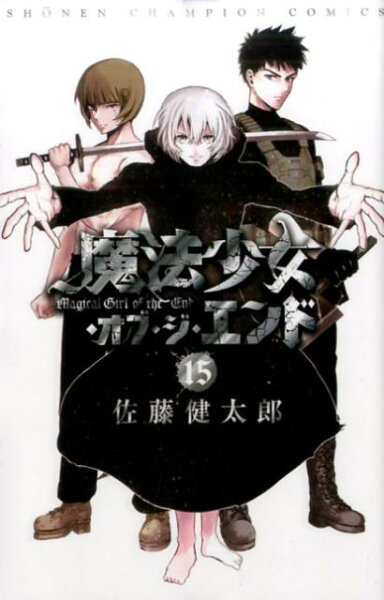
Magical Girl Apocalypse
Yu's review of Magical Girl Apocalypse — ordinary high schooler Kii Kogami watches a magical girl appear at school and kill everyone; the magical girls appear in large numbers and begin a massacre; this is an extremely violent horror manga that uses the magical girl aesthetic as the vehicle for a zombie-apocalypse-style survival story with time travel complications.
Written by
Yu
Manga Enthusiast from Japan
I grew up in Japan and manga literally saved me during a tough time in elementary school. My English isn't perfect, but my love for manga is real — and I want to share it with you.
Disclosure: This post contains affiliate links. As an Amazon Associate, I earn from qualifying purchases at no extra cost to you.