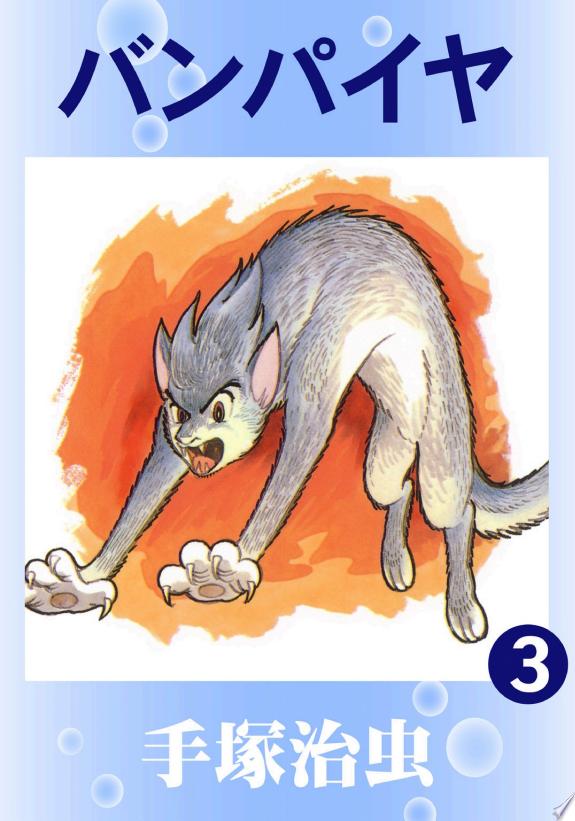
Vampire Review: The Tezuka Work That Asks If Humanity Deserves to Survive
by Osamu Tezuka
Read the first volume. If it doesn't hook you, put it down. It'll hook you.
Buy Vampire on Amazon →*Affiliate link — I earn a small commission at no extra cost to you.
What if the monsters aren't the problem? What if humanity is the problem, and the monsters just figured it out first?
Quick Take
- One of Tezuka's darker works: a shapeshifter story with genuine misanthropy under the adventure surface
- Not as polished as Black Jack or as epic as Phoenix — but distinctively strange and worth encountering
- The ending is characteristically Tezuka: philosophically ambitious, slightly rushed
Who Is This Manga For?
- Tezuka completists and fans of his darker, stranger works
- Readers interested in 1960s manga science fiction
- People who enjoy "monsters who are more human than humans" narratives
- Anyone curious about the range of Tezuka's imagination
Content Warnings & Age Rating
Age Rating: T (Teen) Content Warnings: Violence, transformation horror, dark themes about human nature, some disturbing imagery
Tezuka's darker register. Not extreme by contemporary standards but genuinely unsettling in places.
Yu's Rating
| Category | Score |
|---|---|
| Story Depth | ★★★☆☆ |
| Art Style | ★★★★☆ |
| Character Development | ★★★☆☆ |
| Accessibility for Non-Japanese Readers | ★★★★☆ |
| Reread Value | ★★★☆☆ |
Story Overview
Rock (a recurring Tezuka character in different roles across different manga) is a young man who discovers he is a "Vampire" — not in the blood-drinking sense, but in the sense of being a shapeshifter, able to transform into any animal. He's been hiding this ability his entire life, terrified of what it means and how humans would react.
He discovers there's a hidden society of Vampires. They have their own politics, their own debates about whether to remain concealed among humans or to stop hiding. The more militant faction argues that humans are fundamentally hostile to anything different from them — and that the Vampires' strategy of concealment is capitulation to an enemy that will destroy them regardless.
The story is explicitly a metaphor for minority existence: the decision about whether to assimilate, reveal yourself, or resist. Tezuka was writing in the 1960s, and the civil rights movement was in the background of his thinking. The Vampires are specifically analogized to oppressed minorities who face the question of whether accommodation is possible.
What makes the manga feel Tezuka is the lack of easy answers. The humans in the story are not uniformly hostile. The militant Vampires are not simply right. Rock himself is full of contradictions, and the ending reflects this ambivalence rather than resolving it.
Characters
Rock — Tezuka's most morally complex recurring character, used here as a protagonist under genuine pressure. His loyalty is tested repeatedly and his choices are not always good ones.
Goro — The young human who gets drawn into the Vampire world through Rock. His perspective is the reader's access point to the community's internal debates.
Art Style
Classic 1960s Tezuka — the big eyes, the cinematic compositions, the visual comedic vocabulary mixed with darker material. The animal transformations are drawn with more detail than the human sequences, which gives them an uncanny quality: the animals are more completely rendered than the people.
Cultural Context
The title "Vampire" is somewhat misleading — this is not a fanged-monster story but a shapeshifter metaphor. The specific choice to use shapeshifting as the metaphor for difference is interesting: shapeshifters can pass as human, which is different from being visibly different, and the story's politics are specifically about that kind of passing. Can you make yourself invisible to survive? Should you?
This ran in the same era as major civil rights movements globally, and Tezuka's engagement with those themes — oblique but present — makes it worth encountering with that context in mind.
What I Love About It
Tezuka at his strangest is often Tezuka at his most interesting. This isn't his masterwork — that's Phoenix or MW or Black Jack depending on your preference — but it has a specific unease that his more polished works don't always reach.
The speech that the militant Vampire faction gives about the inevitability of human hostility is written with enough force that you're not sure, reading it, whether Tezuka agrees with them. It's not a straw man. It's a coherent worldview. And then the story doesn't validate it cleanly, but doesn't refute it cleanly either. The ambivalence is more honest than a clear villain would be.
What English-Speaking Fans Say
A relatively obscure entry in Tezuka's catalog in English. Readers who find it are often Tezuka completists; general readers are unlikely to encounter it first. The consensus among those who have read it: interesting and strange, less essential than his major works, but worth reading for the political content and Tezuka's characteristic imagination.
Memorable Scene ⚠️ Spoiler Warning
The scene where Rock, exhausted from hiding, transforms in front of someone who has earned his trust — and the specific expression on his face in that moment, relief mixed with terror — is the emotional center of the manga. Not the political debates, not the action sequences. The private cost of concealment, rendered in Tezuka's expressive style.
Similar Manga
| Title | Its Approach | How Vampire Differs |
|---|---|---|
| MW | Tezuka's darkest work; moral corruption | Vampire has more overt political allegory; MW is more psychologically focused |
| Phoenix | Tezuka's philosophical masterwork | Vampire is smaller scale and more direct in its social commentary |
| Dororo | Outcast protagonist navigating human hostility | Vampire is more explicit about the political nature of outsider existence |
Reading Order / Where to Start
Three volumes. Works as a standalone Tezuka read but rewards knowledge of his other works.
Official English Translation Status
Vertical Comics published the complete 3-volume English edition. Available.
Pros & Cons
Pros
- Genuinely interesting political allegory for its era
- Classic Tezuka imagination working in a different register
- Short enough to be read without major commitment
- The shapeshifting metaphor is specific enough to be meaningful
Cons
- Not Tezuka's strongest plotting — the ending is rushed
- Some aspects of the 1960s cultural context require historical knowledge to fully appreciate
- Rock as protagonist is more interesting in some Tezuka works than here
- Less emotionally developed than his major works
- Style may feel dated compared to modern manga
Is Vampire Worth Reading?
For Tezuka fans, yes. For general readers, start with Black Jack or Phoenix first. Return to Vampire when you want to understand the full range of Tezuka's thinking.
Format Comparison
| Format | Pros | Cons |
|---|---|---|
| Physical | The Vertical edition is quality | May be hard to find in print |
| Digital | Easier to access | — |
| Omnibus | The 3-volume set is the complete story | — |
Where to Buy
Read the first volume. If it doesn't hook you, put it down. It'll hook you.
This post contains affiliate links. If you purchase through these links, I may earn a small commission at no extra cost to you. As an Amazon Associate, I earn from qualifying purchases.
*Affiliate link — I earn a small commission at no extra cost to you.
More Manga You Might Like
Action / Sci-Fi
Cobra
Cobra is the greatest space pirate who ever lived — charming, unstoppable, and armed with the Psychogun fused to his arm — in a galaxy-spanning adventure that turned stylish cool into a manga philosophy.
Action / Adventure
Jungle Emperor Leo
A review of Jungle Emperor Leo by Osamu Tezuka — the foundational manga about Leo the white lion, his journey from cub to king, and the complicated relationship between the animal kingdom and humanity.
Sci-Fi / Mecha
Mobile Police Patlabor
A review of Mobile Police Patlabor, the classic manga about a police unit that operates giant labor robots in a near-future Tokyo.
Action / Sci-Fi
Project ARMS
A comprehensive review of Project ARMS — plot, characters, art style, and whether it's worth reading.
Action / Historical
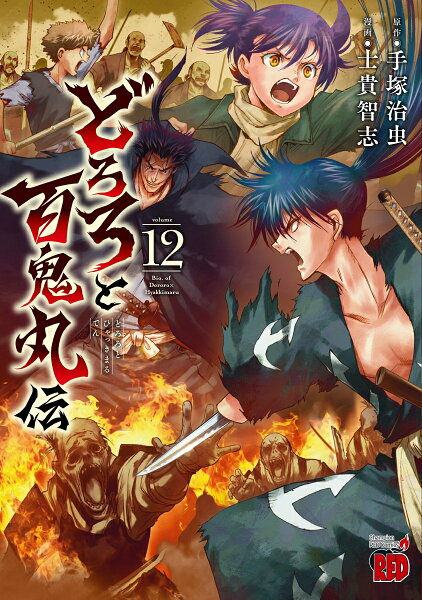
Dororo
Yu's review of Dororo — a 4-volume Osamu Tezuka classic about a boy whose body was traded to 48 demons before birth, now fighting to reclaim his parts. Dark, strange, and essential reading from the God of Manga.
Action / Sci-Fi
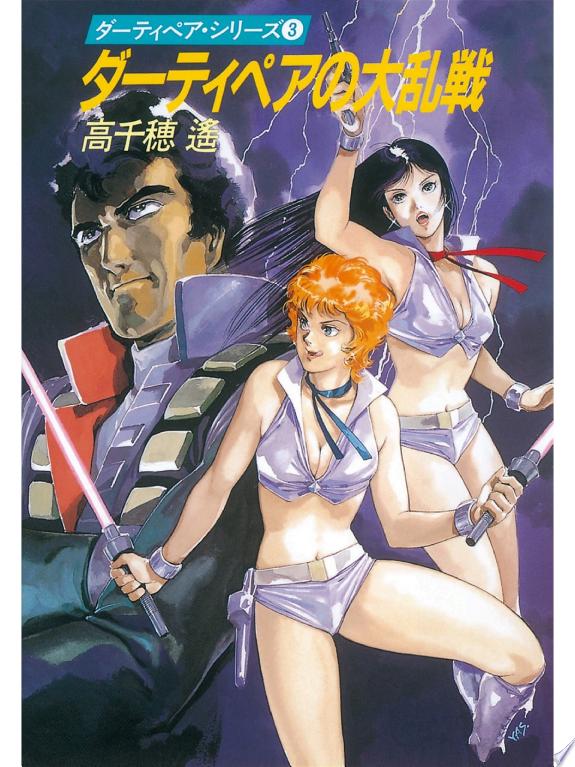
Dirty Pair
Dirty Pair follows Kei and Yuri — the Lovely Angels — a pair of Trouble Consultants whose missions always succeed and whose success always comes with catastrophic collateral damage that earns them their nickname.
Written by
Yu
Manga Enthusiast from Japan
I grew up in Japan and manga literally saved me during a tough time in elementary school. My English isn't perfect, but my love for manga is real — and I want to share it with you.
Disclosure: This post contains affiliate links. As an Amazon Associate, I earn from qualifying purchases at no extra cost to you.